DIY Standing Desk Converter Ideas
To create a DIY standing desk converter, start with durable materials like steel or plywood for the support structure. These materials give the stability needed for regular use and help prevent wobbling when the converter is raised.
Design components should include adjustable shelf heights so you can set monitor and keyboard positions for comfort. Rounded edges improve safety and reduce the chance of bumps or snags.
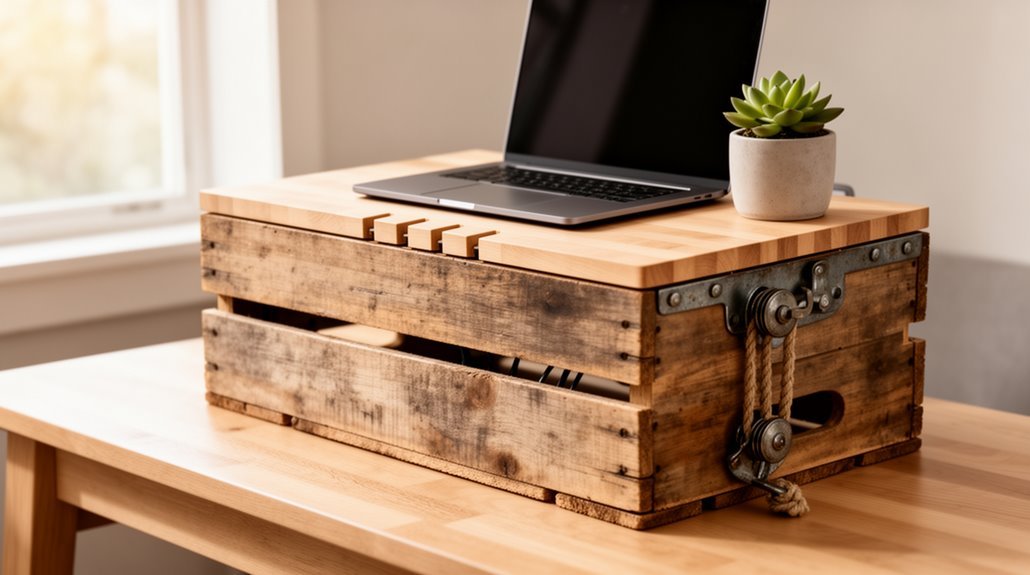
For budget builds, use alternative options such as stacking books or repurposing crates to achieve extra height. Always guarantee ergonomic features like neutral posture support and a solid base design for stability.
Consider your workspace dimensions and aim for compact designs that fit your desk area. By focusing on these specifications, you can enhance your workstation efficiently and explore further tips and ideas.
Essential Materials for Building Your Converter
When building a standing desk converter, selecting the right materials is essential for ensuring stability and durability. Metal frames, like steel and aluminum, provide high durability and support heavy loads. If you prefer a cost-effective option, wood materials such as plywood or MDF are easy to work with for DIY builds. Plastic bases are lightweight but may lack stability for heavier equipment. Composite materials combine strength and lightness, making them popular in commercial converters. For the platform surface, wood is widely used due to affordability, while laminate finishes offer scratch resistance and easy cleaning. Always consider weight capacity; typically, platforms support 15–25 lbs. Choose materials wisely to enhance your converter’s performance and longevity. Additionally, ensure that JavaScript and cookies are enabled to provide a seamless user experience while using your standing desk converter.
Design Components to Consider
The design of your standing desk converter involves several critical components that contribute to its functionality and ergonomics. The base, backboard, shelves, and leveling feet form the core structure.
A tapered backboard enhances ergonomic support and visual appeal, while slots allow for adjustable shelf heights, typically spaced one inch apart. To prevent excessive backward lean, V-notches in shelves and the base guarantee stability and security. Rounded edges improve safety and comfort during use.
Leveling feet balance the converter on uneven surfaces, and the width of the base must exceed the top to avoid tipping. Additionally, plywood thickness should be around 3/4 inch for strength. Incorporating these design elements will optimize your standing desk converter’s efficiency and safety.
Consider using a DIY standing desk converter project as a foundation for your design, ensuring both affordability and customization. adjusting to a standing desk converter can greatly improve your posture and overall comfort during long hours of work. As you make this transition, consider incorporating ergonomic accessories like a footrest or monitor riser to enhance your setup. Embracing these changes may lead to increased productivity and a healthier workspace.
Step-by-Step Construction Techniques
To successfully construct your standing desk converter, you’ll need to follow a series of precise steps that confirm both functionality and ergonomic design. Understanding the ergonomic benefits of standing desks can significantly enhance your workspace experience. These desks encourage better posture, reducing the risk of back pain and increasing overall productivity. Moreover, the ability to easily switch between sitting and standing can promote greater energy levels throughout the workday.
Planning and Prototyping
Identify the four key parts from 3/4-inch plywood. Prototype dimensions to verify comfort and test angles. Use templates and measurement tools for accurate slot placements, ensuring that the slot accuracy is maintained throughout the design process.
Material Preparation and Cutting
Rough cut using a track saw. Drill slots with a drill press and refine shapes with a router. Round edges for safety.
Assembly Techniques
Utilize friction fit construction for secure assembly. Test fit all parts, adjusting as necessary.
Adjustable Mechanisms
Incorporate multiple slots for height adjustments. Confirm shelves snap securely into place.
Final Finishing
Sand surfaces before applying finishes. Attach leveling feet to enhance stability.
Alternative Materials for Budget-Friendly Builds
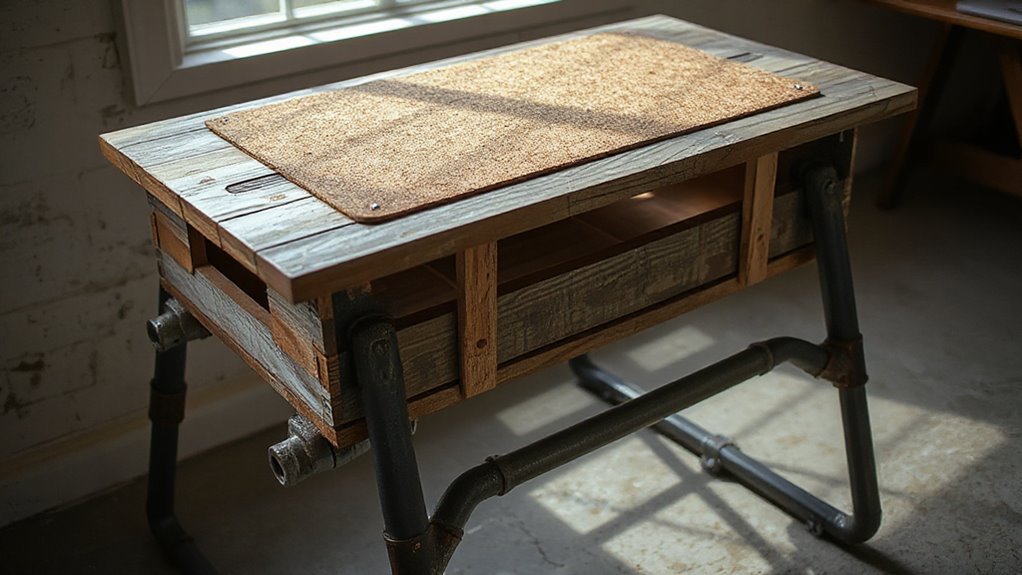
Exploring alternative materials can greatly reduce costs while crafting a standing desk converter. You can use empty trash bins as stable legs to elevate your desk height without any material purchases.
Stacking books provides adjustable elevation, allowing you to customize your workspace easily. For quick height adjustments, layering empty boxes or cartons is effective.
If you need a temporary solution, an ironing board offers height flexibility and easy repositioning. These options require no extra investments, making them perfect for tight budgets.
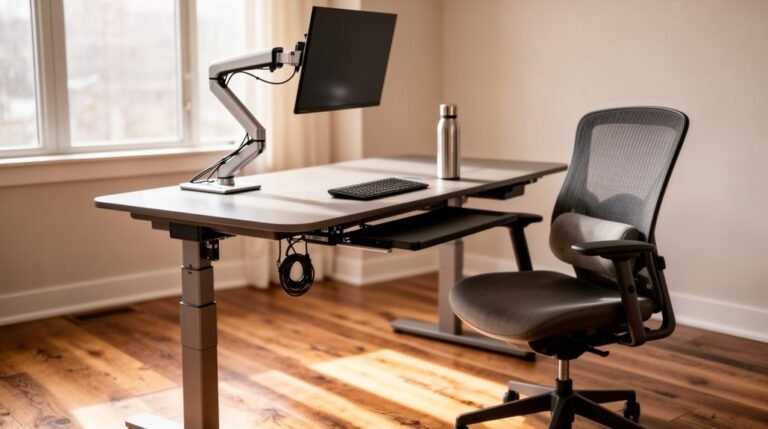
Additionally, consider using monitor arms for existing desks, enhancing functionality without needing a complete replacement. Each of these materials offers a practical approach to building a cost-effective standing desk converter.
Ergonomic Features for Comfort and Health
Creating a comfortable workspace goes beyond just using alternative materials for a standing desk converter.
You need to focus on ergonomic features that enhance your health and productivity. Here are three key elements to take into account:
- Adjustable Height Settings: Choose converters with a wide height range, accommodating users from 5’4″ to over 6′. This guarantees proper alignment and reduces strain.
- Neutral Posture Design: Position all tools within arm’s reach to prevent hunching. A dual-level setup for monitors and keyboards can maintain a neutral wrist position.
- Sturdy Construction: Select converters made with high-grade materials that support your equipment without wobbling. This stability is essential during frequent height adjustments.
Prioritizing these ergonomic features will enhance your comfort and promote better health while working.
Customization Ideas for Personal Touch
When you personalize your workspace, it not only reflects your style but also enhances functionality. Consider modular shelving units for flexible monitor and accessory arrangements. Stackable crates can be adjusted to different heights, catering to your storage needs.
L-shaped setups maximize surface area, accommodating multiple devices efficiently. Use detachable trays for easy repositioning based on tasks.
For decorative enhancements, apply custom vinyl decals for unique surfaces or removable wallpaper for color changes. LED strip lighting under shelves creates an ambient effect.
Implement efficient storage solutions like drawer dividers and wall-mounted shelves to keep items organized. Finally, choose materials like reclaimed wood or metal accents for a personalized aesthetic that complements your workspace, ensuring both style and practicality.
Finishing Touches for Durability and Aesthetics
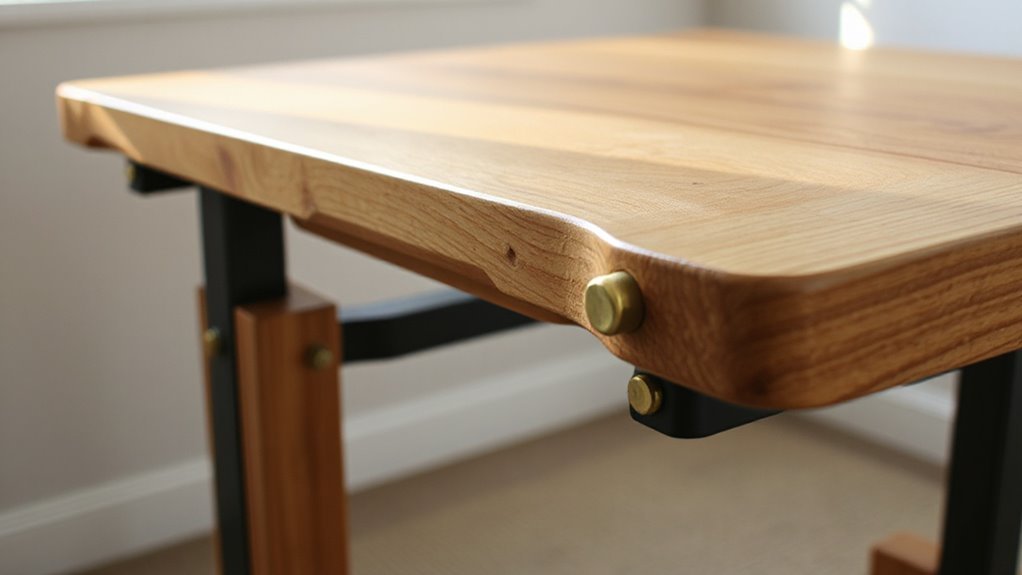
To guarantee your standing desk converter combines durability with aesthetic appeal, careful material selection plays an essential role.
Start with robust materials that enhance both function and look:
- Use thicker gauge steel for framing, assuring stability and longevity.
- Choose surfaces with high-pressure laminate finishes to resist scratches and stains.
- Incorporate rubber pads to prevent slipping and protect your desk.
Enhancing structural integrity is equally important.
Design weighted bases to minimize wobbling, and consider double Z-shaped bases for balanced motion.
Applying noise-reducing components also enhances user experience.
Finally, aesthetic touches, such as neutral color options and rounded edges, improve visual appeal while maintaining safety.
These finishing touches will assure your desk converter is both durable and visually pleasing.
Adjustability Options for Flexible Use
Adjustability options greatly enhance the functionality of standing desk converters, allowing users to personalize their workstations for comfort and productivity.
Height adjustment mechanisms vary; manual levers require physical effort and are slower, while electric motors enable quick changes at the push of a button. Pneumatic systems allow continuous height settings, offering more customization.
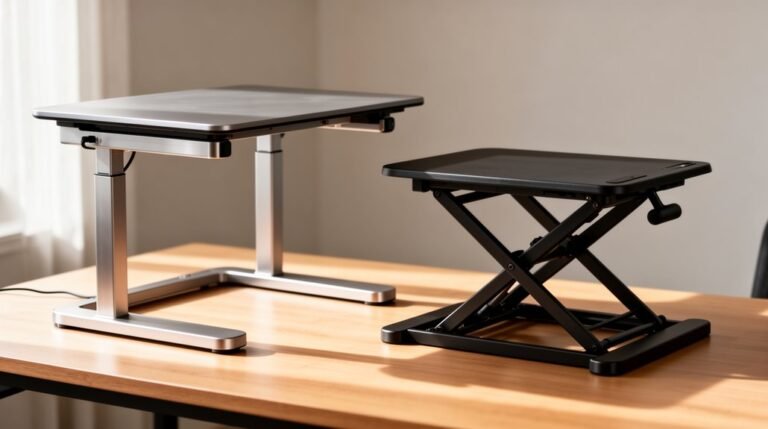
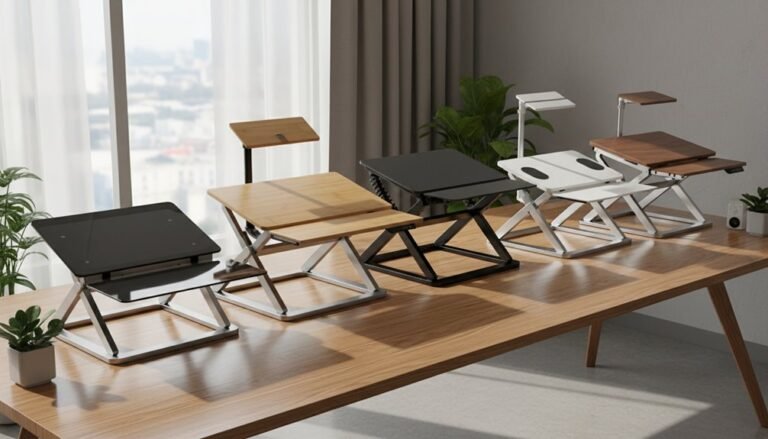
X-lift converters provide compact adjustments, whereas Z-lift converters offer larger surfaces and better stability. Most converters have limited preset heights, typically around ten points.
Advanced models allow monitor height adjustments separately, maintaining ergonomic alignment. Including tilt functionality is less common but beneficial for screen angle adjustments.
Stability and Safety Considerations
Stability and safety are essential aspects of standing desk converters, as they directly impact user comfort and productivity. To guarantee a stable and safe setup, consider the following:
- Choose a converter with a solid base, like a double X or double Z shape, for improved lateral stability.
- Opt for designs that allow for straight up-and-down movement, which minimizes wobbling during use.
- Confirm all height locks engage properly to prevent unexpected drops or slips.
When constructing your converter, use durable materials such as extruded aluminum or weighted steel. This not only enhances stability but also makes adjustments easier.
Always verify that the converter fits your ergonomic height range to avoid awkward postures, which can lead to instability and discomfort.
Creative Solutions for Small Spaces
Finding the right standing desk converter for small spaces can be challenging, but innovative designs make it easier. Compact models, measuring around 25 x 18 inches, fit snugly on small workstations without overcrowding.
X-shaped frames move vertically, maintaining your desk’s surface area. Some converters have base widths as narrow as 16 inches, perfect for slim desks in apartments.
Height adjustments vary; gas spring systems offer smooth, effortless elevation between 5 and 16 inches. Motorized electric options provide convenient push-button adjustments.
Most compact converters support up to 33 pounds, suitable for laptops and keyboards, while premium models can handle multi-monitor setups. Dual-platform designs separate monitor and keyboard surfaces, enhancing usability while reducing clutter.
Frequently Asked Questions
What Tools Are Essential for Building a Standing Desk Converter?
You’ll need a table saw for precise cuts, and a jigsaw for intricate shapes.
A power drill is essential for creating pilot holes and driving screws. Use a router for edge detailing and high-grit sandpaper to smooth surfaces.
Additionally, a level guarantees alignment, while a measuring tape aids in accurate dimensions.
Finally, consider a brad nailer for quick assembly, enhancing structural integrity and reducing assembly time.
How Much Does It Typically Cost to Make a DIY Converter?
Typically, making a DIY converter costs between $50 and $200.
Basic plywood and hardware can total $30-$80, while optional finishes add another $10-$40. If you use salvaged materials, costs may plummet under $20.
More complex designs, especially those with adjustable features, often exceed $200 due to advanced components.
Compared to retail options, DIY solutions frequently offer significant savings, making this approach both economical and customizable for your workspace needs.
Can I Use Recycled Materials for My Standing Desk Converter?
Yes, you can use recycled materials for your standing desk converter. Scrap lumber and pallets offer stability, while cardboard provides lightweight options.
For adjustable legs, consider repurposing aluminum tubing or old furniture parts. Make certain you test weight limits for safety and use proper fasteners for secure assembly.
Laminating layers enhances strength, and modular designs facilitate height adjustments. This approach reduces costs and environmental impact while creating a customized solution.
What Is the Average Height for a Standing Desk Converter?
The average height for a standing desk converter typically ranges from 4 to 20 inches above the desk surface.
Most converters adjust from a minimum of about 4 to 5 inches, allowing for comfortable ergonomic positioning.
For ideal typing posture, your elbows should align with the keyboard, which may require a converter height of around 17 to 20 inches for taller users.
Adjustability is essential for accommodating both seated and standing positions effectively.
How Can I Ensure My Converter Is Stable and Safe?
To guarantee your converter is stable and safe, regularly inspect and tighten all fasteners every 3-4 months.
Check leveling feet for wear every 6 months, adjusting them as needed.
Distribute weight evenly across the surface, adhering to the maximum weight capacity outlined by the manufacturer.
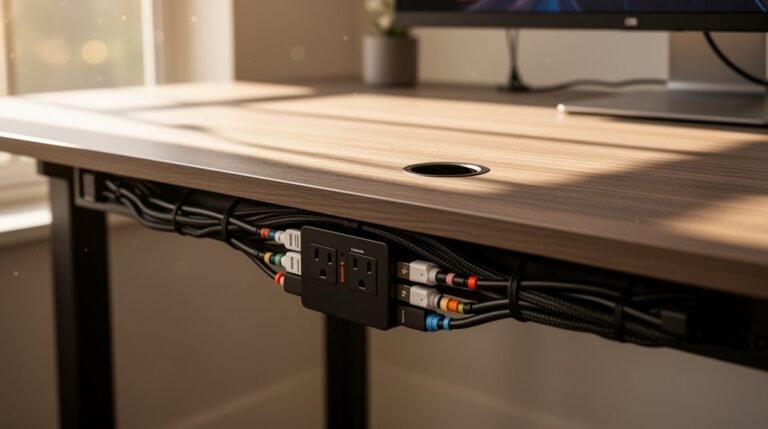
Use cable management tools to prevent snagging, and mount monitors on the main desk, not the converter, to reduce wobbling and enhance stability during height adjustments.
Conclusion
Building your own standing desk converter can enhance your workspace efficiency and promote better posture.
Research indicates that standing for even half the day can burn about 50 extra calories compared with sitting, which can add up to roughly 5 pounds a year.
By selecting essential materials, considering ergonomic features, and ensuring adjustability, you can create a functional and aesthetically pleasing converter.
Prioritize stability and safety to ensure longevity and usability in your workspace.
With this simple upgrade, your productivity and health can markedly improve.