Desk Exercises and Stretches You Can Do at Work
Desk exercises for health and productivity can be simple and effective. Try chair squats and desk pushups to help combat common musculoskeletal complaints while you work.
Perform stretches at least five times a week to maintain flexibility. Aim for static stretches lasting 15–30 seconds, targeting major muscle groups with 2–4 sets each.
Take short movement breaks every 30 minutes to improve circulation and posture. These small actions can reduce discomfort and boost productivity.
Explore additional techniques and routines to further enhance workplace wellness and make healthy habits part of your day.
The Importance of Desk Exercises
As you spend hours sitting at your desk, it’s crucial to recognize the significant health risks associated with prolonged sitting.
Sitting too long can increase your risk of early death by 49% compared to more active individuals. Additionally, sedentary behavior correlates with various health issues, including diabetes, poor heart health, and increased anxiety. Implementing desk exercises can mitigate these risks. Short movement breaks every 30 minutes can enhance posture, reduce muscle fatigue, and improve circulation. Stretching increases blood flow and realigns soft-tissue structures. Prolonged sitting has been identified as a major cause of chronic diseases, making these exercises even more important for your overall health.
Utilizing sit-stand desks or incorporating simple exercises into your routine can further decrease musculoskeletal disorders.
Prioritizing desk exercises promotes better health and productivity while countering the adverse effects of a sedentary lifestyle.
Common Musculoskeletal Complaints
Musculoskeletal complaints are prevalent among office workers, with studies revealing that between 74.7% and 91.5% report issues in at least one body region over a year.
The neck, lower back, and shoulders are the most frequently affected areas, with neck issues reported by 47.1%-65.2%, lower back by 40.7%-58.1%, and shoulders by 36.3%-79%. Additionally, a recent study found that all participants reported at least one musculoskeletal issue in the previous 12 months, highlighting the widespread nature of these problems.
Hand and wrist pain has increased greatly, rising from 11% in 2009 to 53% recently. Elbow and forearm pain affects about 16%-32% of workers.
Sustained or awkward postures, repetitive motions, and inadequate rest breaks contribute to these complaints.
These conditions often lead to missed workdays, especially for lower back and shoulder issues, affecting overall productivity.
Benefits of Regular Stretching
Incorporating regular stretching into your daily routine can greatly enhance your overall well-being, especially if you experience discomfort from prolonged sitting. Stretching improves blood flow, delivering nutrients to muscles, which boosts function. It elongates muscle tendon units, enhancing flexibility and joint range of motion.
Additionally, stretching reduces muscle stiffness and joint pain by stimulating joint-lubricating fluid. This practice decreases the risk of osteoarthritis and enhances muscle elasticity, contributing to better physical coordination. Furthermore, frequent routine stretching can boost energy levels by improving blood flow and nutrient delivery.
On a mental level, structured stretching can lower anxiety and improve overall psychological well-being. You may also experience reduced pain intensity and discomfort associated with prolonged sitting.
Regular stretching increases energy levels and mental alertness, ultimately enhancing productivity and promoting long-term health.
Recommended Stretching Frequency
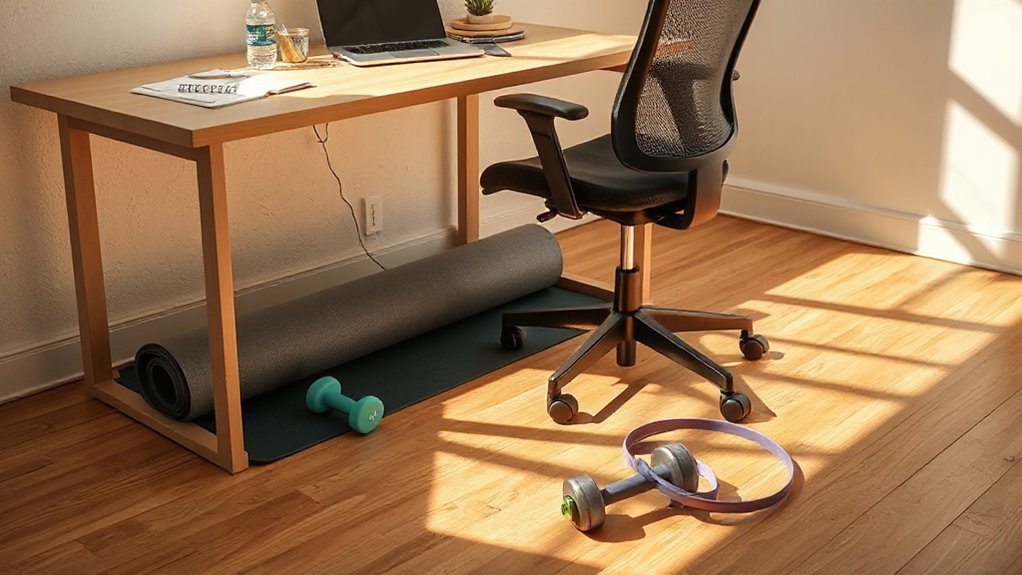
To maintain flexibility and reduce discomfort, aim to stretch at least five times a week. Stretching less than three times weekly shows diminished long-term benefits.
Ideally, daily stretching keeps your muscles flexible and alleviates musculoskeletal discomfort. If you prefer longer sessions, consider stretching every other day while holding each stretch for 60 seconds or more.
Consistency is essential for long-term gains, and each static stretch should last 15–30 seconds. For best results, perform 2–4 sets per muscle group during each session.
Incorporating short breaks of 5–10 minutes every few hours during your workday can effectively reduce discomfort.
Effective Desk Exercises
Desk exercises provide an efficient way to stay active and combat the negative effects of prolonged sitting. Incorporating these exercises into your workday enhances muscle strength and flexibility.
- Chair Squats: Stand up from your chair, lower until you touch the seat, then stand again. Repeat 10 times for muscle strengthening.
- Desk Pushups: Place hands on the desk edge, step back, lean forward, and push away. Complete 10–20 repetitions.
- Seated Leg Raises: Lift one leg straight out, hold for 10 seconds, then switch legs.
- Wall Sits: Stand against a wall and slide down until your hips are level with your knees. Hold for 30–60 seconds, repeating 10–15 times.
These exercises can greatly improve your overall well-being.
Ergonomic Tips for Optimal Stretching
Ergonomic tips for ideal stretching play a key role in enhancing the benefits of desk exercises.
First, take a 5-10 minute break every hour for effective stretching. Aim to stretch at least once per hour to relieve muscle tension.
Use a flat, stable surface for seated or standing stretches, ensuring your workspace is safe and unobstructed.
Maintain proper posture by keeping your spine neutral, shoulders relaxed, and feet flat on the floor.
Hold each stretch for 10-30 seconds without bouncing or locking joints. Focus on key muscle groups like your neck, shoulders, and back.
Consistency in your routine is essential for long-term musculoskeletal health, so prioritize daily stretching for the best results.
Implementing Workplace Stretching Programs
Implementing workplace stretching programs can greatly enhance employee well-being and productivity. Here are four key considerations for effective implementation:
- Program Structure: Develop clear protocols, such as eight-minute group stretching routines, to engage employees effectively.
- Management Involvement: Confirm management oversees and actively supports the program. Their involvement boosts participation and sustainability.
- Cost Analysis: Calculate the annual cost per employee, considering both direct and indirect costs of workplace injuries. This helps justify the investment.
- Feedback Mechanisms: Regularly collect employee feedback to adjust the program. This increases engagement, as evidenced by positive responses from companies like Motorola and L.L.Bean.
Incorporating these elements can lead to significant reductions in musculoskeletal disorders and improved workplace morale.
Enhancing Team Wellness Through Stretching
Enhancing team wellness through stretching programs not only boosts physical health but also fosters a collaborative environment among employees. Group-based stretching routines encourage collaboration, improving workplace camaraderie. Research indicates that these activities enhance communication, creating a stronger safety culture.
Starting the day with group stretches can notably boost morale and job satisfaction.
Additionally, stretching programs contribute to mental health benefits, increasing self-worth and reducing stress. Studies show a notable decrease in musculoskeletal disorders, which account for a significant number of work-related injuries.
Regular participation in stretching routines correlates with enhanced productivity and reduced fatigue. Overall, integrating these programs establishes a supportive culture that improves interpersonal dynamics and promotes long-term health within the workplace.
Frequently Asked Questions
Can Desk Stretches Be Done Discreetly in an Open Office Setting?
Yes, desk stretches can be done discreetly in an open office setting.
Movements like wrist rotations and ankle circles are subtle and can be performed while seated, minimizing visibility. Additionally, neck tilts and shoulder rolls require little space and attention.
You can incorporate these stretches during phone calls or between tasks without disrupting your workflow.
How Do I Remember to Take Stretching Breaks During Work?
To remember stretching breaks during work, use reminder apps like StretchClock or Stand Up! These tools send alerts every 30 to 60 minutes, prompting you to move.
Customize intervals based on your routine. Additionally, create environmental cues, like placing sticky notes on your monitor or setting timers on your phone.
Regular breaks not only reduce discomfort but also enhance productivity, fostering a healthier work environment. Consistency is key to forming this beneficial habit.
Are There Any Specific Stretches for Improving Posture?
Yes, specific stretches can improve posture.
Perform wall angels to open your chest and activate shoulder blade muscles. Do ten repetitions daily for best results.
Incorporate upper trapezius stretches by gently pulling your head toward each shoulder, holding for 10-15 seconds.
Engage in pectoralis stretches by clasping your hands behind your back, pushing your chest out, and holding for 10-30 seconds.
These exercises enhance flexibility, reduce tension, and promote better spinal alignment.
Can Desk Exercises Help Reduce Stress Levels at Work?
Yes, desk exercises can greatly reduce stress levels at work. Engaging in short movement breaks, even for 15 minutes, can lower stress by 14.7%.
Activities like chair squats or neck stretches alleviate muscle tension, enhancing mental well-being. Additionally, incorporating these exercises improves productivity by over 30%.
Regular movement alters workplace perceptions positively, fostering resilience and relaxation. Therefore, integrating physical activity into your routine is essential for managing stress effectively.
What Should I Do if I Feel Pain While Stretching?
If you feel pain while stretching, stop immediately.
Return to a neutral position and avoid pushing through the pain. Take slow, deep breaths to relax your muscles.
Assess for visible swelling or redness. Sharp pain, persistent discomfort, numbness, or weakness signals potential injury.
If pain lasts more than a few hours, interferes with daily activities, or is accompanied by other symptoms, seek medical advice promptly to guarantee proper care.
Conclusion
Incorporating desk exercises into your daily routine can greatly reduce discomfort. Research shows that 60% of office workers experience musculoskeletal pain, often due to prolonged sitting.
By taking just a few minutes each hour to stretch, you can improve flexibility, enhance circulation, and boost productivity.
Implementing these practices not only benefits individual well-being but can also foster a healthier workplace culture.
Prioritizing movement can lead to long-term health benefits that enhance overall job satisfaction.