High-Back Vs Mid-Back Office Chairs
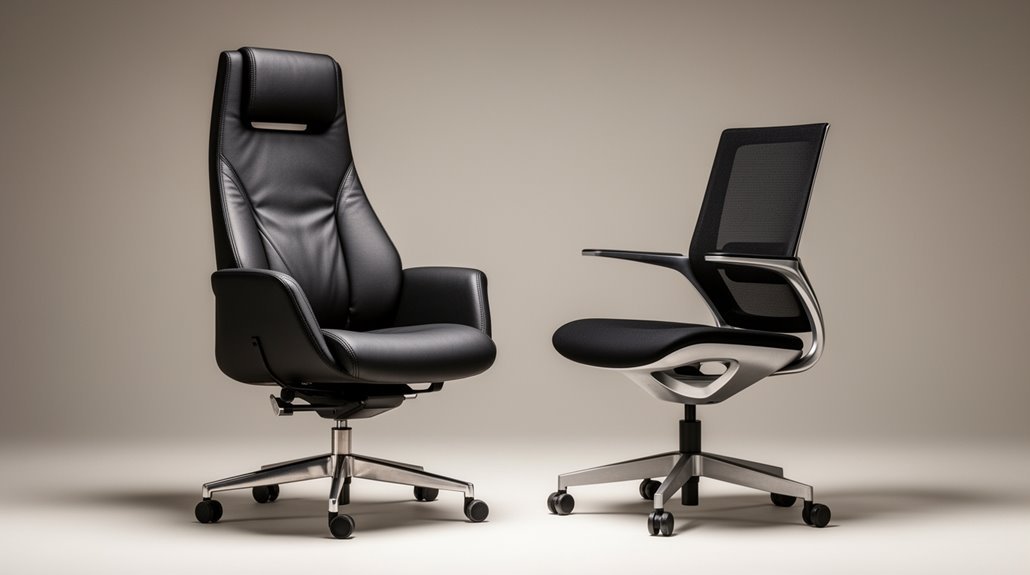
High-back vs mid-back office chairs each have distinct advantages. When choosing between them, consider their key features and how they match your comfort needs.
High-back office chairs typically range from 22 to 30+ inches and provide extensive neck and upper-back support, making them ideal for prolonged sitting and better spinal alignment. They’re a good choice if you spend long hours at your desk and need extra support.
Mid-back office chairs measure about 15–20 inches and promote mobility, making them lighter and more flexible. These chairs suit dynamic workspaces where movement and reach are important.
Your workspace setup and personal comfort preferences will guide your choice. Explore further to discover more about their specific benefits and which model fits your routine best.
Height and Backrest Coverage
When choosing between high-back and mid-back office chairs, understanding height and backrest coverage is vital for comfort and support.
Mid-back chairs typically measure 15-20 inches from the seat to the top of the backrest, ending near the shoulder blades. They mainly support the lumbar and mid-spine regions.
In contrast, high-back chairs range from 22 to 30+ inches, providing coverage up to the upper shoulders or neck area. This extended support is important for taller users, especially those over 6 feet, who may experience strain with mid-back options. High-back chairs are recommended for extended sitters needing neck support, helping alleviate upper body tension.
The support area directly correlates with backrest height, affecting overall posture and comfort.
Choose wisely based on your height and workspace needs for best support.
Ergonomic Support
Understanding ergonomic support is essential for selecting the right office chair. Mid-back chairs provide targeted lumbar support for the lower spine, vital for preventing lower back pain during seated tasks. High-back chairs also offer lumbar support, often with broader backrest coverage, ensuring consistent support for the entire back.
While mid-back chairs support the lumbar and mid-spine, they lack upper back coverage, which can lead to fatigue. High-back chairs extend support to the thoracic region, maintaining spinal alignment. Additionally, high-back models often include headrests for neck and shoulder support, reducing stiffness during long work sessions. Both chair types can be adjusted for a customized fit, but high-back chairs usually offer more ergonomic options for tailored support. High-back chairs provide comprehensive support for individuals spending extended hours at a desk.
Mobility and Workspace Suitability
Mobility is an essential factor in choosing the right office chair, especially in dynamic work environments.
Mid-back chairs support easier movement, allowing you to lean, twist, and reach without restriction. Their lower profile design enhances flexibility, making them ideal for fast-paced settings and shared workspaces. Additionally, mid-back chairs are favored in fast-paced work environments or conference rooms.
In contrast, high-back chairs limit lateral movement due to their extended backrest height, which can hinder quick position shifts. They’re bulkier and require more floor space, making them suitable for static workstations.
Mid-back chairs excel in collaborative environments, supporting frequent changes between tasks, while high-backs function best in executive settings for prolonged sitting.
Consider your workspace layout and mobility needs when selecting the right chair for your tasks.
Design and Aesthetics
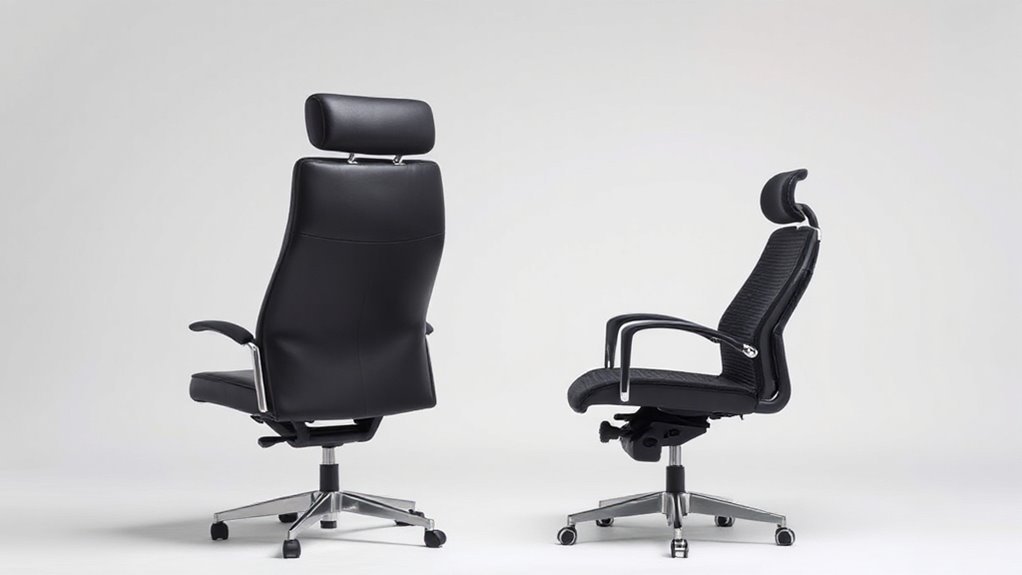
Office chairs serve as an essential element in workspace design, influencing both functionality and visual appeal.
Mid-back chairs feature backrests around 18-20 inches high, providing a compact, lightweight silhouette. This design suits smaller, shared spaces and promotes a modern, minimalist aesthetic.
In contrast, high-back chairs have backrests ranging from 22-30+ inches, delivering a larger, more authoritative presence. Their traditional style often conveys professionalism, making them ideal for private offices.
While mid-back chairs enhance mobility with lighter frames and breathable materials, high-back chairs typically incorporate additional padding and integrated headrests for added comfort.
The visual dominance of high-back chairs may impact space perception, making mid-back options more favorable in collaborative environments.
Health and Comfort
When evaluating health and comfort, the choice between high-back and mid-back chairs considerably impacts your well-being during work.
High-back chairs offer extensive support for your entire spine, including the neck and shoulders, promoting upright posture and reducing strain. Their extended backrests decrease muscle fatigue during long sessions.
Conversely, mid-back chairs focus on lumbar and mid-back support, ideal for preventing lower back pain. They encourage proper alignment but may lack upper support, risking neck strain during prolonged use.
Adjustable features in both chair types allow for personalized comfort settings, yet improper adjustments can lead to poor posture.
Ultimately, consider your work habits and duration when selecting the appropriate chair for your health and comfort needs.
Price and Value
Selecting the right office chair involves not only considerations of health and comfort but also an analysis of price and value.
Mid-back chairs typically cost 30-50% less than high-back models, with prices ranging from $150 to $500. In contrast, high-back chairs range from $300 to over $1,500.
Mid-back options often provide good value for budget-conscious buyers, offering essential ergonomic features without excessive costs. High-back chairs justify their higher prices through additional materials and thorough support, making them ideal for specific needs.
Factors like brand reputation, material quality, and built-in features also influence pricing.
Ultimately, your choice should align with your individual needs, work habits, and workspace environment to guarantee maximum value.
Ideal Use Cases for Mid-Back Chairs
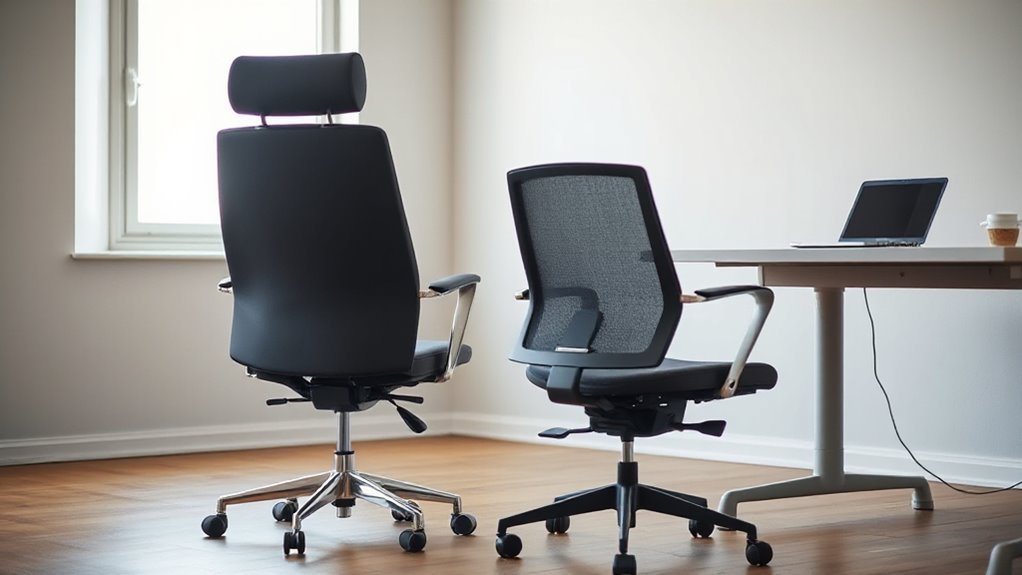
Mid-back chairs serve a variety of ideal use cases, particularly in settings where flexibility and space efficiency are key.
Consider these four scenarios:
- Short to Moderate Sitting: Best for tasks lasting under four hours, these chairs encourage movement and reduce stiffness.
- Compact Workspaces: Their streamlined design fits easily under desks, making them perfect for small offices or shared workstations.
- Dynamic Environments: Lightweight and easy to move, they support quick shifts between tasks or locations.
- Minimalist Designs: Their sleek aesthetic complements modern decor, fitting unobtrusively in open-plan spaces.
These use cases highlight the versatility of mid-back chairs, offering comfort and adaptability without sacrificing style or space.
Ideal Use Cases for High-Back Chairs
High-back chairs are essential for several specific use cases, providing extensive support and comfort for users in various environments. Professions requiring long sitting hours, such as 911 dispatchers and air traffic controllers, benefit from the full-body support these chairs offer.
They’re ideal for dedicated workstations, particularly in corporate offices and control rooms, where space accommodates their size.
Users with posture concerns find high-back chairs advantageous; they alleviate neck and back discomfort. Scenarios requiring maximum ergonomic support, like prolonged computer use, necessitate the extended backrest, which maintains the spine’s natural curve.
Additionally, settings prioritizing comfort and productivity, such as executive offices and customer service centers, frequently choose high-back chairs for their ability to enhance focus during extended work sessions.
Customization and Adjustability
When it comes to office chairs, the level of customization and adjustability greatly impacts comfort and support. High-back chairs typically offer more options, allowing you to tailor your seating experience.
Consider these key features:
- Adjustable Headrests: Support your neck and head as you recline.
- Multi-Point Lumbar Support: Customize height, depth, and firmness for lower back comfort.
- 4D Armrests: Adjust height, width, depth, and pivot to suit your needs.
- Reclining Backrests: Control tension for personalized posture support.
In contrast, mid-back chairs generally provide basic adjustments, limiting your options.
With fewer adjustment points, they mightn’t accommodate your unique body type as effectively. Opting for a high-back chair can notably enhance your ergonomic support and comfort throughout the workday.
Making the Right Choice for Your Workspace
How do you determine which office chair is best suited for your needs? Consider your workspace size and the tasks you perform.
Mid-back chairs, with backrest heights of 18-20 inches, support the lumbar and mid-spine, making them ideal for smaller areas and collaborative settings. They promote movement and are great for task-oriented work.
In contrast, high-back chairs, ranging from 22-30+ inches tall, provide extensive support for the entire spine, neck, and shoulders. They’re best for individuals sitting for long periods, particularly taller users over six feet.
If you need to convey professionalism, high-back chairs enhance authority, while mid-back chairs offer a modern aesthetic.
Choose based on your comfort needs and workspace requirements.
Frequently Asked Questions
Which Chair Is Better for Taller Individuals?
For taller individuals, high-back chairs are better. They provide extended back support, covering the lumbar, thoracic, and cervical regions, which promotes spinal alignment.
With a height of around 33 inches, they accommodate taller frames effectively. The design reduces strain on the neck and shoulders, enhancing comfort during long work periods.
Additionally, their superior lumbar support helps distribute weight evenly, allowing you to maintain good posture without discomfort throughout the day.
Can High-Back Chairs Fit Under Standard Desks?
Yes, high-back chairs can fit under standard desks.
Most high-back chairs, standing between 45 to 55 inches tall, usually accommodate desks that range from 28 to 30 inches in height.
With seat heights of 16 to 21 inches, they provide adequate clearance.
However, chairs with headrests or taller backrests may encounter issues under shorter desks or if obstructions exist.
Always measure your desk’s clearance for best compatibility.
Are Mid-Back Chairs Suitable for Gaming?
Yes, mid-back chairs are suitable for gaming. Their compact profile fits well in limited spaces, while adjustable lumbar support promotes spinal alignment during long sessions.
The lower backrest allows for dynamic movement, essential for gaming. Tilt functions enable customization for comfort in both gaming and work.
Compared to gaming chairs, mid-back designs offer better ergonomic support without restrictive seating, making them ideal for extended use in diverse environments.
How Long Do High-Back Chairs Typically Last?
High-back chairs typically last between 5 to 15 years, depending on build quality and materials.
Premium models can exceed 10 years with proper maintenance, while budget options may deteriorate within 5 years under intensive use.
Materials greatly impact longevity; steel frames and high-density foam outperform cheaper components.
Regular maintenance, including cleaning and lubrication, can extend their lifespan, while heavy use in demanding environments accelerates wear and tear, reducing overall durability.
Do Mid-Back Chairs Come With Adjustable Features?
Yes, mid-back chairs come with adjustable features. Many models include adjustable lumbar support, allowing you to customize spinal alignment.
You’ll find pneumatic seat height adjustment for ideal posture, enhancing comfort for various body types. Most chairs also feature height-adjustable armrests, providing upper body support.
Tilt mechanisms offer options for reclining and tension adjustment, enabling dynamic sitting. This combination of features promotes ergonomic benefits, making mid-back chairs suitable for extended use.
Conclusion
Choosing between a high-back and a mid-back office chair is like selecting the right tool for a specific task.
High-back chairs provide extensive support and are ideal for long hours of focused work. They help maintain posture and reduce neck and upper-back strain.
Mid-back chairs offer greater flexibility and ease of movement, making them well suited for collaborative environments. They allow more freedom when reaching or turning.
Base your choice on your workspace needs, body type, and comfort preferences. Evaluating these factors helps you invest in a chair that enhances productivity and promotes health, leading to a more efficient work experience.