How Much Weight Can a Standing Desk Converter Hold?
How Much Weight Can a Standing Desk Converter Hold?
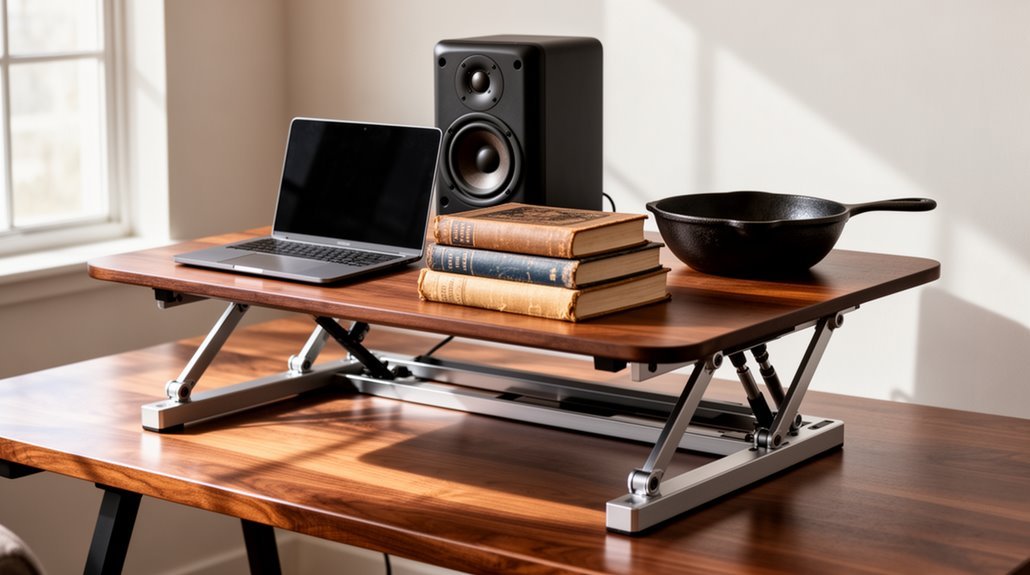
Standing desk converters typically hold between 22 and 110 pounds, depending on size and mechanism type. Smaller converters (about 26–28 inches wide) generally support 22–33 lbs, while larger models can handle up to 55 lbs.
Electric converters usually accommodate heavier loads, commonly in the 33–44 lb range, and many dual-monitor setups expect support around 33–44 lbs. Both frame design and weight distribution play essential roles in overall stability.
If you want to know more about specific brands and capacities, keep exploring product specifications and reviews to match the converter to your equipment.
Understanding Weight Capacity Ranges
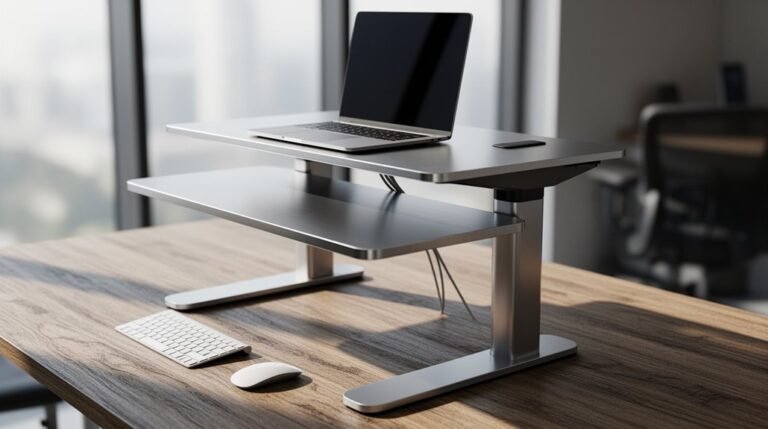
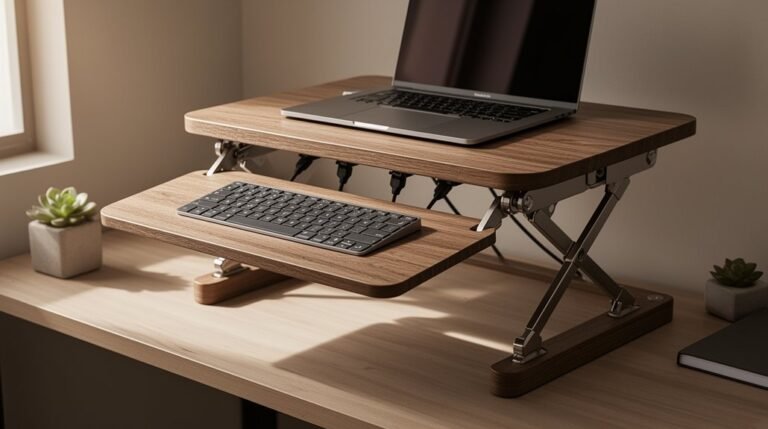
When choosing a standing desk converter, you’ll encounter a variety of weight capacities that typically range from 22 lbs to 55 lbs. Small converters, around 26-28 inches wide, usually hold 22-33 lbs. Medium models, measuring 32-36 inches, support 33-44 lbs. Larger converters, approximately 48 inches wide, can accommodate up to 55 lbs. The VariDesk Pro Plus 36, for example, has a weight capacity of 35 lbs, making it suitable for dual monitor setups. Keyboard trays generally hold less, about 4-5 lbs, and often require separate consideration. The design and materials of the converter, such as steel frames and pneumatic lifts, influence load capacity considerably. High-end or electric models can support up to 110 lbs, making them suitable for dual monitor setups or heavier equipment. Always check manufacturer specifications for accurate weight limits.
Factors Influencing Weight Capacity
Several vital factors determine the weight capacity of standing desk converters. Frame design plays a significant role; multi-leg configurations distribute weight more effectively than single-leg designs. For example, heavy-duty desks can support up to 535 pounds.
Material quality also impacts strength; high-grade steel and professional-grade welding enhance durability. The geometry of the frame affects stability, ensuring it can sustain heavy loads without wobbling. Additionally, weight distribution is essential; placing heavier items centrally reduces strain and increases stability.
Finally, the mechanism type influences lifting power; electric converters generally support heavier loads more effectively than manual or pneumatic systems. Electric systems generally provide higher load limits helps you choose a converter that meets your weight requirements safely.
Electric Vs Manual/Pneumatic Converters
Choosing between electric and manual/pneumatic standing desk converters involves understanding their weight capacity and operational efficiencies.
Electric models generally outperform manual options, supporting 33-44 lbs, while manual versions typically handle only 22-35 lbs.
Here are some key points to weigh:
- Electric converters, like the Mount-It! model, can support up to 98 lbs without motor strain.
- Manual converters require user effort for adjustments, making them less practical for heavier loads.
- Electric mechanisms distribute weight evenly, enhancing stability during use.
- Manual systems risk wobbliness when loaded near their maximum capacity. Additionally, the 36” Standing Desk Converter has a weight capacity of 33 lbs on its main surface, making it suitable for multiple monitors.
Ultimately, your choice should align with your workspace needs and the weight of your equipment.
Common Weight Capacity Specifications
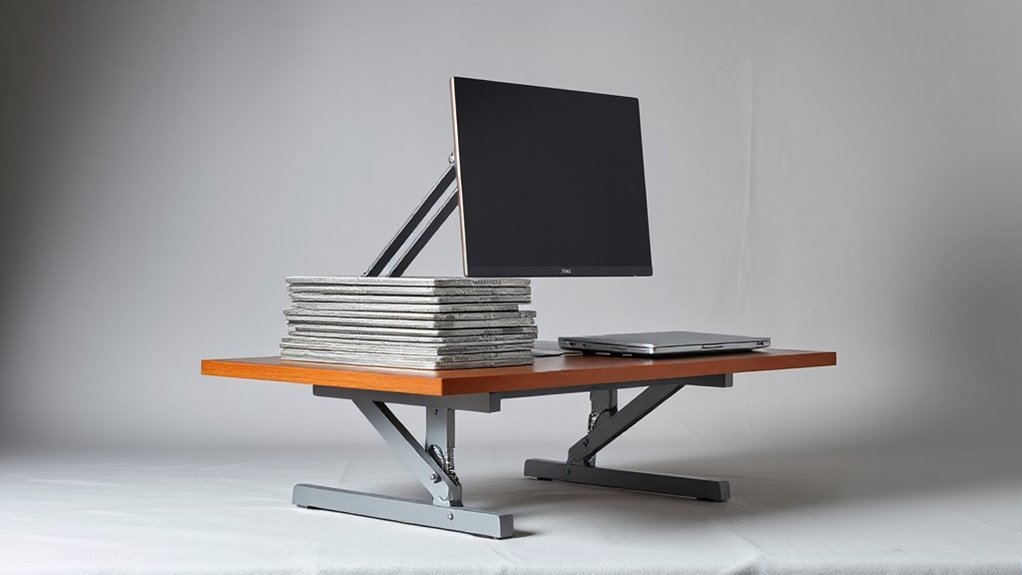
Most standing desk converters fall within a weight capacity range of 25 to 45 pounds, catering to various user needs.
Manual converters usually support lower limits, often 25 to 35 pounds. In contrast, electric models can hold more weight, sometimes reaching up to 110 pounds.
For those using dual monitors, expect support between 33 and 44 pounds. Keyboard trays, however, typically max out at 4 to 11 pounds.
It’s crucial to recognize that larger desktop surfaces often correlate with higher weight capacities. The build materials and converter design also play significant roles in determining stability and maximum load.
Exceeding these weight limits can cause instability, which affects performance and may shorten the lifespan of the converter.
Brand Examples and Specifics
Understanding the weight capacities of various standing desk converters can help you make an informed choice.
Here are some notable models you might consider:
- VariDesk Pro Plus 48: This model supports up to 45 lbs, perfect for dual-monitor setups.
- FlexiSpot M7B: It holds up to 33 lbs with a compact 28-inch work surface, ideal for small spaces.
- Mount-It! Electric Converter: It allows for 33 lbs on the main surface and features an electric lift for easy adjustments.
- UPLIFT Standing Desk Converter: This robust model supports up to 110 lbs, making it suitable for heavy-duty use.
Each of these converters has unique specifications tailored to meet different needs, ensuring you find the right fit for your workspace.
Practical Usage Recommendations
When using a standing desk converter, it’s important to follow specific guidelines to guarantee safety and functionality. One of the key benefits of a standing desk converter is improved posture, which can lead to reduced back and neck pain. Additionally, these converters promote better circulation and energy levels throughout the day, enhancing productivity. Many users also find that the ability to switch between sitting and standing boosts their overall comfort and focus during work hours.
First, check the manufacturer’s weight capacity, which typically ranges from 10–45 lbs for manual models and up to 110 lbs for electric ones. Distribute equipment evenly across the platform; place heavier items, like monitors, near the center to prevent tipping.
Avoid loading the converter at full extension, as higher positions can compromise stability. Always use the converter on stable, level surfaces to assure safe operation.
Leave space for equipment movement during height adjustments, and periodically inspect fasteners for tightness.
Finally, keep liquids and fragile items off the converter to minimize risks of spills or breakage.
Importance of Surface Size and Stability
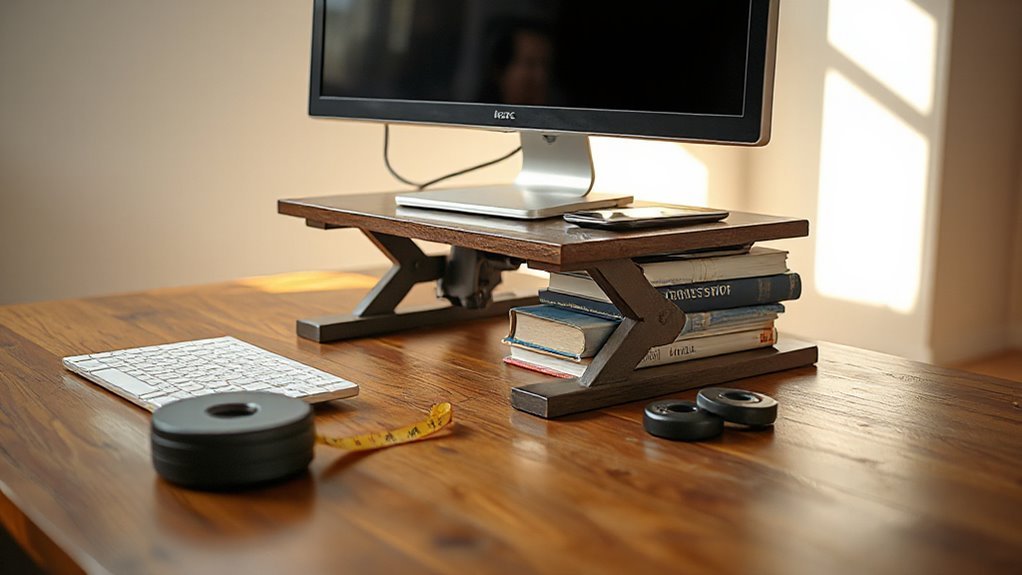
Surface size plays an essential role in the overall functionality and stability of a standing desk converter. A larger surface area distributes weight evenly, minimizing stress on single points. This stability is vital for maintaining balance, especially when fully extended.
Consider these factors:
- Wider platforms accommodate dual monitors, increasing overall weight loads.
- A recommended desktop depth enhances converter stability, preventing tipping.
- Larger bases reduce lateral sway, promoting a steady working environment.
- Integrated device slots keep items organized, enhancing functional stability.
Selecting a desk converter with appropriate surface size guarantees a safe and effective workstation.
Prioritizing both stability and surface dimensions leads to better ergonomic setups and improved productivity.
Warranty and Certifications to Consider
Warranty and certifications are vital elements to reflect on when choosing a standing desk converter. Warranties typically range from 3 to lifetime, depending on the brand and model. High-end brands like VariDesk often provide lifetime warranties, highlighting durability. Most standard warranties cover defects in materials and workmanship for 3 to 5 years.
Certifications, such as ANSI/BIFMA, guarantee safety and performance, while GREENGUARD certifications indicate low chemical emissions for improved air quality. Verify these certifications through manufacturer sites or third-party testing agencies.
Additionally, check for warranty exclusions related to misuse or weight limits, as exceeding these can void coverage. Understanding warranty terms and certification standards is vital for guaranteeing a reliable, safe standing desk converter.
Frequently Asked Questions
Can I Exceed the Weight Limit if I Distribute Weight Evenly?
You shouldn’t exceed the weight limit, even if you distribute weight evenly.
Manufacturers set maximum limits to guarantee stability and mechanical integrity. Even weight distribution can improve performance, but it doesn’t change structural limits.
Exceeding the limit risks mechanical failure, wobbling, or permanent damage. Always consult the product manual for specific guidelines and adhere to the recommended weights to maintain functionality and safety.
Prioritize longevity by following manufacturer recommendations strictly.
How Do I Know if My Converter Is Stable Under Heavy Loads?
To determine if your converter is stable under heavy loads, check its weight capacity specifications and stability features.
For instance, models like the UPLIFT Desk E7 require a minimum desktop depth of 26 inches for ideal support.
Additionally, converters with stability features, such as Dual Stability Bars or balanced weight distribution, minimize wobbling.
Confirm your work surface accommodates these requirements to enhance stability during use, especially when shifting between sitting and standing positions.
What Happens if I Overload My Standing Desk Converter?
Overloading your standing desk converter can lead to structural damage, functional impairments, and safety hazards.
Excess weight stresses joints, causing bending or cracking. You’ll notice diminished height adjustment speed and stability, increasing tipping risks.
Components may wear out faster, leading to costly repairs. Additionally, the warranty may be voided if damage occurs from exceeding weight limits.
Prioritize safe usage to maintain performance and longevity of your converter.
Are There Weight Limits for Additional Accessories Like Monitor Arms?
Yes, there are weight limits for additional accessories like monitor arms on standing desk converters.
Typically, monitor arms can support around 17.6 lbs (8 kg) per arm.
It’s essential to guarantee that the combined weight of the monitor and arm stays within the converter’s overall weight capacity.
Overloading risks instability and can compromise safety.
Regularly check weight distribution to maintain proper function and ergonomic adjustments, assuring a stable workspace.
Can I Use a Standing Desk Converter on a Sloped Surface?
No, you shouldn’t use a standing desk converter on a sloped surface.
These converters are designed for flat, level areas to guarantee stability. Using one on a slope increases the risk of tipping and mechanical failure. The lifting mechanisms won’t operate properly, and your equipment may slide off.
Most manufacturers recommend against this practice, as it can void warranties and lead to damage. Always prioritize using converters on even surfaces for safety.
Conclusion
In conclusion, standing desk converters typically support weight capacities ranging from 20 to 100 pounds. Factors like design type and surface stability affect the exact limit. Additionally, tips for improving desk stability can significantly enhance your workspace experience. Consider adjusting the height settings and evenly distributing weight across the surface to achieve optimal performance. Simple modifications can lead to increased comfort and productivity throughout your day.
For best results, choose a converter that matches your equipment’s weight. Always check the manufacturer’s specifications and warranty options.
Avoid imagining unrealistic loads — a desk that holds the weight of a small elephant is not practical. Choose a converter that maintains stability and functionality so your workspace stays efficient and safe.