Lumbar Support in Ergonomic Chairs Explained
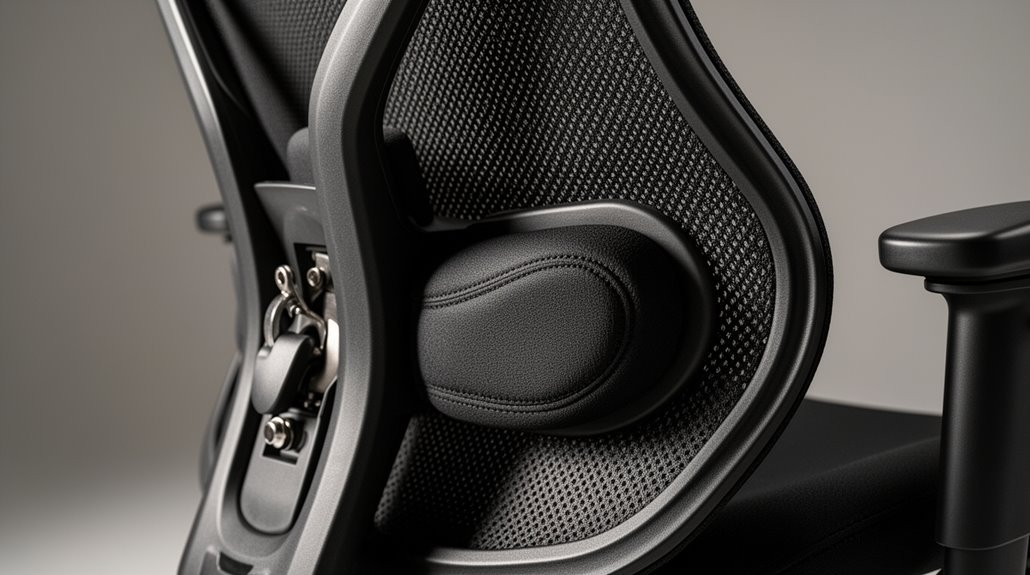
Lumbar support in ergonomic chairs is crucial for your lower back health. It promotes proper spinal alignment by adapting to the natural curve of your lumbar spine.
There are fixed, adjustable, and dynamic supports to meet different needs, enhancing comfort during long hours. Adjustable features like height and depth controls help you achieve ideal posture.
High-quality materials are used for durability and ventilation, ensuring the support lasts and stays comfortable. Knowing these details will help you find the perfect fit for improved well-being and productivity.
Definition and Purpose of Lumbar Support
Lumbar support refers to the additional structural reinforcement designed specifically for the lower spine, focusing on the lumbar region between the sacrum and lower vertebrae.
This support element is an integral part of chair design, either fixed or adjustable, and aligns with the spine’s natural S-shaped curvature. Positioned in the lower portion of a chair’s backrest, it fills the gap between your lower back and the chair seat when seated.
Its main purpose is to maintain proper spinal alignment, preventing the spine from collapsing into a C-shape. By doing so, it reduces muscle fatigue and discomfort, supports upright posture, and helps distribute body weight evenly across the spine, promoting overall health during prolonged sitting periods. Additionally, effective lumbar support maintains neutral posture, which is essential for back health.
Types of Lumbar Support
The various types of lumbar support in ergonomic chairs cater to different user needs and preferences.
Fixed Lumbar Support features a permanent backrest integration, providing basic support but lacking adjustability. It’s best for short sitting periods.
Adjustable Lumbar Support allows you to modify height, depth, and firmness, promoting better posture and accommodating multiple users. This type is particularly effective for maintaining the spine’s natural curve, which is crucial for preventing back pain.
Dynamic Lumbar Support automatically adapts to your posture, maintaining spinal alignment during movement, ideal for extended sitting sessions.
External Lumbar Support includes removable cushions or pillows, enhancing any chair’s comfort.
Technology-Enhanced Systems offer advanced features like multi-directional adjustments and dynamic shapes, ensuring precise support and reduced fatigue during long work hours.
Each type serves distinct ergonomic needs, so consider your personal requirements when choosing.
Mechanisms of Lumbar Support
Understanding how lumbar support mechanisms function is essential for optimizing ergonomic chair use. Height-adjustable lumbar supports align with your lumbar spine curve, while depth adjustments allow customization for different body shapes. Tension controls let you modify firmness to suit your preferences, and knob-based or slider systems enable precise positioning. Inflatable lumbar pumps provide real-time pressure adjustments for dynamic comfort.
Dynamic lumbar mechanisms adapt to your posture changes throughout the day, with 3D/4D systems offering multi-directional movement. Built-in flex padding conforms to your movements, ensuring continuous support. Proper posture is crucial for preventing discomfort and injury, making the right lumbar support even more indispensable.
Contoured backrests mimic the spine’s natural curve, integrating lumbar support directly into the structure. Finally, lumbar support remains effective with tilt and recline adjustments, enhancing comfort and alignment across various positions.
Importance for Posture and Spinal Health
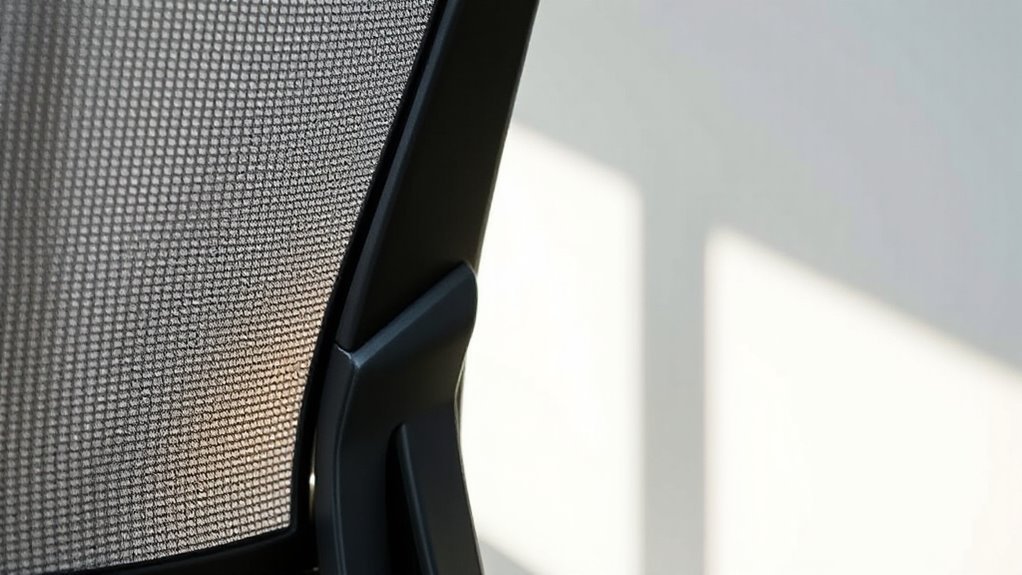
Proper lumbar support is essential for maintaining good posture and spinal health during extended periods of sitting. Ergonomic chairs with lumbar support help sustain the spine’s natural S-shaped curve, preventing forward slouching and shoulder rounding.
By encouraging upright sitting, these chairs reduce compensatory postures that strain your neck and upper back. Maintaining correct posture decreases muscle fatigue and strain across your musculoskeletal system.
In addition, lumbar support alleviates pressure on spinal discs, lowering the risk of compression and herniation. Supporting your lower back prevents chronic inflammation and nerve irritation, reducing the likelihood of conditions like sciatica.
Adjustability Features in Lumbar Support
How does adjustability enhance the effectiveness of lumbar support in ergonomic chairs?
Adjustable lumbar support systems allow you to modify height, depth, and, in some cases, firmness. Manual sliders or knobs enable precise positioning of the lumbar pad, ensuring it aligns with your lower back.
Advanced chairs may include inflatable lumbar pumps, allowing for personalized pressure levels. Dynamic or 3D/4D lumbar systems adapt to your body movements in real time, enhancing comfort.
These features work in conjunction with seat height and backrest adjustments, ensuring ideal lumbar contact. High-end chairs often offer adjustments across multiple axes, enabling fine-tuning to match your spinal curves.
This enhances overall chair functionality and supports dynamic sitting, contributing to your comfort during extended use.
Customization for Individual Needs
When you consider the variability in human anatomy, it’s clear that lumbar support needs to be customized for peak effectiveness. The lumbar spine’s natural curve differs among individuals, requiring tailored contours for optimal support.
Adjustable height and depth features guarantee proper alignment with your spine, accommodating various torso lengths and spinal shapes. This customization helps prevent slouching and spinal flattening during extended sitting.
Furthermore, some ergonomic chairs offer inflatable air pads, allowing you to modulate firmness based on daily comfort needs. Multi-directional systems provide fine-tuning options, adapting to your posture and activities.
Materials Used in Lumbar Support Design
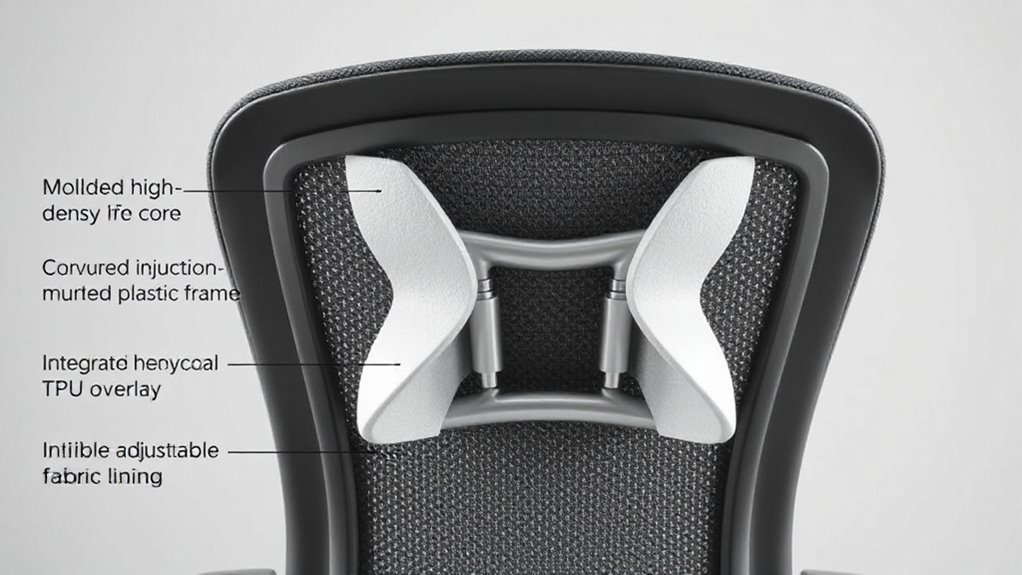
Ergonomic lumbar support relies on a variety of materials, each contributing specific benefits to enhance comfort and effectiveness.
Memory foam technology adapts to your body shape, providing personalized pressure relief while evenly distributing weight. High-density foam balances medium-firm comfort and performance.
Mesh construction offers breathable support, keeping you cool during long sessions, while the eight-zone Pellicle mesh adapts to your contours and maintains airflow.
Composite material systems combine layers of breathable mesh, memory foam, and TPE, guaranteeing even pressure distribution.
Adaptive cushioning materials like TEMPUR-Material™ mold to your unique shape and support healthy posture.
Durable, eco-friendly materials assure longevity and comfort, meeting rigorous safety standards for workplace use.
Each material plays a crucial role in enhancing your overall seating experience.
Impact on Work Productivity
While discomfort can hinder performance, lumbar support in office chairs plays a notable role in enhancing productivity. Ergonomic chairs reduce lower back, neck, and shoulder pain, promoting better focus.
When lumbar support maintains natural spine curvature, it prevents disc pressure and nerve root compression. This adjustment decreases muscle spasms, allowing for sustained attention.
Studies show a productivity increase of up to 15% when using these chairs. Additionally, reduced pain minimizes interruptions, maintaining workflow continuity.
Employees report greater satisfaction with ergonomic workstations, which correlates with higher engagement. Ultimately, investing in lumbar support not only boosts comfort but also notably enhances overall efficiency and work output, creating a more productive work environment.
Benefits of Proper Lumbar Support
Proper lumbar support offers significant benefits for maintaining spinal health and enhancing comfort during prolonged sitting. It helps maintain the natural S-shaped lordotic curve of your spine, preventing slumping and promoting ideal alignment.
This support corrects forward-leaning tendencies, enabling self-correction even after slouching begins. In addition, it decreases muscle strain and fatigue by distributing weight evenly across your back, which alleviates pressure on surrounding muscles.
Relief from spinal disc pressure reduces nerve irritation, preventing leg pain associated with poor posture. Moreover, proper lumbar support lowers the risk of chronic back pain, ensuring a more comfortable experience while seated.
Ultimately, it enhances overall well-being by promoting relaxation and encouraging dynamic movement throughout the workday.
Choosing the Right Lumbar Support for You
When selecting lumbar support that suits your needs, consider how your daily activities influence your posture.
Dynamic lumbar systems automatically adapt to movement, offering real-time support, ideal for those frequently shifting positions. If you prefer manual control, adjustable lumbar support lets you customize height, depth, and firmness to fit your spine’s natural curve.
Fixed lumbar supports provide consistent, non-adjustable support, suitable for stable seating preferences. Hybrid models combine fixed and adjustable features for moderate flexibility.
Evaluate materials like memory foam or mesh, which impact comfort and breathability.
Finally, consider chair adjustability, including seat height and angle, to guarantee full ergonomic alignment. This thorough approach helps you choose effective lumbar support tailored to your specific requirements.
Frequently Asked Questions
How Do I Clean and Maintain Lumbar Support in Chairs?
To clean lumbar support, start by removing the cushion.
Wipe it down with a soft, dry cloth to eliminate dust.
Use a vacuum with a soft brush attachment to remove trapped particles.
Apply a suitable cleaning product in small amounts.
Allow the cushion to air dry completely.
For maintenance, wipe weekly, deep clean monthly, and lubricate mechanisms annually to guarantee smooth operation and prevent stiffness.
Can Lumbar Support Help With Existing Back Pain Conditions?
Yes, lumbar support can help with existing back pain conditions.
It maintains the spine’s natural curve, reducing pressure on lumbar discs. When properly positioned, it prevents slumping, which minimizes strain on muscles and nerves.
Adjustable lumbar support adapts to your movements, often relieving chronic pain and stiffness.
While not a cure-all, it enhances comfort and spinal alignment, making it a practical choice for those experiencing lower back issues during prolonged sitting.
Is Lumbar Support Effective for Short-Term Sitting?
Yes, lumbar support is effective for short-term sitting. It enhances spinal alignment by promoting lumbar lordosis, which reduces muscle discomfort.
Studies show that using lumbar support decreases perceived discomfort ratings and spinal shrinkage during static sitting. This support prevents flattening of the lumbar spine, addressing localized strain.
Furthermore, individuals experience lower back pain intensity and improved comfort levels, especially after prolonged periods of sitting, leading to significant cumulative benefits throughout the day.
Does Lumbar Support Assist With Other Body Areas Besides the Lower Back?
Yes, lumbar support assists with areas beyond the lower back. It promotes better posture, reducing tension in the thoracic spine and shoulders.
Improved alignment enhances circulation, decreasing fatigue in extremities. By stabilizing spinal alignment, it reduces pelvic stress and hip discomfort.
Proper lumbar support also limits muscle strain, potentially alleviating neck and upper back pain.
What Is the Average Lifespan of Lumbar Support in Ergonomic Chairs?
The average lifespan of lumbar support in ergonomic chairs ranges from 5 to 10 years.
High-quality options, typically priced between $800 and $1,200, can last over 10 years with proper care.
Factors influencing this lifespan include material quality, usage frequency, and maintenance practices.
For instance, mesh backrests may last up to 15 years, while memory foam generally lasts within the standard range, depending on user habits and adherence to weight capacity guidelines.
Conclusion
Proper lumbar support is essential for maintaining good posture and spinal health.
For example, one study found that employees using ergonomic chairs with adjustable lumbar support reported a 30% decrease in back pain after six months.
With various types and features available, you can choose the right lumbar support tailored to your needs.
Prioritizing this aspect of your seating can greatly enhance comfort and productivity, making it an important investment for both home and office environments.