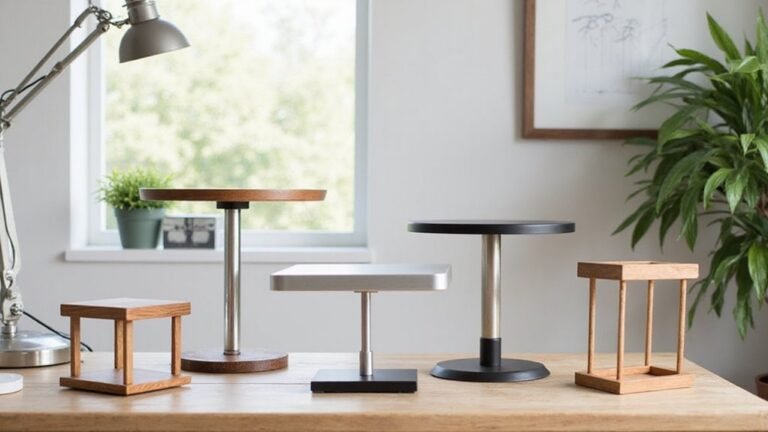
DIY Footrest Ideas for Your Desk
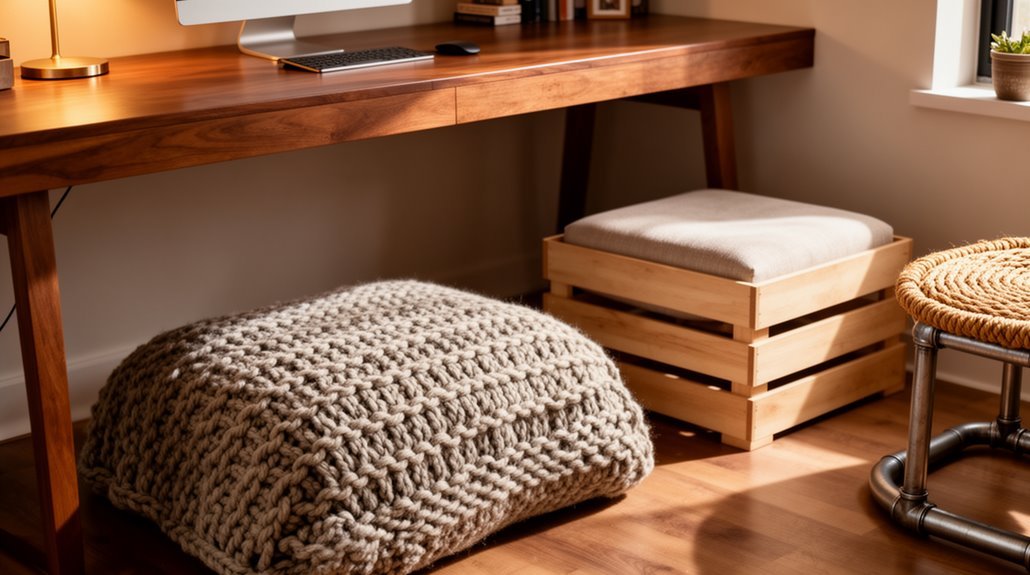
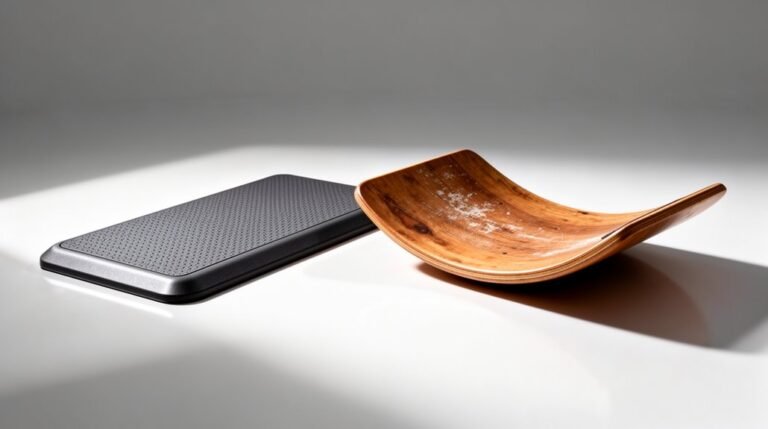
DIY footrest ideas for your desk can improve comfort and posture while you work. Start with materials like plywood cut to about 12″ to 15″ in length and ¾″ in thickness to provide a sturdy base.
Use precise cutting tools, such as a jigsaw, and pre-drill holes to prevent splitting. A multi-slat design adds stability and can make the footrest lighter and easier to move.
Incorporate decorative patterns or finishes for a personalized touch. Adjustable brackets let you set custom angles, and non-slip pads will protect floors and keep the footrest from sliding.
You’ll find more innovative methods and ideas below to customize size, materials, and features to suit your workspace.
Benefits of Using a Footrest
When you use a footrest, you enhance your overall seating posture and comfort. Footrests support proper posture by keeping your feet grounded, maintaining the pelvis’s natural curve. This alignment reduces lumbar flattening and spinal disc pressure. Using a footrest can also significantly improve blood circulation, as it helps to boost circulation when adjusted to a natural angle.
Improper foot positioning can lead to posterior pelvic tilt, increasing strain on your back muscles; footrests neutralize the pelvis, alleviating this strain. Using a footrest also minimizes slouching, which often causes muscle tension and spinal stress. Improved posture decreases neck and shoulder strain, promoting better arm and wrist alignment.
Simple Board Construction Methods
To create an effective footrest, select appropriate materials and dimensions first. Use scrap wood, plywood, or standard lumber, like 1×10 or 1×3 boards. Aim for board lengths around 12″ to 15″, depending on your desired footrest size. A thickness of ¾″ plywood or 1″ boards provides sturdiness without adding unnecessary weight. A footrest can improve overall sitting comfort while you work at your desk.
Mark your cut lines carefully with a measuring tool and pencil, especially for angled cuts. Utilize a miter saw or jigsaw for precise cuts. Pre-drill holes before attaching screws to prevent splitting.
When assembling, combine wood glue with 1¼″ to 1½″ screws for secure joints. Finally, sand all edges thoroughly to guarantee a smooth finish and safety during use.
Multi-Slat Assembly Techniques
Utilizing multi-slat assembly techniques guarantees robust construction and aesthetic appeal in your footrest design. These methods confirm that your footrest is both sturdy and visually pleasing.
Here are four key techniques to take into account:
- Mortise and Tenon Joinery: This method requires 16 total mortises for strong connections between slats and crosspieces.
- Dado Cutting: Use a router sled for consistent 3/4-inch-wide dadoes, ensuring no material splits during shallow passes. Additionally, ensure that your cuts are precise, as the accuracy of cuts is crucial for achieving a seamless fit.
- Spacer Utilization: Placing spacers between slats maintains uniform gap widths, promoting even alignment.
- Notching Systems: Downward-pointing notches fit into upward-pointing notches, creating a self-supporting grid without extra fasteners.
These techniques enhance durability while simplifying the assembly process, allowing for a professional finish on your DIY footrest.
Decorative Patterned Designs
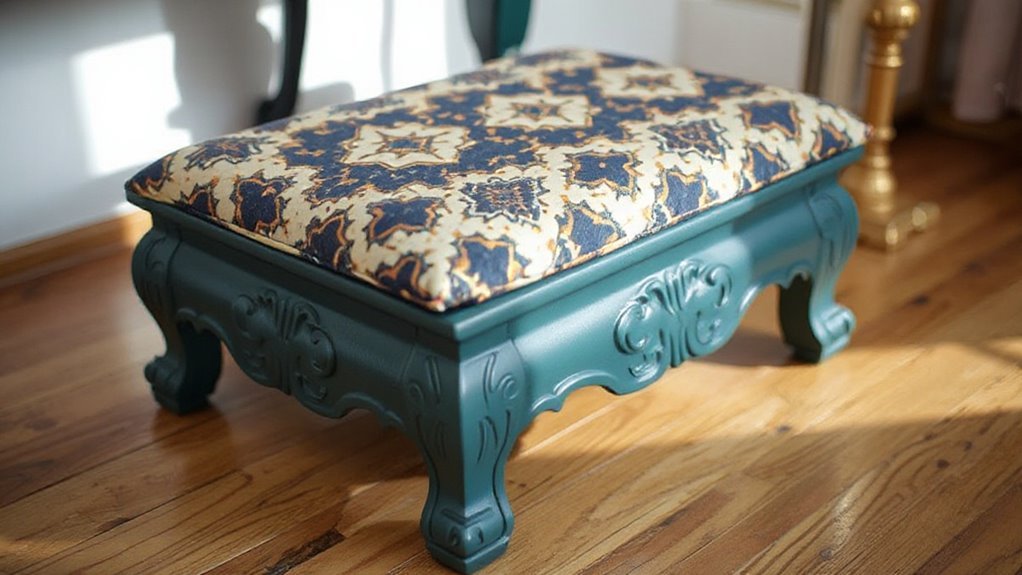
Decorative patterns greatly enhance the visual appeal of footrests, allowing for a blend of style and functionality in your workspace.
Traditional rug motifs, like Turkish or Persian prints, add sophistication and color. Geometric and abstract designs offer a modern aesthetic, perfect for contemporary settings. Floral patterns provide a softness that connects elegance with nature.
Textured details, such as embroidery or appliqué, create an artisanal look, often found in handmade options. Fabrics like velvet or boucle add tactile richness, enhancing luxury.
Choosing contrasting colors between footrests and surrounding furniture draws attention, while neutral tones maintain a harmonious atmosphere. Bold colors can transform footrests into statement pieces, making them integral to your overall décor scheme.
Hardware and Finishing Options
When building a DIY footrest, selecting the right hardware and finishing options is essential for both functionality and longevity. Consider these components:
- Adjustable brackets or hinges: Customize the footrest angle for ideal ergonomic support.
- Non-slip rubber pads: Secure the footrest’s position and protect your floor from scratches.
- Screws of various lengths: Use appropriate screws for assembling wooden or MDF footrests effectively.
- Powder coating or polyurethane varnish: Enhance durability and aesthetics, providing a protective layer against wear and moisture.
Implementing these hardware and finishing details guarantees your footrest isn’t only sturdy but also visually appealing, creating a comfortable workspace for prolonged use.
Prioritize these features to maximize your footrest’s performance and lifespan.
Material Lists and Tool Requirements
Building a DIY footrest requires careful selection of materials and tools to secure a sturdy and comfortable design. For the structure, use pine lumber, Baltic birch plywood, or hardwood floor boards, guaranteeing a minimum thickness of 1/2″ for support.
Dimensions typically range from 14-24 inches long and 8-10 inches wide.
For cushioning, select a 4-inch thick foam pad, covering it with about 1 yard of fabric. Don’t forget batting for softness and optional dust cover fabric.
You’ll need finish nails, wood screws, wood glue, and clamps for assembly. Equip yourself with a miter saw, jigsaw, or table saw for cutting, and a drill/driver for pilot holes.
Finally, sandpaper secures smooth edges for comfort.
Tips for Personalizing Your Footrest
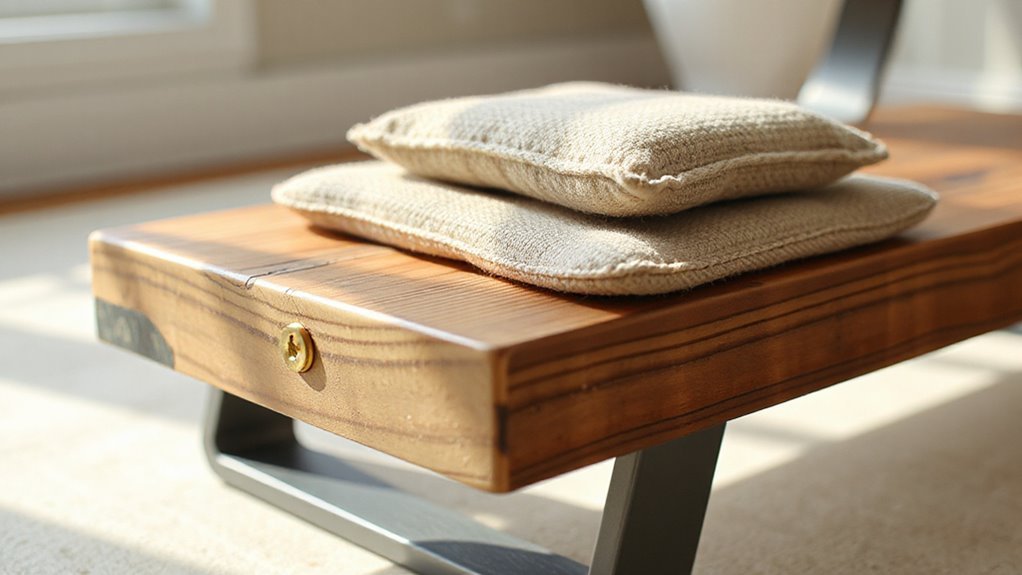
Personalizing your footrest can greatly enhance your comfort and functionality. Consider these tips for effective customization:
- Design Angle: Choose an angle between 10° and 20°, with 15° being standard. Adjust based on your thigh clearance and sitting position.
- Size and Dimensions: Guarantee the footrest accommodates your entire foot, maintaining a minimum thigh clearance of 7 inches. Match width and depth to your foot size.
- Surface Finish: Use a clear top coat like polyurethane for durability. Consider stains or paints that match your office decor.
- Stability Features: Install rubber feet to prevent slipping. Sand edges to eliminate sharp surfaces, guaranteeing a safe and stable design.
These customizations will improve your overall workspace ergonomics.
Frequently Asked Questions
What Is the Ideal Height for a Footrest?
The ideal height for a footrest typically ranges from 3.5 to 8.5 inches, depending on your leg length and desk height.
It should allow your thighs to remain parallel to the floor, with your knees bent at approximately 90 degrees.
If you’re using a fixed-height desk, guarantee your footrest supports your feet flat on the surface.
A footrest that adjusts to various heights can enhance comfort and improve your overall seating posture.
Can I Use Recycled Materials for My Footrest?
Yes, you can use recycled materials for your footrest. Salvaged wood, like pallets or hardwood floorboards, offers durability and cost effectiveness. Properly cleaned and sanded, these materials guarantee a smooth surface.
You can customize height with scrap wood elements. Additionally, using recycled materials diverts waste from landfills, supporting sustainability. Basic woodworking tools are sufficient, making the project accessible.
How Do I Maintain My Footrest Over Time?
To maintain your footrest over time, regularly dust it with a soft cloth to prevent dirt buildup.
Wipe with a damp cloth, then dry to avoid moisture damage. For stains, use mild soap solutions.
Inspect joints and screws, tightening or replacing as needed. Store it in a dry area, avoiding heavy objects.
Apply a protective sealant annually, and monitor for wear to enhance durability and maintain functionality.
Are There Any Safety Concerns With Footrests?
Footrests present several safety concerns.
First, verify the surface is non-slip to prevent feet from sliding off. An unstable footrest can cause falls, so check for wobbliness.
Proper sizing is essential; footrests should be 15-18 inches wide and 11-13 inches deep. Height should allow flat feet with slightly elevated knees.
Finally, use durable materials to avoid collapse, and minimize clutter around the footrest to prevent tripping hazards.
Can Footrests Help With Leg Circulation Issues?
Yes, footrests can greatly improve leg circulation issues.
Research shows that footrests angled between 15 and 30 degrees enhance blood flow, reducing swelling and discomfort. They encourage subtle movements, promoting venous return and preventing blood pooling.
Additionally, elevating your feet decreases pressure on the thighs, which helps open blood vessels. Regular use can lead to warmer extremities and less leg fatigue, ultimately lowering the risk of developing circulatory problems.
Conclusion
In the domain of workspace comfort, a footrest is like the sturdy bridge connecting relaxation and productivity.
By incorporating various construction methods, decorative designs, and personalized touches, you’s can create a functional piece that enhances your desk experience.
With the right materials and tools, your custom footrest can considerably improve posture and reduce fatigue.
Embrace the journey of crafting your own solution; it’s not just a project, but a step towards a more ergonomic workspace.