Standing All Day Vs Sitting: Find the Right Balance
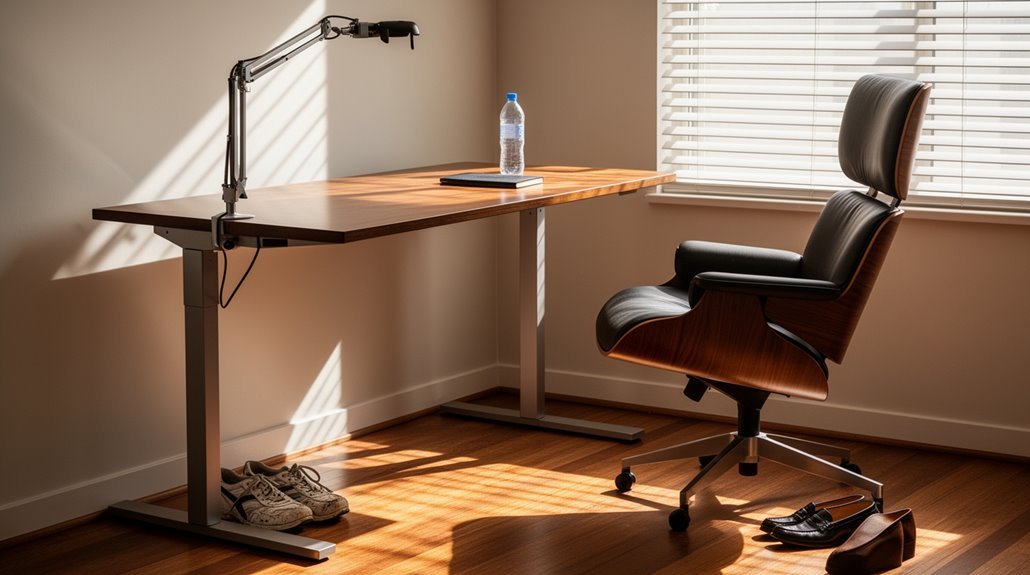
Standing all day vs sitting: finding the right balance starts with understanding the risks of each.
Prolonged sitting increases cardiovascular risk, while extended standing can cause musculoskeletal pain. To reduce both, alternate between sitting and standing throughout the day.
Aim for 10–15 minutes of standing every hour; standing can boost calorie burn by roughly 50 calories compared to sitting. Use an adjustable desk to optimize ergonomics and keep your monitor at eye level.
Incorporate micro-breaks for light movement every 20–30 minutes to improve circulation and energy. Explore additional strategies to enhance comfort and productivity.
Understanding the Health Risks of Prolonged Sitting
As you sit for extended periods, your body experiences a range of health risks that can considerably impact your well-being.
Prolonged sitting increases your risk of cardiovascular issues, such as heart disease and heart failure, by 40-60% when you exceed 10.6 hours per day. This sedentary behavior reduces blood circulation, directly contributing to heart attacks. Moreover, individuals predominantly sitting at work have a significantly higher risk of all-cause mortality.
Additionally, extended sitting is associated with metabolic problems, raising your likelihood of obesity and type 2 diabetes. Studies show that for every additional two hours of sitting, obesity risk jumps by 5%, while diabetes risk climbs by 7%.
Your posture suffers too; neck and lower back pain are prevalent among those who sit for long hours, leading to musculoskeletal disorders.
The Dangers of Extended Standing
Prolonged standing can lead to significant health issues, affecting your musculoskeletal system, cardiovascular health, and overall well-being. The risks increase significantly when standing exceeds eight hours regularly.
Consider these dangers:
- Musculoskeletal Pain: Extended standing pressures joints, causing pain and reducing mobility, especially in the lower back and feet.
- Cardiovascular Complications: Blood pools in your legs, decreasing venous return and increasing the risk for conditions like chronic venous insufficiency and high blood pressure. Prolonged standing is associated with higher risk for cardiovascular disease and chronic venous disorders.
- Postural Problems: Poor posture develops, leading to slouching, which strains neck and shoulder muscles, causing discomfort and stiffness.
Awareness of these issues is essential for maintaining your health while balancing standing and sitting throughout the day.
The Role of Standing Desks in Workplace Ergonomics
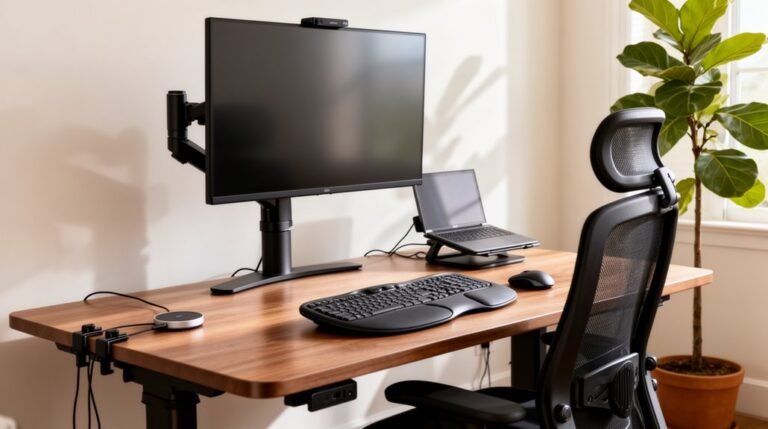
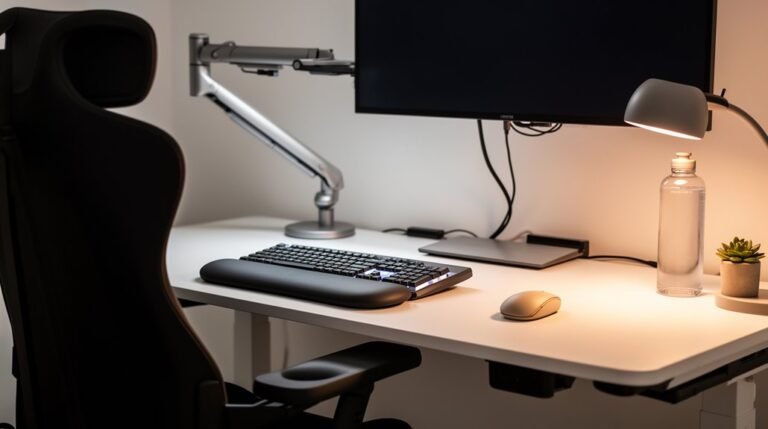
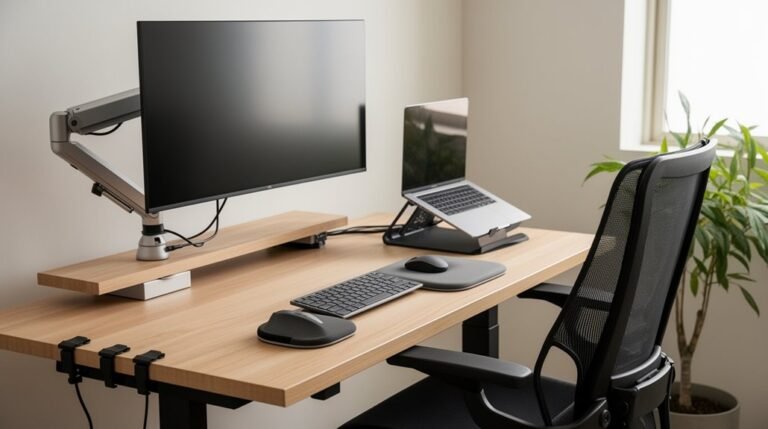
While many offices still rely on traditional sitting desks, height-adjustable desks offer a versatile solution for improving workplace ergonomics. Height-adjustable desks allow you to alternate between sitting and standing, enhancing comfort and reducing muscular pain. Proper monitor height should be at eye level, about 20 inches from your face, while your arms should bend at roughly 100 degrees to minimize strain. Using comfortable standing mats and supportive shoes can further reduce strain on your knees and lower back. Standing increases calorie burn by about 20% compared to sitting, improving overall health. Additionally, employees report enhanced focus and energy levels, potentially boosting productivity. Research shows that height-adjustable desks are effective for improving wellbeing at work, leading to small improvements in stress and overall health. Prioritizing these ergonomic principles can lead to a healthier and more efficient work environment.
Benefits of Alternating Between Sitting and Standing
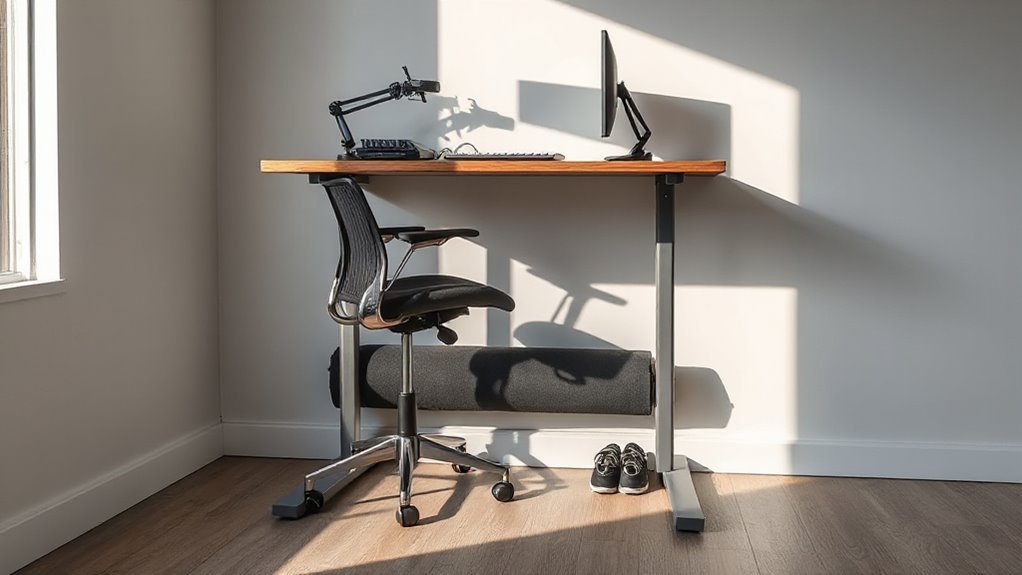
Alternating between sitting and standing throughout your workday greatly enhances your overall well-being. This practice improves circulation and reduces discomfort associated with prolonged sitting.
As you switch positions, you can experience increased alertness and cognitive function, making tasks easier to manage.
- Alternating positions reduces musculoskeletal discomfort, especially in the neck and lower back.
- Standing burns approximately 50 more calories per hour than sitting, promoting better metabolic health.
- Enhanced circulation helps prevent fatigue and supports sustained energy levels throughout the day.
Recommendations for Maintaining a Healthy Balance
Maintaining a healthy balance between sitting and standing is key to maximizing the benefits of both positions. Start with standing intervals of 10-15 minutes per hour, gradually increasing by 5 minutes daily.
Use timers to remind you to switch every 30-60 minutes. Implement micro-breaks every 20-30 minutes for light movement, like stretching.
Set up your workspace ergonomically; adjust desk height so the monitor is at eye level and guarantee elbows remain at a 90-degree angle. Incorporate regular stretching routines and walking breaks every 30 minutes.
Focus on maintaining a natural spine curve and evenly distribute weight while standing. Experiment with different sit-stand ratios, adjusting based on your comfort and physical condition.
Frequently Asked Questions
How Often Should I Take Breaks During Work Hours?
You should take breaks every 75-90 minutes during work hours. This timing aligns with natural brain function cycles, enhancing focus and memory retention.
For shorter tasks, using the Pomodoro Technique—25 minutes of work followed by a 5-minute break—can be effective.
In physically demanding jobs, aim for a 15-minute break every two hours.
Frequent breaks help reduce mental fatigue, improve productivity, and lower the risk of injury.
What Are Some Effective Exercises to Do While Sitting?
Studies show that sedentary behavior increases the risk of chronic diseases by 147%. To counteract this, try these seated exercises:
Desk Chair Leg Lifts engage thigh muscles; perform 10-15 reps per leg.
Seated Leg Extensions improve quadriceps strength; complete 10 reps.
Hamstring Stretch reduces tightness; hold for 2-3 breaths.
Calf Raises enhance circulation; lift heels while seated.
Incorporate these movements regularly to maintain mobility and reduce stiffness throughout your workday.
Can Standing Desks Worsen Existing Back Pain?
Yes, standing desks can worsen existing back pain. Prolonged standing without movement increases stress on spinal joints, potentially exacerbating discomfort.
If you maintain a static position for too long, you may experience muscle fatigue and strain. To mitigate these effects, alternate between sitting and standing, ideally every 30–40 minutes.
Incorporating movement breaks, adjusting desk height, and using anti-fatigue mats can also help optimize comfort and reduce the risk of worsening pain.
How Can I Improve Posture While Sitting or Standing?
To improve your posture, align your ears with your shoulders and hips.
When sitting, keep your feet flat on the floor, knees at a 90-degree angle, and support your lower back.
While standing, distribute weight evenly on both feet, engage your core, and avoid locking your knees.
Use ergonomic chairs and adjustable desks to maintain ideal alignment, and take frequent breaks every 20-30 minutes to prevent stiffness and promote movement.
Are There Specific Shoe Types That Help Reduce Fatigue From Standing?
Supportive shoes act like a cushion for your feet.
Look for models with EVA foam or gel insoles; they absorb shock and relieve pressure. Shoes with built-in arch support distribute weight evenly, minimizing strain.
Opt for those with rigid soles for stability, and slip-resistant outsoles for safety.
Durable materials, like breathable mesh, enhance comfort and longevity, ensuring they withstand long hours on your feet while maintaining performance.
Conclusion
To sum up, you need to strike a balance between sitting and standing for ideal health. Research shows that prolonged sitting can lead to various health issues, while extended standing poses its own risks, such as increased fatigue and discomfort.
Incorporating a standing desk can enhance workplace ergonomics, but it’s crucial to alternate between both positions. Aim for a routine that includes movement breaks and stretches to promote circulation and reduce strain.
Prioritizing this balance can improve your overall well-being.