Health Benefits of Standing Desks
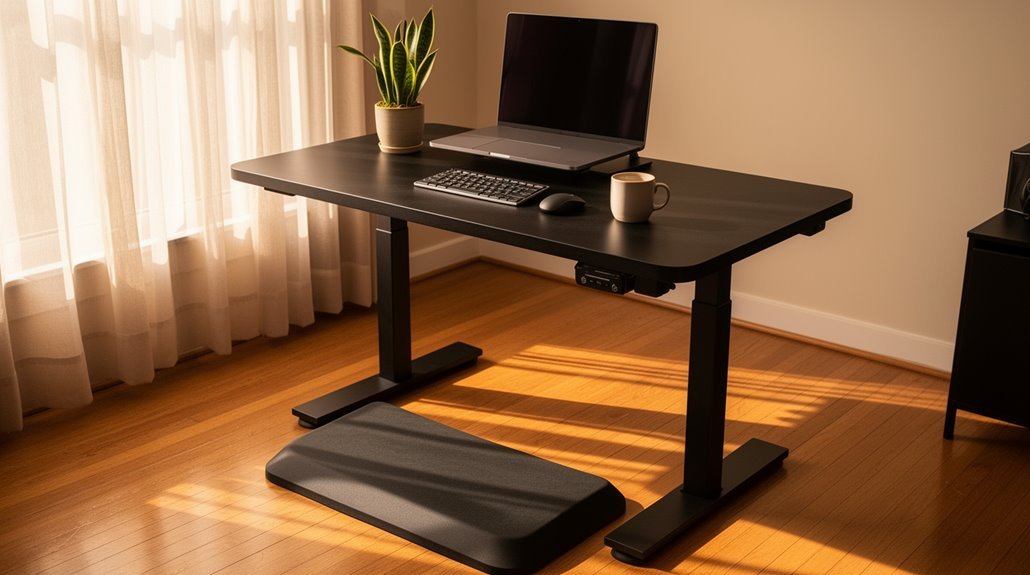
Standing desks effectively reduce sitting time by 62 to 90 minutes daily, improving musculoskeletal health and reducing discomfort in areas like the neck and lower back.
Regularly alternating between sitting and standing elevates energy levels and enhances focus. Users often report better cognitive function and improved memory retention when they switch positions throughout the day.
Standing can also lower blood glucose levels and improve circulation, contributing to overall metabolic and cardiovascular health.
If you’re curious about optimizing your standing desk experience, there’s more to explore on proper usage and ergonomic considerations.
Reduced Sitting Time
Studies demonstrate that using sit-stand desks effectively reduces overall sitting time. Research shows average full-day sedentary behavior reductions range from 62 to 78 minutes per day at intervals of 3, 6, and 12 months compared to control groups. During working hours, users experience sitting time reductions of 48 to 88 minutes daily, observed at 9 weeks, 3, 6, and 12 months. One study reported a notable average reduction of approximately 100 minutes per day after introducing these desks. Baseline work sitting time, typically around 60%, dramatically decreases in intervention groups, while control groups show little change after 3 months. However, it’s important to note that prolonged sitting is associated with negative cardiovascular health outcomes.
Musculoskeletal Health Improvements
Using sit-stand desks can lead to significant improvements in musculoskeletal health, particularly by reducing discomfort in the neck, shoulders, and lower back.
Research shows that alternating between sitting and standing decreases strain on muscles and joints, enhancing physical comfort. Studies confirm that sit-stand desks result in notable reductions in neck and shoulder pain compared to traditional seated workstations. Additionally, standing improves posture, especially for individuals with forward head posture, and reduces muscle fatigue in key areas like the upper trapezius. Furthermore, users of sit-stand desks often report increased energy levels, which can contribute to overall well-being during work hours.
Enhanced Subjective Health and Wellbeing
When employees adopt sit-stand desks, they often experience considerable enhancements in their subjective health and wellbeing.
Research highlights several key benefits:
- Pain Reduction: Users report decreased neck and shoulder discomfort, with about 47% noting improvements in these areas.
- Increased Energy: Engagement levels rise markedly, with workers feeling more refreshed and energetic during tasks.
- Reduced Fatigue: Alternating positions every 30 minutes helps lower physical fatigue and discomfort, especially later in the workday. This practice aligns with recommendations from ergonomics specialists regarding the importance of regular movement throughout the day.
- Improved Mental Wellbeing: Users experience modest increases in concentration and positive mood, contributing to better overall mental health.
These factors contribute to an improved perception of health, making sit-stand desks a valuable addition to workplace environments.
Cardiovascular and Metabolic Effects
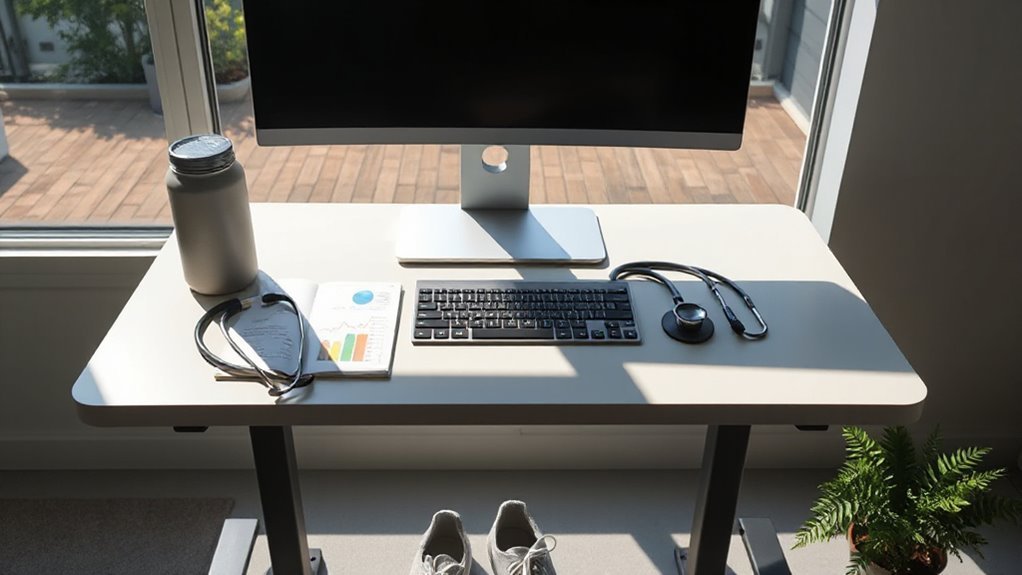
As more people incorporate sit-stand desks into their work routines, the implications for cardiovascular and metabolic health become increasingly evident.
Long-term use of these desks can reduce sedentary time by about 90 minutes daily for overweight and obese office workers. Improved lower extremity vascular function is noted, measured by superficial femoral artery flow-mediated dilation.
However, prolonged static standing may increase aortic arterial stiffness, a potential indicator of early cardiovascular disease. Replacing 1.33 hours of sitting with standing modestly lowers fasting blood glucose levels, and small reductions in body fat mass are observed.
Yet, standing desks don’t greatly alter insulin resistance or improve overall metabolic health. Regular movement remains vital for ideal vascular function and metabolic benefits.
Cognitive Function and Work Performance
Research indicates that standing desks can enhance cognitive function and work performance in various measurable ways.
Studies show significant improvements in executive function and working memory. Here are some key findings:
- Attention and Concentration: Standing individuals outperformed seated peers by 32 milliseconds on attention tests, with improved reasoning scores when standing or walking.
- Memory Function: Working memory capabilities enhanced through regular standing desk use, correlating with optimized blood glucose levels.
- Cerebral Circulation: Better blood flow is noted in critical brain regions, supporting cognitive processing.
- Typing Performance: Typing speed remains largely unaffected, with maintained accuracy during shifts from sitting to standing.
These factors collectively illustrate how standing desks can boost cognitive efficiency and overall work performance.
Benefits for Weight Management
Standing desks offer a unique advantage for weight management by increasing daily calorie expenditure. When you stand, you burn approximately 88 calories per hour compared to 80 calories while sitting, resulting in an 8-calorie difference.
Over six hours, a 143-pound person can burn an additional 54 calories. If you maintain consistent food intake, this could lead to a theoretical weight loss of 5.5 pounds annually.
However, while standing desks can facilitate a modest weight loss of about 4 pounds per year by burning an extra 64 calories daily, they serve primarily as a supportive tool rather than a primary weight loss solution.
Small movements while standing further enhance calorie expenditure, promoting increased metabolic activity throughout the day.
Long-term Health Risks Reduction
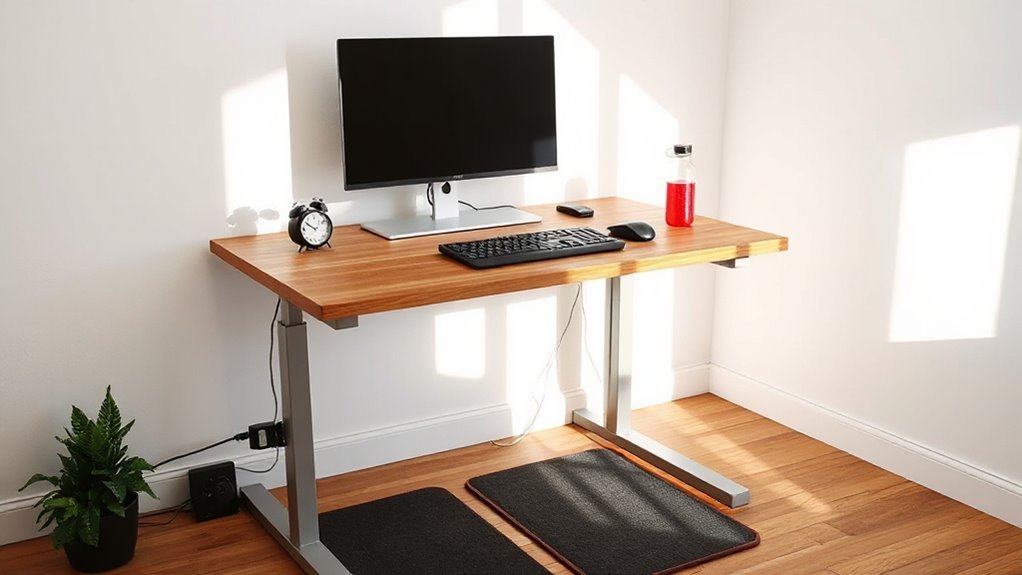
Incorporating sit-stand desks into your daily routine can greatly reduce various long-term health risks associated with prolonged sedentary behavior.
Here are some key benefits:
- Decreased Musculoskeletal Discomfort: Users experience less neck, shoulder, and lower back pain after six months of alternating positions.
- Lower Fatigue Levels: Regular movement improves circulation, resulting in reduced post-work fatigue.
- Reduced Risk of Chronic Disorders: Standing intermittently supports core muscles, which can help prevent joint degeneration and arthritis.
- Lowered Sedentary Time: Sit-stand desks greatly cut down sitting duration, reducing risks linked with prolonged sedentary behavior, including increased mortality rates.
Effects on Mood and Energy Levels
Utilizing sit-stand desks can greatly impact your mood and energy levels throughout the workday. Research shows that standing desks reduce anxiety and improve overall mood. After four weeks of use, employees reported decreased tension and confusion. Reduced sitting time correlates with fewer depressive symptoms and lower anxiety levels.
Standing burns approximately 7.25 additional calories per hour compared to sitting, leading to increased energy expenditure. Many users feel more energized and healthier after implementing standing desks.
Over six months, post-work fatigue greatly decreased. Enhanced task engagement and alertness occur during standing periods, improving concentration and productivity.
Regular use of standing desks contributes to sustained mood benefits and increased ability to finish tasks, enhancing both mental and physical well-being.
Behavioral Interventions for Maximum Impact
Behavioral interventions play an essential role in maximizing the impact of sit-stand desks in the workplace. Implementing effective strategies can enhance desk usage and improve overall health outcomes.
Consider these approaches:
- Combine sit-stand desks with psychoeducational sessions to increase effectiveness.
- Use tailored ergonomic guidance alongside gradual increases in standing time for better adherence.
- Deliver motivational nudges, such as emails or prompts, regularly to enhance user autonomy.
- Foster peer support and social recommendations to improve intervention success.
These multicomponent interventions, especially when combined with gradual implementation strategies, can greatly reduce sitting time.
Engaging users through structured prompts and social support networks leads to sustained desk utilization and positive behavioral change.
Considerations for Use and Ergonomics
To maximize the health benefits of standing desks, you need to pay close attention to ergonomics and proper setup.
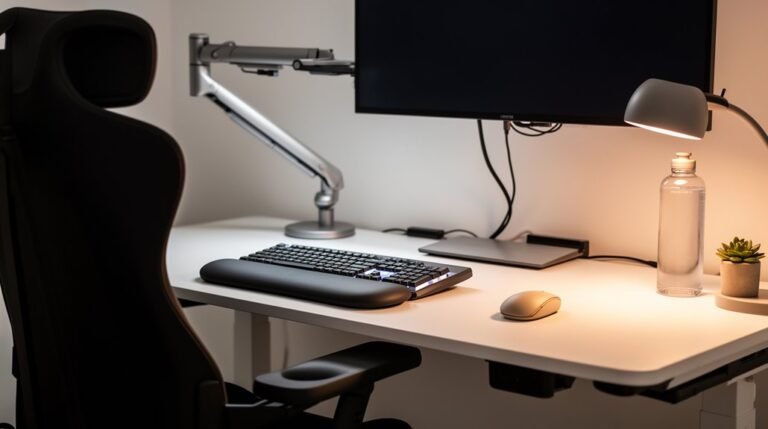
Verify your desk height allows your elbows to form a 90-degree angle, keeping your forearms parallel to the floor. Position your monitor so the top is at or slightly below eye level, about an arm’s length away, to reduce neck strain.
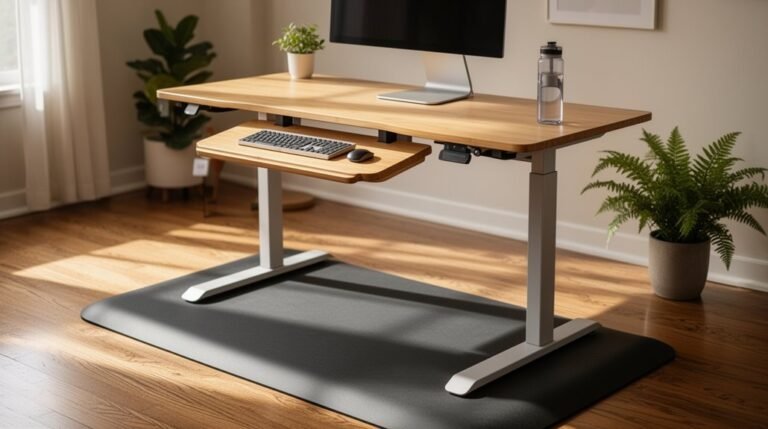
Maintain a natural spine curvature, with feet hip-width apart and knees slightly bent. Wear supportive shoes and use an anti-fatigue mat for comfort.
Alternate between sitting and standing regularly, following the 20-8-2 rule: 20 minutes sitting, 8 minutes standing, and 2 minutes of movement.
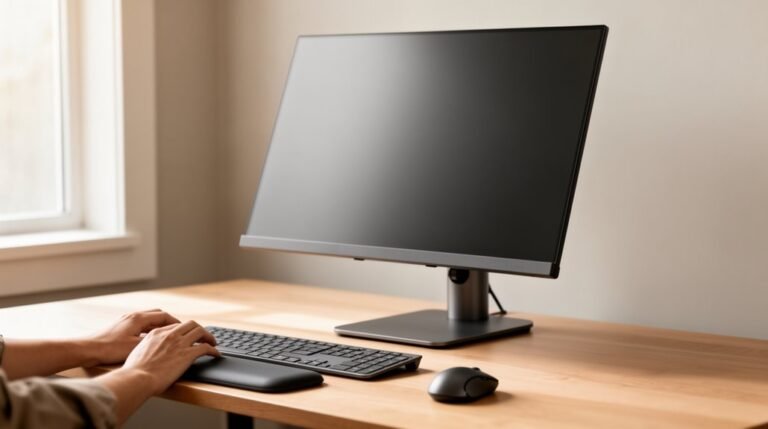
Adjust your equipment to maintain relaxed elbows and neutral wrist posture during use.
Frequently Asked Questions
Can Standing Desks Replace Regular Exercise Routines?
Standing desks can’t replace regular exercise routines. They help reduce sedentary time but only burn about 54 extra calories over six hours compared to sitting, which isn’t enough for significant weight loss or fitness gains.
While standing improves posture and circulation, it doesn’t provide the cardiovascular, strength, or metabolic benefits of traditional exercise.
To achieve ideal health, you need a combination of standing, movement, and structured physical activity.
Are Standing Desks Suitable for Everyone, Including Those With Specific Health Conditions?
Standing desks aren’t suitable for everyone, particularly those with specific health conditions.
Individuals with joint or back issues may require ergonomic adjustments to avoid exacerbation. Prolonged standing can increase discomfort and stiffness. It’s essential to alternate between sitting and standing to minimize strain.
Those with cardiovascular concerns should be cautious, as static standing may not provide the desired benefits.
Always consult a healthcare professional before making significant changes to your workstation setup.
How Do I Adjust a Standing Desk for Optimal Ergonomics?
Set your desk height so your elbows form a 90-degree angle while typing. Measure elbow height from the floor when standing.
Position your monitor so the top is at or slightly below eye level, adjusting separately for sitting and standing.
Keep your keyboard and mouse close, with wrists neutral.
Stand with feet hip-width apart, avoiding locked knees.
Follow the 20-8-2 rule for movement to maintain comfort and reduce fatigue.
Do Standing Desks Require Any Special Maintenance or Care?
Yes, standing desks require special maintenance.
Regularly clean the surface with warm, soapy water and a soft cloth. Inspect and tighten screws and bolts to prevent wobbling. Avoid exceeding weight limits to protect the motor.
Lubricate moving parts as needed, and keep liquids away from the motor area. Dust with a microfiber cloth frequently, especially for wood desks, and maintain proper humidity and temperature levels to guarantee longevity.
Can Children Benefit From Using Standing Desks in School Settings?
Yes, children can benefit from using standing desks in school settings.
These desks reduce sitting time by 20-25%, promoting increased energy expenditure. They improve circulation and spinal alignment, which can alleviate discomfort and support better posture.
Additionally, standing desks enhance concentration and classroom behavior, leading to improved academic performance.
Studies indicate that active postures facilitate cognitive engagement, particularly in students with attention difficulties, creating a more conducive learning environment.
Conclusion
Incorporating standing desks can markedly enhance your health and work performance.
For example, a study involving office workers revealed that those who used standing desks reported a 25% increase in overall productivity within just a few weeks. They also experienced decreased discomfort in their lower backs.
By reducing sitting time and promoting better posture, standing desks can contribute to improved musculoskeletal health, cognitive function, and overall well-being.
Consider adopting ergonomic practices to maximize these benefits.