Do Anti-Fatigue Mats Really Work?
Anti-fatigue mats really work by reducing lower back pain by about 50% and enhancing comfort for people who stand for long periods. Their cushioned surfaces encourage weight-shifting and micro-movements, which improve circulation and help maintain postural stability.
Made from materials such as rubber and polyurethane, these mats suit different environments and usage needs. By distributing pressure evenly and minimizing strain, they help prevent musculoskeletal disorders associated with prolonged standing.
Explore further to learn practical uses, care tips, and how to choose the right anti-fatigue mat for your workspace or home.
Understanding Anti-Fatigue Mats
When you stand for extended periods, discomfort can arise, which is where anti-fatigue mats come into play.
These mats are constructed from various materials, each with unique benefits. Rubber provides durability and slip resistance, while nitrile rubber excels in oil and chemical environments. PVC serves as a cost-effective option, though it’s less durable. Anti-fatigue mats made of polyurethane combine comfort and heat resistance, making it ideal for commercial settings. The cushioning technology varies, with closed-cell nitrile rubber offering anti-fatigue properties without degradation.
Surface patterns, such as diamond plating and bubble designs, enhance grip and comfort. Finally, consider the environmental resistance of the materials, especially in settings exposed to chemicals or moisture, ensuring longevity and functionality in demanding workspaces.
Pain Relief and Fatigue Reduction
Anti-fatigue mats (AFMs) greatly alleviate discomfort and fatigue for individuals who stand for extended periods.
Research shows that AFMs reduce lower back pain by about 50% for “pain developers,” with scores dropping considerably from 6.8 to 3.6 mm on a visual analogue scale during a 60-minute standing test. Additionally, workers in demanding roles, like surgical teams and nurses, report notable decreases in subjective fatigue ratings after using AFMs. A 4-week study highlighted meaningful reductions in weekly fatigue severity. The mats promote subtle movements and weight shifts, which enhance circulation and reduce muscle strain, leading to lower pain levels and increased endurance. In fact, musculoskeletal disorders are frequently reported as causes of lost or restricted work time.
Biomechanical Benefits of Anti-Fatigue Mats
The biomechanical benefits of anti-fatigue mats (AFMs) play an essential role in enhancing comfort and performance during prolonged standing.
AFMs optimize plantar pressure distribution, reducing discomfort by promoting even weight distribution. Increased weight-shifting frequency occurs, improving postural stability and restoring balance between legs.
Soft polyurethane surfaces alleviate localized muscle fatigue, particularly in the calves and triceps, compared to hard surfaces. Continuous micro-movements from the mat stimulate blood circulation, preventing venous stagnation and supporting muscle engagement.
This engagement fosters proper biomechanical alignment, reducing cumulative musculoskeletal stress over extended periods. Ultimately, AFMs enhance standing performance by decreasing localized fatigue and promoting overall physical well-being, making them valuable for workers in demanding standing roles.
Enhancing Worker Comfort and Perceived Exertion
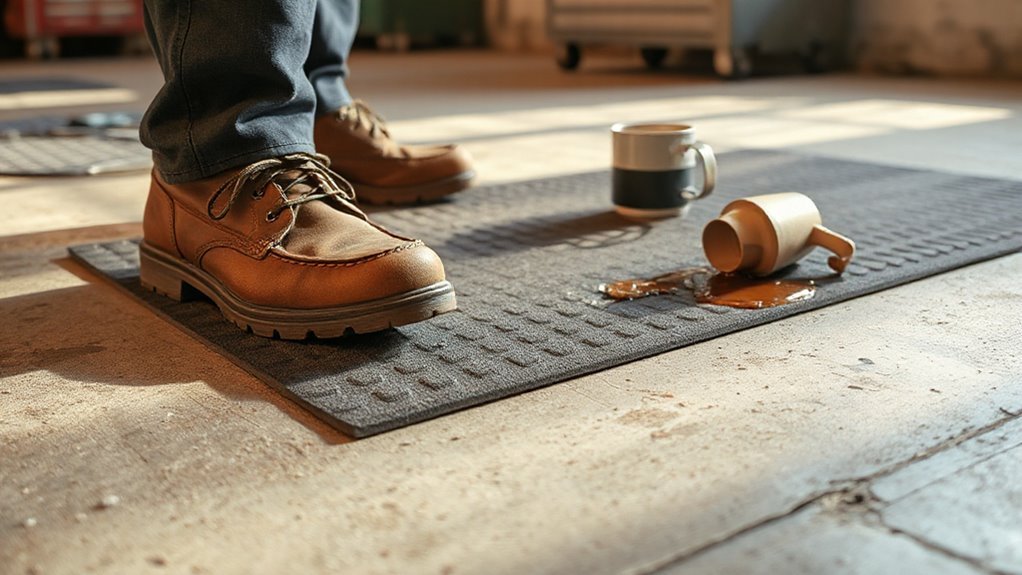
Improved comfort during prolonged standing greatly influences both perceived exertion and overall worker satisfaction.
Anti-fatigue mats notably reduce discomfort in lower legs, upper legs, and lower back. Workers report decreased fatigue levels at the end of the day when using these mats compared to hard flooring.
Subjective thermal comfort also improves, shifting from slightly uncomfortable to neutral, enhancing the overall experience. Feedback consistently indicates that workers experience less muscular and joint trouble, contributing to greater comfort. Additionally, mats have a beneficial effect on thermal and postural comfort, as indicated by research findings.
As perceived exertion decreases, job satisfaction tends to increase, promoting a more positive work environment.
Ultimately, these mats play an essential role in enhancing comfort and reducing perceived exertion in various work settings.
Prevention of Musculoskeletal Disorders
Musculoskeletal disorders (MSDs) often arise from prolonged standing, leading to significant discomfort and pain among workers.
Anti-fatigue mats have shown a reduction of low back pain by approximately 53% in individuals prone to discomfort. Studies indicate that these mats decreased foot and leg musculoskeletal cases by 80% in workplace settings.
Operating room nurses reported clinically meaningful reductions in pain intensity after using anti-fatigue mats. The mats facilitate subtle movement, promoting muscular expansion and contraction, which helps prevent varicose veins.
This compression and support, combined with ergonomic positioning, effectively address lower extremity concerns. Overall, anti-fatigue mats play an essential role in preventing MSDs, enhancing worker comfort through targeted pain relief and improved lower limb health.
Impact on Balance and Postural Stability
When standing for long periods, maintaining balance and postural stability becomes essential. Anti-fatigue mats promote even pressure distribution, helping you maintain a 50/50 balance between your legs.
Studies show that these mats reduce muscle pressure and strain, leading to improved postural stability over time. The cushioned surface encourages micro-movements, which engage muscles and decrease the risk of static postures that impair balance.
Research indicates that mats optimize plantar pressure distribution, lowering peak pressures in the foot. This reduction minimizes postural sway and instability, especially during extended standing.
Compared to hard surfaces, anti-fatigue mats greatly enhance stability and reduce the risk of slips and falls, making them a critical choice for prolonged standing environments.
Material Properties and Technical Design
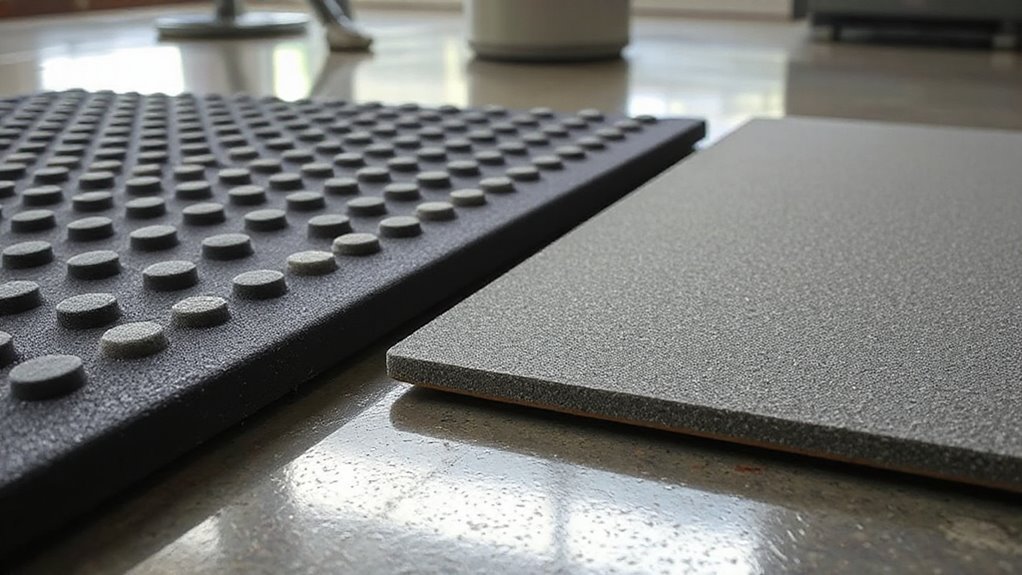
Understanding the material properties and technical design of anti-fatigue mats is essential for selecting the right mat for specific work environments.
Different materials offer unique benefits. Rubber mats provide durability and slip resistance, making them ideal for industrial settings. PVC is lightweight and easy to clean but can crack under stress. Polyurethane offers comfort and heat resistance up to 400°F, while blended materials combine properties for moderate use.
Thickness impacts shock absorption and stability, typically ranging from 3/8″ to 7/8″. Surface textures, like diamond or domed patterns, enhance traction. Edge designs minimize trip hazards, and interlocking tiles allow easy installation.
Selecting the right material guarantees peak performance tailored to your environment’s specific demands.
Evidence From Research Studies
Research studies have consistently shown that anti-fatigue mats greatly reduce pain and discomfort for workers who stand for extended periods. Surgical team members, for instance, experience considerable relief, with studies indicating up to a 50% reduction in lower back pain (p < .05).
Additionally, anti-fatigue mats improve muscle recruitment and blood circulation, minimizing tension and discomfort. Weekly fatigue levels decline markedly (p < 0.001), with energy scores increasing significantly.
Compared to other interventions, like compression socks and insoles, anti-fatigue mats provide broader pain and fatigue reduction. Workers report less muscular discomfort and better balance, confirming the mats’ effectiveness in enhancing comfort during long shifts.
Best Practices for Using Anti-Fatigue Mats
Effective use of anti-fatigue mats involves careful preparation, precise installation, and ongoing maintenance. proper use of antifatigue mats helps improve comfort while standing for extended periods, reducing fatigue and maintaining productivity. Choosing the right type of mat is essential to suit specific work environments, whether it’s a kitchen, workshop, or office. Regularly cleaning and inspecting these mats also ensures they remain effective and safe for use over time.
First, select a smooth, hard surface to guarantee proper adhesion. Allow mats to reach room temperature before installation to maintain adhesive properties. Thoroughly clean the area using 70% Isopropyl Alcohol.
Next, when placing mats, verify they lie flat without air bubbles. Use adhesive tape in high-traffic areas to prevent slippage. Choose mat thickness around three-fourths of an inch for ideal comfort.
Regularly clean mats to prevent dirt buildup and inspect for wear or damage. Train staff on proper usage and care to prolong mat life.
Finally, address environmental factors that may affect mat performance.
Frequently Asked Questions
How Long Do Anti-Fatigue Mats Last Before Needing Replacement?
Anti-fatigue mats typically last between 6 months to 10 years, depending on material type and usage.
PVC foam mats generally endure 6–12 months, while PVC/nitrile blends last 1–3 years.
Premium 100% nitrile rubber can last up to 8 years, especially in low-traffic areas.
Molded urethane mats often exceed 5 years.
Regular inspection for signs of wear, such as flattening or cracking, helps determine when to replace your mat.
Can Anti-Fatigue Mats Be Used on Carpeted Surfaces?
Yes, anti-fatigue mats can be used on carpeted surfaces.
These mats feature dense surfaces and skid-resistant backing for stability. Rubber, vinyl, and polyurethane materials offer durability and comfort. They encourage movement, reducing discomfort and fatigue while standing.
To enhance grip, place a rug pad underneath. Confirm the mat’s compatibility with your specific carpet type and follow cleaning guidelines to prolong lifespan and maintain performance.
Regular maintenance is key for ideal use.
Are There Specific Cleaning Instructions for Anti-Fatigue Mats?
When it comes to cleaning anti-fatigue mats, you’ve got to follow some specific instructions.
Use mild soaps with a pH of 4.0 to 9.0, like dish soap. Avoid harsh chemicals and aggressive scrubbing tools to prevent damage.
Perform daily sweeps or vacuuming, and do a deep clean weekly.
Always let mats dry completely before use, laying them flat to avoid creases, and store them rolled loosely for long-term care.
Do Anti-Fatigue Mats Come in Different Thicknesses or Materials?
Thickness Variations
Anti-fatigue mats typically range from 1/4 inch to over 1 inch thick. Mats between 5/8 inch and 3/4 inch are most recommended for ideal support.
Thinner mats provide inadequate cushioning, while those thicker than 3/4 inch may compress excessively.
Material Types
Common materials include PVC, rubber, and polyurethane.
Rubber offers durability and slip resistance, while polyurethane provides excellent comfort.
Each material has specific applications based on environment and traffic levels.
Can Anti-Fatigue Mats Cause Any Allergic Reactions?
Yes, anti-fatigue mats can cause allergic reactions, particularly if they contain latex, phthalates, or formaldehyde.
These materials may lead to skin rashes, itching, or respiratory issues. To minimize risks, you should choose mats labeled as latex-free and non-toxic.
Regular cleaning helps reduce dust and allergens. If you have known sensitivities, consult safety data sheets before purchasing.
Conclusion
Anti-fatigue mats can greatly enhance comfort and reduce fatigue for people who stand for long periods. the benefits of antifatigue mats extend beyond mere comfort, as they can also improve productivity and reduce the risk of injuries related to prolonged standing. By providing extra cushioning and support, these mats help maintain better posture and circulation throughout the day. Many employees in various industries, including retail and manufacturing, report significant decreases in discomfort when using antifatigue mats regularly.
These mats support better posture and improve balance, which helps prevent musculoskeletal disorders.
Research demonstrates their effectiveness, making them a valuable addition to workplaces where prolonged standing is common.
Why suffer through discomfort when a simple solution exists? Investing in anti-fatigue mats is not just buying a product — it’s prioritizing employee health and productivity.