Calories Burned Standing Vs Sitting
Calories Burned Standing Vs Sitting
When you stand, you burn about 0.15 more calories per minute than when you sit. Over six hours, that adds up to an extra 54 calories burned.
For a 145-pound person, that difference can amount to roughly 5.5 pounds of weight loss over a year, though factors like muscle mass and age also affect total calorie burn.
While standing has benefits, relying on it alone for weight loss is unlikely to be enough. There’s more to discover about combining posture changes with other strategies to optimize calorie expenditure.
Caloric Expenditure: Standing Vs Sitting
When you stand, you burn approximately 0.15 kcal per minute more than when you sit. This difference can range from 0.12 to 0.17 kcal per minute, depending on various factors. Men typically burn about 0.19 kcal per minute more while standing, while women burn around 0.1 kcal per minute more. Over six hours, standing instead of sitting can lead to an extra 54 kcal burned daily. For a 145-pound person, this translates to about 5.5 pounds of weight loss annually. Factors influencing caloric burn include muscle mass, age, body weight, and posture. Research suggests while the differences are modest, they accumulate over time, contributing to overall energy expenditure and potentially aiding weight management.
Energy Expenditure by Activity Type
Activities are measured in MET values, which standardize energy expenditure estimates. Sitting has a MET value of about 1.3, while standing is approximately 1.8 METs. Light activities, like dusting (2.3 METs) or pleasure walking (3 METs), burn more calories than sedentary behaviors. Additionally, understanding METs provides a rough estimate of energy expenditure can help individuals make informed choices about their physical activity levels.
Moderate activities, such as golf (4.8 METs), and running (8.3 METs), greatly increase energy expenditure. Vigorous activities, like squash (12 METs), result in the highest calorie burn rates. Generally, higher intensity activities burn more calories per minute, emphasizing the importance of activity choice in managing energy expenditure effectively.
Factors Influencing Calorie Burn
Various factors influence the number of calories you burn, starting with body composition. Individuals with higher muscle mass burn more calories at rest compared to those with higher fat mass. Additionally, resting metabolic rate is a major contributor to total energy expenditure, making it a key factor in understanding overall calorie burn. Your body size also matters; larger individuals generally have a higher metabolic rate due to more metabolizing tissue. Age plays a role, too; as you age, muscle loss and hormonal changes lead to a decline in metabolic rate. Men typically burn more calories than women, primarily due to greater muscle mass and lower fat levels. Your physical activity level considerably affects calorie burn; active individuals expend more energy than sedentary ones. Finally, environmental factors, like temperature and health status, can also alter metabolic rates and calorie expenditure.
Health Benefits of Standing Over Sitting
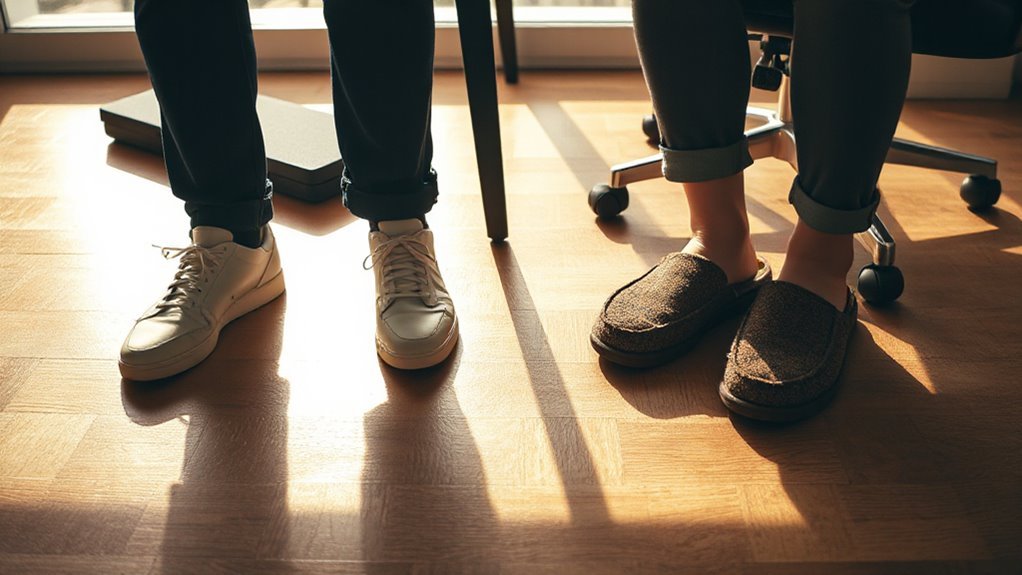
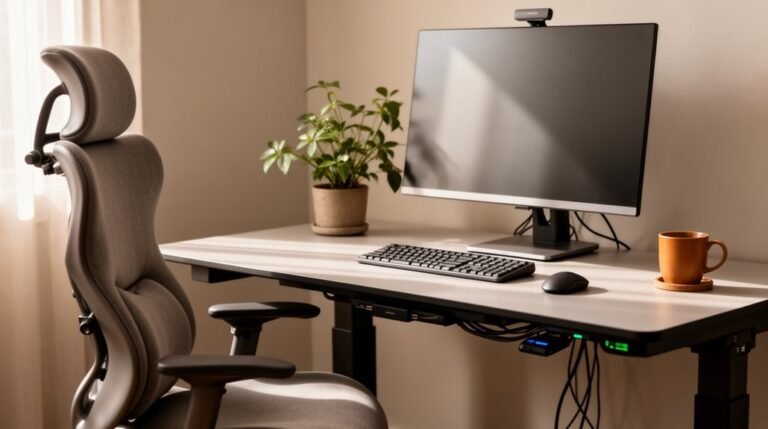
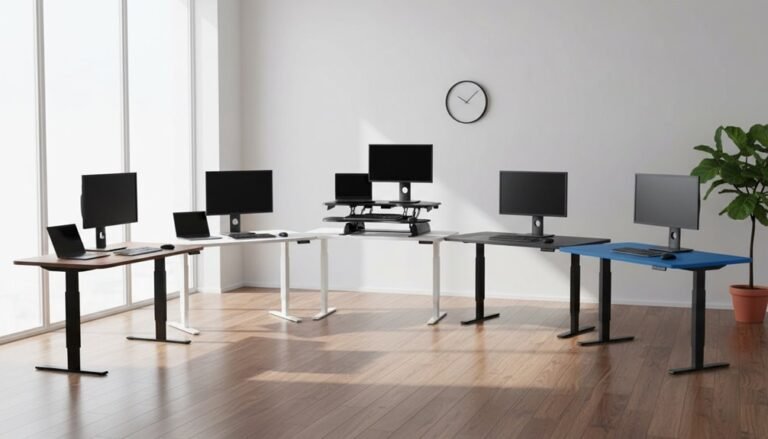
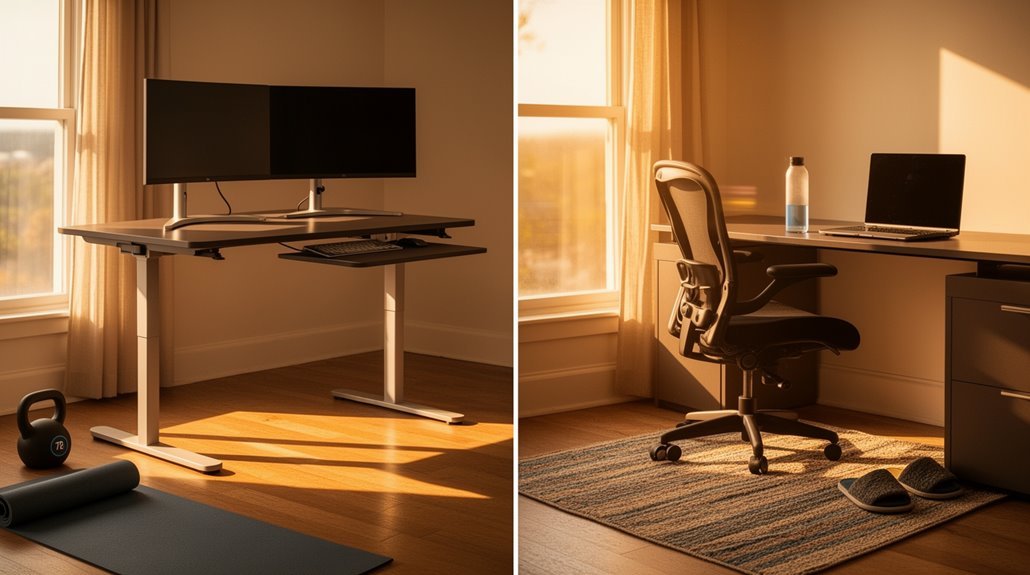
Standing desks offer multiple health benefits compared to traditional sitting arrangements, as they help reduce total sitting time, which can lead to improved subjective health and energy.
By incorporating a standing desk, you can experience:
- Reduced Pain: Significant decreases in neck and shoulder pain occur with sit-stand desk use.
- Better Blood Sugar Regulation: Standing can reduce post-meal spikes in blood sugar by up to 43% versus sitting.
- Increased Productivity: Users report up to 46% higher productivity, particularly in tasks that require focus.
Alternating between sitting and standing helps decrease sedentary behavior, which is linked to better overall health outcomes.
Adopting this practice can lead to improved posture, reduced musculoskeletal discomfort, and enhanced wellness throughout your workday.
Practical Examples of Caloric Burn
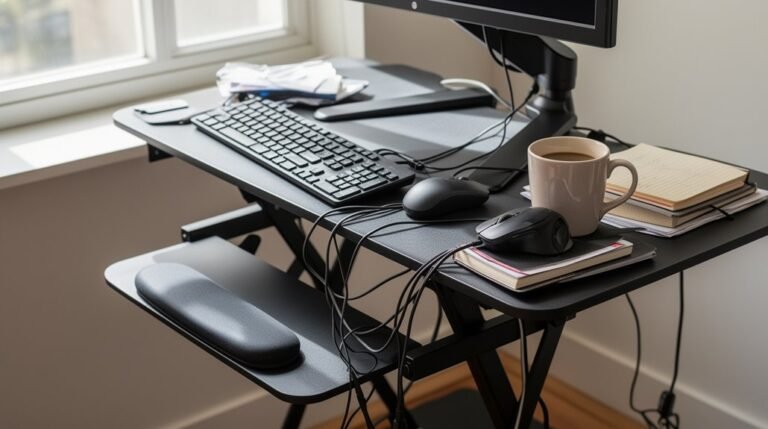
You can markedly influence your caloric burn by choosing to stand instead of sit throughout your workday.
Standing burns approximately 70 to 95 calories per hour, while sitting burns 65 to 85 calories. Over an 8-hour workday, standing can increase caloric burn by around 120 to 160 calories.
For instance, a 220-pound person burns about 129 calories per hour standing versus 82 calories sitting. Even small movements, like foot tapping, can further increase this burn.
If you stand and work at your desk, you’ll burn about 22 more calories per hour compared to sitting. As a result, incorporating standing into your routine can greatly boost your daily energy expenditure.
Limitations of Standing Vs Sitting for Weight Loss
While standing does increase caloric burn compared to sitting, the overall impact on weight loss is limited.
Here are some key limitations:
- Minimal Caloric Difference: Standing burns about 0.15 more calories per minute, translating to roughly 54 extra calories over six hours.
- Physical Discomfort: Extended standing can lead to fatigue and musculoskeletal strain, making it impractical for many individuals.
- Small Body Composition Changes: Substituting sitting with standing results in modest improvements in fat-free mass and small reductions in fat mass, insufficient for significant weight loss.
These factors suggest that relying solely on standing for weight loss may not yield substantial results.
Instead, consider combining standing with other lifestyle changes for better outcomes.
The Role of Muscle Mass in Caloric Burn
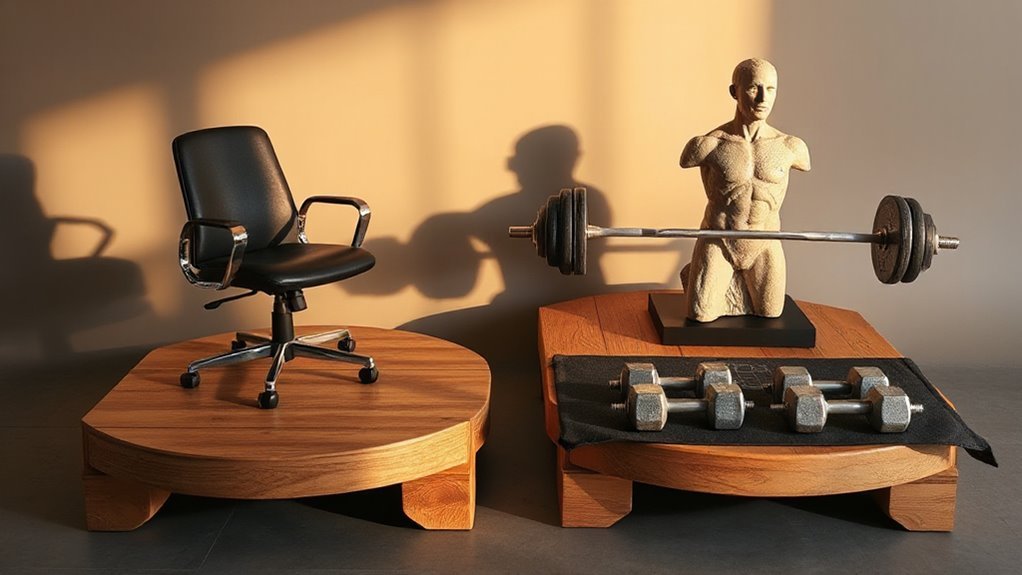
As muscle mass increases, so does your body’s caloric burn rate, even at rest. Skeletal muscle burns approximately 6 calories per pound daily, contrasting with fat tissue, which contributes only 5% to your total daily energy expenditure.
Gains in muscle mass can raise your resting metabolic rate modestly, with a pound of muscle increasing energy expenditure by about 7–12 calories per day. This means that a 10-pound gain could boost daily caloric burn by 90–100 calories.
Muscle tissue, being metabolically active, requires energy for maintenance, highlighting its importance in overall metabolic health. Increased lean body mass enhances energy expenditure both at rest and during exercise, making muscle mass a key predictor of your metabolic rate.
Importance of Movement Breaks
Incorporating movement breaks into a sedentary work routine offers considerable health benefits, particularly in reducing musculoskeletal pain and discomfort. Regular active breaks can lower discomfort by up to 37%. They also improve cardiovascular health and reduce risk factors.
Consider these key benefits:
- Movement breaks considerably lower perceived stress levels, enhancing mental well-being.
- Engaging in physical activity during breaks boosts alertness and reduces post-lunch sleepiness by 13%.
- Short bouts of activity help mitigate the negative effects of extended sitting on metabolic health.
Small Lifestyle Changes for Increased Calorie Burn
Small lifestyle changes can greatly increase your daily calorie burn, making it easier to manage weight and improve overall health.
Standing instead of sitting can burn about 186 calories per hour, compared to 139 calories while seated. Opting for a standing desk or taking phone calls while standing can facilitate this change.
Walking at a moderate pace burns approximately 324 calories per hour, and parking farther away or incorporating walking meetings can add significant steps.
Climbing stairs burns up to 500 calories per hour; therefore, choosing stairs over elevators is efficient.
Finally, household chores like vacuuming or gardening can burn 150-300 calories per hour. Incorporating brief bodyweight exercises, even during commercial breaks, further enhances calorie expenditure.
Frequently Asked Questions
How Does Age Affect Calories Burned While Standing or Sitting?
Age considerably affects calories burned while standing or sitting. As you age, your metabolic rate declines, leading to reduced calorie expenditure.
Older adults typically have lower muscle mass, which diminishes energy requirements for standing. For instance, the difference in calories burned when standing versus sitting decreases with age, as muscle engagement efficiency lessens.
Thus, maintaining muscle mass through regular exercise can help sustain higher calorie burn during both standing and sitting activities.
Can Standing Desks Lead to Fatigue or Discomfort?
Yes, standing desks can lead to fatigue or discomfort. Users often experience lower leg and foot pain, particularly after prolonged standing periods.
This discomfort arises from muscle strain and reduced circulation. To mitigate these effects, it’s essential to alternate between sitting and standing every 30 minutes.
Research indicates that such posture variation can enhance comfort and reduce cumulative fatigue throughout the workday, improving overall workplace well-being.
What Are the Long-Term Effects of Prolonged Standing?
Prolonged standing leads to musculoskeletal disorders, with increased fatigue, leg cramps, and back pain.
Chronic standing deteriorates joint health, as pressure without movement strains tendons and ligaments. This can result in reduced mobility and discomfort.
Additionally, standing causes blood pooling, raising the risk of varicose veins and cardiovascular issues.
Finally, sustained fatigue manifests as overall body discomfort, impacting work performance and increasing the risk of chronic health conditions.
Does Hydration Impact Calorie Burn While Standing or Sitting?
Hydration impacts calorie burn during both standing and sitting. Drinking water boosts your metabolism temporarily, increasing calorie expenditure through thermogenesis.
When well-hydrated, you enhance cellular function and energy metabolism, potentially increasing calories burned. Conversely, dehydration can slow your metabolic rate, reducing calorie burn.
While standing burns more calories than sitting due to increased muscle activation, proper hydration can optimize this effect, promoting higher overall energy levels and activity.
Are There Specific Exercises to Maximize Calorie Burn While Standing?
To maximize calorie burn while standing, incorporate exercises like squats, calf raises, and lunges. These engage large muscle groups, increasing your metabolic rate.
Balance exercises, such as standing on one leg, enhance muscle engagement. Add light resistance movements, like arm raises, to further boost effort.
Additionally, marching in place or performing leg lifts elevates your heart rate and caloric output. Integrating these activities into your routine promotes sustained energy expenditure throughout the day.
Conclusion
In conclusion, standing burns more calories than sitting, but it’s not a magical solution for weight loss.
While you might think you’ll torch a thousand calories just by being upright, the reality is more nuanced. Your total caloric burn depends on various factors, including your activity level and muscle mass.
Incorporating movement breaks throughout your day can enhance your calorie expenditure.
Ultimately, small lifestyle changes can lead to significant improvements in your overall health and energy balance.