Standing Desk Converter Myths Debunked
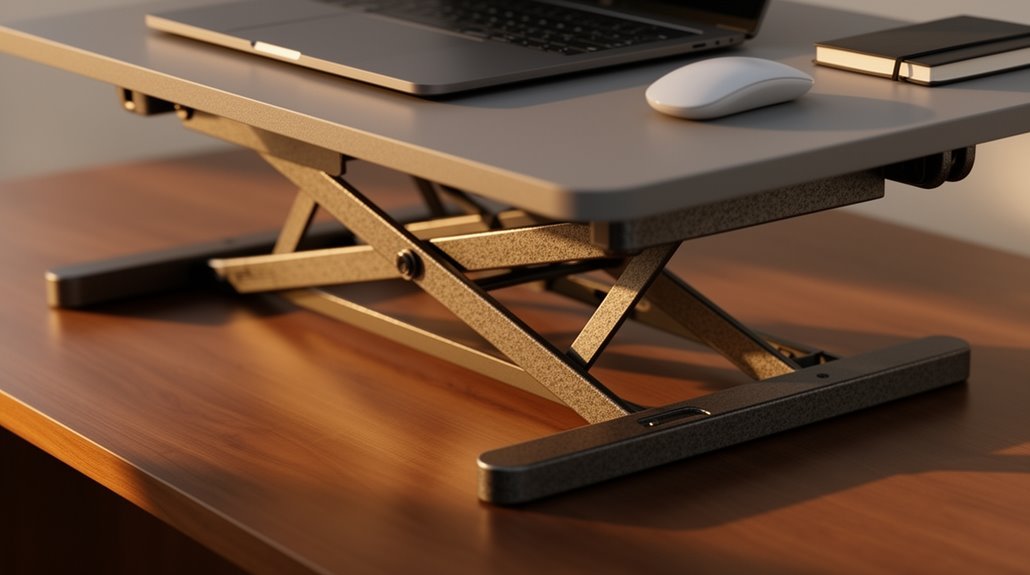
Standing desk converter use doesn’t eliminate all health issues related to desk work. If a converter isn’t adjusted properly, it can lead to poor posture and discomfort. appropriate standing desk converter height adjustments are essential for maximizing the benefits of a standing desk. Users should regularly assess their setup to ensure that the converter is positioned at the right height for their body, promoting better alignment and reducing strain. Investing time in proper adjustments can make a significant difference in overall comfort and productivity throughout the workday.
Standing isn’t always better than sitting; finding a balance between the two is essential. You also shouldn’t expect these converters to guarantee weight loss—calories burned while standing are minimal.
Avoid standing all day. Alternating positions throughout the day is vital for overall health. Finally, not all converters are equal in quality and adjustability, so choose one that fits your ergonomic needs. Learn more about the nuances of ergonomics and health benefits.
Myth: Standing Desk Converters Eliminate All Health Issues
While many believe that using a standing desk converter can solve all health problems linked to sedentary work, this is a misconception. Desk converters often lack fine-tuned adjustments for different body types, leading to improper posture. Most converters fit only 5-10% of users correctly, causing neck pain and back strain over time. Prolonged standing can increase foot discomfort and circulatory issues, compounding health risks. In addition, many converters encourage all-day standing due to inadequate sitting ergonomics, which can result in leg cramps and venous insufficiency. Users may not achieve ideal postural variation, essential for reducing musculoskeletal disorders. Furthermore, limited height range in converters may exacerbate these issues, as it restricts users from finding their optimal working position.
Myth: Standing Is Always Better Than Sitting
Standing isn’t inherently better than sitting; it’s the balance between the two that impacts your health.
While standing for about three hours daily can improve metabolic and cardiovascular markers, prolonged standing without movement poses risks. Standing reduces fasting blood sugar and triglycerides, enhancing heart health. Greater muscle activation occurs when standing, which can further contribute to overall well-being.
However, standing still for long periods can lead to issues like varicose veins and increased arterial stiffness. Alternating between sitting and standing is essential; continuous standing may not effectively lower blood pressure or improve cardiovascular health.
Movement matters most; incorporating walking breaks and active tasks provides greater benefits than static positions.
To maximize health outcomes, focus on a dynamic approach that includes both standing and regular movement throughout your day.
Myth: Standing Desk Converters Guarantee Weight Loss
Many people believe that using a standing desk converter will lead to significant weight loss, but this assumption is misleading. Standing burns only 8 to 20 more calories per hour than sitting, resulting in a modest increase of about 100 calories during a typical workday. This caloric burn isn’t enough to guarantee meaningful weight loss. While standing desks may improve metabolic health markers, such as reducing blood sugar spikes and improving insulin resistance, they don’t directly translate to fat loss. Research has shown that standing desks alone don’t lead to significant weight changes compared to sitting desks. To achieve weight loss, you need a consistent negative energy balance, which requires more than just standing. Active movement is essential for meaningful energy expenditure, and incorporating increased physical activity alongside standing can enhance overall health outcomes.
Myth: You Should Stand All Day for Maximum Benefits
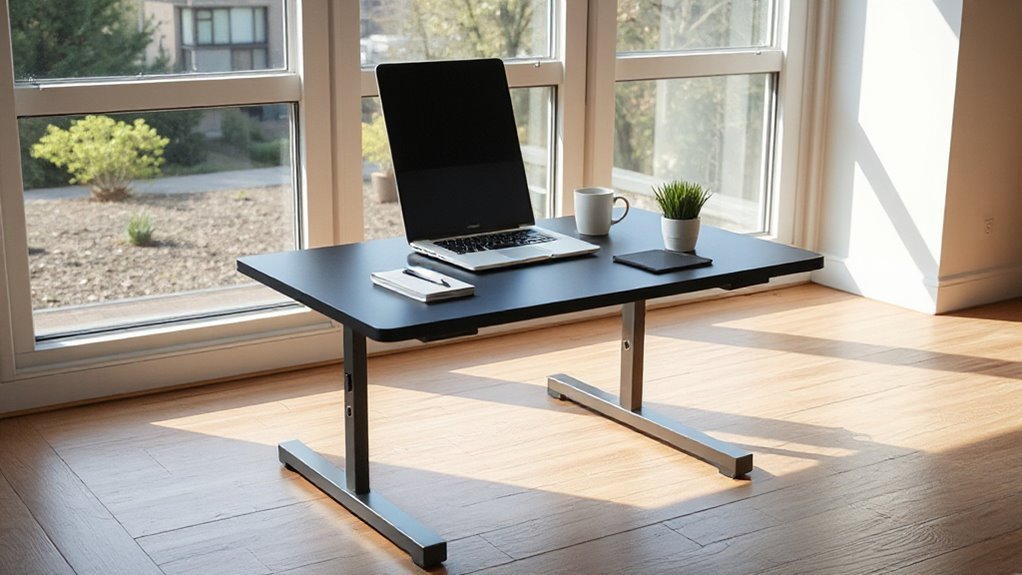
It’s a common misconception that standing all day maximizes the benefits of a standing desk. In reality, the ideal balance is a sitting-to-standing ratio of 1:1 to 1:3. You should aim to stand at least 30 minutes per hour, ideally alternating every 30 to 60 minutes.
Standing continuously can lead to muscle fatigue and reduced circulation, negating any potential posture improvements. Research supports that frequent position changes enhance spinal alignment and blood flow. Prolonged standing without breaks can result in increased fatigue and decreased productivity.
Health benefits peak when standing time represents one-third to one-half of your total desk time. Gradually increasing your standing duration allows your body to adapt effectively, ensuring sustainable work patterns.
Myth: Using a Converter Means You No Longer Need Exercise
Using a standing desk converter doesn’t eliminate the need for regular exercise. While standing increases calorie expenditure compared to sitting, it merely provides passive activity, not a substitute for structured workouts.
Studies show that standing encourages light movement, yet it doesn’t fulfill aerobic exercise recommendations essential for cardiovascular health. Furthermore, metabolic improvements from standing are incremental and insufficient for managing conditions like type 2 diabetes.
Musculoskeletal benefits arise, but they require strengthening exercises for ideal support. Finally, cognitive gains from standing enhance focus but are maximized when combined with physical activity.
Thus, to achieve extensive fitness and health goals, you must incorporate regular exercise alongside using a standing desk converter.
Myth: All Standing Desk Converters Are Created Equal
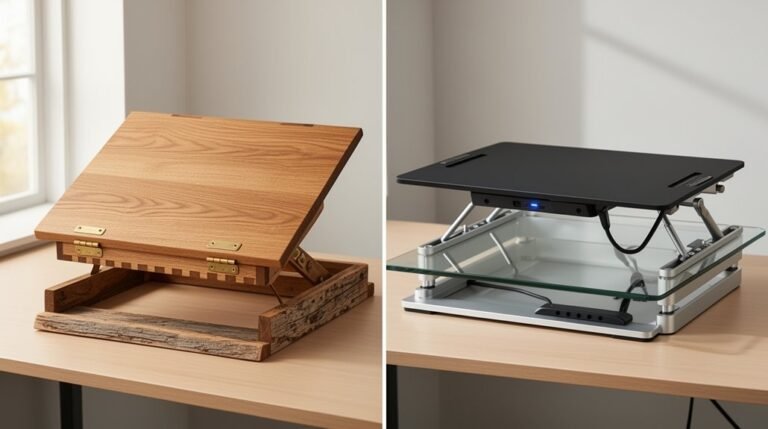
Not all standing desk converters offer the same features or performance.
Adjustment mechanisms vary greatly. Manual spring-assisted converters require physical effort, while electric models allow push-button adjustments. X-lift converters maintain stability with minimal forward movement, unlike Z-lift converters, which pose tipping risks.
Weight capacity also differs; standard converters support 26-35 pounds, insufficient for multiple monitors or heavy equipment. X-lift structures generally hold more weight than Z-lift alternatives.
Workspace size matters too; compact models are ideal for small desks, while larger converters accommodate dual-monitor setups.
Assembly requirements vary, with premium models needing no setup, while gas spring models often require complex assembly.
Finally, prices range widely, from budget-friendly options to premium electric models, affecting overall value.
Frequently Asked Questions
How Often Should I Alternate Between Sitting and Standing?
To maximize health benefits, you should alternate between sitting and standing every 30 minutes during your workday.
Reducing your sitting time by 2–4 hours daily is recommended. Regular postural changes alleviate discomfort, fatigue, and enhance focus.
Using a height-adjustable desk helps you find an ergonomic position tailored to your needs. Prioritizing this alternation can improve blood flow, lower blood pressure, and boost overall productivity, contributing to better health outcomes over time.
Can I Use a Standing Desk Converter for Specific Tasks?
You can effectively use a standing desk converter for many specific tasks.
It’s perfect for computer work, writing, and reading, allowing smooth shifts between sitting and standing. Electric models guarantee quiet adjustments, enhancing focus.
However, for prolonged standing tasks, fatigue may occur. Consider ergonomic designs with dual-level surfaces for typing.
Always alternate positions to maintain comfort and productivity, especially during meetings or collaborative sessions requiring engagement and energy.
Are There Any Risks Associated With Prolonged Standing?
Yes, prolonged standing carries several risks. You may experience musculoskeletal pain, particularly in your lower back, legs, and feet, after standing for more than eight hours.
Additionally, standing increases your risk of cardiovascular issues, including heart disease and circulatory problems, due to blood pooling in your legs.
If you’re pregnant, extended standing can lead to complications like preterm birth.
How Do I Choose the Right Standing Desk Converter?
To choose the right standing desk converter, evaluate these features:
Adjustment Method—consider manual or electric options for height changes.
Weight Capacity—ensure it supports your monitors, typically 26 to 35 lbs.
Workspace Size—opt for larger surfaces if you use multiple screens.
Stability—look for sturdy bases to prevent tipping.
Footprint—select compact models for limited space or larger converters for more functionality.
Assess your budget, balancing cost with desired features and durability.
Can Standing Desk Converters Improve My Posture?
Posture Improvement
Yes, standing desk converters can improve your posture. They enable you to alternate between sitting and standing, which reduces prolonged static postures.
Research shows that using a converter enhances spinal alignment, increases your craniovertebral angle, and alleviates forward head posture.
Regular use helps extend hip flexors, decreases anterior pelvic tilt, and lowers discomfort in your neck and back, promoting overall spinal health and reducing the risk of musculoskeletal disorders.
Conclusion
Standing desk converters offer real benefits but aren’t a cure-all. They can improve ergonomics and encourage movement, yet they won’t eliminate underlying health issues on their own. effective standing desk height adjustments can significantly enhance comfort during long work hours. By ensuring that your desk is set to the optimal height, you can reduce strain and promote better posture. Additionally, regular adjustments based on your activities throughout the day can further maximize the benefits of using a standing desk.
Standing isn’t always superior to sitting. Neither posture is perfect; prolonged time in one position can cause problems.
Weight loss isn’t guaranteed from using a converter, and standing all day isn’t necessary for ideal health. Regular exercise and overall activity remain essential.
Not all converters are equal in quality or design. Knowing the differences helps you choose one that fits your needs.
Balance is key: alternate standing and sitting throughout the day to boost productivity and well-being.