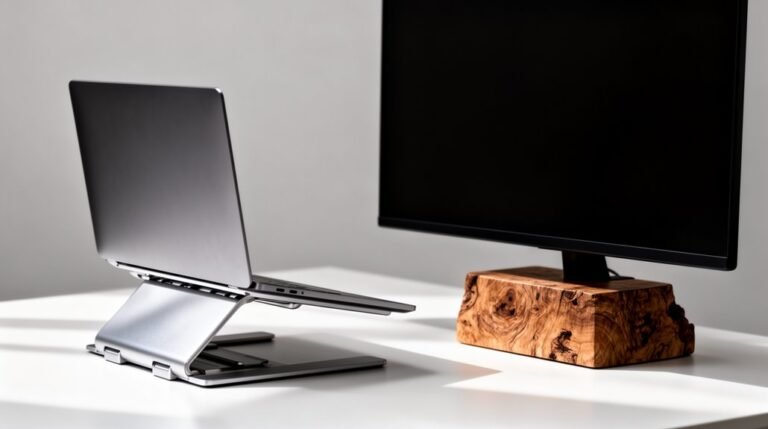
Are Dual Monitor Arms Safe?
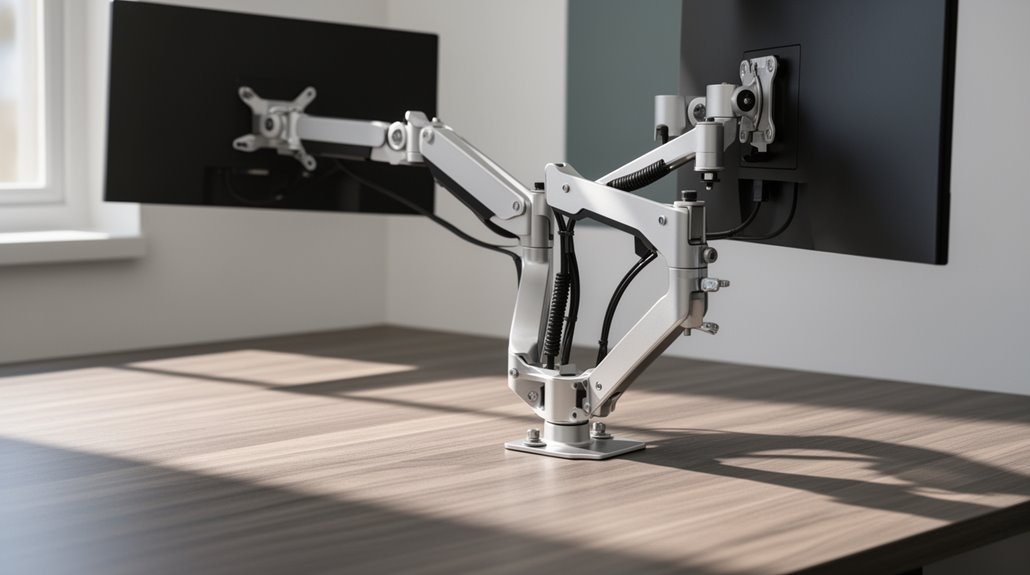
Dual monitor arms are safe when correctly set up and adjusted. They provide adjustable ergonomic positioning that helps reduce neck, back, and eye strain.
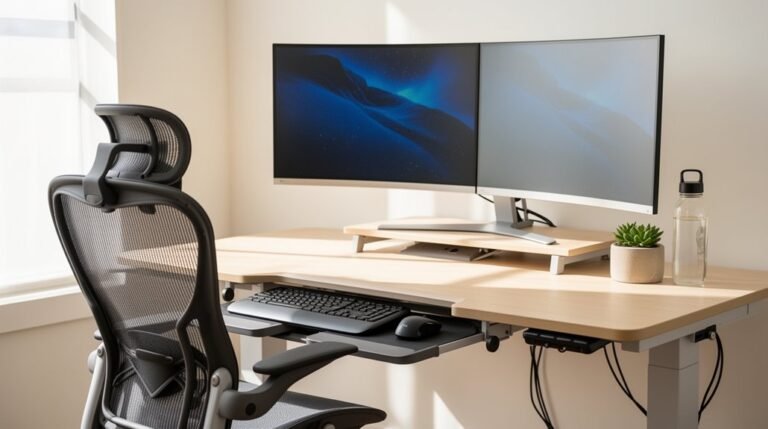
Position monitors at or slightly below eye level to maintain a neutral head posture. Keep screens about 50–65 cm away to help reduce eye strain.
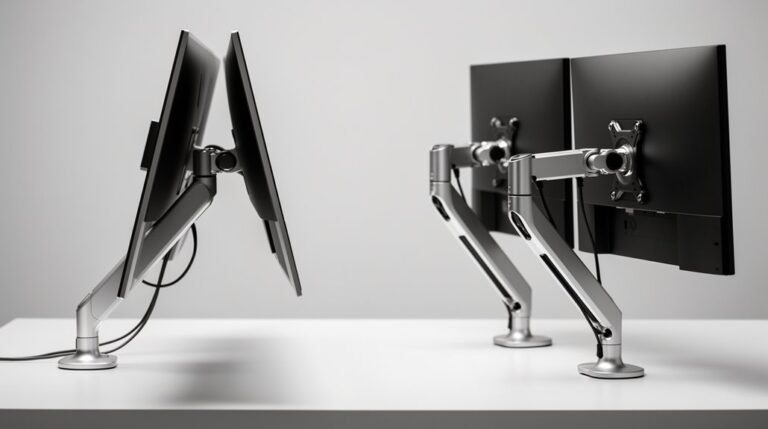
Configuring the two monitors in a slight V-shape minimizes neck rotation. Regularly inspect the arms to ensure they meet load capacity requirements and that joints remain secure.
For more information on optimizing your dual monitor setup, additional insights are available.
Ergonomic Benefits of Dual Monitor Arms
When you use dual monitor arms, you can achieve adjustable ergonomic positioning that meets your specific needs. These arms allow for precise height, tilt, pan, and rotation adjustments for each screen. Proper positioning helps maintain a neutral posture, greatly reducing neck, back, and eye strain. By setting screen height at eye level, you minimize repetitive strain injuries and musculoskeletal disorders. The flexibility of adjustments supports comfort when shifting between sitting and standing desks. Independent movement of monitors reduces the need for awkward head turns, lowering neck and shoulder tension. Additionally, proper ergonomic positioning minimizes strain and discomfort, further enhancing your overall well-being while working.
Injury Prevention With Proper Setup
To prevent injuries, it’s essential to set up your dual monitor arms correctly. Proper alignment reduces neck flexion by up to 50.6%, lowering the risk of neck strain.
Position monitors at or slightly below eye level to maintain a neutral head position, minimizing “tech neck.” A distance of about an arm’s length (60–70 cm) from the screen helps reduce eye strain. Additionally, ergonomic setups help address risks associated with lack of movement.
For dual monitors, arrange them in a slight V-shape, which decreases neck rotation. Effective cable management reduces clutter, minimizing tripping hazards.
Adjustable arms allow for independent height and angle adjustments, ensuring stability. By optimizing your setup, you greatly decrease the likelihood of musculoskeletal disorders and promote a healthier work environment.
User Satisfaction and Adoption Trends
Although many users have embraced dual monitor arms, their satisfaction hinges on several key factors. Over 99% of users report satisfaction, primarily due to perceived strength and flexibility. However, issues like improper joint tightening can lead to position slippage, impacting user experience. Additionally, satisfaction often correlates with the arm’s stability and ease of adjustment. Users benefit from reduced wrist and neck strain, enhancing overall comfort. The dual monitor arm market holds a 37% share, favored by IT professionals and designers, reflecting rising adoption trends. Innovations, such as easy-tilting joints and compatibility with curved monitors, further boost usability. As ergonomic benefits gain recognition, productivity boosts are expected to grow, driving market valuation to nearly $1.9 billion by 2032.
Optimal Monitor Positioning for Safety
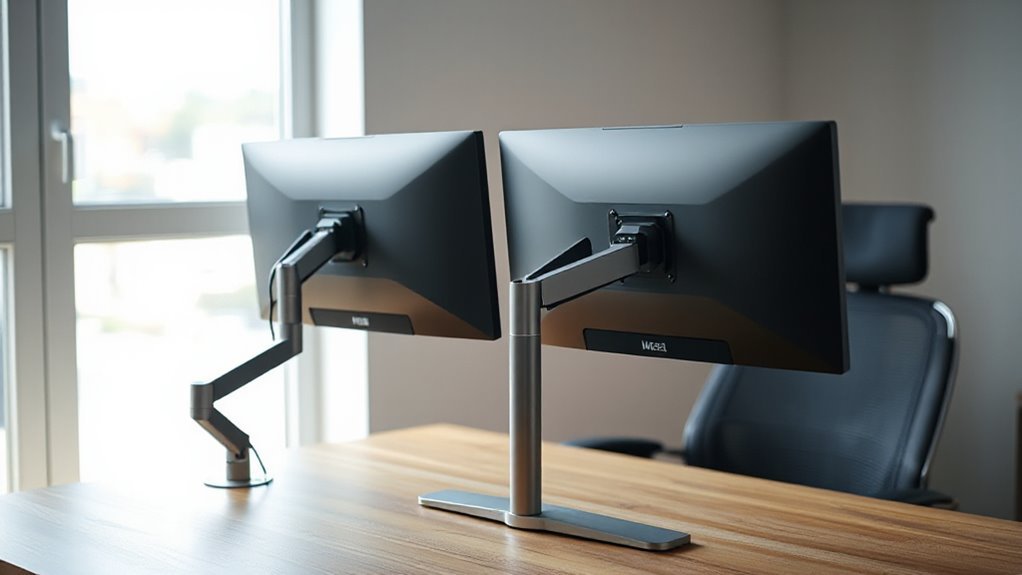
Achieving proper monitor positioning is essential for maintaining safety and comfort during extended screen use.
Position the top of your monitor at or slightly below eye level, ensuring your eyes align 2-3 inches below the top edge. Tilt the screen backward 10° to 20° to reduce glare. For bifocal wearers, lower the monitor by 1-2 inches.
Place the monitor about an arm’s length away, 50-65 cm (20-26 inches), to minimize eye strain. Align it directly in front of you to avoid neck twisting.
In dual setups, keep the primary monitor centered and angle secondary monitors inward to limit head and eye movement. This setup promotes neutral posture and reduces the risk of musculoskeletal strain.
Enhancing Space Efficiency in Workspaces
When you utilize dual monitor arms, you can greatly increase the efficiency of your workspace by freeing up valuable desk space.
These arms reduce the footprint of monitor setups by up to 50% compared to traditional stands, allowing you to position monitors above the desk surface. This creates room for keyboards, documents, and other essential tools.
In small or shared work environments, this space-saving design promotes organization and minimizes clutter. Additionally, dual monitor arms help keep cables out of sight, enhancing workspace tidiness.
Adjusting to Dual Monitor Configurations
Adjusting to dual monitor configurations can greatly enhance your workflow by providing more screen real estate for multitasking. Users typically experience productivity gains between 20% and 50%, particularly with tasks requiring multiple information sources.
Furthermore, you may notice a 33% reduction in errors when using dual monitors, thanks to improved visibility.
Here are some key considerations for effective adjustment:
- Position the top of each monitor at or slightly below eye level for ideal posture.
- Maintain an arm’s length distance for comfortable viewing.
- Center your primary monitor directly in front to reduce neck strain.
- Verify both monitors are at the same height and aligned to prevent uneven posture.
These adjustments can lead to significant ergonomic and productivity benefits.
Professional Assessment and Setup Verification
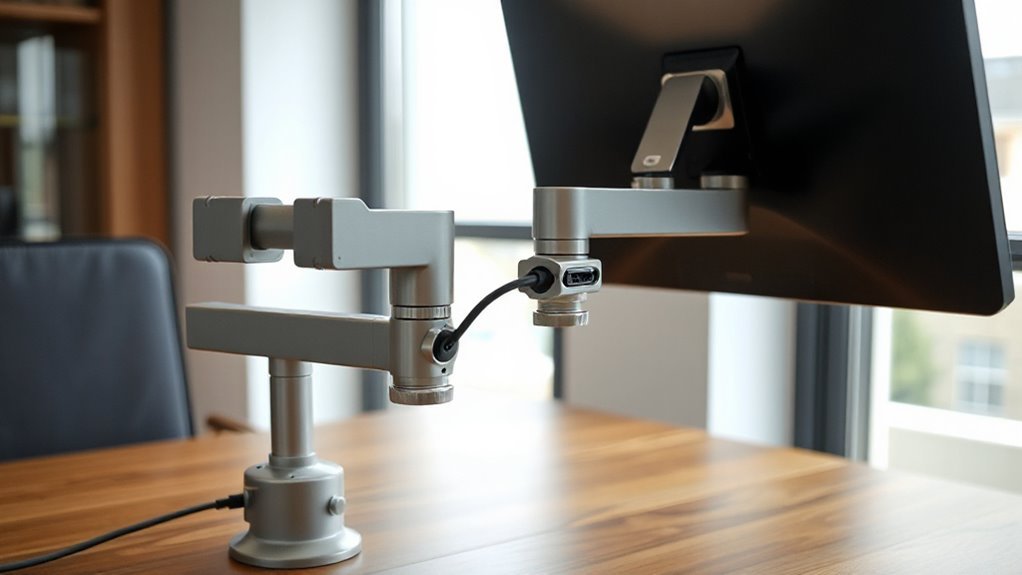
To guarantee ideal functionality and safety of dual monitor setups, a thorough professional assessment is essential.
Start by verifying the monitor arm’s static load rating, confirming the total weight, including cables, remains within 80% of capacity. Calculate the actual weight to avoid overloading.
Inspect attachment points regularly for signs of stress, like loose joints or sagging. Conduct individualized Display Screen Equipment (DSE) risk assessments to address ergonomic needs.
Ascertain primary monitors are centered, while secondary monitors sit at a 30° angle. Maintain a viewing distance of 20-26 inches and align monitor heights to eye level.
Regularly check equipment compatibility, including VESA mounting patterns, and schedule routine inspections to maintain arm tension and joint integrity.
Frequently Asked Questions
Can Dual Monitor Arms Support Different Monitor Sizes and Weights?
Yes, dual monitor arms can support different monitor sizes and weights, but you must check compatibility.
Each arm typically accommodates monitors weighing between 4.4 lbs and 25 lbs, depending on the model.
Verify VESA pattern compatibility, such as 75x75mm or 100x100mm.
Monitor depth also affects balance; deeper monitors may exceed safe limits.
Always follow manufacturer guidelines for weight distribution to maintain stability and prevent drooping or failure during use.
How Do I Clean and Maintain My Dual Monitor Arms?
To clean your dual monitor arms, power down equipment and disconnect cables.
Wipe the arm structure with a microfiber cloth, using top-to-bottom motions. For sticky residue, apply a damp cloth with mild soap.
Use compressed air to remove dust from tight joints.
Regularly check gas spring tension with a hex wrench, re-tightening screws as needed.
Avoid abrasive cleaners to maintain surface integrity and guarantee peak performance over time.
Are There Any Specific Brands Recommended for Dual Monitor Arms?
When choosing dual monitor arms, consider brands like Ergotron, VIVO, and AmazonBasics.
Ergotron offers durable, adjustable options with weight capacities up to 32 inches.
VIVO features versatile arms that accommodate various monitor sizes and include cable management.
AmazonBasics provides budget-friendly choices with straightforward setups.
Each brand emphasizes ease of adjustment and ergonomic benefits, ensuring ideal screen positioning and improved workspace efficiency, which contributes to enhanced productivity and comfort during extended use.
Can I Use Dual Monitor Arms With Laptops?
Yes, you can use dual monitor arms with laptops, but you’ll need specific solutions.
Most laptops lack VESA mounting holes, so consider using adapter plates or dedicated laptop arms. Confirm the monitor arms support weights between 8.98-9 kg per mount.
Additionally, plan for cable management, as extended runs can complicate connections. Stability may be an issue with uneven weight distribution, so verify your workspace has adequate clearance and support for both devices.
What Is the Warranty Typically Offered on Dual Monitor Arms?
Most brands offer robust warranties on dual monitor arms.
Corsair and Dell provide a 3-year warranty, covering defects in materials and workmanship.
Ergotron and StarTech.com extend this to 10 years, ensuring mechanical and electrical components remain reliable.
Herman Miller offers an impressive 12-year limited warranty, with some exceptions.
Always check specific terms, as warranties may exclude damage from misuse or unauthorized modifications, affecting your coverage considerably.
Conclusion
In conclusion, dual monitor arms can enhance workspace ergonomics and efficiency when set up correctly. By positioning monitors at eye level, you reduce strain on your neck and eyes.
This setup supports injury prevention and also encourages user satisfaction and productivity. Small adjustments can make a noticeable difference in comfort.
As you adjust to dual monitor configurations, remember that safety hinges on proper alignment and verification. Check mount stability and cable management regularly.
Ultimately, investing in dual monitor arms is like investing in your well-being, ensuring comfort while maximizing your workspace potential.