Sitting on a Stability Ball: Good or Bad?
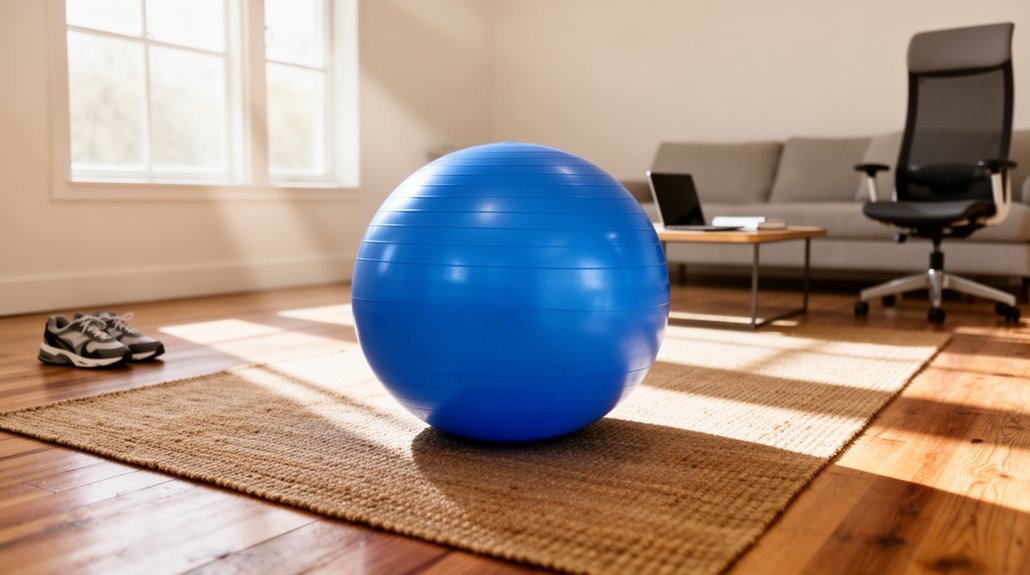
Sitting on a stability ball can improve core muscle activation and posture. You’ll engage muscles more, which can promote better spinal alignment and a more upright seated position.
However, prolonged use can lead to muscle fatigue and discomfort. Some studies report that moving to a stability ball may reduce pain for certain people, but low back discomfort can still persist for others.
Calorie burn is slightly higher than when using a traditional chair, but the increase is not large. For effective use, maintain proper posture and take regular breaks to avoid fatigue.
If you want to try it, start with short periods and monitor how your body responds. Discover more insights on this topic to decide whether a stability ball fits your routine.
Benefits of Core Muscle Activation and Posture Improvement
Sitting on a stability ball offers significant advantages for core muscle activation and posture enhancement. This seating method requires constant engagement of your core muscles, including the transverse abdominis and multifidus, to maintain balance. Studies indicate you can experience up to 30% greater core activation compared to a standard chair. The ball’s instability promotes better spinal alignment, encouraging an upright posture and reducing slouching. Regular use can train your body to maintain this improved posture off the ball. Enhanced posture minimizes stress on your back and neck, supporting overall spinal health. Additionally, the ball’s design aligns your pelvis and spine, further decreasing the risk of developing poor posture habits. Moreover, using a stability ball can help improve balance, which is essential for maintaining proper posture throughout daily activities.
Limitations and Risks of Muscle Fatigue
While core muscle activation and improved posture are notable benefits of using a stability ball, there are significant limitations and risks associated with muscle fatigue. Prolonged sitting leads to sustained low-level muscle activation, mainly in your lumbar and trunk muscles. This continuous contraction can accelerate muscle fatigue, resulting in improper posture, such as slumping or leaning. Additionally, sedentary behavior is linked to musculoskeletal disorders, particularly when uninterrupted, which compounds the risks associated with prolonged use of a stability ball.
Over time, this increases strain on your spine and soft tissues. Additionally, studies show no significant difference in trunk muscle activation patterns after an hour on a stability ball versus a standard chair. Fatigue disrupts balance control, elevating the risk of falls. Finally, highly trained individuals may not experience adequate challenges, leading to disproportionate fatigue without neuromuscular benefits, compounding the risk of discomfort and injury.
Evidence on Pain Reduction and Health Outcomes
Research indicates that shifting from standard office chairs to stability balls can reduce pain reports considerably. In one study, reports of pain dropped from approximately 45% to 21% among users.
However, 42%-45% of participants still reported discomfort while using stability balls. Users commonly experienced increased pain in the low back and buttocks compared to traditional chairs.
Some studies found no significant difference in low back pain prevalence between the two seating options. The instability of the balls could lead to discomfort and potential injuries. Prolonged static sitting may also contribute to discomfort, as users are encouraged to remain active while seated.
While users may perceive improvements in posture and balance, biomechanical studies show no significant increase in core muscle activation.
Calorie Burn and Energy Expenditure
Elevating oxygen consumption by 10% to 16% is one of the notable effects of using a stability ball instead of a traditional chair. This increase in VO2 indicates higher metabolic activity, which can be beneficial in contexts like weight loss or cardiac rehabilitation.
However, while energy expenditure rises, the actual calorie burn only increases by about 4.1 kilocalories per hour compared to sitting in a chair. Over an 8-hour workday, that amounts to roughly 33 to 34 extra calories—minimal for weight management.
Research shows that core muscle activation remains similar to that of a stable chair, suggesting that the higher energy expenditure primarily stems from increased oxygen consumption, not from muscle engagement.
Practical Recommendations for Stability Ball Use
When using a stability ball, it’s essential to prioritize proper posture to maximize benefits and minimize discomfort. Keep your knees hip-width apart and feet flat on the floor for stability.
Straighten your spine and roll your shoulders back to maintain natural alignment. Incorporate subtle pelvic movements to engage core muscles and prevent stiffness.
Limit continuous sitting to short intervals, taking breaks every 10 minutes for targeted exercises. Make certain you use the correct ball size and inflation pressure; this promotes safety and stability.
Position the ball in a clutter-free workspace on a non-slip surface to reduce hazards. Pair your ball with ergonomic accessories to enhance comfort and support for peak posture.
Summary of Conflicting Research Findings
Conflicting research findings highlight the complexity of using stability balls as seating alternatives.
Muscle activation studies show no significant differences between stability balls and office chairs after one hour, with only minimal thoracic erector spinae activation noted.
Regarding posture, lumbar spine alignment remains consistent across both seating types, although users report subjective posture improvements.
Pain reports are also conflicting; while some studies indicate decreased pain with stability ball use, many users still experience discomfort.
Energy expenditure differences are negligible, with only 4.1 kcal/h more burned on stability balls.
Finally, safety concerns arise due to the instability of these balls, increasing the risk of back discomfort and potential falls.
Frequently Asked Questions
Can Children Use Stability Balls for Sitting at School?
Yes, children can use stability balls for sitting at school.
These balls promote core muscle engagement and improve posture, which may enhance focus. Studies show they can reduce disruptive behaviors and improve attention, especially in students with ADHD or ASD.
However, results can vary based on individual needs and classroom dynamics. While some students benefit behaviorally, academic outcomes may not see significant change, indicating a need for personalized assessment.
Are There Specific Exercises to Do While Sitting on a Stability Ball?
Yes, there are specific exercises you can do while sitting on a stability ball.
Try pelvic tilts to engage your core; simply rock your pelvis back and forth. Incorporate gentle trunk rotations to enhance stability.
For balance, lift one leg while keeping your spine straight. These movements activate your abdominal and lower back muscles, improve posture, and promote spinal health.
Consistent practice can lead to increased core strength and better overall balance.
How Do I Choose the Right Size Stability Ball for My Height?
To choose the right size stability ball for your height, refer to standard diameter guidelines.
For heights under 4’8″, select a 45 cm ball; for 4’8″ to 5’5″, opt for a 55 cm ball; 5’6″ to 6’2″ users should pick a 65 cm ball; and those over 6’3″ should choose a 75 cm or larger.
Confirm your knees and hips form a 90-degree angle when sitting for ideal posture. Adjust air pressure as needed.
Can Stability Balls Be Used for Workouts Beyond Sitting?
Absolutely, stability balls can be used for a variety of workouts beyond sitting. They enhance core strength through exercises like crunches and planks, requiring constant muscle engagement.
You can also perform balance and flexibility exercises, improving posture and spinal mobility. The instability of the ball promotes coordination and proprioception, making it beneficial for athletes and rehabilitation.
Its versatility allows for a range of movements, ensuring effective workouts for different fitness levels.
How Should I Inflate My Stability Ball for Optimal Use?
To inflate your stability ball for ideal use, start by inflating it to about 80% of the recommended diameter.
Let it rest for 24 to 72 hours, allowing the material to stretch.
Afterward, inflate it fully according to the manufacturer’s specifications.
Ascertain your hips are level or slightly above your knees when seated, and regularly check for firmness, adjusting as needed to maintain comfort and support during use.
Avoid overinflation to enhance longevity.
Conclusion
Sitting on a stability ball can offer benefits, such as improved core activation and better posture.
However, it also carries risks, particularly muscle fatigue and discomfort.
Some studies suggest stability-ball sitting may reduce pain, but findings vary considerably.
Consider your unique needs and environment before deciding. Weigh the pros and cons, since using a stability ball can be a double-edged sword in your daily routine.