Standing Desk Converter Height: Finding the Right Level
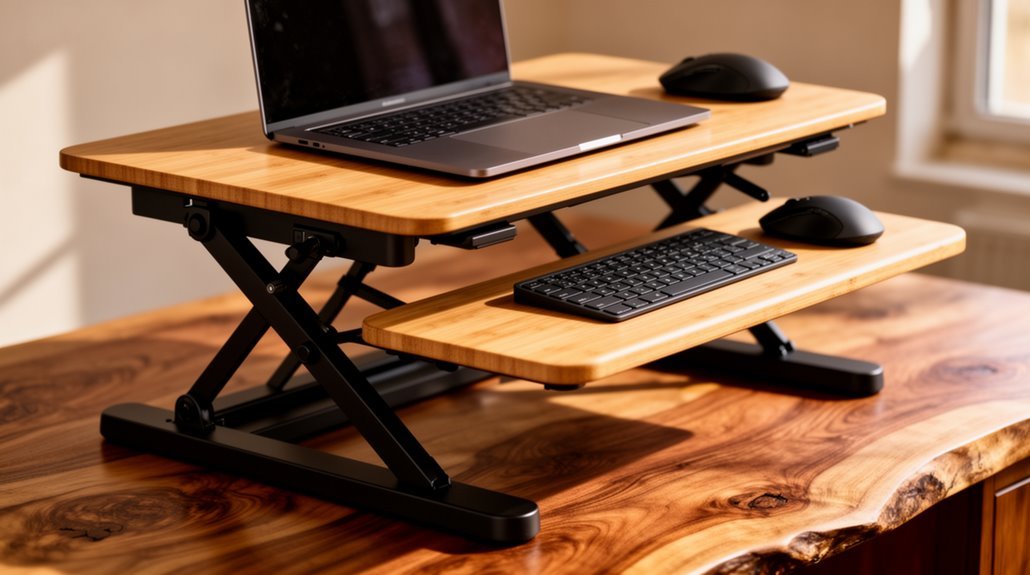
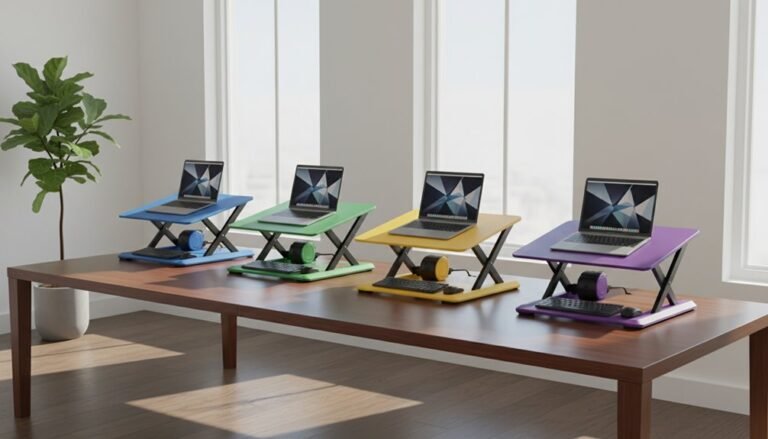
Standing desk converter height matters for ergonomic comfort and productivity. Most converters offer adjustable ranges from about 4.5 inches up to 19.6 inches, which helps you maintain proper spinal alignment while standing.
Aim to position your screen at eye level and keep your elbows at a roughly 90-degree angle while typing. Also check your desk’s depth and the converter’s weight capacity so it can safely support your monitor, laptop, and any accessories.
If you want to dive deeper, look into different installation types and product variations to find the converter that best fits your workspace and workflow.
Understanding Height Adjustment Ranges
When selecting a standing desk converter, it’s essential to understand the height adjustment ranges available, as they directly influence your ergonomic setup. considering the various standing desk converter benefits explained can also provide clarity on how they enhance productivity and comfort during long working hours. Many individuals find that these converters help reduce fatigue and improve posture, leading to a more focused work environment. Furthermore, exploring the different features and adjustments can help you select a model that best fits your specific needs and preferences.
Common adjustment ranges span from 4.5 inches to about 19.6 inches, accommodating various user preferences. For example, the VariDesk Pro Plus 36 offers 11 adjustable height settings from 4.5 to 17.5 inches. In contrast, StarTech.com laptop converters provide 6 options ranging from 1.8 to 15.9 inches.
Motorized converters generally offer broader adjustment capabilities, while spring-assisted lifts typically reach up to 17.5 inches. Consider your height and arm length when selecting a converter. Workspace depth and monitor placement also impact the ideal height range, ensuring you maintain effective posture during use.
Importance of Ergonomic Positioning
Ergonomic positioning is essential for maintaining health and productivity in the workplace. Proper spinal alignment reduces strain on your back, neck, and shoulders, minimizing the risk of cervical lordosis and lumbar strain.
Standing desk converters, when adjusted to the correct height, encourage natural spinal curvature. Customizable height settings allow you to tailor your workstation to your body’s proportions, enhancing comfort. Moreover, enhanced circulation encourages light physical activity throughout the day, which can further support overall well-being.
Additionally, alternating between sitting and standing prevents chronic musculoskeletal disorders that arise from prolonged sitting. Improved posture increases blood flow, which supports cardiovascular health and combats lethargy.
This not only helps maintain energy levels but also fosters better cognitive performance. Ultimately, ergonomic positioning leads to increased productivity and reduced absenteeism due to pain.
Surface Area and Equipment Compatibility
Selecting the right standing desk converter involves understanding its surface area and compatibility with your equipment. The dimensions of the converter impact how well it fits your workspace. For example, the VariDesk Pro Plus 36 measures 36″ wide by 29.75″ deep, while the Deskrite 100 offers a larger 890mm width.
Here are some key considerations:
- Verify your desk has a minimum depth of 24″ for compatibility.
- Check the weight capacity; for instance, Mount-It holds up to 33lbs.
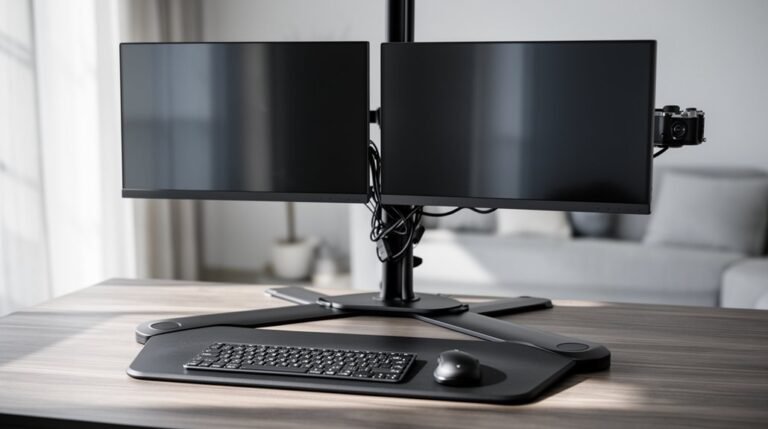
- Consider multi-monitor setups; the ATX converter supports three monitors.
- Verify the surface area; a 35″ surface supports various devices comfortably.
- Confirm design compatibility with your existing desk structure.
Both options promote movement and evaluating these factors guarantees superior functionality and fits your workspace needs.
Installation and Adjustment Mechanisms
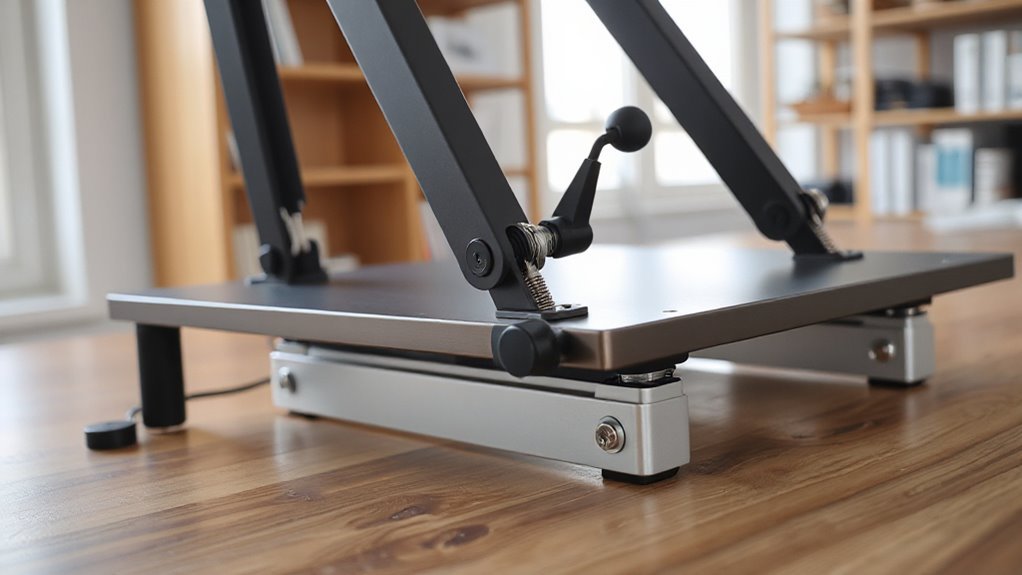
Understanding the installation and adjustment mechanisms of standing desk converters is essential for optimizing your workspace.
Manual height adjustment mechanisms include crank systems, which utilize gears for precise but slower adjustments. Counterbalance systems offer a balance with tension springs, requiring minimal effort. Gas cylinders enable easy height changes by locking or releasing pressure. Spring-assisted lifts make changes smoother, especially in two-tier designs.
Pneumatic systems feature compressed air cylinders for quick, effortless adjustments, while electric converters use motors for smooth, button-controlled height changes. They typically have presets for ergonomic positioning.
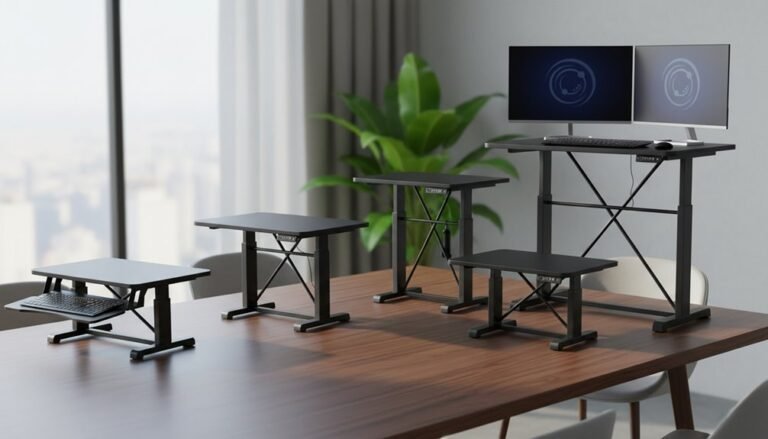
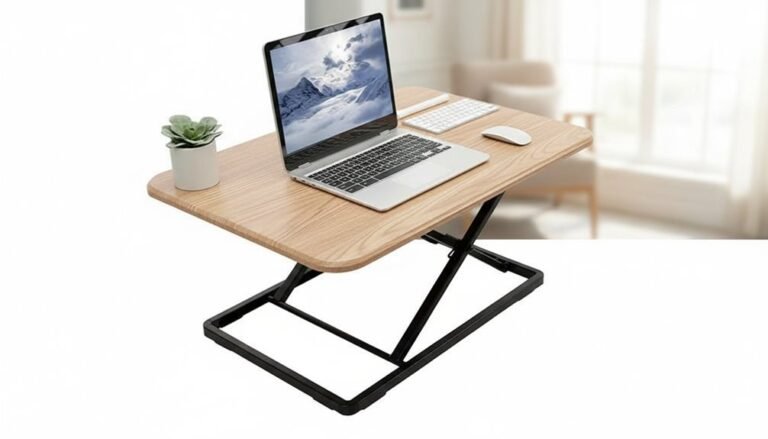
Stability is vital; X-lift converters provide better support for heavier loads, while solid bases enhance stability at all heights.
Choose the mechanism that suits your needs for a functional workspace.
Pricing and Product Range Variations
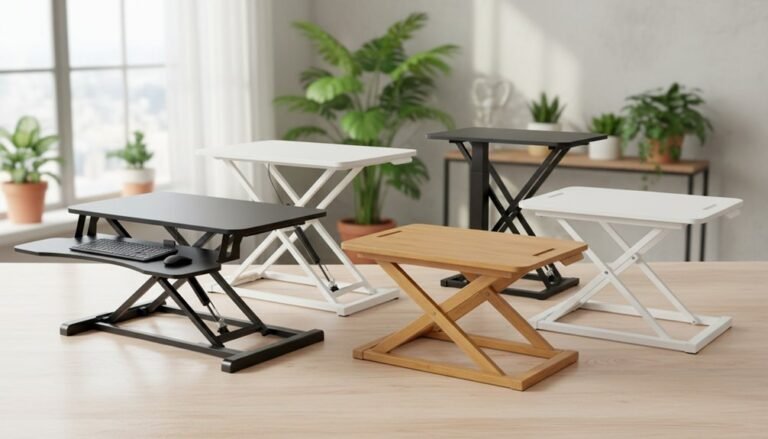
When evaluating standing desk converters, you’ll find a diverse range of pricing and product variations that cater to different needs and budgets.
- Budget-friendly options start around $130, like the Claiks 32″ model, designed for compact spaces.
- Mid-range professional models, priced between $400 and $750, offer advanced features and durability.
- Premium products range from $800 to $1,000, ideal for corporate and creative environments.
- Size and weight capacity notably affect pricing, with larger models commanding higher costs.
- Feature differentiation, such as electric versus manual operation, also influences price.
With these variations, you can select a converter that best aligns with your workspace requirements and budget constraints.
Frequently Asked Questions
How Do I Measure My Ideal Standing Desk Height?
To measure your ideal standing desk height, stand upright with your feet flat and shoulders relaxed.
Using a tape measure, find the distance from the floor to your elbow crease. This measurement serves as your baseline desk height.
Make sure your elbows rest at a 90-degree angle when adjusting the desk. For maximum comfort, confirm that your monitor aligns with your eyes when standing. This will promote better posture during use.
Can I Use a Standing Desk Converter With a Treadmill?
Yes, you can use a standing desk converter with a treadmill, but you’ll need to guarantee compatibility.
Aim for a minimum desktop width of 40 inches for basic pairing; 53 inches is ideal.
Consider the treadmill arm circumference, which should measure 9.4 inches or less for secure attachment.
Additionally, avoid tapered or slanted arms to maintain stability.
Proper alignment and sufficient space will enhance your workstation’s functionality and safety.
What Are the Health Benefits of Using a Standing Desk?
Using a standing desk reduces sedentary behavior, decreasing sitting time by about 100 minutes daily.
It alleviates neck, shoulder, and back pain, with 47% of users reporting discomfort reduction.
Metabolically, standing lowers post-meal blood sugar spikes by 11%, enhancing cardiovascular health.
Additionally, standing desks boost workplace performance, improving self-rated productivity and engagement.
How Often Should I Switch Between Sitting and Standing?
You should switch between sitting and standing every 30 minutes for best ergonomic benefits.
This 1:1 ratio allows your body to adjust gradually. Start with 20 minutes of standing, then 40 minutes of sitting, and increase standing time incrementally.
Listen to your body; factors like age and fitness level may affect your ideal schedule. Proper footwear and gradual changes can help reduce discomfort during this adjustment phase.
Are There Standing Desk Converters Specifically for Shorter Users?
Yes, there are standing desk converters specifically designed for shorter users.
Models like the UpDown PRO Series start at 25.2 inches, accommodating petite individuals well.
The VariDesk Pro Plus 48 offers a minimum height of 4.5 inches above the desk, while the VersaDesk Power Riser adjusts from 6.1 to 18.9 inches.
Electric converters allow precise height adjustments, catering to various user needs, ensuring comfort and ergonomic support throughout the workday.
Conclusion
In summary, choosing the right standing desk converter height is essential for your ergonomic setup. A height range that suits your body can transform your workspace, enhancing comfort and productivity.
The ideal converter should accommodate various equipment sizes while allowing seamless adjustments. With prices varying markedly, investing wisely can yield substantial long-term benefits.
Don’t underestimate the impact of proper positioning; it’s as important as finding the perfect chair. Prioritize your health and efficiency by selecting the appropriate height today.