Should You Use a Standing Desk All Day?
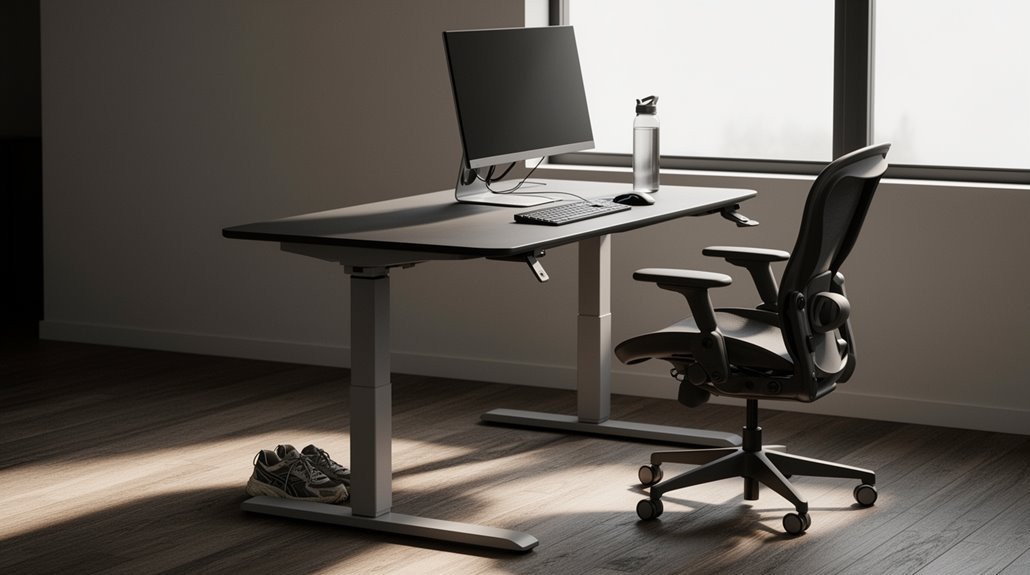
Should you use a standing desk all day? Using a standing desk all day isn’t recommended. While standing desks can reduce sitting time and lower discomfort, prolonged standing can cause circulatory issues and musculoskeletal problems.
Each extra 30 minutes of standing elevates circulatory risk by about 11%. Alternating between sitting and standing is key; it promotes better posture, activates muscles, and improves energy expenditure.
To maximize health benefits, incorporate regular movement breaks. Learn more about balancing these benefits and potential risks.
Health Benefits of Standing Desks
As you consider the health benefits of standing desks, it’s essential to emphasize that they greatly reduce sedentary behavior and sitting time.
Studies show that sit-stand desks markedly decrease total sitting time during work hours, with intervention groups achieving a p-value of 0.002 compared to controls. By alternating between sitting and standing, you lower sedentary behavior, enhancing overall physical activity during the day. This is supported by evidence indicating that sit-stand desk users experience significant decreases in discomfort, particularly in the neck and back.
Data from Scandinavia reveals that around 90% of office employees use sit-stand desks, demonstrating widespread adoption for sitting reduction. This practice promotes frequent postural changes and increases energy expenditure, even without additional physical movement.
Impact on Physical Discomfort
Using a standing desk can greatly affect physical discomfort experienced during work hours.
Research shows that alternating between sitting and standing can markedly reduce neck, shoulder, and lower back discomfort. Stand-biased desks promote better spinal alignment, decreasing strain associated with slouched posture. Users report up to a 54% reduction in upper back and neck pain during active use periods. Improved posture activates core and leg muscles, relieving pressure on lumbar discs. However, prolonged static standing can lead to discomfort and vascular issues. To mitigate this, it’s essential to recognize that regular movement breaks can significantly enhance overall comfort and reduce the risk of musculoskeletal strain.
It’s recommended to stand for 15 to 30 minutes per hour and incorporate movement. By regularly changing positions, you can enhance comfort and minimize muscle imbalances during your workday.
Effects on Fatigue and Energy Levels
Standing desks can greatly influence fatigue and energy levels throughout the workday. When you stand, your energy expenditure increases by about 7 kilocalories per hour compared to sitting, promoting higher calorie burn. This boost in energy use correlates with better oxygen consumption, enhancing metabolic function. Additionally, increased standing time is linked to better weight management, which can further enhance overall energy levels throughout the day.
Standing also improves circulation, reducing feelings of heaviness and fatigue. Alternating between sitting and standing helps combat post-work fatigue, as it promotes muscle activation and better blood flow. Workers using standing desks report improved mood and perceived energy levels, reducing afternoon slumps. Overall, standing desks can mitigate the negative effects of prolonged sitting, ultimately contributing to sustained energy throughout your work hours.
Influence on Productivity and Focus
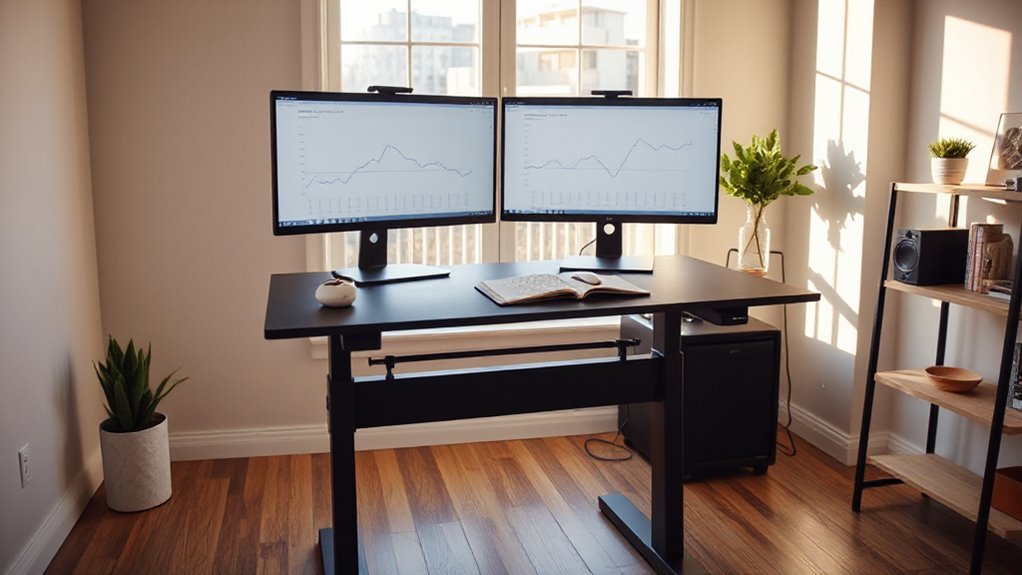
Research indicates that the use of a standing desk can markedly enhance productivity and focus during work hours.
Studies reveal significant benefits for employees who incorporate standing into their routines. For instance, a Texas A&M study found that workers using sit-stand desks saw a 46% increase in productivity. Additionally, 65% of participants in a Steelcase study noted improved concentration.
Here are key benefits you might experience:
- Improved productivity: Users often report higher output, like increased word counts during typing tasks.
- Enhanced focus: Standing desks may support better attention spans and decision-making abilities.
- Reduced sedentary behavior: Decreasing sitting time can lead to improved work engagement and energy.
Consider these factors when evaluating a standing desk’s potential impact on your work performance.
Risks and Limitations of All-Day Standing
When you opt for all-day standing, it’s important to recognize the potential health risks associated with prolonged periods in this position.
Standing more than two hours daily greatly increases your risk of circulatory issues, including deep vein thrombosis and varicose veins. Each additional 30 minutes of standing raises this risk by about 11%.
In addition, you may experience musculoskeletal problems, such as lower limb discomfort and back pain, due to the strain on your joints and muscles.
Standing without movement doesn’t mitigate the risks of obesity or cardiovascular disease either.
To maintain health, incorporate regular movement and breaks, rather than relying solely on a standing desk for improvements.
Prioritizing movement is key to minimizing these risks effectively.
Frequently Asked Questions
Can Standing Desks Help With Weight Loss?
Standing desks can contribute to weight loss, but the effect is modest.
You burn about 0.15 more calories per minute while standing compared to sitting. For a 143-pound adult, replacing six hours of sitting with standing can result in an extra 54 calories burned daily, potentially leading to a 5.5-pound weight loss over a year.
However, without additional lifestyle changes, standing alone may not greatly impact your weight.
How Do I Adjust My Standing Desk Properly?
To adjust your standing desk properly, first, set the desk height so your elbows form a 90-degree angle while typing.
Position your monitor top at eye level, ensuring it’s 20-28 inches away.
Stand with feet hip-width apart, and keep your spine in a natural curve.
Avoid locking your knees; maintain a slight bend.
Use an anti-fatigue mat for comfort, and consider supportive footwear to reduce joint strain during extended periods of standing.
What Accessories Enhance Standing Desk Use?
Anti-Fatigue Mats: These mats reduce pressure on your feet, encouraging movement and stretching.
Their contoured surfaces and sloped sidewalls enhance comfort and flexibility.
Monitor Arms: They maintain eye-level alignment, reducing neck strain.
Adjustable options clear desk space and offer stability for dual monitors.
Active Seating Options: Wobble stools promote core engagement.
Their lightweight design allows easy shift between sitting and standing.
Ergonomic Accessories: Keyboard platforms optimize wrist angles, while cable management systems keep your workspace organized.
Are Standing Desks Suitable for Everyone?
Standing desks aren’t suitable for everyone. Individuals with circulatory or cardiovascular conditions may face increased risks.
Chronic lower limb pain or musculoskeletal disorders can worsen with prolonged standing. Hypertensive individuals mightn’t see benefits and could experience heightened arterial stiffness.
However, those with sedentary lifestyles may gain from reduced sitting time.
Ergonomic setups and regular movement breaks are essential for all users to minimize health risks and maximize potential advantages.
How Can I Transition to a Standing Desk Gradually?
To shift to a standing desk gradually, start with short intervals of 15-30 minutes per hour.
As you adapt, increase your standing time over several days or weeks.
Use a height-adjustable desk to alternate between sitting and standing every 30-60 minutes.
Guarantee your desk height allows for a 90-degree elbow angle, and incorporate regular movement breaks every 30-60 minutes to enhance circulation and reduce discomfort throughout the day.
Conclusion
To sum up, using a standing desk all day isn’t a one-size-fits-all solution. While it can enhance energy and reduce discomfort, standing continuously may lead to fatigue and strain.
Like a tightrope walker, balance is essential. Alternate between sitting and standing to optimize health benefits and maintain productivity.
Listen to your body, adjust your routine, and consider ergonomic accessories. By doing so, you can create a work environment that supports your well-being and enhances your focus effectively.