How to Choose the Right Standing Desk Converter
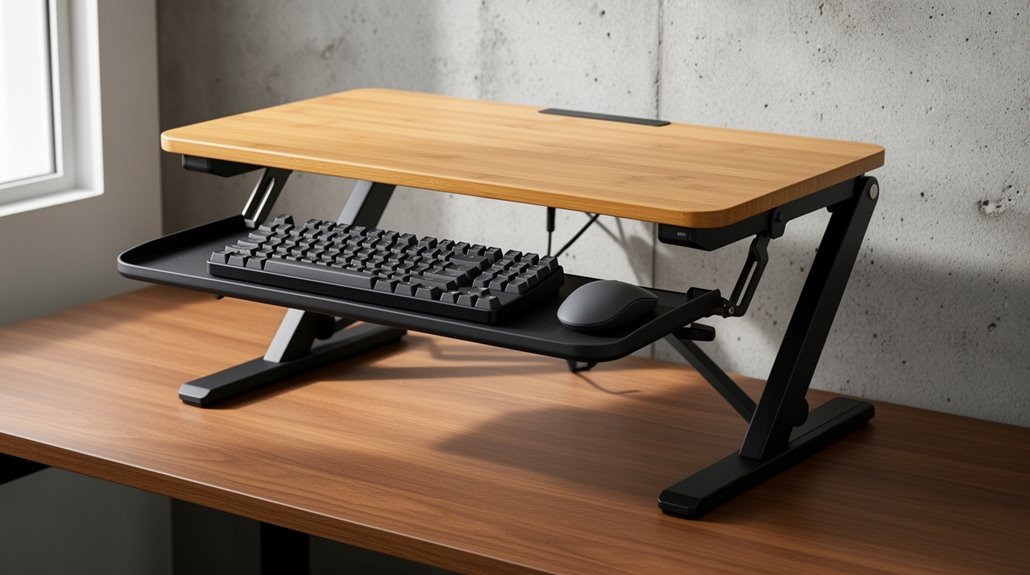
To choose the right standing desk converter, start by evaluating the type you need—X-lift, Z-lift, electric, or post & base. Each design has different mechanisms and footprints, so match the style to your workspace and how often you’ll switch between sitting and standing.
Next, consider key features like surface size. A suitable range is about 890 mm to 915 mm to accommodate a monitor and keyboard comfortably. Also check weight capacity, which typically falls between 10 kg and 50 kg, to ensure your devices are well supported.
Assess height adjustability for ergonomic benefits; an ideal adjustable range is roughly 11 to 17.75 inches so you can position your screen and input devices at the right heights. Finally, investigate performance metrics such as stability and compliance with UL standards to ensure safe, reliable use.
Understanding these details will help you narrow options and make an informed choice when buying a standing desk converter.
Understanding Different Types of Standing Desk Converters
How do you choose the right standing desk converter for your needs? Start by understanding the different types available. Look for standing desk converter recommendations that fit your workspace and ergonomic preferences. Consider models from trusted brands like Vari and Flexispot, as they often receive positive reviews from users. Additionally, explore user testimonials and expert opinions to help guide your decision. adjusting to a standing desk transition can greatly enhance your productivity and comfort levels at work. It’s important to give yourself time to adapt to the new setup and to make adjustments as necessary for optimal ergonomics. Don’t forget to incorporate regular breaks and stretching to complement the benefits of standing while you work.
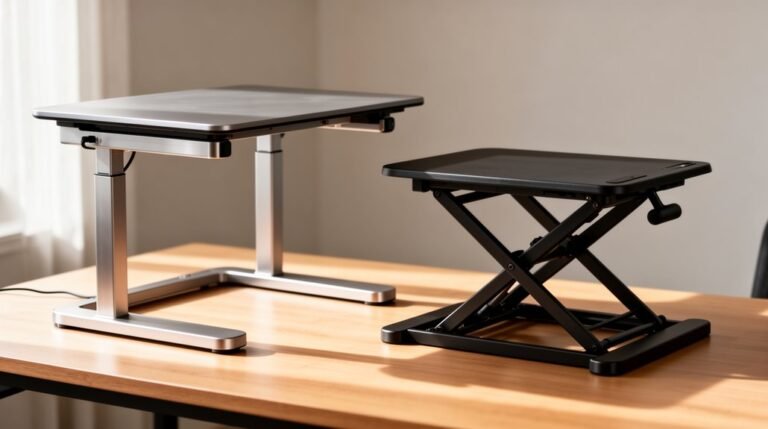
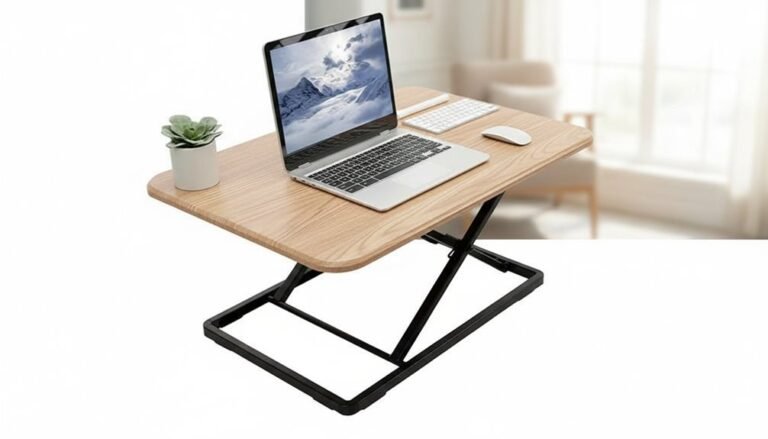
X-Lift converters feature an X-pattern frame, providing stability and smooth height adjustments. They’re budget-friendly and robust, supporting up to 33 lbs.
Z-Lift models have a Z-shaped frame, offering a larger workspace but can be bulkier and risk tipping.
Electric converters use motorized systems for easy adjustments and often include added features.
Post & Base designs are compact, ideal for small spaces, while Dual-Platform converters allow independent monitor and keyboard adjustments. Each type has unique attributes, so consider your workspace needs and equipment weight before making a decision. This guarantees you select a converter that best fits your requirements, especially since using standing desks can reduce the risk of sedentary lifestyle-related issues.
Key Features to Look For
When selecting a standing desk converter, it’s important to focus on key features that align with your workspace needs.
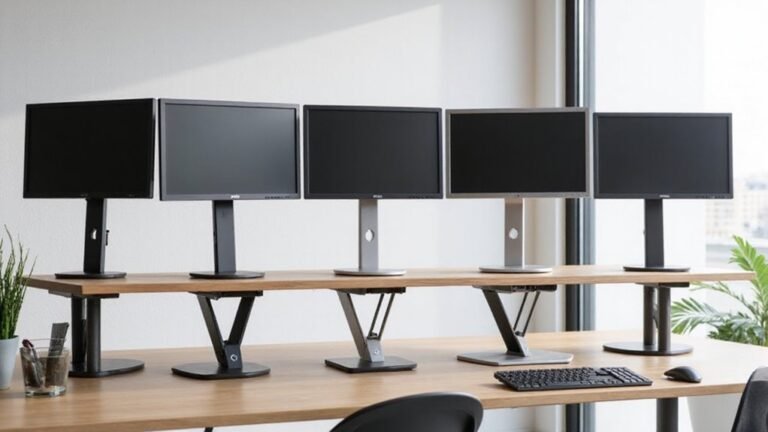
First, consider surface size; a larger desktop (around 890 mm to 915 mm) accommodates multiple monitors and accessories, while compact models fit smaller spaces. The VariDesk Pro Plus 30 features a two-tier design that accommodates one monitor with a keyboard/mouse deck, making it ideal for a streamlined workspace.
Next, check the weight capacity; converters range from 10 kg to over 20 kg, with premium models supporting up to 50 kg.
Height adjustability is vital for ergonomics; look for models with a lift range of 11 to 17.75 inches.
Finally, verify material quality; thicker gauge steel and durable finishes enhance longevity. Assess ease of use; fully assembled models or those with intuitive height adjustments improve your workflow efficiency without hassle.
Evaluating Performance and Stability
Performance and stability are essential factors in determining the effectiveness of a standing desk converter. To evaluate stability, consider wobble deflection scoring systems, which score from 0-20, indicating excellent stability when users notice no motion.
Utilize WobbleMeter technology for standardized assessments of wobble at various heights. Check for compliance with UL 1678 testing standards, which evaluate monitor stability and pinch safety. Weight capacity should be verified through laboratory testing, as actual performance may exceed manufacturer ratings.
Assess frame rigidity; play in construction can lead to instability. Regular maintenance, such as checking fastener torque every 3-4 months, maintains long-term stability. Always position heavy items closer to the center to minimize leverage and enhance overall performance. Ensuring symmetrical load distribution is vital for maintaining balance and preventing instability.
Importance of Ergonomics and User Experience
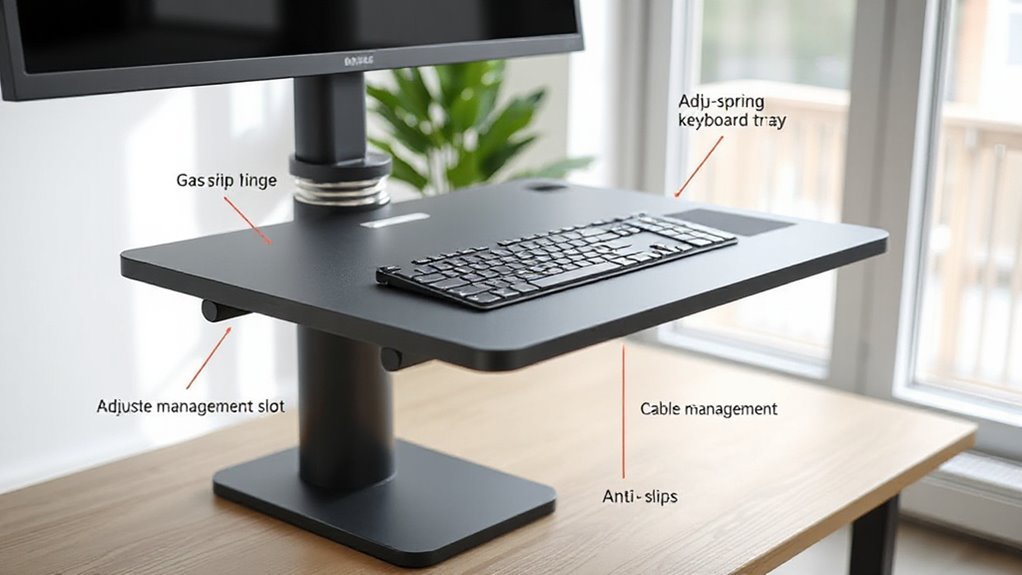
Choosing a standing desk converter that prioritizes ergonomics enhances your overall user experience.
Ergonomic design features, like separate keyboard trays, reduce neck and back strain. Position your monitor with the top at or slightly below eye level to prevent cervical spine stress. Make certain the height accommodates your stature, as inadequate range leads to compensatory bending.
Adjustable risers optimize screen placement, promoting postural alignment. Flexible monitor arms allow angle adjustments for comfort. Additionally, a keyboard tray that maintains wrist neutrality prevents strain injuries.
Check weight capacity to confirm structural stability during height changes. Prioritizing these ergonomic factors not only improves comfort but also maintains productivity throughout your workday.
Budgeting for Your Standing Desk Converter
Start by determining your ergonomic needs. Budget models, like the E3 Compact, begin at $149 for basic features.
Mid-tier options, such as the Vivo 32-inch, range from $200 to $300, offering a balance of stability and performance.
Premium models, like the Ergotron WorkFit-S, exceed $800 and provide advanced features.
Consider the adjustment mechanism; electric models typically start around $600 due to motorized features.
Factor in potential additional costs, like shipping or assembly tools.
Look for refurbished models and coupon codes to maximize savings.
Prioritize essential features, as budget options may compromise on materials and stability but still deliver core ergonomic benefits.
Choose wisely to justify your investment.
Popular Models and Their Benefits
When you evaluate standing desk converters, several popular models stand out for their unique features and benefits.
The VariDesk Essential 36 offers 11 height settings and supports up to 35 pounds, making it ideal for dual monitors. Its two-tier design enhances posture, while a weighted base guarantees stability.
The Ergotron WorkFit Series includes the WorkFit-TL, which features easy installation and a large surface area, and the WorkFit-S, known for its tilting column.
FlexiSpot’s M2 ClassicRiser supports 35 pounds and boasts a sleek design.
Finally, the Mount-It! Converter is minimalist yet sturdy, accommodating multiple devices.
Each model provides smooth height adjustments, catering to a range of ergonomic needs.
Maintenance and Care Tips
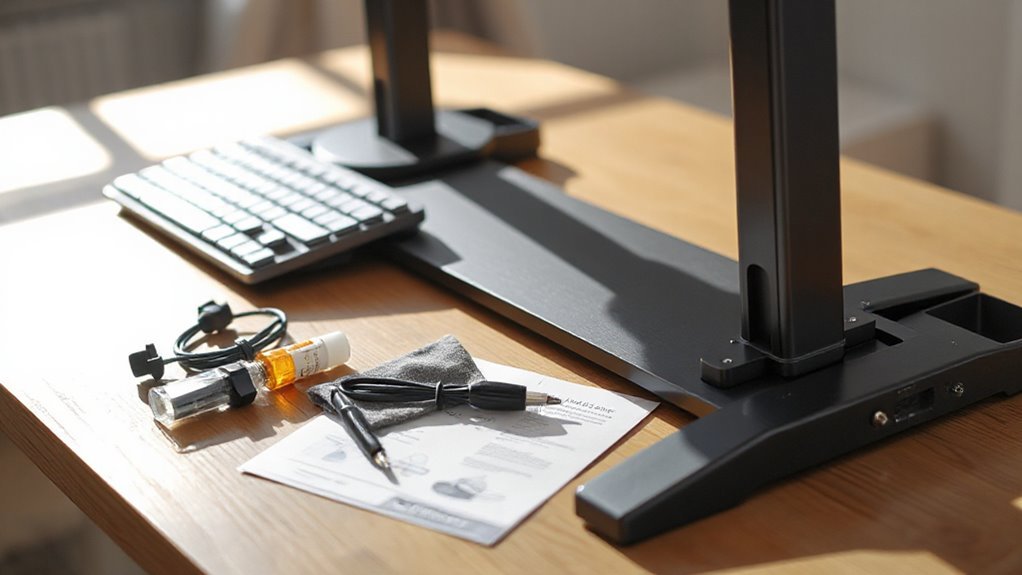
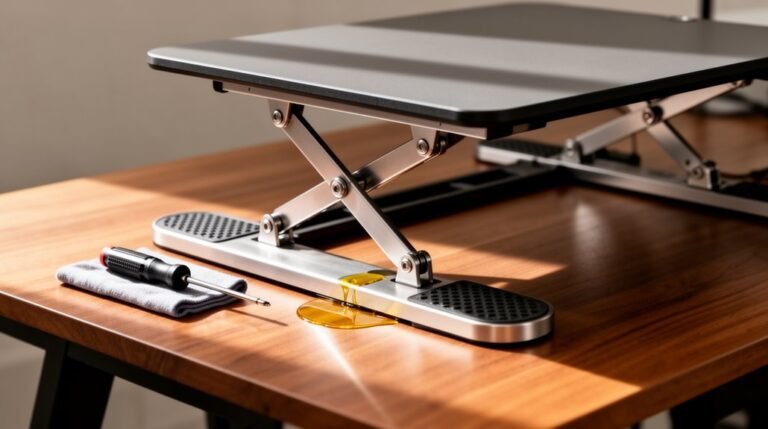
Maintaining your standing desk converter is essential for guaranteeing its longevity and ideal performance. Regularly clean surfaces with a soft, damp cloth to prevent dirt buildup. For tougher stains, use mild soap and water, avoiding saturation.
Lubricate moving parts, like gas springs, periodically to guarantee smooth height adjustments, following the manufacturer’s guidelines. Inspect bolts and screws for tightness to maintain stability, especially when fully extended.
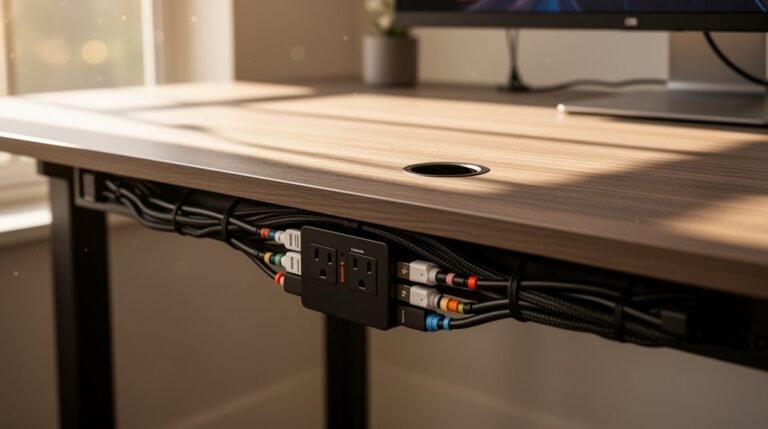
Organize cables using clips or trays to prevent tangling and wear. Always adhere to the recommended weight limits, typically 30-40 lbs, and distribute equipment evenly for balanced performance.
These maintenance practices enhance functionality and prolong the lifespan of your converter, keeping your workspace efficient and safe.
Making the Final Decision
Making the final decision on a standing desk converter involves weighing various factors that impact functionality, performance, and value.
Start with your budget; prices range from $149.99 to $377.75. Mid-range options typically offer a balance between cost and performance.
Next, consider weight capacity; basic models support loads under 10 kg, while heavy-duty converters handle over 20 kg.
Evaluate workspace size; compact designs suit limited areas, while larger converters accommodate multiple monitors.
Check assembly requirements; tool-free options allow quick setup, while heavier models may need professional help.
Finally, assess stability and durability; high-grade steel frames enhance strength, and dual-spring systems guarantee smooth operation.
Prioritize features that align with your specific needs for peak performance.
Frequently Asked Questions
Can Standing Desk Converters Help Reduce Back Pain?
Yes, standing desk converters can help reduce back pain. They allow you to alternate between sitting and standing, which decreases spinal compression and muscle fatigue.
Proper ergonomic setup, with monitors at eye level and elbows at 90 degrees, minimizes strain. Studies indicate that regular postural changes can alleviate discomfort in your neck and back.
Additionally, improved circulation from standing may reduce stiffness, enhancing overall musculoskeletal health and energy levels during work hours.
How Do I Clean and Maintain My Standing Desk Converter?
Cleaning Your Standing Desk Converter
To keep your desk converter as fresh as a morning breeze, use a soft, damp cloth for all surfaces.
Wipe lifting columns and motors regularly to prevent dust buildup. For tough stains, apply a mild soap and water solution, wiping immediately.
Avoid harsh chemicals to protect the finish.
Regularly inspect and lubricate moving parts according to manufacturer guidelines, ensuring smooth operation and continued performance for your workspace.
Are Standing Desk Converters Suitable for All Types of Desks?
Standing desk converters aren’t suitable for all types of desks.
They require a flat, stable surface and a minimum depth of 20″–24″.
Desks with very low heights, built-in drawers, or non-standard shapes may not accommodate them.
Additionally, if your desk has a sloped edge or is made of glass, confirm it’s rated for the converter’s weight.
Always check weight limits; exceeding them can lead to damage or instability.
Can I Use a Standing Desk Converter With a Laptop?
Yes, you can use a standing desk converter with a laptop.
Most converters feature compact platforms, typically measuring 26.4 x 18.5 inches, accommodating laptops, keyboards, and mice. They often support weights up to 17.6 lb (8 kg), ensuring stability.
Pneumatic and electric height adjustments facilitate smooth shifts between sitting and standing. Additionally, these converters integrate easily with existing desks, requiring minimal assembly and allowing you to create an ergonomic workspace tailored to your needs.
What Are the Environmental Impacts of Standing Desk Converters?
Standing desk converters can impact the environment in various ways. They often use virgin materials, which increase carbon footprints during production.
Sustainable options, like recycled wood, reduce this impact. Electric motors consume minimal energy but contribute to e-waste issues when disposed of improperly.
Additionally, components like PVC cords contain hazardous chemicals that can contaminate landfills. Opting for converters made from durable, recyclable materials can help mitigate these environmental concerns.
Conclusion
In conclusion, choosing the right standing desk converter requires careful consideration of various factors.
Research shows that using a standing desk can increase productivity by up to 46%.
Focus on key features like adjustable height, stability, and ergonomic design to enhance your work experience.
Set a budget that aligns with your needs and evaluate popular models for their benefits.
By prioritizing these elements, you can make an informed decision that supports your health and efficiency at work.