Is a Balance Board at Your Desk Safe?
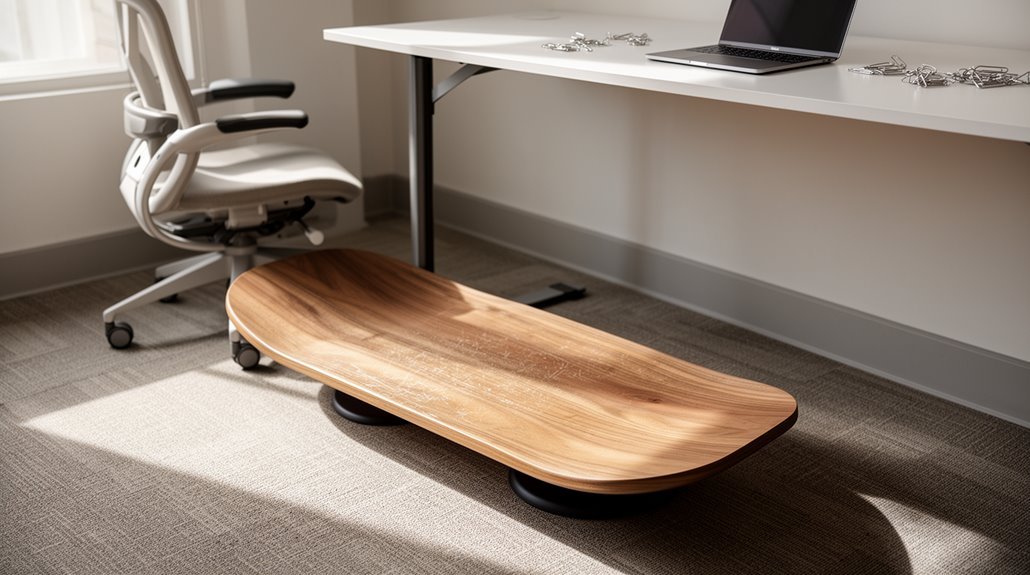
Balance boards at your desk can be safe and beneficial. A balance board engages core muscles and increases energy expenditure by about 14–19% compared to sitting.
Take precautions when using a balance board. Wear supportive, grippy footwear and consider protective gear if you’re new to it. Maintain a clear area of 3 to 6 feet around the board to avoid collisions.
Beginners should use support from sturdy furniture or a wall until they feel stable. Although productivity tends to remain consistent for users, learning and practicing safe-use techniques is important to get the most benefit.
Understanding Balance Boards and Their Use
As you explore balance boards, it’s important to recognize their unique design and functionality.
These boards feature a flat standing surface combined with a curved bottom, allowing for weight shifting while maintaining balance. This design requires constant body adjustments, engaging your core muscles continuously. The equipment creates an uneven surface that demands the engagement of stabilizer muscles, promoting subtle movement even during stationary work activities. Engineered with workplace safety considerations, balance boards support ergonomic positioning, enhancing your work environment. Their dynamic nature helps break the monotony of static standing, engaging multiple muscle groups, including your core. This engagement fosters improved spinal alignment and posture, making balance boards a valuable addition to your workspace. Additionally, they offer the benefit of enhancing overall stability while you work, allowing for a more productive and comfortable experience.
Energy Expenditure and Caloric Burn
Using a balance board at your desk can increase energy expenditure by approximately 14-19% compared to sitting still.
Research shows that:
- Standing on a FluidStance® balance board yields a 19.2% increase in energy expenditure.
- Energy expenditure is 14.2% higher on a balance board than sitting, and 11.6% higher than standing on a flat surface.
- Continuous balance challenges enhance muscle activation, improving overall metabolic rates. Additionally, using a balance board can help burn more calories than simply standing still, making it an effective tool for those seeking to increase their daily energy expenditure.
These modest yet consistent increases contribute positively over extended work periods, leading to better calorie burn without formal exercise.
Incorporating balance boards in your workspace can effectively reduce sedentary time while promoting energy expenditure and dynamic muscle engagement.
Safety Considerations for Balance Board Users
When using a balance board, safety considerations are essential to prevent injuries and guarantee an effective workout experience.
Start by wearing protective gear, such as helmets, knee pads, and wrist guards, which reduce the risk of injury. Make sure your footwear provides good grip and ankle support for enhanced stability.
Before use, clear the area of obstacles and maintain a 3 to 6-foot clearance around the board for safety. Position the balance board on carpet to minimize movement and potential falls.
For beginners, use walls or sturdy furniture for support. Choose boards with a height under 3.5 inches and a moderate tilt of 15 degrees to reduce instability. Office balance boards are also popular accessories for standing desks, making them a great addition to your workspace.
These precautions will help enhance your balance training while minimizing risks.
Risk Factors and Precautions to Take
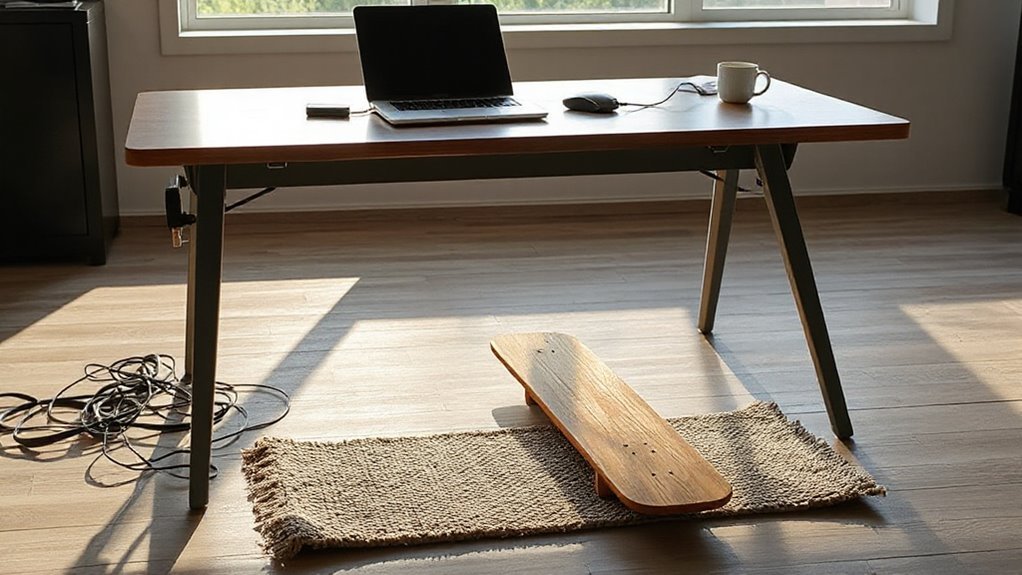
Understanding the risk factors associated with desk-based balance board use is essential for ensuring safety and effectiveness. Several precautions help mitigate these risks:
- Use a non-slip, flat surface free of clutter to prevent falls.
- Keep a supportive structure, like a desk or wall, within reach for stability.
- Start with short durations and gradually increase time as your balance improves.
Beginners or those with weak ankles or knees face a higher risk of falls. Individuals with balance disorders or recent injuries should avoid use.
Unstable surfaces can lead to strains, while prolonged use may cause muscle fatigue. Always inspect your balance board for wear or damage to maintain safety.
Taking these precautions can markedly reduce the likelihood of injury.
Musculoskeletal and Postural Benefits
Balance boards offer significant musculoskeletal and postural benefits by engaging various muscle groups and promoting proper alignment. They activate deep abdominal muscles, obliques, and lower back, enhancing core strength. This activation reduces the likelihood of injuries, particularly for seniors. Improved core strength prevents excessive strain on back muscles, addressing muscular imbalances that lead to chronic pain.
Additionally, balance boards promote natural spinal alignment, countering “tech neck” and hunched shoulders common among prolonged computer users. Sustained use helps correct postural issues, leading to long-term improvements.
The gentle movement decompresses the spine, distributing pressure evenly and reducing strain during static positions. Overall, balance boards enhance coordination, body awareness, and functional mobility while contributing to long-term musculoskeletal health.
Impact on Fatigue and Pain Levels
Using a balance board can influence fatigue and pain levels during work sessions. Research shows that fatigue remains similar whether you sit, stand, or use a balance board. Pain levels also don’t greatly differ across these positions.
However, here are some key points to reflect on:
- Fatigue tends to accumulate over time, regardless of your position.
- Balance boards promote energy expenditure without greatly increasing fatigue, burning about 25 extra calories daily.
- Users may experience temporary discomfort initially, but gradual integration can help mitigate this.
Productivity and Work Performance
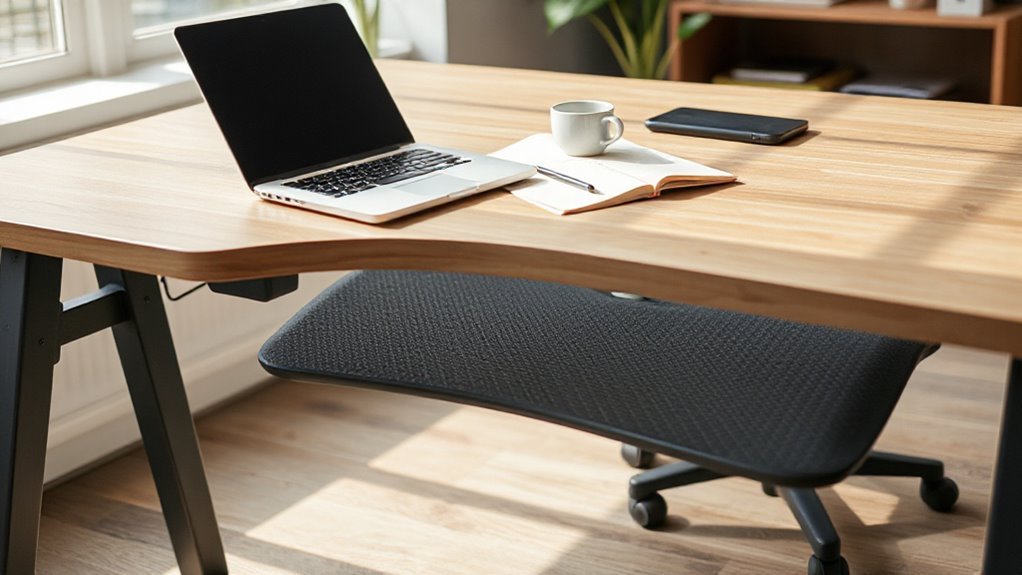
While many might assume that different work positions impact productivity, studies indicate that there’s no significant difference in output between sitting, standing, or using a balance board.
Research shows productivity levels remain consistent across these conditions. Using a balance board doesn’t hinder your ability to complete tasks effectively. In fact, the slight movement required enhances cognitive function by stimulating blood flow and oxygen delivery to your brain, leading to improved focus.
Users report feeling more alert, with energy expenditure increasing by 14.2% compared to sitting. Incorporating a balance board into your workspace can boost satisfaction, indicating a commitment to employee wellbeing, all while maintaining productivity levels similar to traditional work positions.
Ergonomic Features of Office Balance Boards
Office balance boards incorporate several ergonomic features designed to enhance user comfort and support healthy posture.
These features promote active engagement of core muscles, which strengthens your posture and helps maintain spinal alignment.
Key ergonomic benefits include:
- 360° Movement: The tilt geometry allows you to shift your weight in multiple directions, reducing fatigue and encouraging active standing.
- Anti-Fatigue Technology: Textured surfaces decrease pressure on your joints and muscles, while soft foam cushioning minimizes foot strain during prolonged use.
- Joint Engagement: Patented designs activate ankle and foot muscles, enhancing flexibility and promoting muscle growth throughout your workday.
These features work together to foster a healthier work environment, potentially reducing the risk of musculoskeletal issues over time.
Recommendations for Safe Use in Work Environments
To guarantee safe use of balance boards in work environments, a stable setup is essential. Use a flat, non-slip surface like carpet or rubber mats to minimize fall risks.
Clear obstacles from the surrounding area to avoid injuries during falls. Maintain at least 3 feet of clearance around you for safe movement.
Wear supportive footwear with good grip; barefoot use is acceptable for advanced users. Gradually acclimate by starting with support and short durations.
Regularly inspect the board for damage. Choose boards with stable platforms and non-slip surfaces.
Incorporate balance board usage into your daily routine, alternating with sitting and standing. Store boards in clutter-free spaces to reduce hazards when not in use.
Regularly clean boards for hygiene.
Research Gaps and Limitations in Balance Board Studies
Research on balance boards reveals significant gaps and limitations that can impact understanding their effectiveness and safety. Many studies have short durations and small sample sizes, which hinder the generalizability of findings.
Key issues include:
- Limited participant diversity: Most studies focus on healthy adults, neglecting older populations and those with disabilities.
- Inadequate productivity measures: Assessments often rely on typing speed and accuracy, which may not capture all job types or complex tasks.
- Lack of long-term data: Few studies track participants beyond immediate sessions, leaving long-term safety and efficacy unexamined.
These gaps create uncertainty regarding the true impact of balance boards in various work environments.
Without more thorough research, you may not have a complete understanding of their benefits and risks.
Frequently Asked Questions
Can Children Use Balance Boards Safely in Home Offices?
Yes, children can use balance boards safely in home offices with proper precautions.
Guarantee adult supervision to prevent falls. Choose age-appropriate boards with rounded edges and non-slip surfaces. Introduce the boards gradually to build confidence.
Encourage children to wear protective gear, like helmets and pads, especially when starting. Integrate movement breaks, and monitor their usage to avoid fatigue.
Utilize flat, clutter-free areas to enhance safety and effectiveness during use.
Are There Specific Balance Board Exercises for Beginners?
Beginner Balance Board Exercises
Start with simple rocking motions, side-to-side or front-to-back, to establish foundational stability.
Stand with feet shoulder-width apart, then shift your weight gently from one foot to the other, enhancing your balance.
Introduce small circular hip movements to challenge proprioception.
Gradually practice static standing for short intervals, like 5–10 minutes, to build confidence.
Always make certain a stable object is nearby for support during your initial sessions.
How Do I Clean and Maintain My Balance Board?
Cleaning Your Balance Board
Wipe wooden boards gently with a damp microfiber cloth.
For plastic surfaces, use mild soap and water, applying it with a soft cloth, and dry immediately.
Dust rubber or foam bases regularly and clean with rubber-safe cleaners.
Wipe metal parts with a dry cloth to prevent rust.
Clean textured grips using a soft-bristled brush.
Regular maintenance guarantees peak performance and longevity, keeping your board safe and effective.
Can Balance Boards Be Used on Carpeted Surfaces?
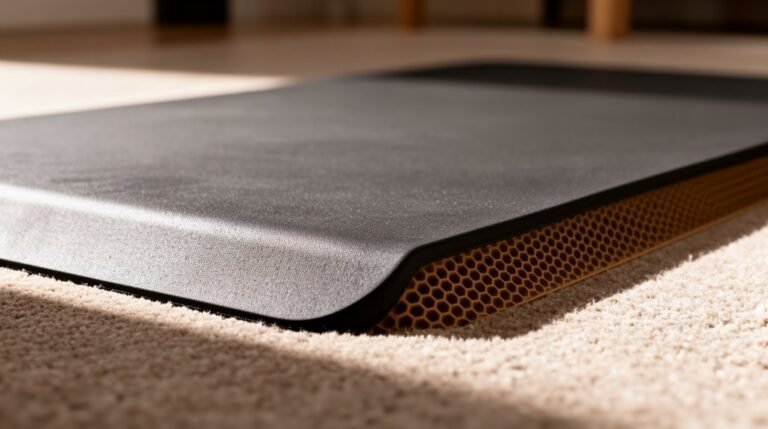
Yes, balance boards can be used on carpeted surfaces. Carpet slows movement, reducing injury risk, especially for beginners. The thicker the carpet pile, the safer the experience.
It also provides a softer landing, minimizing joint impact. Practicing on carpet enhances stability and decreases slipping likelihood. However, safety gear is still recommended.
For those without carpet, consider alternatives like grass or interlocking foam mats to maintain safety and protect your board.
What Is the Best Footwear for Using a Balance Board?
For ideal balance board use, choose shoes with firm, supportive soles. These prevent excessive foot movement, enhancing stability.
Look for closed-toe designs to protect your toes, and non-slip soles to maintain traction. Moderately flexible soles allow natural foot movement while providing enough rigidity.
Avoid loose-fitting shoes and high heels, as they can compromise balance. Properly fitting footwear guarantees you maintain control and prevent injuries while engaging in dynamic movements.
Conclusion
Using a balance board at your desk can enhance energy expenditure. Studies show users can burn up to 100 calories more per hour compared to sitting.
However, safety is essential. Make sure you maintain proper posture and start with short sessions.
Also consider your workspace layout to avoid hazards. By following these guidelines, you can enjoy musculoskeletal benefits while minimizing risks.
Ultimately, integrating a balance board requires careful consideration to promote both productivity and safety in your work environment.