How to Choose an Anti-Fatigue Mat
To choose an anti-fatigue mat, consider the type, material, and thickness to match your workspace needs.
Rubber mats offer superior shock absorption and durability, while PVC mats are flexible and resistant to grease and oils. Look for a non-slip surface to reduce the risk of slips and falls.
Aim for a thickness of about 1/2 to 5/8 inch for ideal support and comfort. Prioritize mats that resist chemicals and wear so they last longer under heavy use.
Ergonomic benefits include improved circulation and reduced discomfort from standing. Verify that the mat complies with relevant safety standards, and perform regular maintenance to extend its life.
Understanding Different Types of Anti-Fatigue Mats
When you’re selecting an anti-fatigue mat, it’s essential to contemplate the various materials available, as they significantly influence comfort and durability.
Rubber mats provide superior shock absorption, making them ideal for extended standing. They resist flattening over time and suit diverse environments, from industrial to home. Anti-fatigue matting is particularly beneficial for individuals experiencing pain in feet, ankles, and legs.
PVC mats offer flexibility and good anti-fatigue properties, perfect for kitchens due to their grease resistance.
Foam mats are lightweight, customizable in thickness, and best for light-duty use in offices.
Polyurethane mats excel in comfort and durability but tend to be pricier.
Nitrile rubber mats combine longevity and traction, especially in wet or oily conditions.
Each material has specific advantages, so consider your environment and usage needs carefully.
Key Features to Look For
To guarantee you select the best anti-fatigue mat for your needs, focus on critical features that directly impact comfort and safety. Here are key aspects to take into account:
- Material Composition: Look for closed-cell PVC or nitrile rubber for durability and chemical resistance.
- Surface Texture: Choose non-slip surfaces to minimize slip hazards, especially in wet areas.
- Thickness and Cushioning: Select mats with a thickness of 1/2 to 5/8 inch for adequate support. Additionally, be aware that access issues can occur without prior warning, which can affect your ability to research mat options online.
- Durability and Resistance: Make sure mats withstand heavy foot traffic and industrial chemicals for longevity.
- Application-Specific Features: Take into account drainage holes for wet environments and anti-static properties for electronics.
Ergonomic Benefits of Anti-Fatigue Mats
Anti-fatigue mats provide significant ergonomic advantages that enhance comfort and support during prolonged standing. They stimulate micro-movements in your calf and leg muscles, promoting continuous blood flow and reducing blood pooling. This leads to improved circulation, lowering the risk of varicose veins and muscle stiffness. Mats also reduce musculoskeletal strain by evenly distributing body weight, which can decrease lower back pain by up to 50%. Additionally, they encourage better posture and balance, minimizing the risk of slips and falls. Studies show that anti-fatigue mats can significantly reduce discomfort associated with long periods of standing.
Health and Safety Considerations
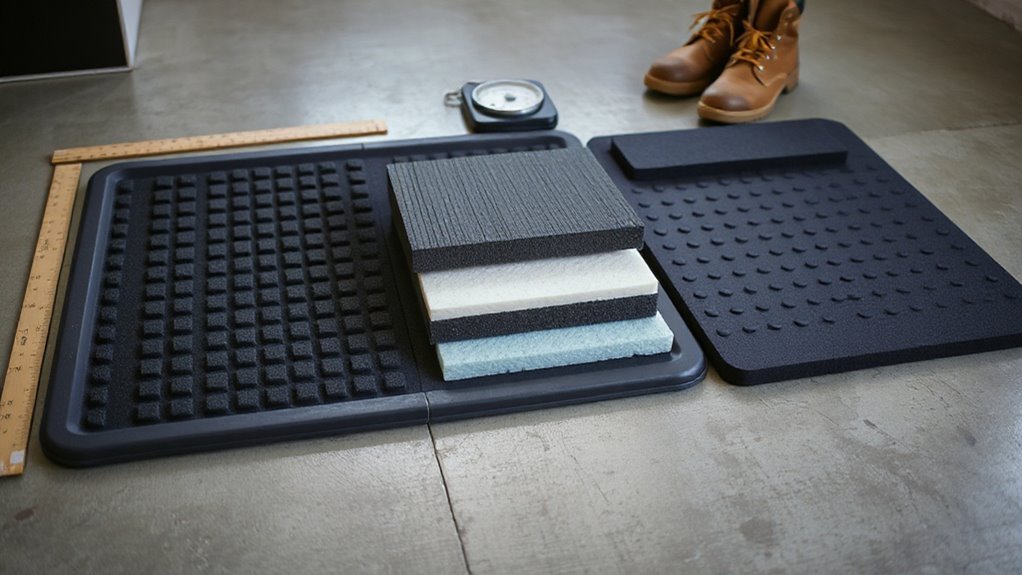
Selecting the right mat involves understanding various health and safety considerations that can impact workplace safety and employee well-being.
- Slip-resistant surfaces minimize the risk of slips and falls.
- Textured grips and beveled edges enhance stability.
- Compliance with ADA and OSHA standards guarantees safety.
- Regular inspection and maintenance prevent unnoticed hazards.
- Appropriate mat thickness reduces tripping risks.
Choose a mat that meets these criteria to enhance safety in your work environment. Thicker mats made from nitrile rubber provide better stability, while regular cleaning preserves their slip-resistant properties.
Inspect mats every 30 to 90 days, replacing damaged ones immediately. By prioritizing these health and safety aspects, you contribute to a safer and more comfortable workplace for everyone.
Impact on Productivity and Business Outcomes
The choice of anti-fatigue mats not only addresses health and safety but also directly impacts productivity and business outcomes.
These mats can reduce worker fatigue by up to 50%, leading to enhanced focus and energy during long shifts. Standing on hard surfaces uses about 20% more energy than sitting, but mats help mitigate this effect.
Research shows a potential 2–5% increase in productivity due to decreased fatigue, contributing markedly across teams. Additionally, ergonomic improvements foster a more comfortable work environment, reducing errors.
Selecting the Right Mat for Your Environment
Choosing the right mat for your environment requires careful consideration of various factors, including material, thickness, and surface texture.
- Rubber mats provide elasticity and shock absorption.
- PVC mats resist grease and oil, perfect for kitchens.
- Polyurethane mats excel in comfort but have limited heat resistance.
- Foam mats are suited for light-duty settings but may compress.
- Anti-slip surfaces enhance safety in wet or oily areas.
Consider the specific conditions of your workspace. For wet environments, choose nitrile rubber or PVC.
In dry settings, rubber or polyurethane will work well.
Prioritize thickness based on your activity level and make certain the mat’s surface texture facilitates traction and cleaning.
Select wisely to enhance comfort and safety.
Sizing Your Anti-Fatigue Mat
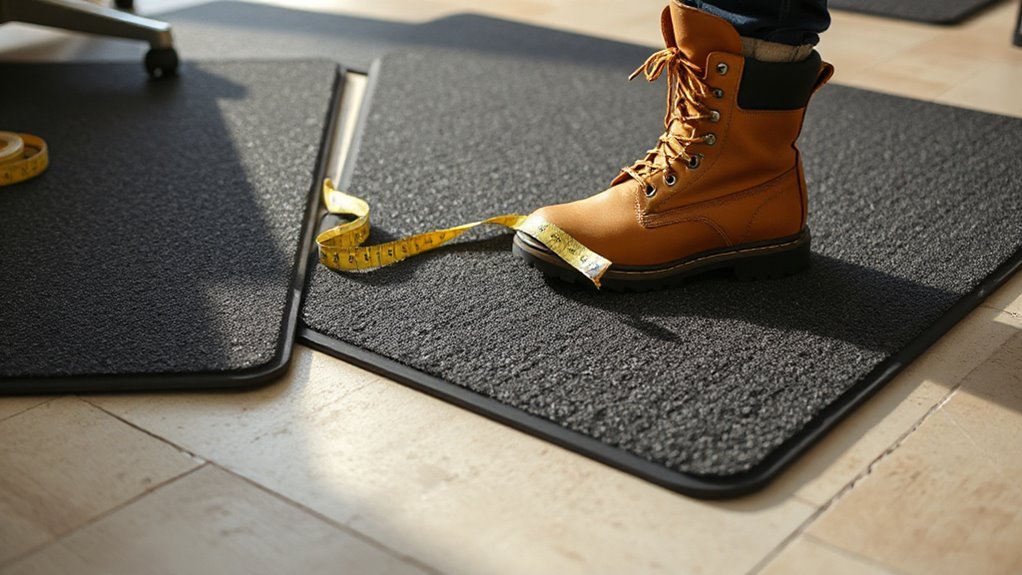
When you’re sizing your anti-fatigue mat, it’s essential to contemplate both dimensions and coverage area to guarantee ideal support.
Standard mat sizes, like 2′ x 3′ or 3′ x 5′, cater to various workspace needs. Smaller mats target limited areas, while larger mats cover entire workstations for full foot support. Custom dimensions fit unique layouts, including shapes like octagonal mats.
Ensure the mat allows for multiple standing positions without stepping off, which maximizes ergonomic benefits. Measure your standing area accurately, considering furniture and foot traffic patterns.
Choose rectangular or square mats based on your workspace configuration. Larger workspaces benefit from wider mats, while custom or modular options accommodate unconventional floor plans, enhancing comfort and usability.
Maintenance and Care Tips
Maintaining your anti-fatigue mat is essential for its longevity and effectiveness. Regular care not only enhances its lifespan but also guarantees peak performance.
- Sweep or vacuum daily to eliminate dirt and debris.
- Wipe down weekly with a damp cloth and mild soap for cleanliness.
- Address spills immediately, using warm water and a soft cloth.
- Store mats rolled, not folded, to prevent damage.
- Inspect mats regularly for wear and trip hazards.
When to Replace Your Anti-Fatigue Mat
Recognizing the right time for replacing your anti-fatigue mat is essential for maintaining workplace safety and comfort.
Most foam and rubber mats last about one year, while PVC sponge mats also need replacement after the same period. Molded vinyl and urethane mats typically last five years.
Look for signs of wear, like eroded surfaces, cracks, or compression, which indicate loss of cushioning. Check edges for curling or chipping, as these create tripping hazards.
If mats shift during use, replace them immediately. Employee complaints about discomfort or absenteeism can signal the need for a new mat.
Regular inspections within the first twelve months can help detect deterioration early, ensuring peak performance and support.
Frequently Asked Questions
Can Anti-Fatigue Mats Be Used on Carpets?
Yes, anti-fatigue mats can be used on carpets, but compatibility varies. Some mats feature skid-resistant backings that prevent slipping on soft surfaces.
However, conventional mats may shift, creating tripping hazards. It’s important to select mats designed specifically for carpets, as they often have a dense carpet surface and provide better stability.
Always consider the carpet’s thickness, as plush carpets can diminish the mat’s cushioning effectiveness. Regular maintenance is also essential to guarantee longevity.
Are Anti-Fatigue Mats Suitable for Outdoor Use?
Yes, anti-fatigue mats are suitable for outdoor use.
Heavy-duty rubber or nitrile rubber mats offer durability and weather resistance, while EVA foam mats provide water resistance and easy cleaning.
Non-skid surfaces enhance safety on wet ground. Choose mats designed to withstand moisture, UV radiation, and temperature extremes.
Regular monitoring for wear is essential, as outdoor mats may degrade faster than indoor options, especially in heavy-use environments.
How Do I Clean My Anti-Fatigue Mat?
To clean your anti-fatigue mat, start with daily maintenance. Sweep or vacuum the surface to remove dirt.
For deeper cleaning weekly, mix warm water with mild soap. Scrub with a soft brush, focusing on stains, then rinse thoroughly. Avoid water above 140°F to prevent damage.
Dry the mat completely before reuse, laying it flat to avoid moisture buildup. For specific materials, follow manufacturer guidelines to guarantee effective care and longevity.
Do Anti-Fatigue Mats Have a Warranty?
Yes, anti-fatigue mats typically come with warranties.
Most standard warranties cover manufacturing defects, while some brands offer lifetime warranties. Limited warranties vary from 1 to 6 years, depending on the product.
Performance warranties protect against specific issues like delamination.
However, be aware that normal wear and tear, environmental damage, and improper cleaning can void coverage.
Always check the warranty details to understand what’s included and excluded for your specific mat.
Can I Use Multiple Mats Together for Larger Areas?
You can use multiple mats together for larger areas.
However, guarantee proper alignment of edges to prevent gaps or overlaps, which can lead to tripping hazards. Choose mats with durable, slip-resistant backing to minimize movement.
Avoid stacking mats, as this increases instability. Instead, opt for mats designed for modular setups with beveled edges or interlocking systems to create a stable, uniform surface that enhances ergonomic benefits and reduces fatigue effectively.
Conclusion
To sum up, choosing the right anti-fatigue mat isn’t just about comfort; it’s a strategic investment in your health and productivity.
With options ranging from foam to gel, the right features can enhance your work environment. Consider ergonomic benefits, maintenance needs, and the specific demands of your space.
A mat may not solve all your problems, but it can certainly cushion the blow of standing all day. After all, who doesn’t appreciate a little support while staying productive?