Neck and Shoulder Stretches for Office Workers
Neck and shoulder stretches are essential for office workers. Incorporate neck tilts, side-to-side stretches, and chin tucks to improve mobility and reduce tension.
For shoulders, focus on side-lying external rotations and face-pull exercises. Aim for 3–5 repetitions of each stretch, holding positions for 15–30 seconds.
This routine can greatly alleviate pain and enhance posture. Regular stretching not only boosts physical health but also improves mental well-being.
There’s more to discover about optimizing your routine for better results.
Understanding Neck and Shoulder Pain in Office Workers
Neck and shoulder pain is a common issue for office workers, especially as they spend long hours at desks. Research shows that 42% to 63% of office workers experience neck pain annually, while shoulder pain affects about 31% to 33% over two years.
These conditions often co-occur, with many workers reporting both simultaneously. Contributing factors include prolonged sitting, poor workstation design, and suboptimal ergonomics. Forward head posture and repetitive arm movements further strain these areas.
Psychological stress can increase the risk of neck pain by 1.6 times. Over time, these issues can lead to decreased productivity and increased healthcare costs, making understanding the mechanics of neck and shoulder pain crucial for prevention and management. Additionally, studies indicate that interventions such as neck/shoulder strengthening exercises can significantly reduce pain intensity among office workers.
Importance of Stretching for Pain Relief
Stretching plays an essential role in alleviating pain and discomfort associated with prolonged office work. Regular stretching considerably reduces musculoskeletal complaints in the neck, shoulders, and upper back.
A three-month program can yield benefits similar for both men and women. Stretching during lunch breaks can decrease neck and low back pain intensity by nearly 60% within six weeks. This practice alleviates muscle stiffness common in prolonged sitting, improving overall comfort. Prolonged sitting can also lead to chronic diseases, making it even more important to incorporate stretching into your daily routine.
Enhanced flexibility from stretching contributes to better posture and movement ease. Additionally, increased blood flow to muscles reduces stiffness and tension, promoting muscle recovery and minimizing soreness.
Effective Stretching Techniques for the Neck
To effectively alleviate neck discomfort, incorporating targeted stretching techniques into your daily routine is essential.
Start with neck tilts: gently lower your chin to your chest for 15–30 seconds, then tilt your head back to look upward. Perform 3–5 repetitions in each direction.
Next, try side-to-side stretches; tilt your head toward each shoulder, holding for 15–30 seconds while keeping your shoulders down. This exercise can help reduce stiffness in neck muscles.
For seated neck rotations, slowly rotate your head side to side, completing 5–10 rotations per side.
Include chin tucks by gliding your head straight back, holding for 20 seconds, and repeat 5–10 times.
Finally, use your hand to gently pull your head toward each shoulder for 10–15 seconds, repeating 3–5 times per side.
Targeted Shoulder Stretches to Alleviate Discomfort
Incorporating targeted shoulder stretches into your routine can greatly reduce discomfort associated with prolonged office work.
These stretches specifically focus on the upper limb, effectively addressing shoulder pain. Research shows that regular stretching can decrease shoulder pain prevalence by approximately 30%.
Consider these effective shoulder stretches:
- Side-lying shoulder external rotation: Engages the middle and lower trapezius while minimizing upper trapezius stress.
- Face-pull exercises: Target rhomboids and middle trapezius for improved scapular stability.
- Resisted Y-upward rotation: Activates serratus anterior and trapezius, enhancing shoulder mobility.
- Stretch breaks during work: Regular self-administered stretches can alleviate musculoskeletal complaints considerably.
Enhancing Posture Through Regular Stretching
Maintaining proper posture is critical for office workers, especially after addressing shoulder discomfort through targeted stretches. Regular stretching interventions of 3-7 minutes throughout your workday can greatly enhance posture.
These brief sessions reset shortened muscles, restoring proper joint positioning. Studies show that 86% of office workers face posture issues, leading to increased neck and shoulder pain. By stretching twice daily, you can improve your joint range of motion and minimize muscle fatigue.
Alternating between sitting and standing every 30 minutes also promotes spinal alignment, reducing discomfort. Frequent posture breaks activate inhibited muscles and calm the nervous system, leading to immediate improvements in posture.
Consistent, short stretching routines yield sustainable physiological changes, essential for long-term musculoskeletal health.
Combining Stretching With Strengthening Exercises
Combining stretching with strengthening exercises offers a thorough approach to improving neck and shoulder health for office workers.
This dual-action method can enhance posture, build muscle endurance, and alleviate discomfort.
- Cervical retraction exercises improve neck stability and can be performed easily at your desk.
- Scapular retraction strengthens shoulder blade support, encouraging proper alignment.
- Chin tucks involve gently tucking the chin toward your chest, engaging neck muscles for 10-15 seconds.
- Upper trapezius stretches help relieve tension by tilting the head while applying gentle pressure with your hand.
Incorporating Stretching Into Your Daily Routine
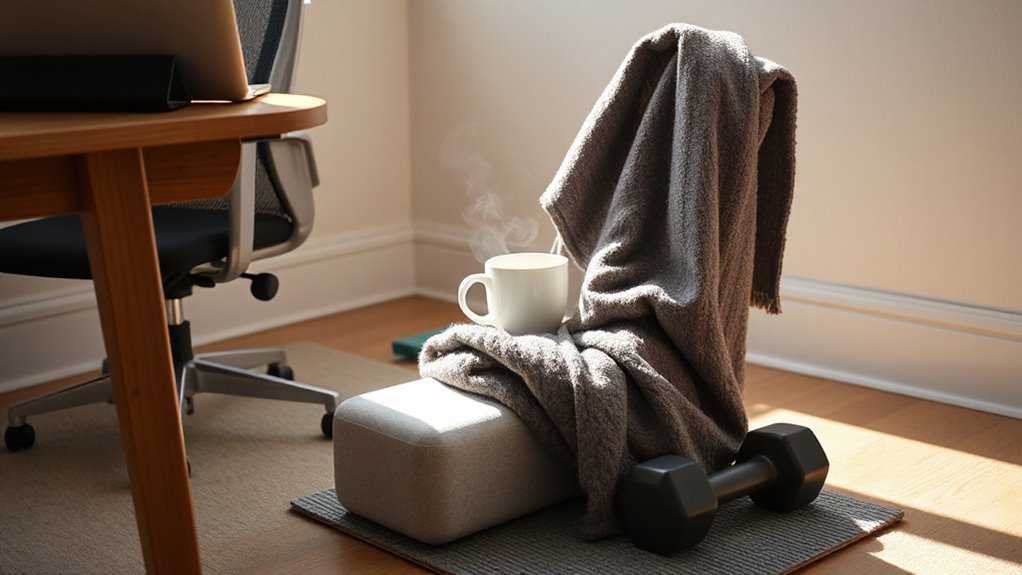
To effectively integrate stretching into your daily routine, you should prioritize brief, scheduled breaks throughout your workday. Aim for 5-10 minutes of stretching every hour, as consistent, short sessions yield better results than infrequent, longer ones.
Consider pre-shift stretching, which greatly reduces musculoskeletal discomfort. Utilize lunchtime for whole-body stretches to decrease pain and fatigue. Whenever possible, incorporate standing or walking during breaks to further alleviate strain.
You can perform stretches at your workstation without needing to leave your desk, promoting ease of integration. Tracking your progress will help maintain consistency. Following a structured program can lead to a notable reduction in pain intensity and physical exertion, enhancing your overall well-being and productivity.
Additional Benefits of Stretching for Mental Well-being
While many people associate stretching primarily with physical benefits, it also plays an essential role in enhancing mental well-being. Engaging in regular stretching can greatly impact your mental health.
- Stretching activates the parasympathetic nervous system, promoting relaxation.
- It reduces cortisol production, alleviating chronic stress.
- Stretching releases endorphins, acting as natural mood elevators.
- Consistent stretching elevates serotonin levels, improving mood and reducing anxiety.
These benefits contribute to improved self-regulation and emotional coping. When you stretch, you create a mental space that fosters self-awareness and emotional ease.
Regular practice can enhance your overall quality of life, making it an effective strategy for managing stress and anxiety throughout your workday. Prioritize stretching, and you’ll likely notice improvements in both your physical and mental health.
Frequently Asked Questions
How Long Should I Hold Each Stretch for Optimal Results?
For ideal results, hold each stretch for 15 to 30 seconds. This duration allows you to feel tension in the muscles effectively.
Perform stretches three times in each direction for maximum benefits. For chin tucks, hold for at least 5 seconds, but longer holds enhance effectiveness.
Consistency is key, so aim to stretch regularly, ideally every 30 to 55 minutes, to maintain flexibility and reduce discomfort throughout your day.
Can Stretching Worsen My Existing Neck or Shoulder Pain?
Stretching can worsen your existing neck or shoulder pain if done improperly. If you overstretch or use excessive intensity, you might aggravate inflamed tissues.
Individual responses vary; some may feel temporary discomfort initially. To minimize risks, start with gentle stretches, focusing on low intensity.
It’s wise to consult a healthcare professional before beginning any stretching regimen, especially if you’re experiencing persistent pain. Monitoring your response can guide adjustments in your routine.
What Are Common Mistakes to Avoid While Stretching?
First, avoid neck circles; they can compress nerves and cause pain.
Don’t overstretch or bounce during stretches, as this increases injury risk.
Remember to breathe; holding your breath reduces oxygen flow.
Maintain good posture; slouching decreases stretch effectiveness and strains the neck.
Finally, don’t ignore individual needs; using generic stretches can be harmful.
Always consult a professional for personalized guidance to guarantee safe and effective stretching practices.
How Do I Know if I’M Stretching Correctly?
To know if you’re stretching correctly, focus on these indicators. You should feel mild tension in the targeted muscle group without sharp pain.
Make sure the stretch feels symmetrical on both sides, and maintain steady, relaxed breathing. Hold the stretch comfortably for 10–30 seconds.
If you experience numbness, tingling, or discomfort, stop immediately. Avoid overstretching or bouncing, and prioritize proper posture throughout the movement for best results.
Are There Specific Stretches for Desk Workers With Tightness?
You should incorporate neck flexion, extension, and lateral bending stretches.
Perform shoulder rolls to relieve upper tension. Focus on the upper trapezius, levator scapulae, and sternocleidomastoid muscles to improve range of motion.
Aim for brief routines lasting 1-2 minutes during breaks. Use slow, controlled movements, and maintain good posture.
Consistent practice enhances effectiveness, reduces discomfort, and prevents future tightness, ultimately contributing to improved physical function and comfort at your desk.
Conclusion
Incorporating neck and shoulder stretches into your daily routine can greatly reduce discomfort and improve your overall well-being.
Regular stretching enhances flexibility and posture, which directly impacts your productivity.
Have you considered how a few minutes of stretching could transform your work experience? By consistently practicing these techniques, you’ll not only alleviate pain but also boost your mental clarity.
Make stretching a priority, and you’ll likely notice the benefits in both your physical health and work efficiency.