Mental Health Benefits of an Ergonomic Workspace
Mental Health Benefits of an Ergonomic Workspace
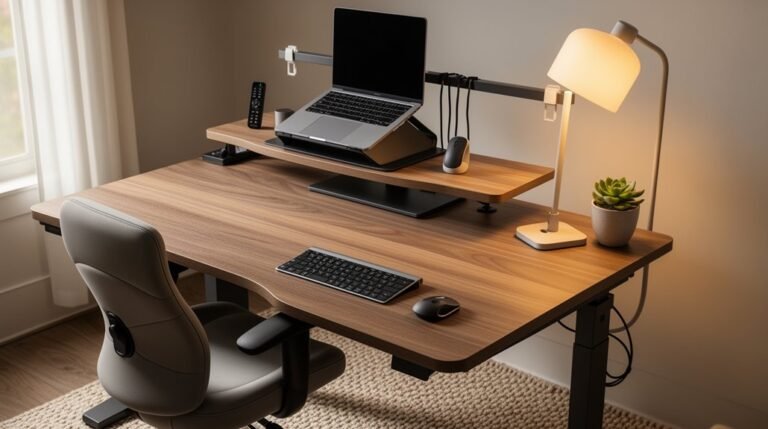
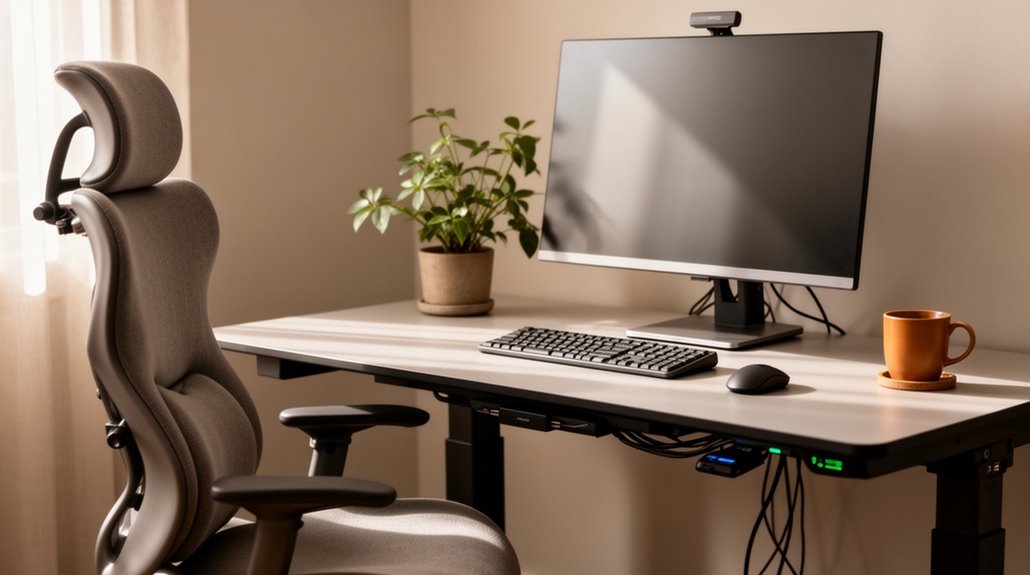
An ergonomic workspace reduces physical strain, enhances comfort, and supports better mental health. Comfortable seating and adjustable furniture lower muscle tension, which can directly decrease feelings of stress and anxiety.
This setup also increases job satisfaction, helping you feel less overwhelmed by daily tasks. Ergonomic workstations promote productivity by enabling sustained focus and reducing fatigue throughout the day.
With fewer injuries and less physical discomfort, you’ll likely experience reduced absenteeism and a more consistent work routine. Understanding these elements can help you create a healthier work environment and gain greater insight into overall well-being.
The Connection Between Physical Comfort and Mental Health
When you prioritize physical comfort in your workspace, you greatly impact your mental health. Ergonomic workspaces reduce physical strain, which lowers perceived stress levels. Social support can also enhance mental well-being by providing a network of encouragement and assistance, further amplifying the benefits of an ergonomic setup.
Studies show that comfortable seating and adjustable furniture decrease muscle tension and discomfort, leading to reduced cortisol production. This minimization of physical discomfort enhances focus, allowing for better concentration and less distraction.
Employees in ergonomic environments report feeling less overwhelmed and anxious, contributing to improved emotional stability. Furthermore, reducing physical pain and fatigue correlates with higher positive affect and lower negative affect.
How Workspace Layout Influences Psychological Well-Being
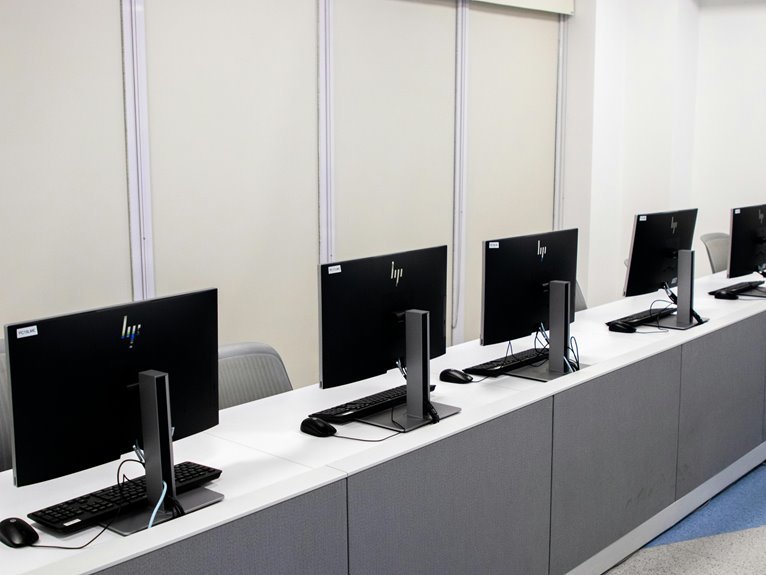
A well-designed workspace layout greatly affects your psychological well-being. Open-plan offices increase stress levels; studies show a 34% rise in sweat response due to noise exposure. In contrast, cell offices and small open-plan offices reduce emotional exhaustion, particularly for women. Hot-desking poses the most challenges for men, correlating with negative psychosocial outcomes. Workspace privacy and control are vital. Private offices allow you to manage environmental stressors, leading to lower stress levels. Access to natural light and greenery enhances job satisfaction and emotional comfort. Research indicates strong connections between indoor environments and mental health, and movement-friendly layouts promote positive mental health, combating the sedentary nature of many work environments. These design elements collectively influence your emotional health, showcasing the importance of strategic workspace layout for psychological well-being.
The Role of Ergonomic Training in Enhancing Employee Health
Ergonomic training plays an essential role in promoting employee health by addressing the root causes of musculoskeletal disorders (MSDs).
By investing in this training, you can expect:
- Reduced Injury Rates: Training can lead to a 20-40% decrease in MSDs, effectively lowering workplace injuries.
- Improved Knowledge: Employees gain insights into proper body mechanics, fostering safer movements and postures. Research indicates a direct correlation between training and injury reduction, emphasizing the importance of proper body mechanics.
- Long-term Benefits: Follow-up studies show reduced MSD prevalence lasting up to 12 months after training.
These factors contribute to fewer lost workdays, decreased injury severity, and enhanced overall workplace safety.
Ergonomics and Its Impact on Job Performance
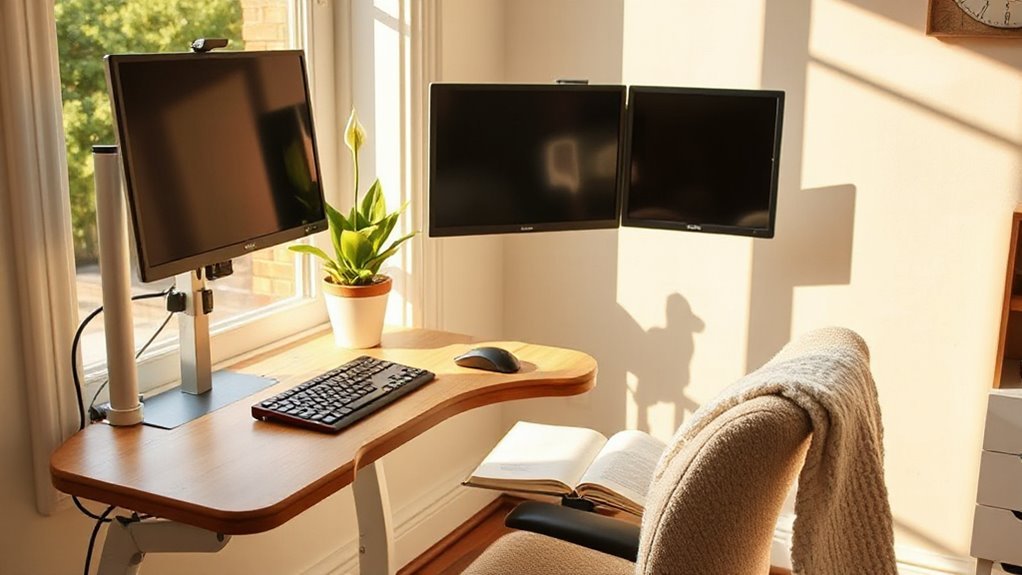
Job performance markedly improves with the implementation of ergonomic principles in the workplace.
Ergonomic workstations enhance productivity metrics, increasing cycle time by 18% and improving lean processes by 27%. They reduce ergonomic risks by 59% for packaging and 46% for assembly tasks.
By minimizing physical strain, these workstations align with your needs, reducing fatigue and allowing for sustained focus. Consequently, ergonomic interventions lead to a 75% reduction in lost workdays and a 48% decrease in employee turnover.
Favorable ergonomic conditions also boost job satisfaction, fostering a positive workplace culture. Engaged employees, in turn, demonstrate higher motivation and creativity, contributing to overall job performance improvements.
Implementing ergonomic strategies yields a significant return on investment in workplace efficiency.
Fostering a Culture of Holistic Wellness in the Workplace
Fostering a culture of holistic wellness in the workplace requires a strategic approach that integrates various health dimensions. Companies adopting wellness programs see significant benefits, including improved workplace culture and employee retention.
To implement this effectively, consider the following:
- Comprehensive Wellness Programs: Develop initiatives addressing mental, physical, and emotional health, ensuring all aspects of employee wellbeing are covered.
- Flexible Work Options: Offer remote or hybrid models to support mental health, reducing stress and absenteeism, while fostering a sense of community.
- Leadership Training: Incorporate wellness into governance, equipping managers to recognize burnout and promote proactive mental health support.
Frequently Asked Questions
What Specific Ergonomic Furniture Is Best for Mental Health?
Ergonomic Chairs
An ergonomic chair with adjustable lumbar support reduces back pain, enhancing comfort.
Sit-Stand Desks
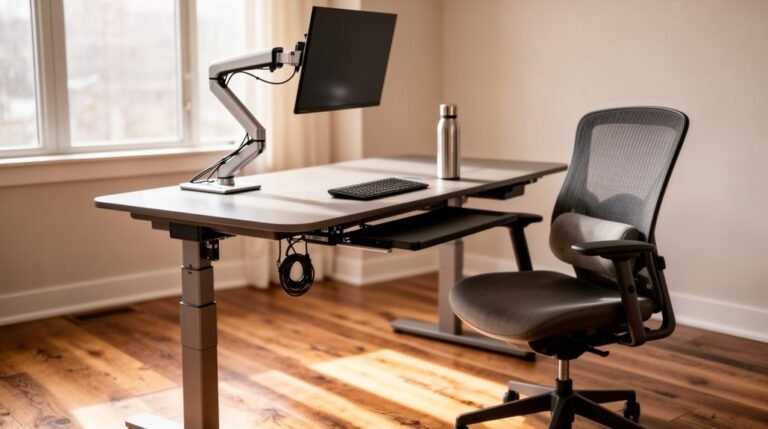
Sit-stand desks encourage movement, improving circulation and reducing mental fatigue.
Monitor Arms
Adjustable monitor arms align screens to minimize eye strain and neck pain.
Footrests
Footrests promote proper leg alignment, supporting posture and circulation.
Each of these furniture types contributes to reduced discomfort and improved focus, fostering better mental health in the workplace.
How Can I Assess My Current Workspace Ergonomics?
To assess your current workspace ergonomics, start with your chair.
Make sure it supports your lower back, with height allowing your feet to rest flat.
Next, check your desk height; your elbows should sit at a 90–110 degree angle.
Position your monitor at eye level, an arm’s length away.
Finally, evaluate your keyboard and mouse placement; they should be close to minimize reach.
Regularly take breaks to maintain posture and reduce strain.
Are There Any Quick Ergonomic Tips for Remote Workers?
To enhance your workspace, position your monitor at eye level, reducing neck strain.
Use a chair with a backrest to support your spine.
Take one- to two-minute breaks every 30 minutes to stretch and improve circulation.
Follow the 20-20-20 rule—look at something 20 feet away for 20 seconds every 20 minutes to alleviate eye fatigue.
Finally, alternate between sitting and standing to maintain comfort throughout the day.
Can Ergonomic Adjustments Be Made on a Budget?
Yes, you can make ergonomic adjustments without spending much.
Start by ensuring your monitor’s at eye level, your feet are flat on the floor, and your elbows form 90-degree angles. Simple positioning changes can eliminate discomfort.
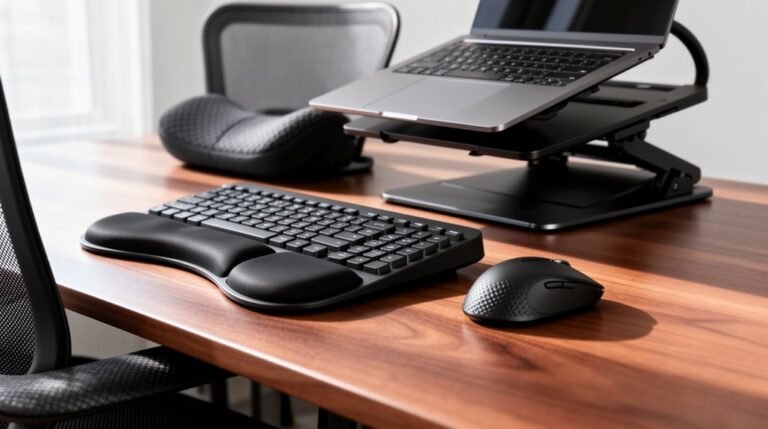
Consider budget-friendly items like supportive cushions, monitor risers, or ergonomic mice, each costing under $80. These adjustments improve comfort and productivity without the need for an expensive setup.
Prioritize consistent positioning for the best results.
What Signs Indicate My Workspace Is Negatively Affecting My Mental Health?
You may notice physical discomfort, like back or neck pain, indicating poor ergonomic conditions.
If you experience persistent headaches or fatigue, your workspace setup might be contributing to stress.
Difficulty concentrating or increased irritability can signal environmental stressors, such as lighting and layout.
Finally, if you feel disengaged or less motivated, these behavioral changes often reflect the impact of your workspace on mental well-being.
Conclusion
Creating an ergonomic workspace enhances comfort, boosts mental health, and improves productivity.
By prioritizing physical comfort, optimizing layout, and providing ergonomic training, you foster a healthier work environment.
Investing in ergonomic solutions reduces strain, minimizes discomfort, and promotes well-being.
Emphasizing a culture of wellness benefits not just individual employees but the organization as a whole.
Ultimately, a well-designed workspace leads to happier, healthier, and more engaged employees, contributing to overall job satisfaction and performance.