How to Convince Your Office to Try Standing Desk Converters
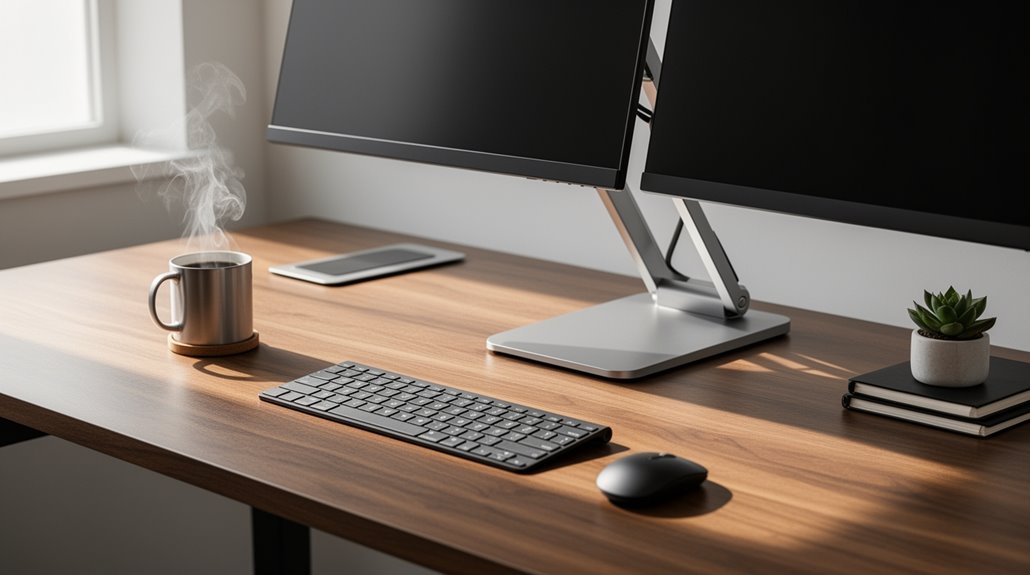
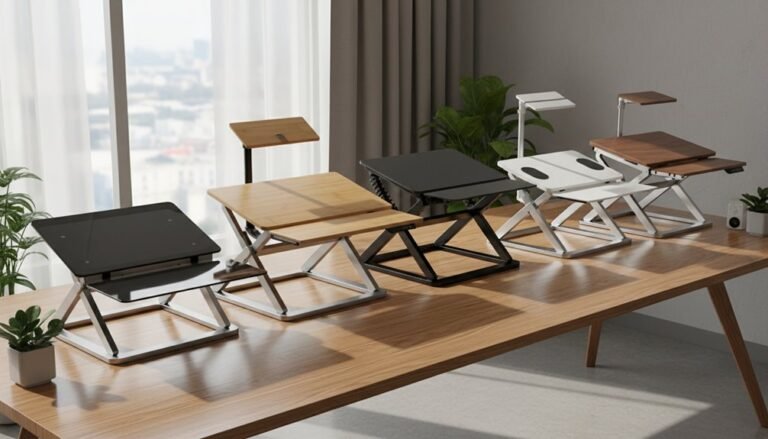
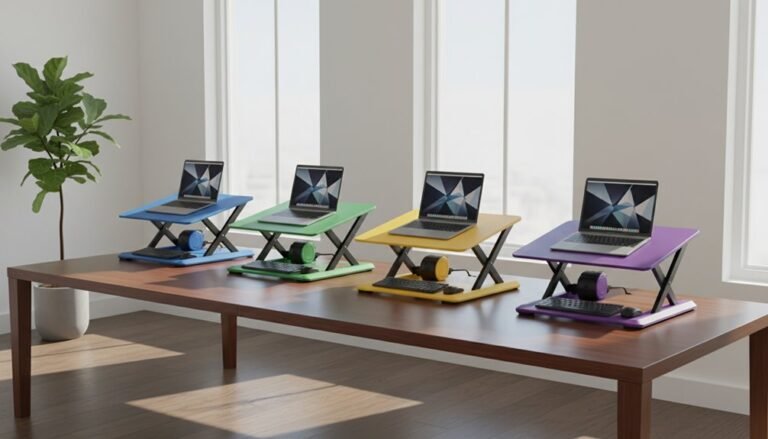
To convince your office to try standing desk converters, highlight their benefits.
These converters can reduce sedentary behavior by up to 100 minutes daily and have been shown to improve productivity by 18% in cognitive tasks. Users also report decreased musculoskeletal discomfort, particularly in the upper back and neck.
Standing desk converters are cost-effective, require no assembly, and offer about 80% of the functionality of full standing desks. Presenting successful case studies can demonstrate their impact on engagement and energy levels. one aspect that often goes overlooked is the common misconceptions about standing desks. Many people believe that simply switching to a standing desk will eliminate all back pain or lead to weight loss, but the reality is more nuanced. Effective usage involves proper ergonomics, regular movement, and a balance between sitting and standing throughout the day. The ergonomic benefits of standing desks have been widely recognized, leading to increased productivity and reduced discomfort for users. Many organizations are adopting these solutions to enhance employee well-being and create a healthier work environment. As a result, businesses are seeing lower absenteeism rates and higher overall job satisfaction among their teams.
Explore more advantages ahead.
Health and Wellness Benefits of Standing Desks
Standing desks offer several health and wellness benefits that can greatly impact your work experience. They considerably reduce sedentary behavior, leading to up to 100 minutes less sitting daily. Height-adjustable desks achieve a 17% reduction in sitting time, primarily replacing sitting with standing. Users also report relief from musculoskeletal discomfort, with 47% experiencing reduced upper back and neck pain after three months. Additionally, height-adjustable workstations have been linked to increased productivity and better concentration, which can enhance overall job performance. Subjective health ratings improve, with 65% of users noting positive effects on their overall health. Metabolic benefits include an 11% reduction in post-lunch blood sugar spikes and increased calorie burn of 50–100 calories per hour. These factors collectively contribute to a healthier workplace environment and improved employee well-being.
Boosting Productivity and Cognitive Performance
Research indicates that using standing desk converters can markedly enhance productivity and cognitive performance.
Studies show that standing desks improve executive function and working memory. For instance, students demonstrate an 18% increase in operational memory with standing desks. Furthermore, continued use of standing desks has been linked to significant improvements in cognitive functioning among users.
Functional near-infrared spectroscopy imaging reveals altered activation patterns in the prefrontal cortex, linked to increased cognitive engagement during tasks. Users also experience better focus and attention span, especially when alternating between standing and walking.
Enhanced brain activation correlates with improved task performance, with no detriment observed in job efficiency. Importantly, cognitive gains persist over time, maintaining academic achievement levels comparable to seated desk users.
Shifting to standing desks can yield measurable benefits in cognitive function and productivity.
Enhancing Mood and Mental Health
Utilizing standing desk converters can greatly improve mood and mental health among office workers. Research shows that reducing sedentary behavior boosts blood flow and releases endorphins, which enhance mood. In fact, 87% of standing desk users reported increased energy levels within a seven-week study. Additionally, studies indicate that prolonged sitting is linked to stress and low focus, emphasizing the importance of incorporating standing desks to mitigate these issues.
Alternating between sitting and standing every 30 minutes reduces stress and anxiety, resulting in lower cortisol levels. Participants reported feeling less fatigued and more comfortable when using sit-stand desks.
Additionally, frequent posture changes contribute to overall wellbeing by minimizing discomfort. Such improvements lead to better concentration and engagement at work, making standing desks an essential tool for promoting both physical and emotional health in the office environment.
Cost-Effectiveness of Standing Desk Converters
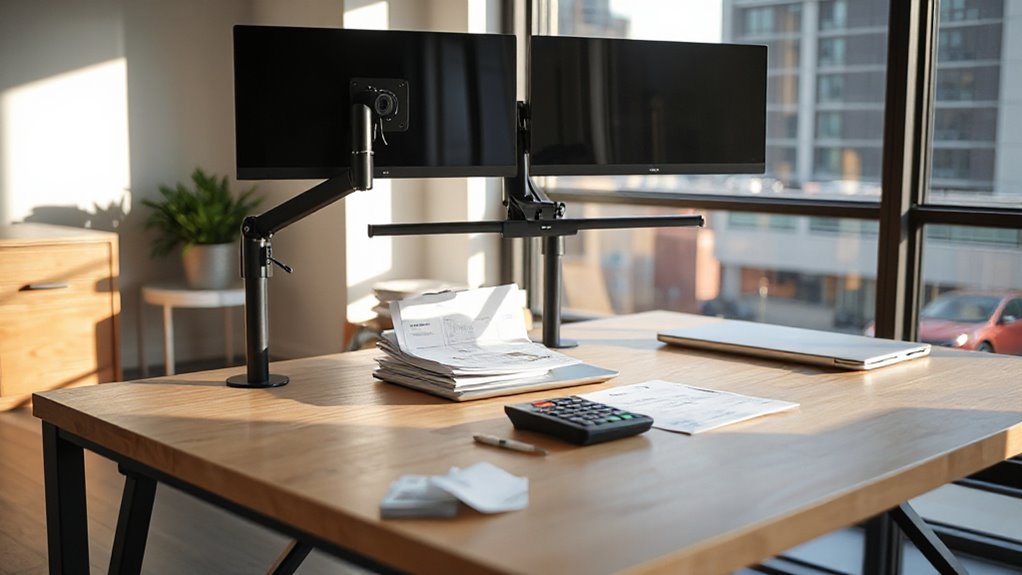
Investing in standing desk converters offers a practical solution for enhancing workplace ergonomics without the hefty price tag of full standing desks.
Desk converters typically range from low-medium to medium costs, compared to full desks, which fall into the medium-high price range. Quality converters, like the iMovR Cadence Express, retail for around $429, notably lower than premium full standing desks.
Converters require no assembly, saving on installation costs. They provide about 80% functionality of higher-end models, making them budget-friendly options for short-term use.
Their portability means you can easily relocate them, fitting into various office layouts without extensive modifications.
Real-World Success Stories and Case Studies
Standing desk converters have demonstrated their effectiveness in various workplace settings, enhancing employee focus and engagement. At Lied STEM Academy, these converters improved attentiveness, particularly for ADHD students. Teachers reported increased energy levels and better focus during lessons.
- Schools noted higher classroom participation and fewer distractions.
- The mobility and adjustable height of converters allowed easy classroom reconfiguration.
- Users experienced reduced back pain and increased energy, leading to lower absenteeism.
These real-world successes highlight the adaptability and health benefits of standing desk converters, reinforcing their role in enhancing workplace productivity while catering to diverse needs.
Frequently Asked Questions
How Much Space Do Standing Desk Converters Require in the Office?
Standing desk converters typically require minimal space. They sit atop existing desks, saving up to 70% of floor space compared to full standing desks.
Most converters need a desk depth of at least 24 inches for secure placement. They occupy about 30% to 50% of the desk surface while leaving around 70% accessible.
Guarantee there’s 2 inches of clearance behind the desk for movement, and consider cable management for a tidy workspace.
Are Standing Desk Converters Suitable for All Body Types and Heights?
Yes, standing desk converters are suitable for various body types and heights.
Most models offer adjustable height ranges, typically between 4.5 inches and 17.5 inches, accommodating users from 4’10” to 6’1″.
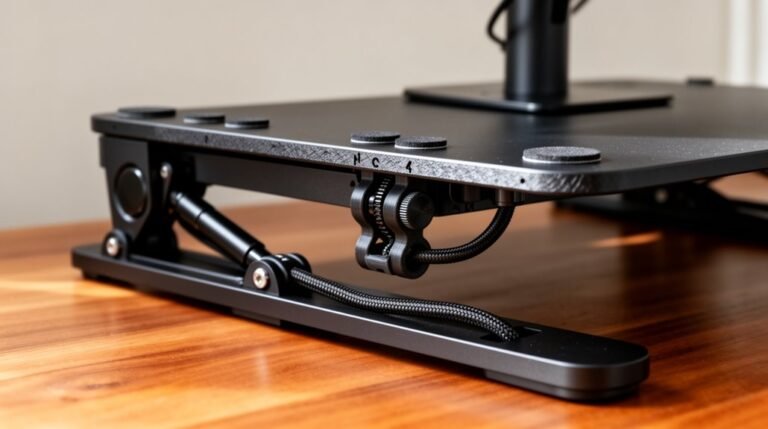
Features like two-tier designs promote ergonomic alignment, while stability mechanisms guarantee safe use.
With weight capacities ranging from 28.6 lbs to 55 lbs, these converters support multiple monitors and accessories, providing versatility for different workspace needs.
Can I Use My Existing Desk With a Sit-Stand Converter?
Yes, you can use your existing desk with a sit-stand converter.
These converters sit directly on top of your current desktop and require no modifications. They’re compatible with various desk sizes, but you should measure your desk’s depth and width before buying.
Ascertain your desk’s stability can support the converter and any equipment.
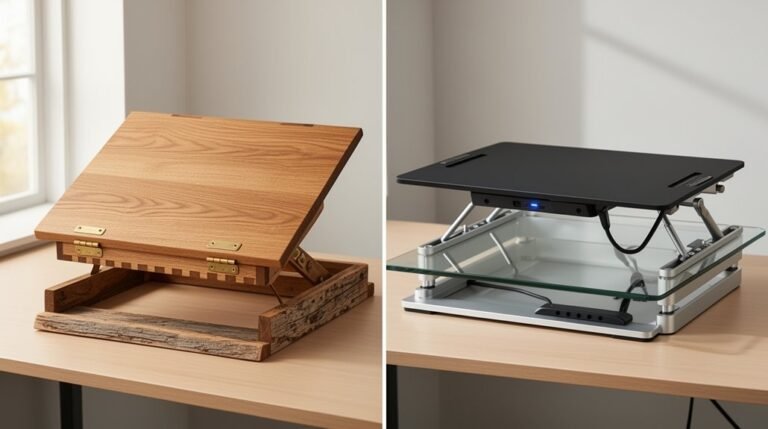
Choose from different types, like tabletop or desk-mounted, based on your workspace needs and preferences.
How Do I Maintain Proper Posture While Using a Standing Desk?
Keep your desk height at elbow level, ensuring a 90-degree angle at your elbows.
Position your monitor’s top at or slightly below eye level, about 20–28 inches from your face.
Stand with your feet shoulder-width apart, weight evenly distributed.
Maintain a relaxed shoulder position, and align your head directly above your pelvis.
Keep your wrists straight and in line with your forearms to prevent strain during use.
What Accessories Can Enhance the Standing Desk Experience?
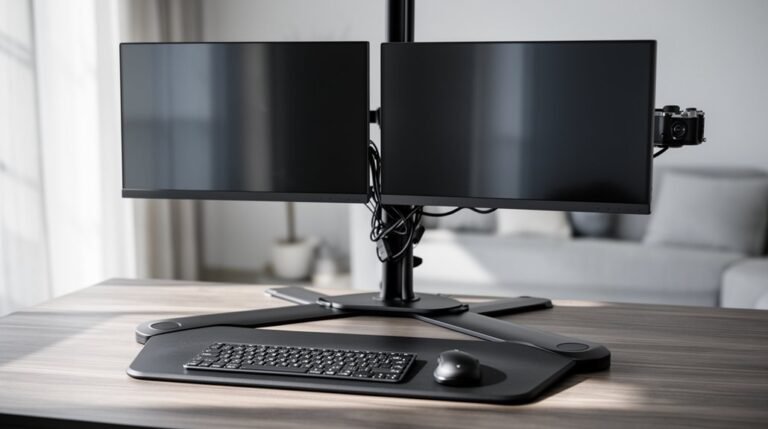
To enhance your standing desk experience, consider ergonomic accessories like adjustable keyboard trays and monitor arms.
These tools help maintain neutral wrist posture and ideal screen height, reducing strain. Anti-fatigue mats cushion your feet, while footrests promote movement.
Using cable management solutions keeps your workspace organized. Additionally, noise-canceling headphones improve concentration, and task lighting boosts visibility, ensuring a productive and comfortable work environment during long hours.
Conclusion
Incorporating standing desk converters into your office can enhance employee health, boost productivity, and improve mood.
While some may worry about cost, these converters often prove to be a long-term investment that reduces health-related expenses.
They allow for quick height adjustments and accommodate various user preferences.
Additionally, numerous companies have reported positive outcomes after implementation. By presenting these benefits, you can effectively advocate for the adoption of standing desk converters in your workplace.