The Ideal Ergonomic Workspace Setup
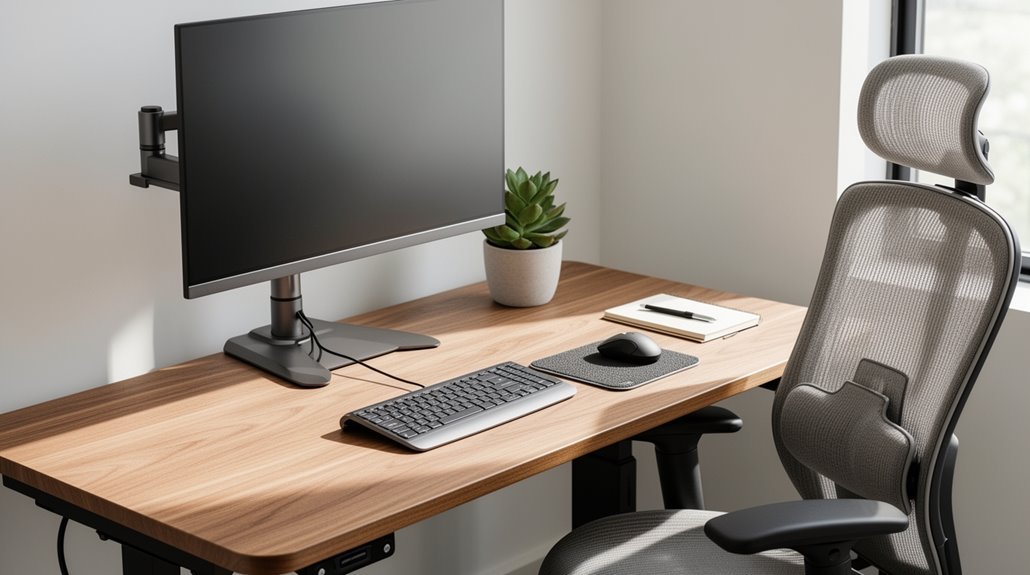
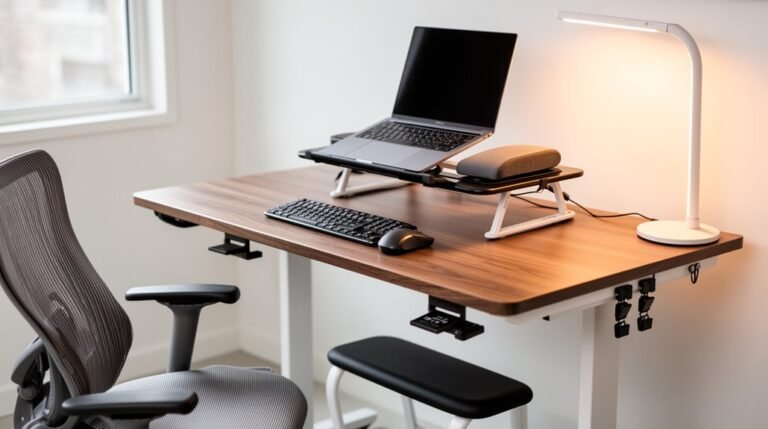
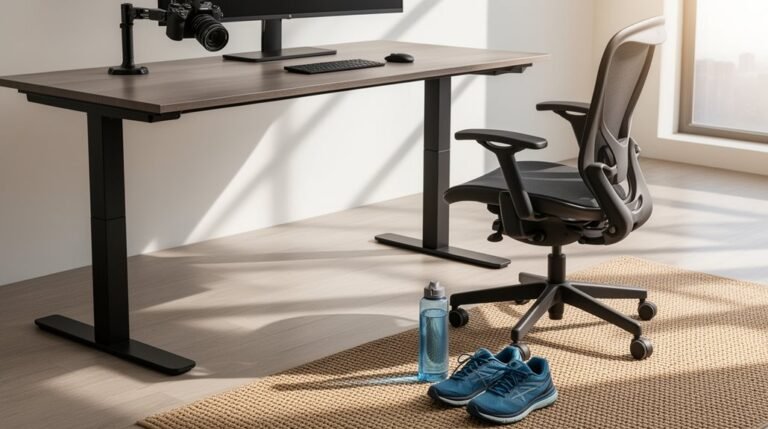
The Ideal Ergonomic Workspace Setup helps reduce strain and improve comfort during long workdays. Adjust your chair height so your feet rest flat on the floor and your knees bend at about 90 degrees.
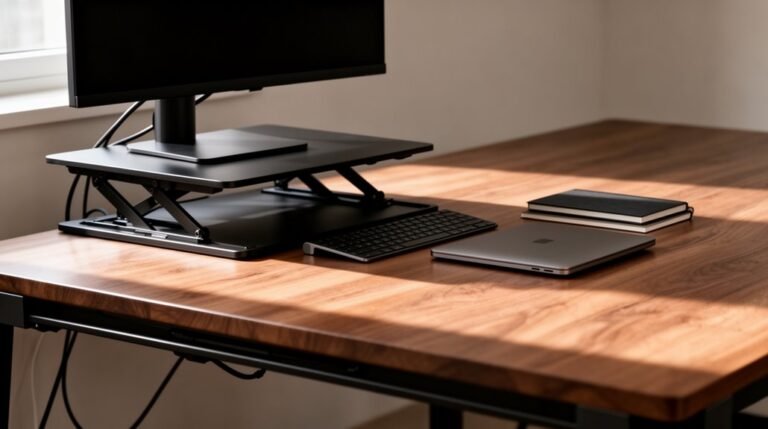
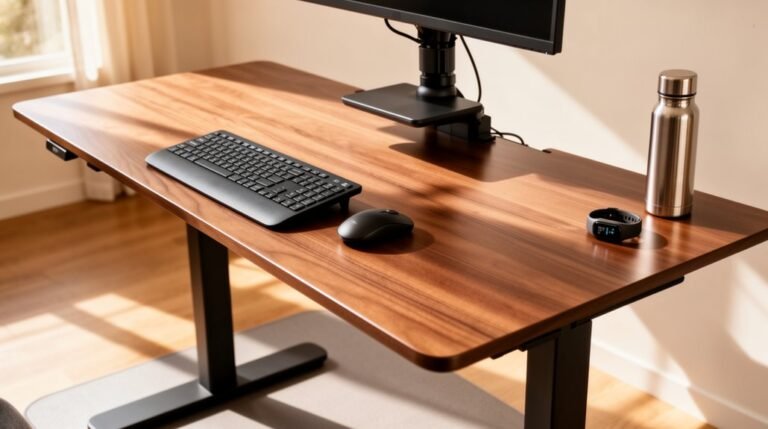
Position your monitor at eye level and roughly an arm’s length away to minimize neck strain. Keep your desk at elbow height so your arms remain comfortable while working.
Place your keyboard and mouse within easy reach to avoid excessive stretching. Incorporate microbreaks and vary tasks throughout the day to alleviate fatigue and maintain productivity.
Learn more about specific ergonomic practices to further enhance your workspace and tailor adjustments to your needs.
Importance of Ergonomics in the Workplace
When you consider the impact of your workspace on productivity and health, ergonomics becomes essential.
Ergonomic improvements can boost productivity by up to 25%, optimizing work heights and reach zones. These adjustments can lead to an 18% faster cycle time and a 27% lean-process gain. Furthermore, ergonomic issues account for 33% of all worker injury and illness cases in the U.S., highlighting the critical need for proper ergonomic setups.
Proper ergonomics notably reduce the risk of musculoskeletal disorders, thereby preventing injuries and discomfort. Companies that prioritize ergonomics experience a 48% reduction in employee turnover and a 58% decrease in absenteeism.
Financially, for every dollar invested in ergonomic enhancements, businesses often see a two-dollar return through increased productivity and lower claims.
Chair and Seating Adjustments
Optimizing your chair and seating setup greatly enhances your comfort and productivity. Adjust the seat height so your feet rest flat on the floor or a footrest, with knees bent at about 90 degrees. The chair’s top should sit just below your kneecap when standing. For back support, set the backrest to fit the natural curve of your lower back, aiming for an angle of 100-110 degrees. Make sure there’s 1 to 3 inches of clearance between the seat edge and your knees. Adjust armrests to elbow height, keeping them at a comfortable level. Finally, utilize seat tilt adjustments and a stable five-point base for better posture and mobility, promoting a healthy sitting experience. Remember that server issues can arise from high traffic or configuration errors, which can impact your ability to work effectively in your ergonomic setup.
Monitor Placement and Visual Ergonomics
Proper monitor placement is essential for maintaining comfort and reducing strain during long hours of screen use.
Position the top of your monitor at or slightly below eye level, keeping the screen about 15 to 20 degrees below horizontal. This setup promotes a neutral neck posture and reduces discomfort. Improper monitor positioning can lead to awkward working body positions, contributing to discomfort and potential work-related musculoskeletal disorders (WMSD).
Maintain an arm’s length distance, approximately 50 to 100 cm, to minimize eyestrain. Align the monitor directly in front of you to avoid neck twisting.
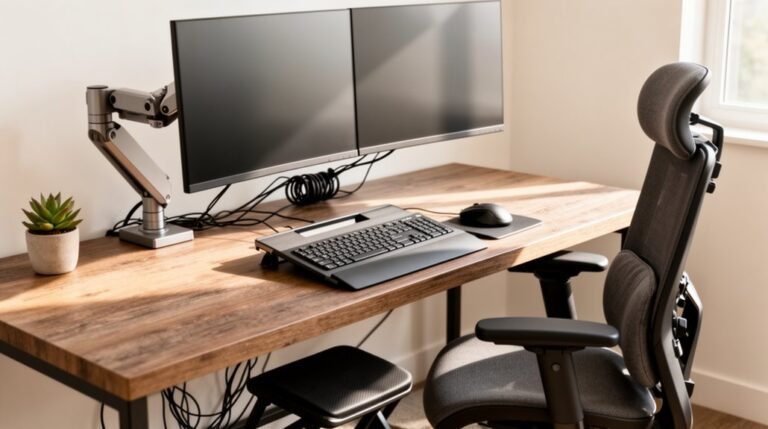
For dual setups, center the primary monitor and angle secondary ones in a semi-circle. Avoid glare by positioning the monitor away from windows and overhead lights.
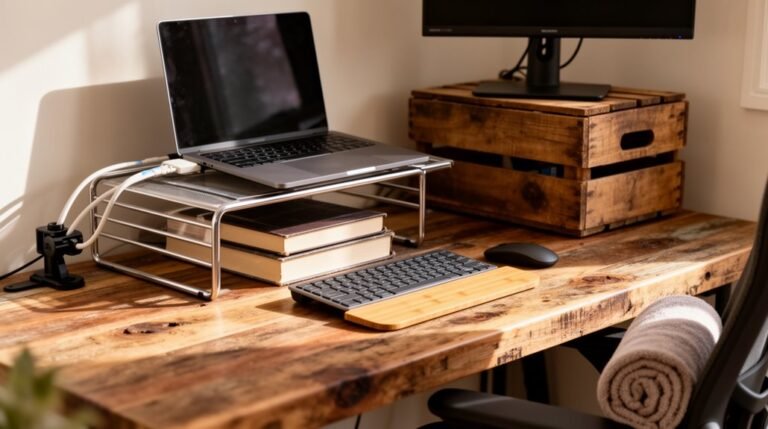
Adjust the height with stands or arms to guarantee your shoulders remain relaxed and your head stays in a natural position.
Desk Setup and Reach Zones
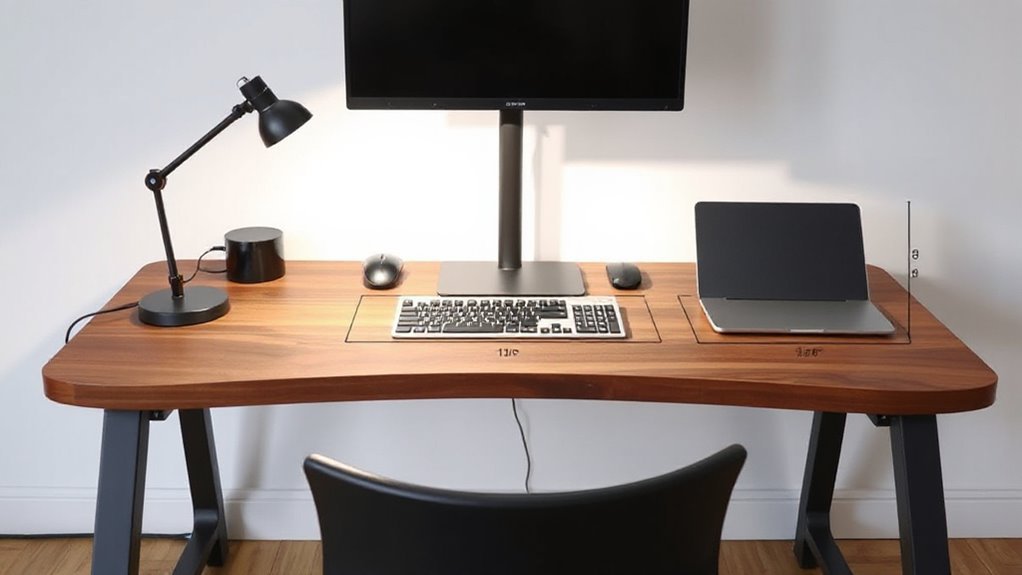
How can you create an ergonomic desk setup that enhances comfort and efficiency? Focus on the chair height, desk height, and reach zones to prevent strain.
- Adjust your chair so your feet rest flat on the floor, with knees at a 90-degree angle.
- Verify your desk height matches your elbow height when seated, keeping your arms at 90 degrees.
- Place your keyboard and mouse in the primary reach zone, within comfortable arm’s length.
- Organize less-used items in the secondary reach zone, allowing slight forward stretches.
- Clear under-desk space for leg movement, avoiding cramped conditions that lead to poor posture.
These adjustments will promote better posture and reduce the risk of discomfort during work.
Keyboard and Mouse Positioning
To create a comfortable and efficient workspace, you need to guarantee your keyboard and mouse are positioned correctly.
Place your keyboard at or slightly below elbow level, making sure your forearms align with your shoulders. This positioning helps maintain a neutral arm position, reducing strain.
Keep the keyboard directly in front of you to avoid twisting your torso. Position the mouse at the same height as the keyboard to prevent shoulder strain and maintain close proximity, which reduces muscle imbalance.
Your wrists should stay neutral, with elbows bent at about 90 degrees. Aim for a relaxed grip on the mouse, allowing natural movement.
Finally, make sure the keyboard and mouse are approximately 5 centimeters from the desk edge for ideal arm relaxation.
Task Variation and Breaks
While you may be focused on completing tasks efficiently, incorporating task variation and scheduled breaks is essential for maintaining both physical and cognitive health.
Task variation helps reduce muscle fatigue and prevents overuse injuries by engaging different muscle groups. Alternating between sitting and standing improves circulation and decreases strain. Scheduled breaks further enhance your productivity by resetting attention and promoting recovery.
Consider these effective strategies:
- Use adjustable sit-stand desks for flexibility.
- Rotate tasks that require different physical movements.
- Schedule microbreaks every 20-30 minutes.
- Incorporate varied work zones to diversify tasks.
- Allow time for relaxation to reduce stress on joints.
Ergonomic Program Implementation
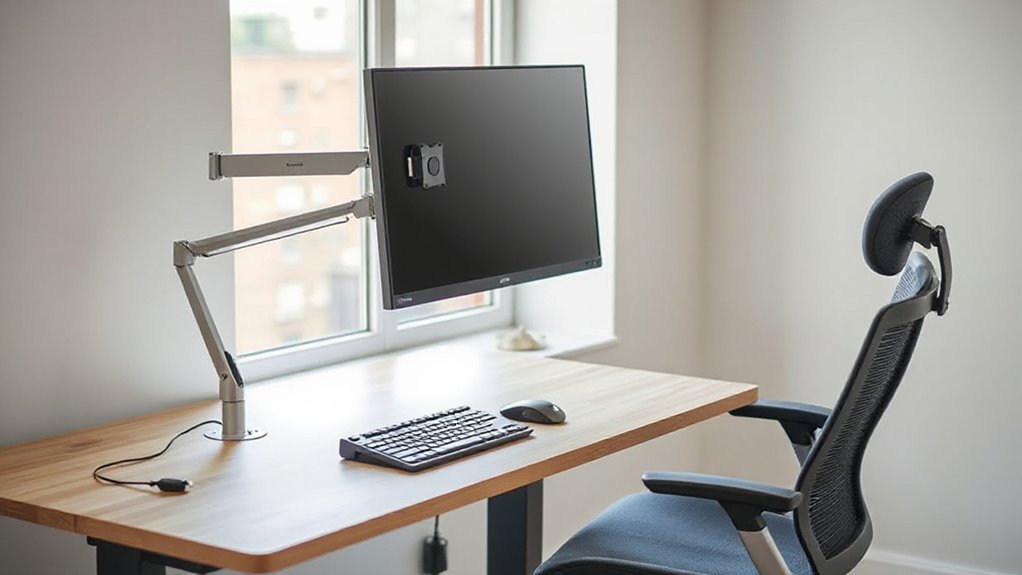
Implementing an ergonomic program is essential for enhancing workplace safety and efficiency. Start by tracking key metrics such as reductions in work-related musculoskeletal disorders (MSDs) and lost workdays, which typically decrease by 88% after interventions.
Monitor injury rates over time to evaluate program impact. You’ll find the cost-to-benefit ratio for ergonomic interventions averages 1:1.78, showcasing a positive return on investment. Additionally, high participation rates in training reflect strong engagement.
Focus on employee comfort and satisfaction for qualitative feedback. As you implement these programs, expect to see productivity improvements and reduced absenteeism.
Regulatory guidelines recommend injury prevention programs, aiming for a 15–35% reduction in workplace injuries, further solidifying the need for an effective ergonomic approach.
Engaging Employees in Ergonomic Practices
Engaging employees in ergonomic practices is essential for fostering a healthy work environment. Implementing effective strategies boosts awareness and compliance with ergonomic standards.
Here are key components to contemplate:
- Employee Education: Training programs raise awareness about posture and habits, reducing injuries.
- Personalized Workstations: Adjustable desks and chairs cater to individual needs, enhancing comfort.
- Periodic Assessments: Regular evaluations identify risks, ensuring workstations meet ergonomic best practices.
- Psychological Safety: Supportive environments improve job satisfaction and motivation.
- Organizational Culture: Promoting open communication encourages feedback and boosts employee participation.
Frequently Asked Questions
What Are Common Signs of Poor Ergonomic Setup?
You’ll notice persistent neck and shoulder pain from monitor height issues.
Lower back discomfort arises from unsupportive seating.
Wrist soreness indicates improper keyboard placement.
Eye strain can result from glare or poor lighting.
You may experience leg tingling due to poor circulation in your chair.
Frequent position shifting, headaches, and declining focus often highlight an ineffective workspace.
Addressing these issues can enhance comfort and productivity markedly.
How Often Should I Adjust My Workspace?
You should adjust your workspace regularly, ideally every 2–4 weeks after initial changes.
Monitor your comfort and report any discomfort immediately. Annual assessments are standard, but react quickly to changes like new equipment or job duties.
If you’re returning from injury, prioritize an ergonomic evaluation. Use pulse surveys to identify issues.
Regular adjustments can greatly reduce musculoskeletal pain and improve overall productivity, ensuring your workspace meets your evolving needs.
Can Ergonomics Improve Productivity?
Yes, ergonomics can markedly improve productivity. Ergonomic interventions reduce physical discomfort and fatigue, leading to a 32% productivity increase.
Adjustable workstations allow longer working intervals, enhancing focus. They also reduce non-value-added motions by up to 39%, streamlining workflows.
Furthermore, ergonomically designed workspaces can improve usability by 76%, accommodating diverse employee needs.
This combination of factors guarantees a healthier, more efficient work environment, fostering higher output and sustained employee engagement.
What Should I Do if My Chair Is Uncomfortable?
If your chair’s uncomfortable, adjust the height for flat feet and 90-degree knees.
Check the depth; there should be a 2–4 inch gap behind your knees.
Add lumbar support to match your lower back’s curve, preventing slouching.
Confirm armrests allow elbows at 90 degrees without shoulder tension.
Finally, consider a seat cushion for pressure distribution and breathability, avoiding overly soft options that compromise posture and circulation.
Are There Specific Exercises for Desk Workers?
Yes, there are specific exercises for desk workers.
Incorporate neck stretches by tilting your head side to side, holding each for 10-15 seconds.
Perform shoulder rolls, rotating forward and backward 5-10 times.
Include seated spinal twists, holding for 10-30 seconds, to enhance mobility.
For legs, try seated leg lifts, holding each for 10 seconds.
Finally, do wrist circles to prevent strain.
These exercises improve flexibility, circulation, and overall comfort.
Conclusion
Creating an ergonomic workspace is essential for productivity and health.
Adjust your chair, monitor, desk, and input devices to optimize your setup. Small changes now can prevent future discomfort.
Incorporate task variation and regular breaks to further enhance your workspace and reduce strain.
Practicing good ergonomics benefits you and contributes to a healthier work environment overall. Prioritize ergonomics and notice the difference in your daily performance.