Lumbar Cushion Vs Built-In Lumbar Support
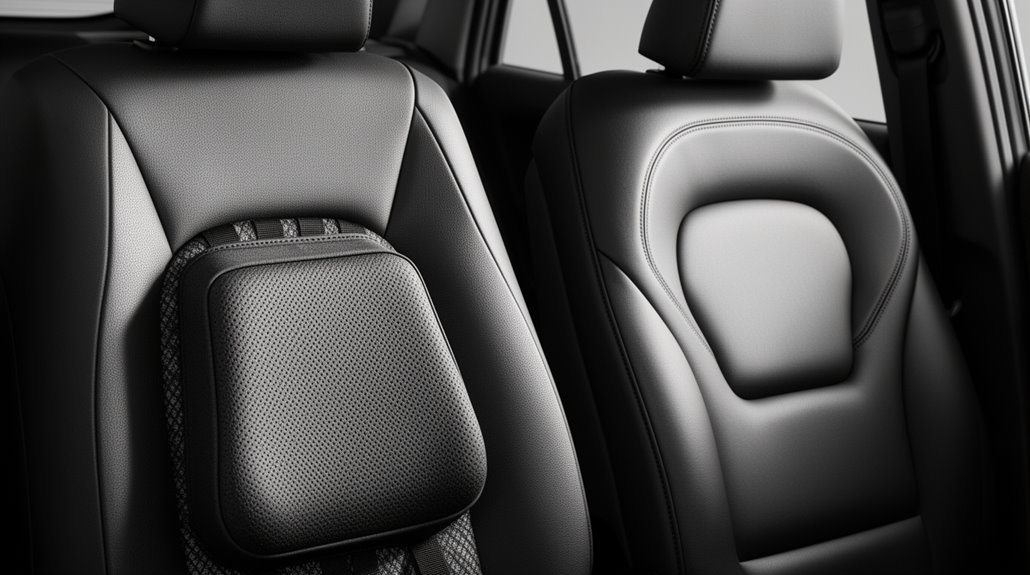
Lumbar cushion vs built-in lumbar support both have distinct advantages to consider.
A lumbar cushion offers portability and adjustability. You can easily reposition it for personalized support across different chairs and settings.
Built-in lumbar support provides fixed alignment and typically less customization. Its integrated design helps maintain natural spinal curvature without frequent adjustments.
Support quality is important: cushions may shift during use, while built-in support stays in place. Durability also varies—lumbar cushions often need more care and eventual replacement.
If you want to evaluate how each option fits your specific needs, there’s more to explore on this topic.
Portability and Adjustability
When considering lumbar support options, portability and adjustability are essential factors.
Portable lumbar cushions feature compact, lightweight designs, making them easy to transport. You can carry these cushions to various environments like offices, cars, and airplanes without much effort. This portability guarantees consistent lower back support across multiple seating arrangements throughout your day.
Adjustable lumbar cushions often come with straps, allowing you to customize their positioning. You can modify cushion placement to align with your specific spinal curve and body dimensions. This flexibility accommodates varying body types and back conditions, assuring personalized support levels. Additionally, the adjustability of lumbar cushions ensures that users can find the right thickness for their comfort and support needs.
In contrast, built-in lumbar support systems remain permanently fixed, limiting flexibility and requiring new chair purchases for different seating needs.
Support Quality and Spine Alignment
Support quality is essential for maintaining proper spine alignment during extended periods of sitting. Built-in lumbar support maintains natural spinal curvature through the chair’s integrated design, offering consistent ergonomic alignment without repositioning.
Studies show that lumbar cushions effectively prevent spine flattening, preserving natural lordosis. These cushions also improve lumbar curvature, particularly for users with lower back pain. Furthermore, proper spinal alignment is crucial to avoid long-term pain in the lower back, shoulders, and hips.
However, built-in systems may struggle with fixed positioning, misaligning with individual spine curves. In contrast, lumbar cushions can shift during use, potentially compromising sustained alignment.
Customization and Personal Fit
Understanding the differences in customization between lumbar cushions and built-in lumbar supports is essential for achieving preferred comfort and support.
- Lumbar cushions offer adjustable positioning for precise support placement.
- Built-in supports usually have fixed height and depth, limiting alignment options.
- Cushions come in various thicknesses and firmness levels, allowing for tailored comfort.
- Fixed built-in supports lack options for altering firmness, restricting adaptability.
- Portable lumbar cushions enhance versatility across different seating environments.
These features make lumbar cushions more suitable for various body types and preferences.
Their ability to accommodate unique spinal curves guarantees better alignment and comfort. Proper lumbar support is crucial for maintaining the spine’s natural S-curve, which can further enhance the effectiveness of lumbar cushions. In contrast, built-in supports may not provide the necessary customization needed for ideal fit, particularly for individuals with distinct body shapes or sizes.
Durability and Maintenance
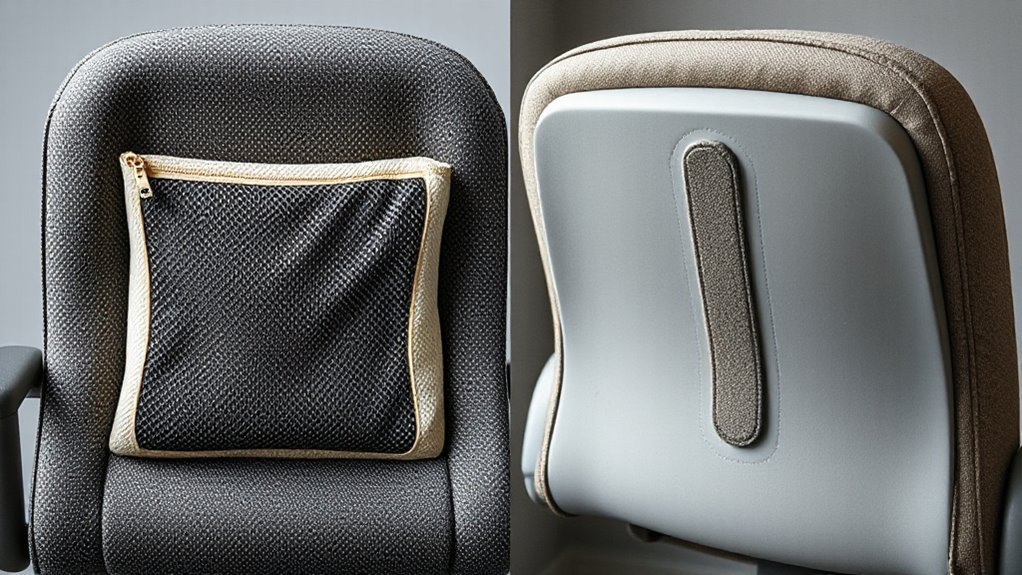
Durability and maintenance are key factors to evaluate when comparing lumbar cushions and built-in lumbar supports.
Built-in supports are typically made from durable materials like hard plastic or molded foam, ensuring long-lasting stability. In contrast, lumbar cushions, often crafted from memory or gel-infused foam, may degrade over time, especially with heavy use. Their fabric covers can stain or pill, increasing maintenance needs.
Built-in supports require minimal upkeep, usually just a wipe-down, while cushions need periodic cover washing. With built-in options, you avoid repositioning issues, but cushions may require frequent adjustments.
If a lumbar cushion wears out, you can easily replace it, whereas damaged built-in supports often necessitate chair replacement or professional repairs.
Cost and Convenience
When evaluating lumbar cushions and built-in lumbar support, cost and convenience play essential roles in your decision-making process.
Here are key factors to take into account:
- Price Range: Cushions range from $20 to $90, while ergonomic chairs with built-in support start under $100 and can exceed $300.
- Portability: Cushions are lightweight and easily transportable, making them convenient for multiple seating locations.
- Setup: Lumbar cushions require occasional adjustments, while built-in supports need no setup.
- Maintenance: Cushions have removable covers for easy cleaning; built-in supports typically lack this feature.
- Adaptability: Cushions fit various chair types, while built-in options are fixed to specific models.
These factors can influence your choice depending on your budget and lifestyle.
Effectiveness for Different User Needs
To meet various user needs, evaluating the effectiveness of lumbar support options is essential.
Built-in lumbar support offers consistent, stable support, maintaining ergonomic alignment for long-term users. It suits those requiring reliable, integrated support at work. However, if your spine curve doesn’t match the fixed positioning, you might experience discomfort.
On the other hand, external lumbar cushions provide greater adjustability. You can reposition them for different chairs and postures, making them ideal for occasional users or those with varying body dimensions. Cushions can also target specific discomfort areas, offering flexibility.
While built-in supports maintain shape longer, cushions allow experimentation with thickness and firmness, helping you find the most comfortable setup for your individual needs.
User Preferences and Comfort
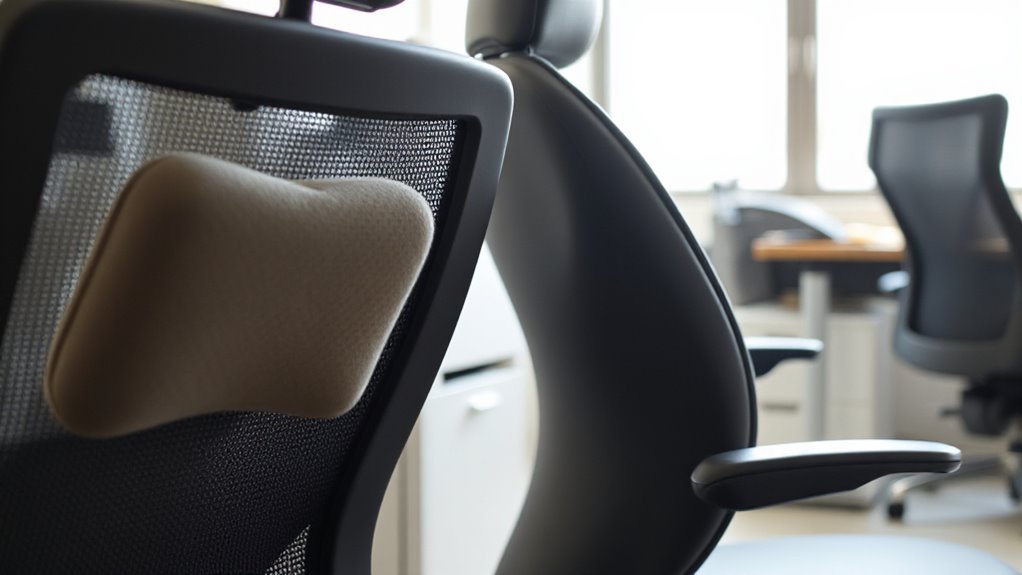
Understanding user preferences for lumbar support is key to enhancing comfort in various seating situations. Different users have distinct needs that influence their choices.
Here are some preferences you might consider:
- Built-in lumbar support offers a streamlined workspace without extra accessories.
- Users at dedicated workstations prefer built-in support for stability during long hours.
- Those valuing durability often choose integrated lumbar features.
- Adjustable built-in systems enhance comfort by allowing customization.
- Lumbar cushions are favored for portability and flexibility across multiple seats.
Choosing the right lumbar support can greatly impact your comfort.
For instance, built-in support provides consistent alignment, while cushions allow for experimentation with different support levels. Identifying your specific needs will help you find the best solution.
Choosing the Right Option for You
Choosing the right lumbar support option involves evaluating your specific needs and preferences.
If you prioritize adjustability, an external lumbar cushion may suit you better. These cushions adapt to your body shape, allowing for repositioning throughout the day.
In contrast, built-in lumbar support systems often offer less flexibility, but they provide a more durable, fixed solution that maintains consistent alignment with your spine.
For those concerned about spinal alignment, integrated systems align directly with your lower back, minimizing discomfort.
However, if you’re outside the average height range, fixed options may not align correctly.
Consider portability too; external cushions are lightweight and transportable, while built-in supports are limited to specific chairs.
Assess your unique requirements to determine the best choice for you.
Frequently Asked Questions
Can Lumbar Cushions Help With Specific Medical Conditions?
Yes, lumbar cushions can effectively aid specific medical conditions. They maintain spinal alignment, essential for conditions like lumbar lordosis and scoliosis.
By providing targeted support, they minimize muscle stress and prevent pressure points. This consistent support reduces the risk of developing chronic issues, such as sciatica or herniated discs.
Even individuals without existing pain can benefit, as lumbar cushions encourage proper posture and maintain even weight distribution, enhancing overall spinal health.
How Do I Clean and Maintain a Lumbar Cushion?
To clean and maintain your lumbar cushion, remove the cover and machine wash it on a gentle cycle using mild detergent.
Don’t exceed 40°C (104°F) to avoid damage.
Spot clean the foam core with a mild soapy solution; avoid submerging it in water.
Regularly vacuum the surface to remove dust and fluff the cushion to maintain its shape.
Inspect for wear and verify it’s completely dry before reassembling after cleaning.
Are There Any Weight Limits for Lumbar Cushions?
Most lumbar cushions don’t specify strict weight limits, but many can support weights up to 700 lbs.
For instance, high-quality memory foam cushions maintain shape under pressure and resist deformation.
Lightweight options, weighing between 1.5 to 3.1 pounds, also provide adequate support for various body sizes.
Manufacturers often indicate durability through warranties, which can range from 10 years for premium models, suggesting confidence in their performance across a wide weight range.
Can I Use a Lumbar Cushion in My Car?
Yes, you can use a lumbar cushion in your car.
These cushions attach securely to your seat, providing additional lower back support. They’re typically made from memory foam or gel, which helps maintain proper spinal alignment during long drives.
Make sure the cushion doesn’t interfere with seat belt operation or headrest positioning. Always follow manufacturer guidelines for installation to enhance comfort while guaranteeing safety during vehicle movement.
Proper placement is key for effectiveness.
What Materials Are Commonly Used in Lumbar Cushions?
Lumbar cushions often use memory foam for personalized support, adapting to your spine’s shape.
High-density foam offers firm, durable support, maintaining its structure over time.
Gel-infused foam combines cooling properties with supportive foam.
For softer options, polyester fiberfill is common, while cotton and organic cotton provide breathability.
Covers are typically polyester for durability, or blends of cotton and polyester for comfort.
Each material serves specific needs in lumbar support.
Conclusion
In the journey toward ideal support, you’ve encountered two distinct paths: the lumbar cushion and built-in lumbar support. Each offers unique advantages, from portability to customization.
A lumbar cushion provides adjustability, allowing you to fine-tune position and firmness. Built-in options, by contrast, guarantee consistent support without needing extra accessories.
Your choice hinges on personal needs, comfort, and budget. Ultimately, selecting the right support is like choosing the right tool for a craftsman—precision matters.
Weigh the features carefully, and you’ll find the best fit for your spine’s journey.