Is Standing Healthier Than Sitting?
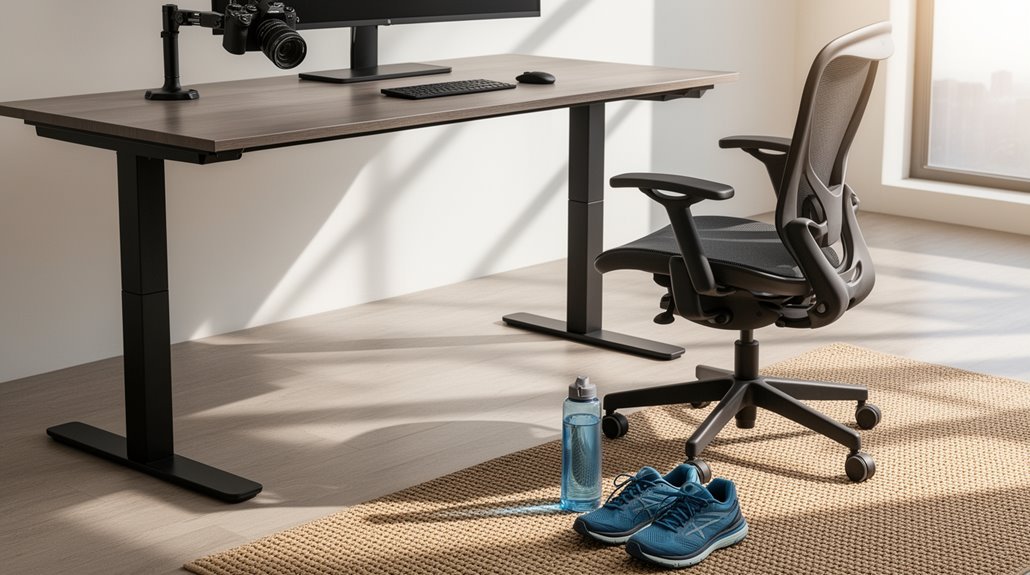
Standing is generally healthier than sitting. It boosts muscle activation, enhances posture, and improves metabolic health.
Standing can help lower blood sugar levels, and regular movement may raise HDL cholesterol while lowering triglycerides. These changes support better cardiovascular and metabolic function.
Prolonged sitting has been linked to increased cancer risk and other chronic diseases. However, excessive standing also poses health risks, including strain that can contribute to heart problems.
Balancing both positions throughout the day is essential for ideal health. To learn practical ways to incorporate more standing into your routine, continue exploring.
Understanding the Health Benefits of Standing
While you might think sitting all day is comfortable, standing offers several health benefits that can enhance your overall well-being.
Standing increases muscle activation, particularly in your legs and core, which supports improved posture and balance. This position prompts micro-movements, maintaining muscle tone and preventing muscle atrophy due to prolonged inactivity.
Additionally, standing can enhance metabolic health by promoting sugar burning and improving insulin sensitivity. It helps regulate glucose levels, reducing Type 2 diabetes risk, and promotes lower blood sugar levels that further contribute to overall health.
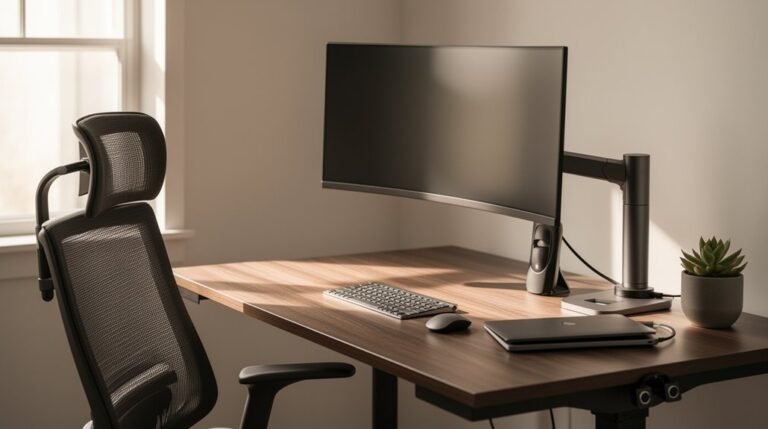
Moreover, standing desks can alleviate neck, shoulder, and low back pain, especially when combined with movement.
Comparing Cardiovascular Health: Standing vs. Sitting
Understanding the cardiovascular implications of standing versus sitting is essential for making informed lifestyle choices. Research shows that standing for about 1.33 hours daily can lead to minor decreases in fasting blood glucose and body fat. However, notable changes in cardiovascular markers are limited.
Consider these key points:
- Standing doesn’t notably lower blood pressure.
- Prolonged standing may increase arterial stiffness.
- Occupational standing correlates with a higher risk of heart disease.
- Alternating positions may offer cardiovascular benefits, especially for men.
- Sit-stand workstations don’t consistently improve cardiovascular health. Additionally, excessive standing may negatively impact cardiovascular health over time.
Metabolic Effects: How Standing Impacts Blood Sugar and Cholesterol
Standing can greatly influence your blood sugar and cholesterol levels, especially when combined with light movement.
Light walking breaks can reduce postprandial insulin levels by 16.3 mU/L compared to prolonged sitting. This effect is even more pronounced in South Asian populations, showing a 22.4 mU/L reduction.
You’ll see a decrease in glucose levels by 0.3 mmol/L when you interrupt sitting with walking. Additionally, substituting sitting with standing and light walking improves insulin sensitivity by 16%. This is significant as the mean difference in energy expenditure when standing versus sitting is 0.15 kcal/min.
Walking breaks can also raise HDL-cholesterol by 0.08 mmol/L and lower triglycerides by 32%.
Therefore, standing with movement, rather than static standing, maximizes benefits for your metabolic health.
The Link Between Sitting and Cancer Risk
The relationship between prolonged sitting and cancer risk has garnered increasing attention in recent years. Research highlights several concerning links between sedentary behavior and cancer, particularly in specific populations:
- Prolonged occupational sitting raises pancreas cancer risk in men, and lung cancer risk in women.
- Meta-analyses show an association between occupational sitting and colon cancer.
- Longer leisure-time sitting correlates with higher total cancer risk in women, including breast cancer.
- Each additional two hours of sitting increases colon and endometrial cancer risk by approximately 8-10%.
- Cancer survivors who sit more than 8 hours daily face over five times the mortality risk compared to those active for less than 6 hours.
These findings emphasize the importance of reducing sitting time to mitigate cancer risk.
Musculoskeletal Benefits of Standing
While shifting to a standing posture can enhance spinal health, it’s essential to recognize both its advantages and potential drawbacks.
Standing maintains the spine’s neutral position, preserving its natural curvature and reducing pressure on intervertebral discs. You’ll find trunk muscle strength in standing to be about double that of sitting, improving musculoskeletal stability.
However, prolonged standing can increase discomfort in the neck, back, knees, and ankles due to greater biomechanical load. Fatigue in the legs and discomfort in the buttocks may occur, especially during sit-stand tasks.
To balance spinal loading and reduce strain, it’s recommended to alternate between sitting and standing regularly. This approach can help mitigate the risks associated with prolonged static postures.
Standing Desks and Pain Relief: What the Research Shows
Research shows that using standing desks can greatly alleviate pain and discomfort associated with prolonged sitting.
Studies demonstrate significant reductions in musculoskeletal issues when alternating between sitting and standing. Key findings include:
- Six-month interventions show decreased neck, shoulder, and lower back discomfort.
- Meta-analysis confirms sit-stand workstations reduce low back pain, with pain scores improving by -0.30 to -0.51.
- A small study indicates a 50% decrease in low back pain for users with behavioral counseling.
- Users report improvements in spinal alignment, leading to less muscle fatigue.
- Control groups using traditional desks show no substantial changes in discomfort levels.
Incorporating standing desks into your daily routine can consequently contribute to better pain management and overall spinal health.
Productivity Gains From Standing
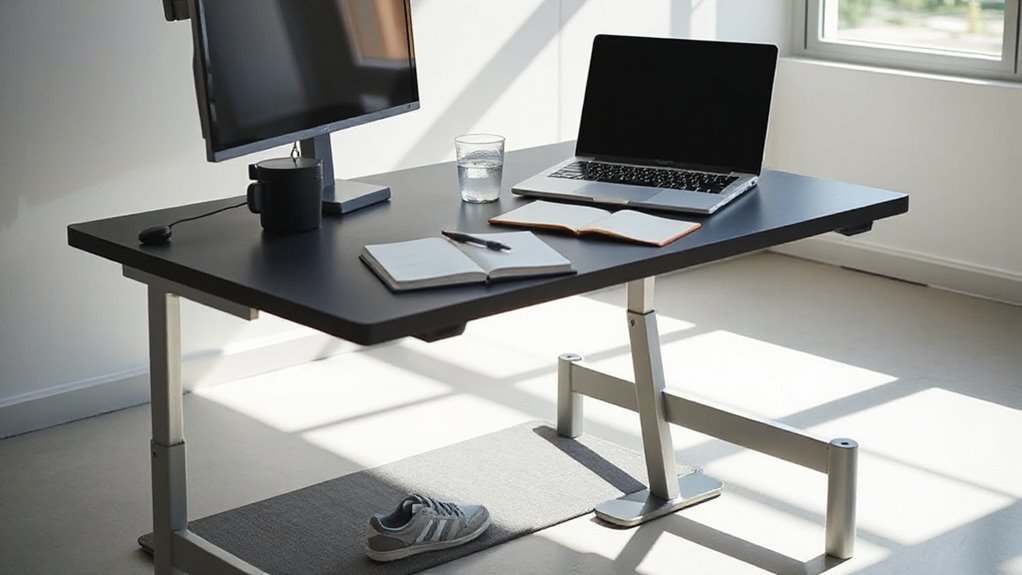
How can standing desks boost your productivity? Research indicates significant productivity increases with sit-stand desks.
Texas A&M University found a 46% increase in call center employees’ productivity. Users of adjustable desks self-reported a 65% boost after 12 months.
Improved focus, energy, and engagement occur when you alternate between sitting and standing. Studies show that standing desk users type more words, albeit with more errors, indicating heightened engagement.
Additionally, standing enhances concentration and cognitive function, especially during afternoon energy dips. Users report reduced distractions from physical discomfort, allowing sustained task focus.
The Role of Movement in Overall Health
Movement plays an essential role in maintaining overall health, as regular physical activity greatly reduces the risk of various non-communicable diseases.
Engaging in consistent movement leads to numerous health benefits, including:
- Lower risk of cardiovascular disease, type 2 diabetes, and cancer
- Improved mental health, reducing symptoms of depression and anxiety
- Enhanced cognitive function, aiding in sharper thinking and judgment
- Better cardiovascular and metabolic health, improving blood pressure and cholesterol levels
- Increased longevity, decreasing all-cause mortality with higher activity levels
Even small increases in physical activity yield measurable benefits, particularly for sedentary individuals.
Following the recommended guidelines of 150 minutes of moderate-intensity exercise weekly can markedly enhance your overall well-being and longevity.
Prioritize movement to promote a healthier life.
Risks of Prolonged Standing
Prolonged standing poses significant health risks that can affect various aspects of your well-being. Musculoskeletal issues arise frequently, with lower back pain, leg pain, and muscle aches becoming common complaints.
Standing for extended periods increases your risk of chronic musculoskeletal disorders, particularly if you adopt awkward postures. Cardiovascular health is also compromised; standing workers are twice as likely to develop heart disease compared to seated workers.
Additionally, prolonged standing can lead to chronic venous insufficiency and varicose veins. If you’re pregnant, standing for extended hours may increase the risk of preterm birth and pregnancy complications.
Practical Tips for Incorporating More Standing Into Your Day
Incorporating more standing into your day can greatly improve your overall health and productivity.
Here are practical tips to help you stand more:
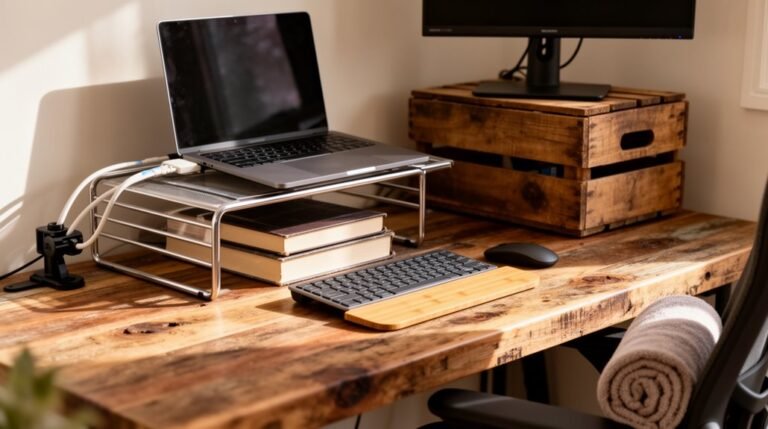
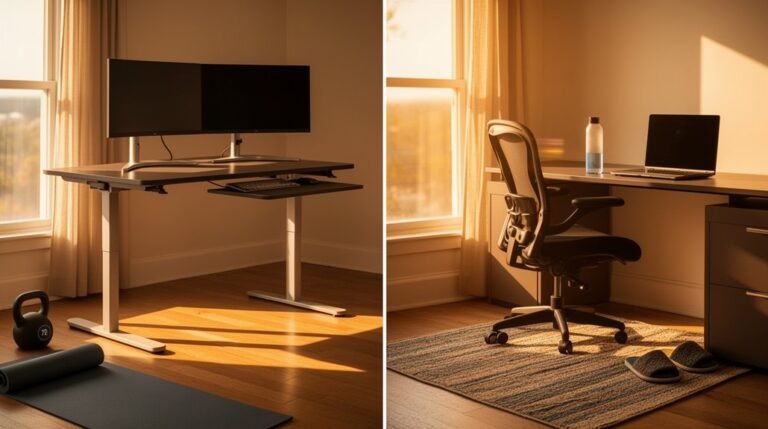
- Use a sit-stand desk, alternating between sitting and standing throughout the day.
- Schedule standing breaks for 15 to 30 minutes every hour to reduce sedentary time.
- Stand during phone calls or meetings to maximize your standing time.
- Walk to a colleague’s desk instead of sending an email, increasing incidental movement.
- Incorporate standing into daily activities, like cooking or folding laundry, to further enhance your standing duration.
Frequently Asked Questions
Can Standing Improve Mental Health or Mood?
Standing can indeed improve mental health and mood. It reduces feelings of stress, tension, and confusion.
Users report increased energy levels, especially in the afternoon, which contributes to a better mood. Standing enhances alertness and cognitive function, promoting focus and engagement.
Additionally, the movement associated with standing counteracts sedentary behavior, further benefiting mental well-being.
How Does Standing Affect Energy Levels Throughout the Day?
Standing can positively affect your energy levels throughout the day. By increasing energy expenditure by about 9.7–10.2%, you expend an additional 45–54 kcal daily when substituting 6 hours of sitting with standing.
Your heart rate also rises by approximately 16 bpm, enhancing circulation.
However, it’s crucial to balance standing with movement, as prolonged standing can strain your legs and feet, potentially leading to fatigue.
Are There Specific Exercises to Complement Standing?
Incorporate exercises like calf raises and leg swings to enhance circulation while standing.
Perform calf raises by lifting your heels off the ground, engaging your calves for 15 to 20 repetitions.
Leg swings involve shifting one leg forward and backward, completing 10 swings per leg.
Additionally, include simple stretches for your shoulders and neck every hour.
These activities reduce muscle tension, improve flexibility, and promote blood flow, optimizing your standing experience.
What Are the Best Types of Footwear for Standing?
For standing, you need supportive shoes that prioritize comfort and stability.
Look for well-cushioned midsoles to absorb impact, arch support to prevent strain, and a wide toe box for toe movement.
Shoes like STAND+ and Hoka Transport GTX offer excellent cushioning and support.
Guarantee shock-absorbing outsoles to protect your joints.
How Can I Gradually Transition to More Standing?
Start by standing for 15 to 30 minutes each hour. Gradually increase this time over several weeks.
Alternate between sitting and standing every 30 to 60 minutes to avoid discomfort. Use sit-stand desks for easy shifts.
Initially, stand during low-effort tasks to build tolerance. Incorporate reminders or trackers to prompt standing breaks.
This approach helps your body adapt and reduces fatigue while enhancing overall comfort and productivity.
Conclusion
Incorporating standing into your daily routine offers numerous health benefits. Research shows that standing can improve cardiovascular health, enhance metabolic function, and reduce the risk of certain cancers.
Although prolonged standing can lead to discomfort, the advantages often outweigh the drawbacks. By integrating more standing into your work and leisure activities, you can foster better musculoskeletal health and boost productivity.
Ultimately, balancing standing and sitting while embracing movement is key to optimizing your overall well-being.