How to Stay Active at Your Desk
How to Stay Active at Your Desk
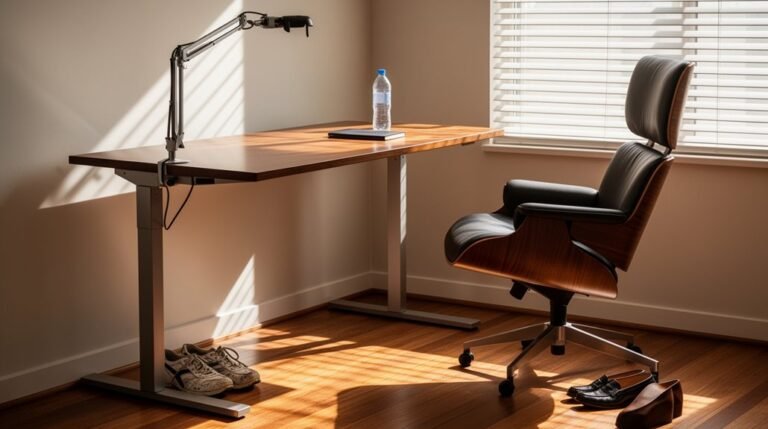
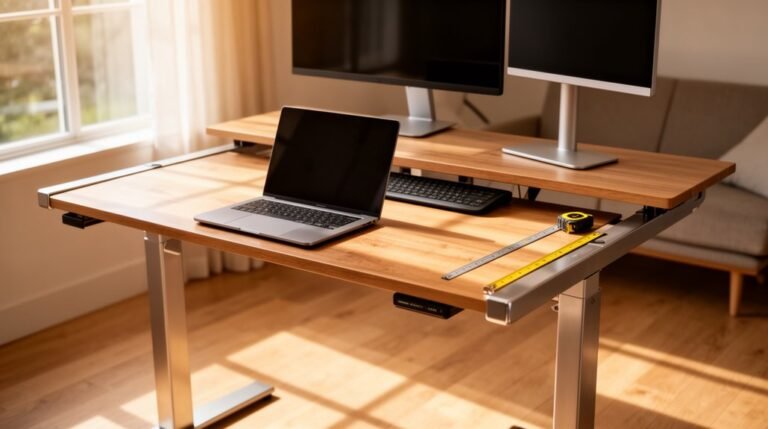
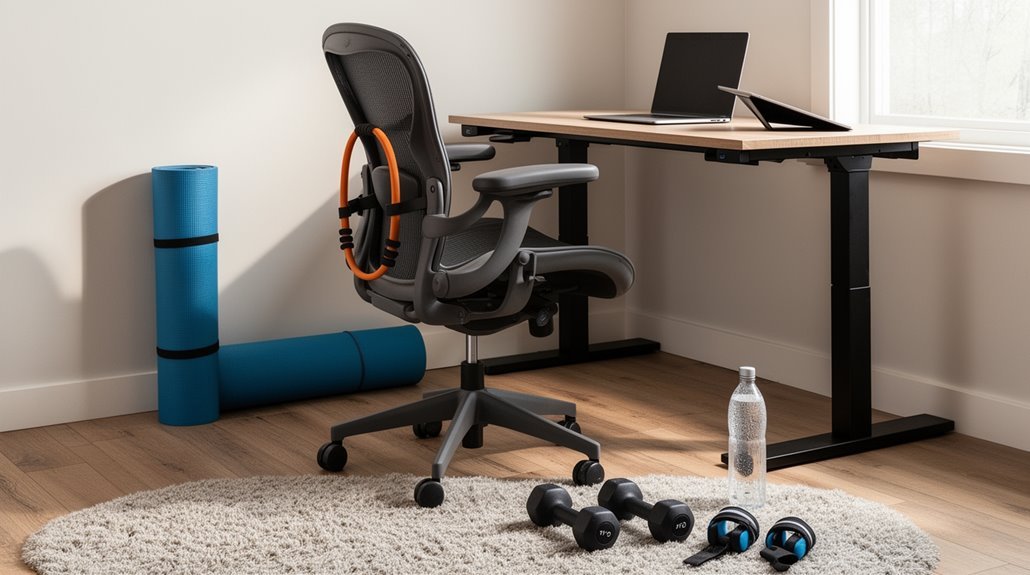
To stay active at your desk, incorporate movement into your routine. Using a sit-stand desk lets you alternate positions regularly and reduces prolonged sitting.
Aim to switch your posture every 30 minutes to alleviate strain. Short movement breaks each hour — doing desk exercises like squats or chair swivels — keep blood flowing and muscles engaged.
Choose ergonomic furniture to enhance comfort and productivity, which can improve focus. Finally, maintain energy levels with nutritious snacks to support sustained activity and overall well-being.
The Benefits of Exercise for Desk Workers
When you incorporate exercise into your work routine, you can greatly enhance your overall health and productivity. Regular physical activity reduces rates of repetitive strain injuries and musculoskeletal disorders, particularly in the neck, shoulders, and back.
Desk workers engaged in exercise programs demonstrate improved flexibility and decreased pain, with adherence leading to up to 80% pain reduction over 12 weeks. Moreover, workplace exercise enhances cardiorespiratory fitness, lowering the risk of cardio-metabolic diseases. Additionally, the economic burden of physical inactivity highlights the importance of integrating physical activity into daily routines to mitigate long-term healthcare costs.
Increased productivity results from improved muscle strength and balance control, allowing you to complete physically demanding tasks more easily. Additionally, lower pain levels contribute to higher job satisfaction and work efficiency, reinforcing the importance of integrating exercise into your daily routine.
Incorporating Movement Into Your Workstation
Incorporating movement into your workstation can greatly impact your health and productivity. Using a sit-stand desk allows you to alternate between sitting and standing, reducing sedentary time. Aim to switch positions every 30 minutes to decrease the risk of musculoskeletal issues, such as neck and back pain. Prolonged inactivity increases risks of cardiovascular disease, obesity, and all-cause mortality, making it essential to stay active during your workday.
Implementing short movement breaks every hour can further enhance your well-being. Incorporate microbreaks with exercises like squats or desk push-ups to engage different muscle groups and improve circulation.
Additionally, consider simple desk exercises, such as chair squats or seated leg lifts, to reduce stiffness. Utilize technology for reminders to encourage consistent movement, ensuring you maintain an active routine throughout your workday.
Ergonomics and Productivity Enhancement
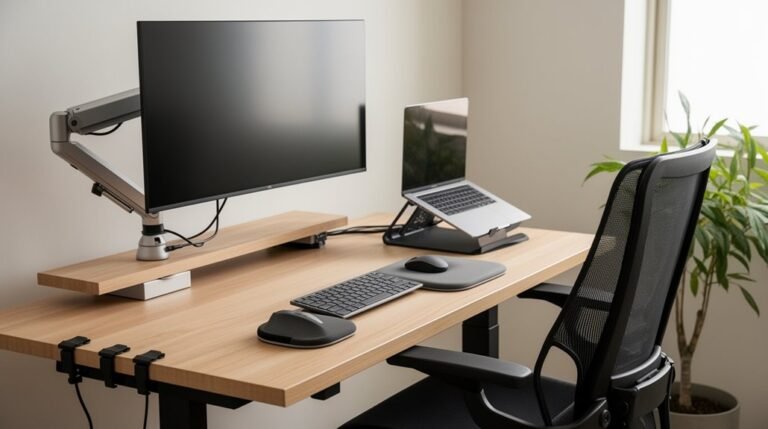
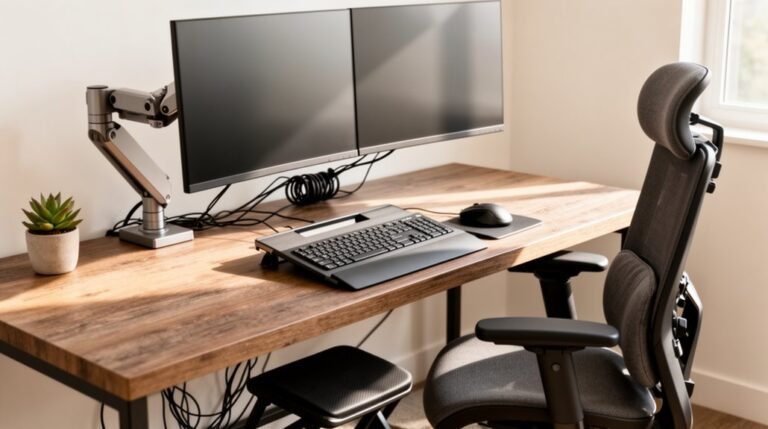
Optimizing your workstation with ergonomic furniture can greatly enhance your productivity. Ergonomic setups reduce discomfort, allowing you to focus better on tasks. Research shows that proper ergonomic designs can boost productivity by approximately 15%. Additionally, proper ergonomic setups contribute to reducing distractions and improving overall work-life balance.
Here are three key benefits:
- Increased Comfort: Ergonomic chairs and desks improve posture, reducing distractions from discomfort.
- Reduced Absenteeism: Investing in ergonomic solutions can lead to a 67% decrease in lost workdays due to musculoskeletal disorders.
- Enhanced Cognitive Performance: Ergonomically optimized environments lower physical distractions, improving decision-making and problem-solving abilities.
Implementing these ergonomic principles not only enhances individual productivity but also fosters a healthier work environment overall.
Practical Desk Exercises to Try
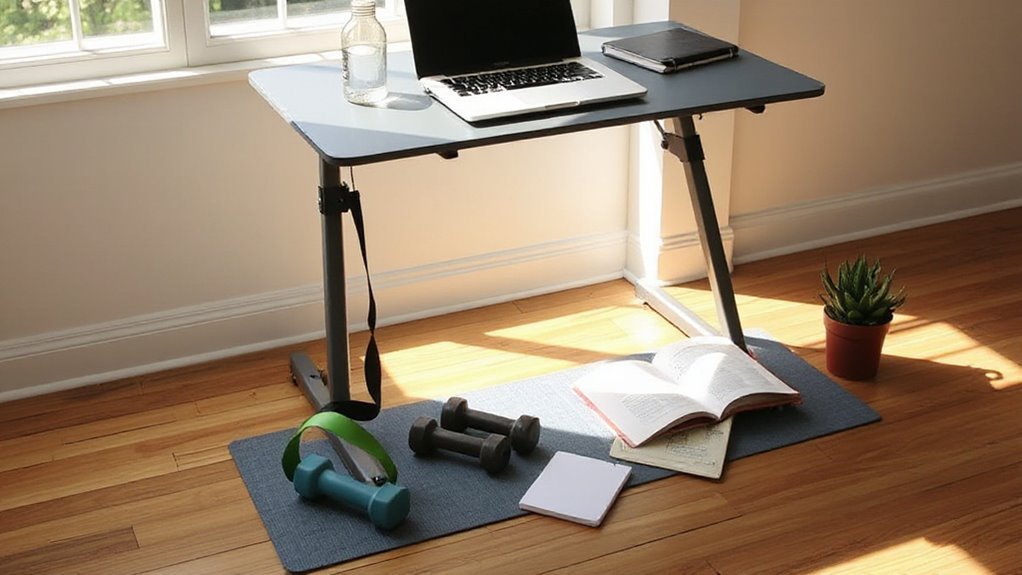
Staying active at your desk is essential for maintaining physical health and mental focus throughout the workday.
Neck and Shoulder Stretches
Perform neck rolls by gently rolling your head in a circular motion.
Try shoulder shrugs; lift your shoulders toward your ears and release, repeating 10–15 times.
For seated forward bends, clasp your hands, extend your arms forward, and round your back.
Core and Back Strengthening
Engage your core with chair swivels, rotating your chair side to side for 10–15 reps.
For desk pushes, place hands on the desk, push down, and hold for 10 seconds.
Lower Body Exercises
Lift one leg at a time for leg extensions, and hold for a few seconds.
Try knee-to-chest stretches, hugging each knee for 10–30 seconds.
Nutrition Tips for Maintaining Energy Levels
Nutrition plays an essential role in how you feel and perform at your desk. To maintain energy levels, focus on balanced snacks that provide sustained energy without the crash.
Consider these options:
- Greek yogurt: It’s rich in protein, calcium, and probiotics, supporting digestion and bone health.
- Mixed nuts: They offer healthy fats and protein, preventing energy slumps throughout the day.
- Whole grains: Foods like oatmeal and quinoa regulate glucose levels, providing steady energy and essential B vitamins for brain function.
Incorporating these foods into your daily routine will help you stay alert and productive.
Organizational Strategies to Encourage Activity
Organizational strategies that encourage activity can greatly enhance workplace wellness and productivity. Implement policies that incentivize active commuting, like rewards for cycling or walking to work.
Redesign office layouts to place printers and waste bins farther from desks, promoting incidental movement. Incorporate active workstations, such as sit-stand or treadmill desks, to reduce sedentary behavior. Provide on-site fitness facilities and bike storage to facilitate employee activity.
Organize team-based activities, like stair-climbing competitions, to foster motivation and camaraderie. Establish peer support systems and use group incentives to sustain engagement.
Schedule structured exercise sessions during breaks and allow flexible work hours for physical activity. Secure leadership support to drive these initiatives and embed them into workplace culture.
Frequently Asked Questions
How Can I Stay Active While Working From Home?
To stay active while working from home, incorporate short exercise breaks every hour.
Stand up, stretch, or do a quick workout for 5-15 minutes. Use desk exercise tools like resistance bands or under-desk bikes to integrate movement seamlessly.
Consider a treadmill desk to reduce sedentary time. Additionally, schedule walking meetings or phone calls, allowing you to move while discussing work.
These strategies help counteract long periods of sitting and promote overall well-being.
What Are Signs I Need to Take a Movement Break?
You should consider taking a movement break if you experience muscle stiffness, neck or lower back pain, or tingling in your limbs.
If you notice decreased focus, increased irritability, or frequent zoning out, it’s time to move.
Eye strain and poor posture are also indicators.
Additionally, if you’ve been sitting for over 30-60 minutes without a break, you likely need to reset your body and mind through physical activity.
How Often Should I Change Positions While Working?
You should change positions about 40 times each workday for ideal health.
Frequent shifts reduce the risks linked to prolonged sitting. For instance, standing during phone calls or walking to meetings can effectively incorporate movement.
While the average user engages their sit-stand desk only once daily, increasing this frequency correlates with higher productivity.
Regular movement breaks are essential; they enhance well-being and reduce musculoskeletal strain, improving overall work engagement.
Can I Use a Regular Chair Instead of a Stability Ball?
Yes, you can use a regular chair instead of a stability ball.
Office chairs provide essential lumbar support and armrests, promoting better posture during prolonged sitting. Stability balls lack this support, often leading to discomfort and quicker muscle fatigue.
While stability balls may activate core muscles slightly, the benefits are minimal compared to ergonomic chairs. For safety and productivity, a regular chair is a more practical and reliable choice for desk work.
What Types of Shoes Are Best for Desk Work?
For desk work, choose athletic shoes like walking or cross-trainers that provide cushioning and arch support.
Clogs or sandals with solid arch support are ideal for warmer settings.
Dress shoes with comfort features blend style and support.
Recovery shoes, like Oofos, offer cushioning for all-day wear.
Hybrid casual-comfort shoes, such as ECCO ST.1, combine a professional look with sneaker-like comfort, ensuring stability and foot health throughout your workday.
Conclusion
Incorporating movement into your workday can markedly enhance your productivity and well-being.
For instance, a study found that employees who took short breaks for stretching or walking improved their focus and reduced fatigue.
By implementing desk exercises, optimizing ergonomics, and maintaining proper nutrition, you can create a healthier work environment.
Prioritize these strategies to boost your energy levels and overall performance, ensuring you remain active and engaged throughout your day.