Should You Wear Shoes on an Anti-Fatigue Mat?
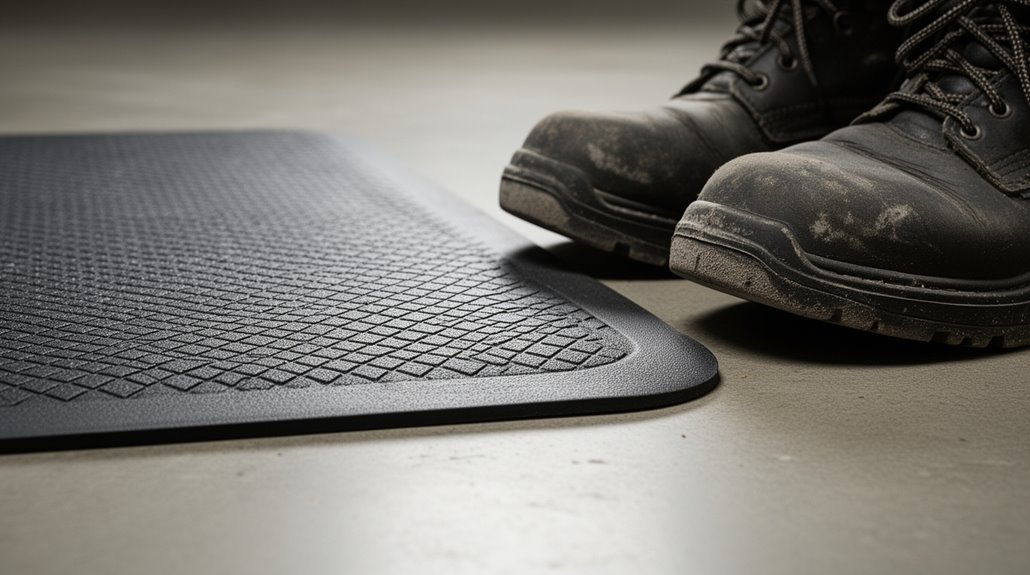
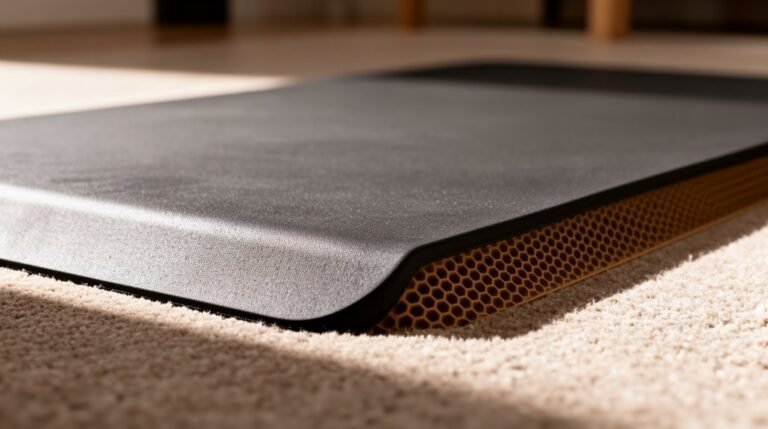
Should you wear shoes on an anti-fatigue mat? Wearing shoes on an anti-fatigue mat enhances comfort and support during prolonged standing. Supportive footwear provides essential arch support and cushioning, which reduces strain on your feet, joints, and muscles while the mat helps absorb pressure and mitigate fatigue.
Standing barefoot on a mat can increase risks such as moisture accumulation, discomfort, and added stress on joints. To optimize your experience, choose the right footwear that complements the mat’s cushioning and promotes proper alignment.
Explore the full range of advantages that anti-fatigue mats and appropriate shoes can offer for your comfort and overall well-being.
Effectiveness of Anti-Fatigue Mats With Different Footwear
When considering the effectiveness of anti-fatigue mats with different footwear, it’s essential to recognize that these mats provide cushioning and reduce plantar pressure, regardless of what you wear on your feet.
Studies reveal that mats decrease subjective discomfort in lower limbs compared to hard flooring, whether you’re wearing shoes or not. The biomechanical advantages, such as reduced peak plantar pressure and optimized pressure distribution, remain consistent across various footwear types. Additionally, mats help maintain instep height and ball of foot length, which further mitigates fatigue. Research indicates that anti-fatigue mats can delay or lessen subjective fatigue and discomfort, yielding statistically significant results for all footwear categories, ensuring comfort during prolonged standing or movement. Furthermore, using anti-fatigue mats has been shown to significantly lower discomfort ratings compared to standing on concrete.
Benefits of Wearing Shoes on Anti-Fatigue Mats
Wearing shoes on anti-fatigue mats greatly enhances comfort and support during prolonged standing. Shoes provide an extra layer of cushioning, reducing foot strain. Supportive footwear complements the mat’s pressure-distributing properties, improving overall comfort. In industrial or healthcare settings, shoes often feature steel toes or arch support, enhancing protection while reducing fatigue. Additionally, anti-fatigue mats are designed to alleviate pressure on muscles and joints, further promoting comfort and reducing physical strain.
Risks of Barefoot Standing on Anti-Fatigue Mats
Barefoot standing on anti-fatigue mats presents several risks that can negatively impact foot health and overall comfort.
First, moisture accumulates beneath your feet, promoting bacteria and fungi growth, which can lead to infections. Additionally, dirty mats concealing tripping hazards can exacerbate these risks by making it harder to identify and address any underlying issues.
Second, direct contact with mat materials can harbor pathogens, compromising hygiene.
Third, without shoes, you lack arch support, forcing your muscles and joints to work harder, increasing discomfort and stress.
Fourth, temperature fluctuations can cause skin irritation, while direct contact may lead to blisters from friction.
Finally, barefoot standing provides inadequate shock absorption, increasing joint stress over time.
These factors can collectively contribute to discomfort and potential injuries, making barefoot standing a less advisable option on anti-fatigue mats.
Enhancing Comfort With Insoles
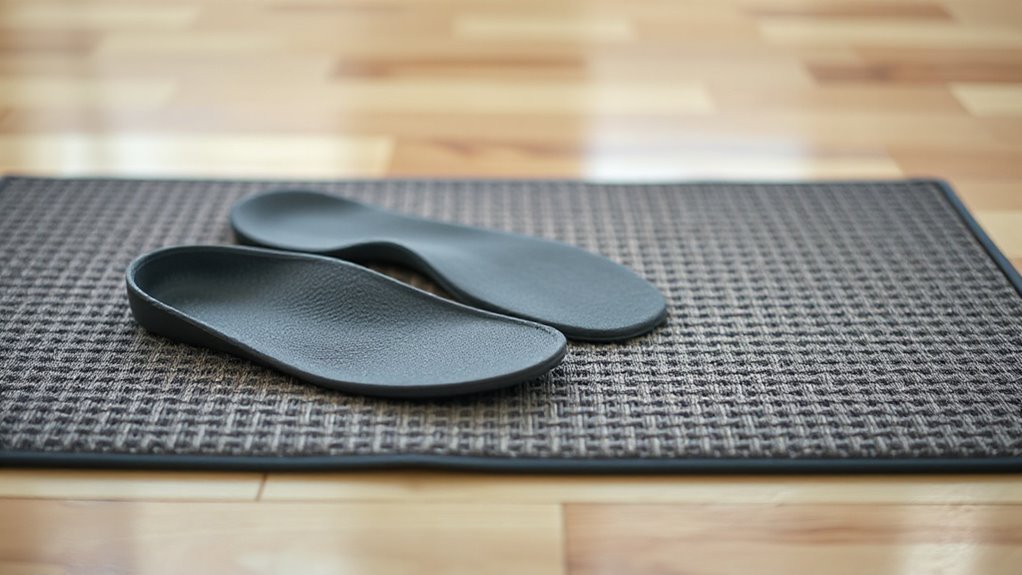
Utilizing anti-fatigue insoles in conjunction with shoes can considerably improve comfort during prolonged standing.
These insoles, crafted from high-density dual-layer memory foam, provide excellent shock absorption. They fit directly inside your shoes, enhancing balance and reducing muscle strain more effectively than mats alone.
Contoured arch supports and deep heel cushions offer additional comfort, while ventilation holes help minimize moisture issues. Many insoles feature anti-fungal and anti-bacterial fabrics for hygiene.
Machine-washable designs extend durability, especially in high-cleanliness environments. By optimizing plantar pressure distribution, insoles can alleviate discomfort in your hips, knees, and feet.
This combination of features makes insoles an effective tool for maintaining comfort in both stationary and mobile roles.
Ergonomic Advantages of Anti-Fatigue Mats
When you’re standing for long periods, anti-fatigue mats offer significant ergonomic benefits that can enhance your overall well-being.
These mats reduce musculoskeletal strain by providing cushioning, which evenly distributes your weight, alleviating pressure on your lower back, legs, and feet. Studies show that users experience up to 50% less muscle fatigue while standing on these mats compared to hard surfaces.
Additionally, anti-fatigue mats promote improved circulation through micro-movements, reducing blood pooling and discomfort. Their design supports better posture, enhancing spinal alignment and balance, ultimately lowering the risk of slips or trips.
Practical Tips for Optimal Use of Anti-Fatigue Mats
To maximize the benefits of anti-fatigue mats, it’s crucial to use them correctly in your work environment. Here are some practical tips:
- Wear supportive shoes that provide proper grip, enhancing slip resistance and comfort.
- Position mats only in designated standing areas to minimize tripping hazards and guarantee stability.
- Check mat compatibility with your footwear, selecting materials like rubber or high-density foam for durability and support.
- Encourage movement on the mat; subtle shifts improve circulation, reducing fatigue and joint stress.
Frequently Asked Questions
Can Children Use Anti-Fatigue Mats Barefoot Safely?
Yes, children can use anti-fatigue mats barefoot safely.
The mats’ closed-cell foam construction prevents liquid absorption, minimizing slip hazards. High-traction surfaces guarantee secure footing, while beveled edges reduce tripping risks.
Soft cushioning distributes plantar pressure, enhancing stability and reducing muscle tension. Anti-microbial treatments maintain hygiene, preventing odor and degradation.
Do Anti-Fatigue Mats Help With Existing Foot Conditions?
Yes, anti-fatigue mats can greatly aid those with existing foot conditions.
These mats evenly distribute weight, reducing peak plantar pressure by up to 50%. This distribution helps alleviate discomfort in the midfoot and heel areas.
Additionally, their design encourages micro-movements, which stimulate blood flow and reduce the risk of pain.
Research shows users report a 70% decrease in impact injuries, making them a practical choice for managing foot-related issues effectively.
How Often Should Anti-Fatigue Mats Be Replaced?
You should replace anti-fatigue mats every 1 to 3 years, depending on their quality and usage.
Signs of wear, like flattening or cracking, indicate it’s time for a replacement.
Regular maintenance, including cleaning and rotating mats, can extend their lifespan.
If mats become dirty or lose their non-skid backing, they compromise safety and functionality.
Always monitor for deterioration, as worn mats can lead to safety hazards in the workplace.
Are There Specific Brands Recommended for Anti-Fatigue Mats?
You should consider several brands for anti-fatigue mats.
The Imprint CumulusPRO offers durable 100% polyurethane construction.
The iMovR EcoLast features a ten-year warranty and lifetime defect coverage.
For a budget option, check the Kensington Anti-Fatigue Mat, which includes a 2-year warranty.
Additionally, the Ergotron Workfit Mat provides medium-density foam and a five-year warranty.
Each brand caters to different needs, ensuring quality and support.
Can Anti-Fatigue Mats Be Used Outdoors?
Yes, anti-fatigue mats can be used outdoors. They’re made from durable materials like EVA foam, rubber, and polyurethane, which withstand moisture and temperature changes.
These mats often feature slip-resistant surfaces and drainage designs that enhance safety in wet conditions. Their UV resistance prevents fading, ensuring longevity.
Suitable applications include workshops, kitchens, and entryways, where they provide cushioning and reduce fatigue for individuals standing for extended periods in outdoor environments.
Conclusion
Wearing shoes on anti-fatigue mats can enhance comfort and support. A study found 88% of users reported decreased discomfort when wearing supportive footwear compared to standing barefoot.
Shoes provide stability and distribute weight evenly, reducing strain on your feet and legs. While anti-fatigue mats offer ergonomic benefits, combining them with proper footwear optimizes their effectiveness.
For best results, consider using insoles tailored to your foot type to maximize the advantages of both the mat and your shoes.