Benefits of a Standing Desk Converter
A standing desk converter considerably reduces sedentary time, increasing daily calorie burn and improving cardiovascular health. Standing can boost metabolic function, enhance insulin sensitivity, and decrease blood sugar spikes, which helps overall metabolic health.
It also lowers the risk of certain cancers and relieves musculoskeletal pain by promoting better posture. Using a converter encourages more natural, ergonomic positioning that can reduce strain on the neck and shoulders.
Studies show alternating between sitting and standing can cut lower back pain by up to 50%. Overall, a standing desk converter can enhance well-being and productivity by supporting healthier movement patterns throughout the workday.
Reduced Risk of Heart Disease and Cardiovascular Issues
When you incorporate a standing desk converter into your routine, you may considerably lower your risk of heart disease and related cardiovascular issues.
Long-term use can reduce your daily sedentary time by replacing about 90 minutes of sitting with standing. This change improves lower extremity vascular function, as shown by superficial femoral artery flow-mediated dilation (SFA-FMD). Enhanced vascular endothelial health helps prevent cardiovascular disease. Additionally, standing for an average of 1.33 hours daily over four months can modestly lower fasting blood glucose levels, an important cardiovascular risk factor. However, it is essential to note that prolonged static standing may increase arterial stiffness, which can counteract some benefits of standing.
These improvements occur without requiring increased exercise or changes in weight metrics, underscoring the significance of reducing sitting time for better cardiovascular health outcomes, especially for overweight and obese sedentary workers.
Increased Daily Calorie Burn and Weight Management
Incorporating a standing desk converter can lead to an increased daily calorie burn, which is beneficial for weight management. When standing, you burn about 95 calories per hour, compared to 80 calories per hour while sitting. This difference results in a net increase of approximately 15 calories per hour, meeting the threshold for non-exercise activity thermogenesis (NEAT). Additionally, this increase in calorie burn is classified as NEAT activity, which can enhance overall productivity throughout the day.
Over a typical workweek, standing for three hours daily can burn an additional 300 to 450 calories. If you maintain this routine, you could potentially lose around 5.85 pounds annually. Combining standing with walking increases your calorie burn considerably, with walking at 1.0 mph burning five times more calories than standing. This approach supports gradual weight reduction over time.
Reduced Risk of Certain Cancers
Research shows that minimizing prolonged sitting can greatly lower your risk of various cancers. Studies indicate that individuals who reduce sitting hours exhibit remarkably lower rates of colon, breast, and endometrial cancers.
For instance, the Australian study involving over 200,000 adults supports this finding. The Nurses’ Health Study also established a link between active lifestyles and reduced breast cancer rates.
Prolonged sitting contributes to chronic inflammation and poor insulin regulation, both of which increase cancer risk. By using a standing desk converter, you can promote movement and improve metabolic processes, thereby enhancing your immune function. Additionally, standing desks can play a role in mitigating cancer risks by encouraging regular movement throughout the day.
Regularly changing your posture further mitigates the risks associated with sedentary behavior, leading to a healthier work environment and potentially reducing cancer risk.
Improved Metabolic Health and Biomarkers

Using a standing desk converter markedly enhances metabolic health, primarily through improved insulin sensitivity and reduced triglyceride levels.
Research shows that standing desk use leads to a 23% improvement in insulin resistance among overweight office workers over 24 weeks. This improvement is largely due to reductions in fasting insulin levels.
Additionally, standing for 180 minutes post-lunch can decrease post-meal blood sugar spikes by 43%.
Furthermore, a 24-week intervention demonstrates significant improvements in fasting triglyceride levels, correlating lower triglyceride concentrations with reduced sedentary time.
Enhanced vascular function also results from standing desk use, improving blood flow and reducing cardiovascular disease risk.
Relief From Back and Musculoskeletal Pain
Although many workers experience back and musculoskeletal pain due to prolonged sitting, switching to a standing desk converter can provide significant relief.
Research shows that alternating between sitting and standing every 30 minutes reduces lower back discomfort compared to continuous sitting. A 2018 study found a 50% decrease in low back pain among users of sit-stand desks. Additionally, participants reported a 54% reduction in upper back and neck pain after four weeks.
Frequent postural changes help alleviate chronic anterior pelvic tilt and lessen spinal compression. Furthermore, proper ergonomic setup is essential; ensuring desk height allows elbows to remain at 90 degrees prevents hunching and awkward reaching.
This combination can lead to improved physical function and decreased disability related to pain.
Enhanced Wellbeing and Mood
Studies indicate that incorporating a standing desk converter can greatly enhance your overall wellbeing and mood. A 7-week study found that participants reported less stress and fatigue while using standing desks. This setup lowers cortisol levels, a hormone linked to chronic stress.
Your mood can improve as standing activates more muscles, increasing endorphin production. This leads to heightened feelings of vigor—87% of users reported increased energy during work.
Additionally, research shows standing desks reduce anxiety and enhance emotional well-being. By promoting movement, these desks also support cardiovascular health, which can further improve mental state.
Improved Cognitive Function and Productivity

Incorporating a standing desk converter can greatly enhance your cognitive function and productivity. Studies show that using these desks markedly improves executive function and working memory. Functional near infrared spectroscopy (fNIRS) indicates increased prefrontal cortex activation during standing, enhancing brain function. This improvement parallels benefits observed in exercise programs.
In office settings, active workstations—like standing desks—boost mental cognition without hindering job performance. Randomized trials verify that reasoning test scores improve with standing or walking workstations.
Additionally, improved blood flow to the brain supports concentration and mental energy. Reduced sedentary time correlates with better cognitive health, minimizing risks associated with prolonged sitting.
Therefore, standing desk converters are a simple yet effective tool for enhancing cognitive performance and productivity. In addition to boosting productivity, the ergonomic benefits of standing desks can significantly reduce the risk of back pain and other musculoskeletal issues associated with prolonged sitting. This positioning encourages better posture and promotes greater movement throughout the day, contributing to overall wellness. As a result, many users report increased energy levels and improved mood, making these desks a popular choice in modern workplaces.
Flexibility and Customization in Workspaces
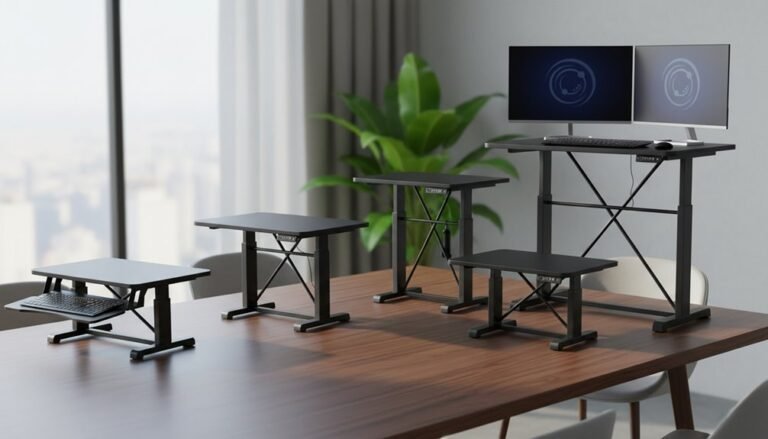
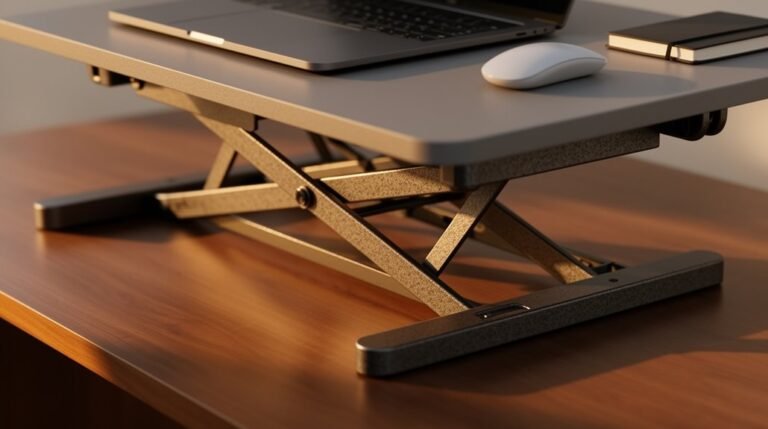
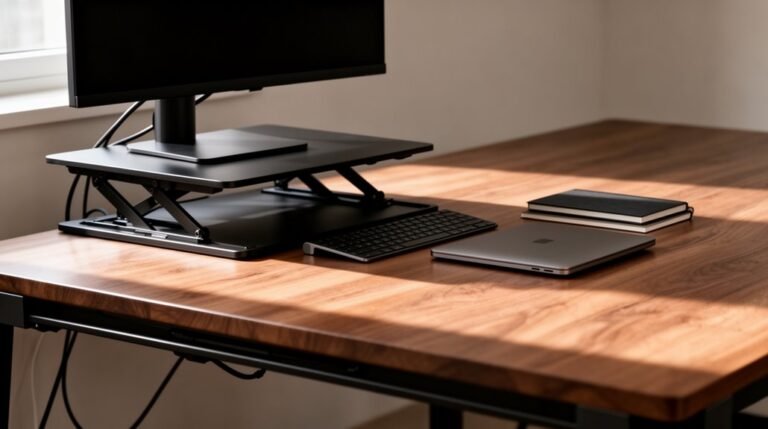
Standing desk converters offer a range of features that enhance flexibility and customization in work environments. You can choose from various models to fit your specific needs. standing desk converter benefits for users include improved posture, increased energy levels, and enhanced productivity throughout the workday. By allowing for easy adjustments between sitting and standing, these converters help to reduce the risk of sedentary-related health issues. Additionally, they can foster a more dynamic workspace that encourages movement and engagement.
- Electric converters provide motorized height adjustments with programmable settings.
- Manual crank models allow for adjustable heights, requiring physical effort for customization.
- Compact designs enable use in small spaces, maximizing efficiency without major changes.
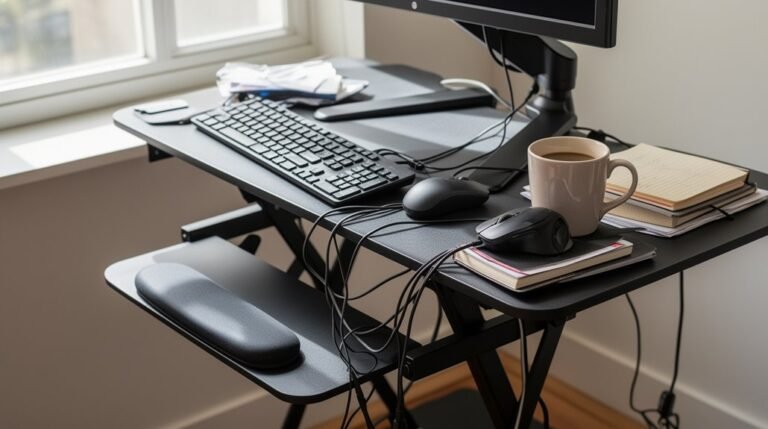
- Ergonomic features like adjustable keyboard trays help you maintain proper posture.
These options support different user preferences, accommodating various tasks and body types. Most converters adjust heights from 1.8 inches to over 15 inches, promoting comfort throughout your workday.
Frequently Asked Questions
How Do I Transition to Using a Standing Desk Effectively?
To shift to a standing desk effectively, start with short standing periods of 20-30 minutes.
Gradually increase this time by 5-7 minutes weekly.
Alternate between sitting and standing every 45-60 minutes to minimize fatigue.
Make sure your desk height allows for a 90° elbow angle when typing.
Maintain straight posture and shift your weight periodically.
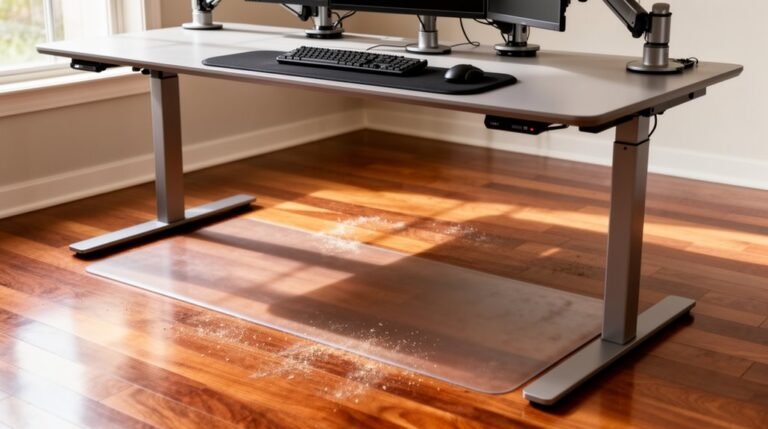
Use ergonomic accessories like anti-fatigue mats.
Listen to your body, adjusting as needed to prevent discomfort or strain.
Can a Standing Desk Converter Fit on Any Desk?
Yes, a standing desk converter can fit on many desks, but specific criteria must be met.
Verify your desk has a stable surface, measuring between 0.47″ to 2.4″ thick. The desk depth should be at least 16 inches for proper clamp attachment.
Check for overhead obstacles and maintain 5 centimeters of clearance.
Finally, confirm that your desk supports the combined weight of the converter and all equipment, typically ranging from 15.8kg to 20.4kg.
Are There Specific Standing Desk Converter Brands Recommended?
Recommended Brands
You should consider Ergotron WorkFit-S for stability and build quality.
VariDesk Pro Plus offers ease of use and pre-assembled delivery.
Vivo K Series provides excellent value with multiple size options.
Duke VESA, made in the USA, features a gas lift system for easy adjustments.
Finally, VertDesk Converter boasts a robust double z-shaped base for enhanced stability and smooth operation.
Each brand excels in specific performance metrics, catering to diverse user needs.
What Is the Ideal Height for a Standing Desk Converter?
The ideal height for your standing desk converter aligns with your elbow height. Measure from the floor to the bottom of your hands with elbows bent at 90 degrees.
For users around 5’6″, aim for approximately 41 inches. Taller individuals, like those at 6’1″, should consider around 44 inches, while 6’4″ users may need 46 inches.
Make sure your monitor is at eye level, about 20–30 inches away, for best ergonomics.
How Can I Prevent Fatigue While Using a Standing Desk?
To prevent fatigue while using a standing desk, alternate your position frequently. Shift your weight between feet, use a footstool, and lean against the desk occasionally.
Maintain proper posture by standing with feet shoulder-width apart and knees slightly bent. Use an anti-fatigue mat for cushioning and wear supportive shoes.
Take breaks every 30 minutes to sit or walk, promoting circulation and reducing discomfort. Incorporate small movements to keep your muscles engaged.
Conclusion
Incorporating a standing desk converter transforms your work environment.
You reduce the risk of heart disease while simultaneously increasing daily calorie burn.
Musculoskeletal pain decreases, which enhances overall comfort.
Improved metabolic health leads to better biomarkers.
Cognitive function and productivity can rise, contributing to a more efficient workflow.
Flexibility in workspace design allows for personalized setups.
By balancing these benefits against traditional seating, you enable a healthier, more productive lifestyle.