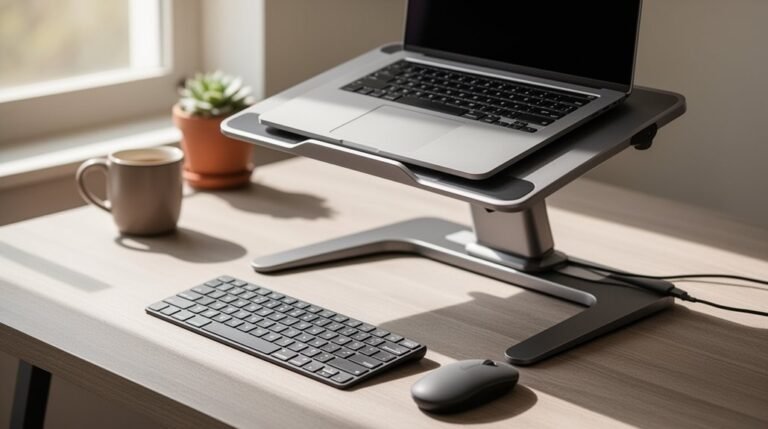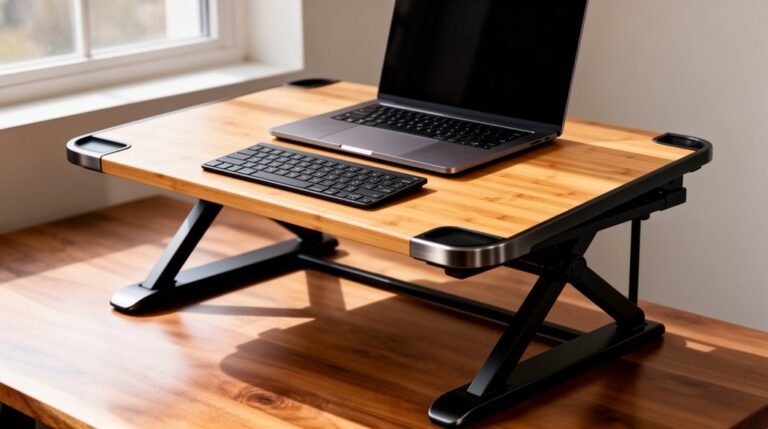
Are Standing Desk Converters Worth It?
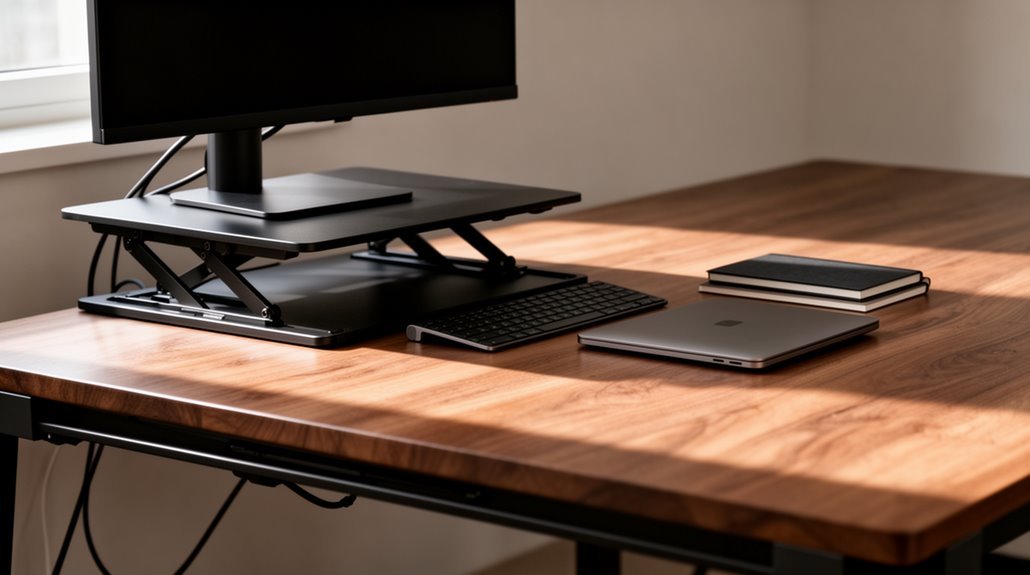
Standing desk converters are worth it for many users because they offer clear ergonomic benefits, including improved posture and better spinal alignment. By enabling easy changes between sitting and standing, they help reduce discomfort and can make long work sessions more tolerable.
Switching positions throughout the day also helps with focus and may boost productivity—some studies suggest height-adjustable work setups can increase productivity by up to 23%. Standing burns more calories than sitting, too, which can help counteract sedentary time.
Compared with full standing desks, standing desk converters usually cost less while delivering many of the same advantages. If you want to optimize your work environment further, consider exploring additional insights on their benefits and practical setup and usage tips.
Understanding Posture and Ergonomic Benefits
When you use a height-adjustable desk converter, you maintain a neutral spine position, which is essential for spinal alignment. This neutral position reduces chronic anterior pelvic tilt, often caused by tight hip flexors. By frequently changing your posture, you allow spinal compression to relax, decreasing pain and discomfort. Switching between sitting and standing every 30 minutes provides consistent postural relief and helps extend hip flexors, improving overall spinal posture. Studies show that using a standing desk can lower back pain, particularly later in the workday. Additionally, research indicates that height-adjustable desks can improve wellbeing at work by reducing stress and enhancing productivity. By correcting forward head posture, you also reduce muscle fatigue in the neck and shoulders.
Enhancing Energy, Focus, and Productivity
Height-adjustable desk converters not only improve posture but also greatly boost energy levels and cognitive function. Studies show they enhance executive function and working memory. Users experience better reasoning, short-term memory, and concentration. Active workstations lead to faster task completion and fewer errors, highlighting improved attention. Continued use of standing desks is linked to significant improvements in cognitive performance.
Alternating between sitting and standing reduces lethargy, promoting blood flow and sustained alertness. You’ll likely engage more with tasks, as studies indicate a 12% increase in active participation. Intermittent standing every 30 minutes minimizes mental fatigue and sleepiness, ensuring consistent cognitive performance. This dynamic work environment fosters focus and clarity.
Calorie Expenditure and Metabolic Health
Calorie expenditure and metabolic health are critical considerations when evaluating standing desk converters. Standing burns about 95 calories per hour, while sitting only burns 80 calories, leading to a 10-12% increase in metabolic rate. Over a typical 8-hour workday, this can add up to an extra 160-400 calories burned. However, simply standing isn’t enough for significant weight loss. Walking at a slow pace while standing can boost calorie burn to 170-240 calories per hour. Although standing contributes to Non-Exercise Activity Thermogenesis, the caloric increase is modest, roughly 9 calories per hour. For meaningful weight management, incorporating movement and adjusting dietary habits are essential alongside using a standing desk converter. Additionally, walking speed plays a key role in determining calorie expenditure while using a standing desk.
Cost-effectiveness and Practicality
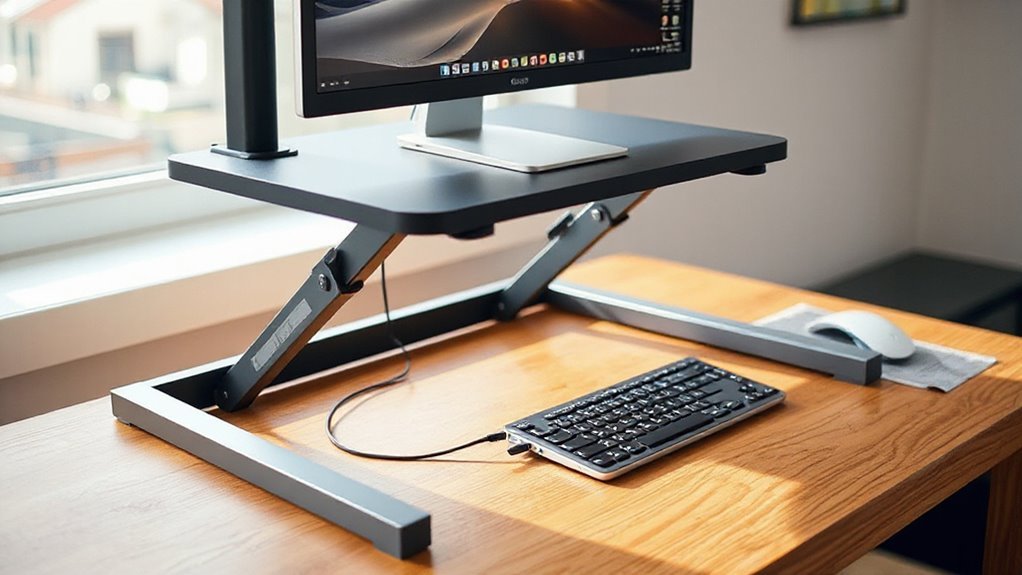
Although standing desk converters offer a more budget-friendly alternative to full standing desks, their practicality can vary greatly based on individual needs.
You should consider a few key factors before making a purchase:
- Cost Savings: Converters typically cost $200-$400, markedly lower than full standing desks.
- Workspace Limitations: Using a converter may restrict about 70% of your work surface, impacting multitasking.
- Durability Issues: Cheaply made converters can break easily, leading to hidden replacement costs.
While converters present an attractive entry point for budget-conscious consumers, their long-term value may diminish if you require consistent use and stability.
Assess your workspace and needs to determine if a converter is the right choice for you.
Health Outcomes and Pain Reduction
Standing desk converters can greatly improve your work experience by enhancing posture and ergonomic alignment. By allowing you to alternate between sitting and standing, these converters reduce the risk of back pain and neck strain.
Customizable height settings let you tailor the desk to your specific needs, preventing musculoskeletal strain. Research indicates that alternating positions every 30 minutes can lower overall discomfort, particularly in the lower back, from 80% to 51.7% compared to traditional seated desks.
Additionally, using a sit-stand desk reduces acute physical discomfort and fatigue, contributing to improved overall wellbeing. Regularly changing postures can enhance circulation, lower fatigue levels, and increase energy, ultimately leading to a more productive work environment.
Adaptability in Various Work Environments
As the modern workplace evolves, flexibility in work setups becomes increasingly essential. Standing desk converters offer versatility across diverse environments, accommodating various desk types and settings. They’re commonly used in:
- Corporate offices and home offices
- Healthcare facilities and educational institutions
- Small businesses and startups
Their modular design means you can easily relocate them, supporting both hybrid and remote work models. Converters install on existing desks without permanent modifications, making them ideal for rented spaces.
Additionally, they fit well in compact areas, satisfying space constraints and furniture regulations. Their compatibility with existing furniture reduces costs, while their customizable features allow for ergonomic adjustments tailored to individual needs.
This adaptability makes standing desk converters an efficient solution for modern workplaces.
Integration With Workplace Wellness Programs
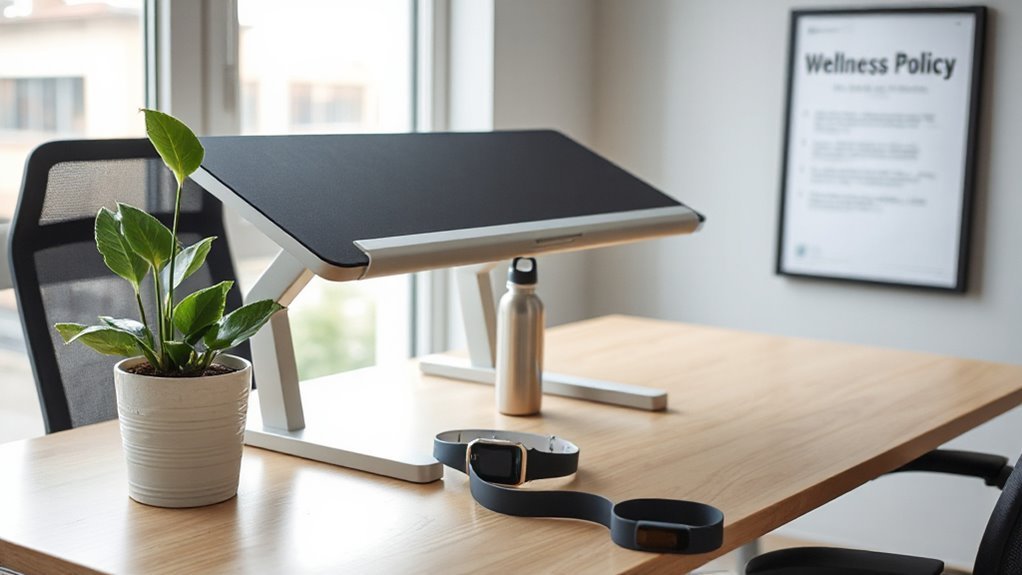
Integrating standing desk converters into workplace wellness programs enhances employee health and productivity. By reducing sedentary time, office workers cut their sitting hours from 5.5 to 4.4 daily.
Call center employees using sit-stand desks achieve 23% higher productivity levels than those seated. Standing for at least 30 minutes during the workday correlates with 57% job satisfaction rates.
Additionally, 87% of workers report increased energy and vigor when alternating positions. Improved metabolic function is evident, with an 11% decrease in post-lunch blood sugar spikes.
Standing desks also contribute to lower cortisol levels, indicating reduced stress. These metrics illustrate how integrating standing desk converters can remarkably enhance overall workplace wellness and employee performance.
User Experiences and Feedback
Many users have reported significant health and posture improvements after adopting sit-stand desk converters.
These conversions enable users to experience various benefits, including:
- Noticeable improvements in posture quality due to ergonomic design features
- Reduced back and neck pain through increased movement and position variation
- Enhanced productivity from prolonged sitting reduction, promoting dynamic working patterns
Feedback indicates that many users find the height adjustability essential for proper positioning of keyboards and monitors.
Stability remains consistent across all height ranges, contributing to a reliable workspace.
Most converters arrive ready for immediate use, with simple assembly processes.
Users appreciate the ease of height adjustments, often described as effortless.
Frequently Asked Questions
How Do I Choose the Right Standing Desk Converter for My Needs?
To choose the right standing desk converter, assess the adjustment mechanism—manual, gas spring, or electric.
Consider work surface dimensions of 28 to 36 inches for compatibility.
Check the weight capacity, typically between 26 and 35 pounds, to support your equipment.
Evaluate the height adjustment range from 1.8 to 20 inches for ergonomic flexibility.
Finally, examine base designs, like X-lift or Z-lift, for stability and footprint suitability in your workspace.
Can Standing Desk Converters Accommodate Multiple Users in an Office?
Yes, standing desk converters can accommodate multiple users in an office. Many models, like Ergotron, offer adjustable height ranges, allowing diverse user heights to find comfortable positions.
Converters with VESA mounting systems support multiple monitors, enhancing collaborative work. In addition, floating arm designs swing away, freeing desk space when not in use.
Features like spring-assisted lifts guarantee smooth changes between users, making it easy to adapt for different individuals throughout the day.
Are There Any Risks Associated With Using Standing Desk Converters?
Using standing desk converters can pose several risks.
Prolonged standing may result in musculoskeletal disorders, such as back pain and joint strain, due to poor posture.
Additionally, standing for extended periods can lead to circulatory issues like varicose veins and lightheadedness, as blood flow becomes impaired.
Finally, heavy converters can strain your back during adjustments, increasing the likelihood of injury.
Frequent movement and proper ergonomics are essential to mitigate these risks.
How Much Adjustment Height Range Should I Look For?
You should look for a standing desk converter with an adjustment range that fits your height.
If you’re around 6 feet tall, aim for a converter that adjusts at least 11 inches. Taller users, over 6’1″, benefit from ranges between 14 to 20 inches.
Consider your existing desk height and equipment when selecting. Guarantee the converter allows your arms to remain parallel to the ground while standing, enhancing ergonomic alignment.
Do I Need to Change My Office Chair When Using a Standing Desk Converter?
You don’t need to change your office chair when using a standing desk converter. Most converters accommodate standard office chairs, allowing you to maintain proper ergonomics.
Confirm your chair’s height matches the converter’s lowered position for ideal posture. Ergonomic chairs with adjustable heights work best, but existing chairs remain suitable for seated work.
Conclusion
In conclusion, standing desk converters can be as beneficial as a well-tailored suit, providing comfort and adaptability.
They promote better posture, enhance focus, and improve energy levels.
These converters also contribute to increased calorie expenditure and can alleviate discomfort associated with prolonged sitting.
While initial costs may vary, their practicality in various work environments makes them a worthwhile investment.
Ultimately, their integration into workplace wellness programs can lead to better health outcomes and overall employee satisfaction.