How Long Do Ergonomic Chairs Last?

How Long Do Ergonomic Chairs Last? Ergonomic chairs typically last between 7 to 12 years with daily use, though build quality and materials play a big role.
High-quality models can exceed 15 years when cared for properly. Budget options may only endure 3 to 5 years before parts or comfort degrade.
Factors such as frequency of use, maintenance, and sitting habits greatly affect longevity. Regular upkeep—like tightening screws, cleaning upholstery, and lubricating mechanisms—can extend a chair’s lifespan.
Watch for signs that it’s time to replace the chair: visible wear, persistent discomfort, or failing adjustments. Learn more about what affects chair durability and the best maintenance practices to keep yours lasting longer.
Average Lifespan of Ergonomic Chairs
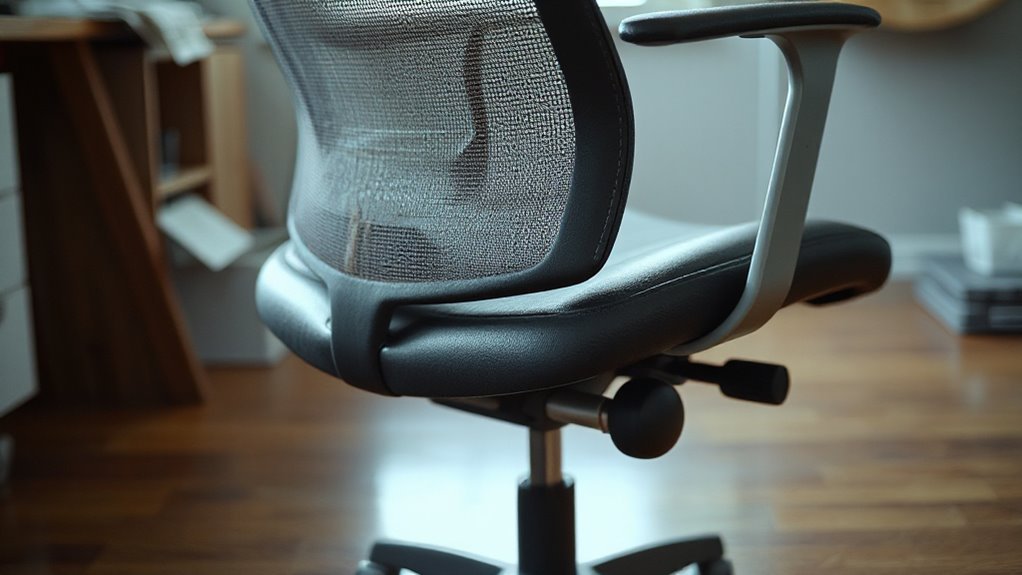
The durability of ergonomic chairs is a crucial factor for users seeking long-term support. Ergonomic chairs typically last between 7 to 12 years with daily use. High-quality models can extend this lifespan to 15 years or more, especially with proper maintenance. In contrast, budget options may only endure 3 to 5 years before significant wear appears. Manufacturers design ergonomic chairs to perform for a minimum of 7 years under normal conditions, which aligns with industry standards. These chairs undergo rigorous testing, rated for 10,000 to 20,000 cycles of use. Compared to standard office chairs, which last 5 to 8 years, ergonomic chairs provide enhanced longevity due to their reinforced frames and superior materials, ensuring better support over time. Additionally, the quality of materials used in ergonomic chairs plays a vital role in their overall durability and lifespan.
Factors Affecting Longevity
Understanding the factors that affect the longevity of ergonomic chairs is essential for making informed purchasing decisions. Several key elements contribute to their lifespan:
- Build Quality and Materials: Chairs made with sturdy metal frames and durable upholstery last longer. High-quality materials, such as commercial-grade leather, enhance durability. High-quality ergonomic chairs are designed to maintain support and minimize long-term musculoskeletal issues, contributing to their overall lifespan.
- Frequency and Intensity of Use: Daily use in demanding environments leads to more wear and tear. Proper maintenance can extend lifespan considerably.
- Weight Capacity and User Habits: Exceeding weight limits or improper sitting habits can damage structural components. Chairs designed for higher capacities typically last longer.
Signs a Replacement Is Needed
Recognizing when to replace your ergonomic chair is essential for maintaining comfort and productivity. Look for visible wear and tear, such as flattening seat cushions, torn upholstery, or cracked armrests. These issues compromise support and comfort.
Additionally, if adjustability fails—like seat height or lumbar support not functioning properly—it may be time for a new chair. Discomfort or pain, including persistent back or neck issues, signals inadequate support. Ergonomic office chairs are designed to enhance daily comfort, so when they no longer provide that, it’s a clear sign of wear.
Listen for squeaks or creaks, which indicate worn components. Finally, decreased mobility and stability, like wobbling bases or stuck casters, affect functionality.
If you notice these signs, consider replacing your chair to guarantee ideal ergonomic support and safety during work hours.
Longevity and Warranty Considerations
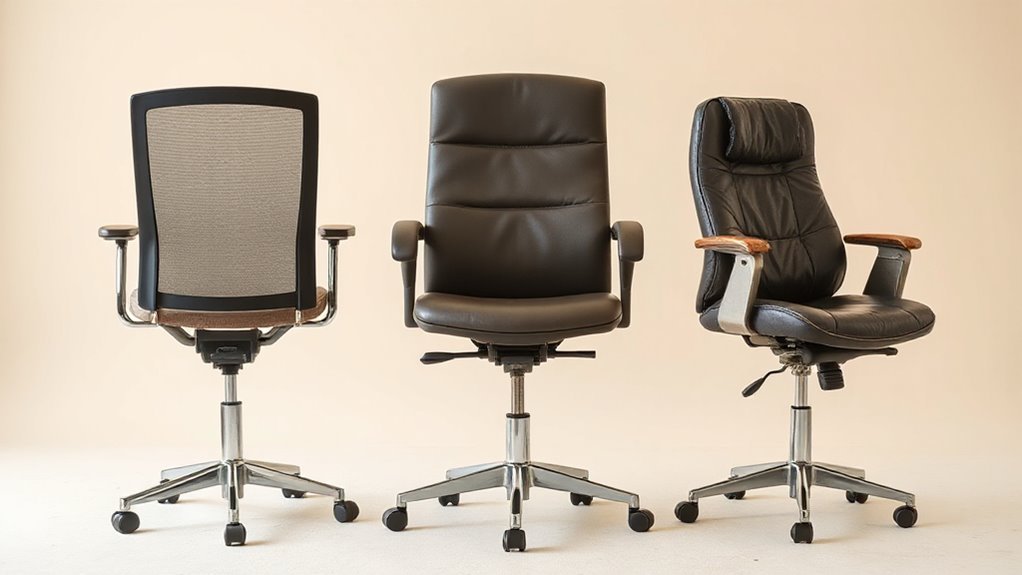
When investing in an ergonomic chair, considering its longevity and warranty is essential for making an informed decision. Most ergonomic chairs last between 8 and 12 years, depending on usage and quality. High-end models often exceed 10 years, while budget chairs may only last 4–5 years.
Here are key warranty considerations to keep in mind:
- Warranties typically range from 3 to 12 years, indicating expected lifespan.
- Premium brands usually offer longer coverage, reflecting their confidence in durability.
- Warranties generally cover defects, not normal wear, so review specifics before purchasing.
Understanding these factors helps you choose a chair that meets your needs and guarantees you get the best value for your investment.
Maintenance Practices to Extend Lifespan
To extend the lifespan of your ergonomic chair, regular maintenance is crucial. Start with a weekly wipe-down using a microfiber cloth to remove dust and dirt.
For fabric chairs, apply a fabric protector spray after cleaning to repel stains.
Every three months, perform a deep clean by vacuuming the seat and backrest, and cleaning armrests and casters.
Inspect and tighten screws and bolts every six months to guarantee stability.
Remove hair and debris from casters to maintain smooth movement, using a vacuum or compressed air.
For leather chairs, apply a conditioner after cleaning to prevent cracking.
These practices, combined with a stable environment away from direct sunlight, will help prolong your chair’s functionality and appearance.
Material and Design Impact on Durability
Durability in ergonomic chairs largely depends on the materials used and their structural design.
Choosing the right components greatly influences the chair’s lifespan. Key factors include:
- Base Material: Aluminum and steel bases offer superior strength and stability, while plastic bases are more prone to damage.
- Upholstery: High-quality mesh and leather provide long-lasting durability, resisting wear and maintaining shape.
- Structural Design: Reinforced joints and modular designs enhance longevity, allowing for easier repairs.
These elements work together to determine how well a chair can withstand daily use.
Commercial vs. Residential Use
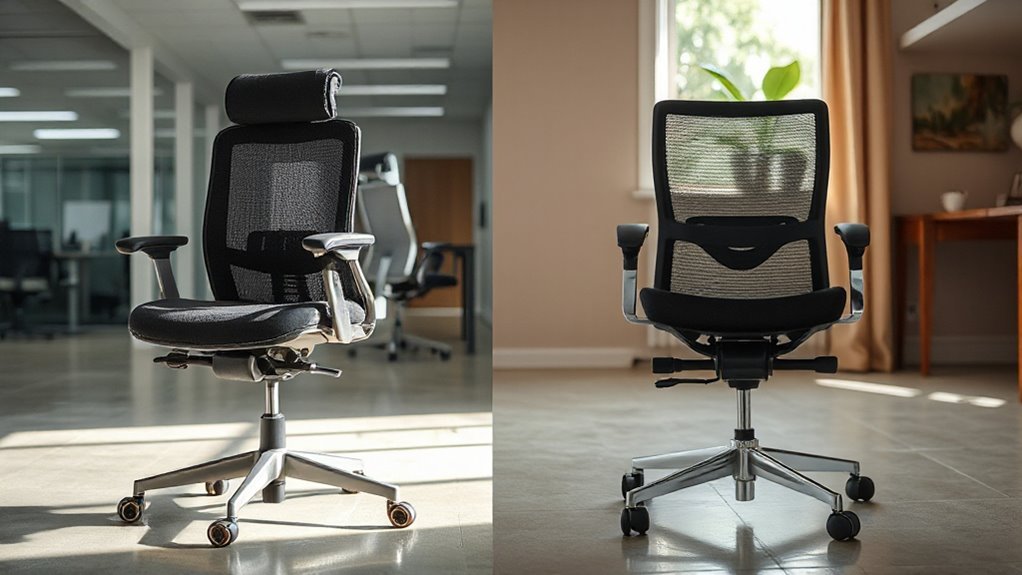
How do commercial and residential ergonomic chairs differ in durability?
Commercial ergonomic chairs are designed for heavy use, lasting between 7 to 12 years with proper care. These chairs meet commercial-grade standards, such as BIFMA certification, ensuring they withstand daily use by multiple users.
Features like heavy-duty frames, reinforced joints, and durable casters enhance their longevity.
In contrast, residential ergonomic chairs typically last 5 to 10 years, depending on usage. Home chairs usually lack the reinforced construction of commercial models, leading to shorter lifespans.
Maintenance practices also differ; commercial environments often schedule regular servicing, while home users may neglect repairs, resulting in earlier replacements.
Consequently, the durability of ergonomic chairs varies markedly based on their intended use and maintenance practices.
Investing in Quality Ergonomic Chairs
Investing in quality ergonomic chairs pays dividends in comfort and productivity. When you choose a chair built with durability in mind, you enhance your workspace considerably.
Look for features that indicate longevity:
- Material Quality: High-density foam and breathable fabrics resist wear, maintaining support for years.
- Durability Standards: Chairs meeting international standards often last over 10 years due to rigorous testing.
- Repairable Components: Models with replaceable parts extend the chair’s life and functionality.
Consider the cost over time: a $1,000 chair lasting ten years equals just $100 per year.
This investment not only improves comfort but also reduces healthcare costs linked to poor seating.
Prioritizing quality guarantees you’re making a smart, long-term choice for your workspace.
Frequently Asked Questions
Can Ergonomic Chairs Be Repaired Instead of Replaced?
Yes, ergonomic chairs can often be repaired instead of replaced.
You can reupholster seat cushions or replace gas lift cylinders to restore functionality. Casters and armrests are typically modular, allowing easy swaps if they wear out.
Repairing recline mechanisms may require professional help. Consider repair if costs are lower than a new chair and parts are available.
However, significant wear across multiple components usually indicates that replacement might be more practical.
Do Ergonomic Chairs Have a Weight Limit?
Yes, ergonomic chairs have a weight limit.
Most standard ergonomic chairs support up to 250 pounds, while mid-range chairs accommodate 300-350 pounds.
Heavy-duty models can handle between 400 and 800 pounds, tailored for bariatric users.
Manufacturers determine these limits through rigorous testing, ensuring safety and structural integrity.
Always check the specific chair’s specifications before purchase, as exceeding these limits may compromise performance and void warranties.
How Do I Choose the Right Ergonomic Chair?
You should prioritize adjustable features.
Look for a chair with adjustable seat height, lumbar support, and armrests.
Ascertain the backrest angle tilts to promote movement.
Check material quality; reinforced steel frames and durable upholstery increase longevity.
Consider brands with solid warranties, indicating confidence in product durability.
Finally, choose chairs certified by ergonomic standards, ascertaining they meet safety and support benchmarks.
This approach will enhance your comfort and productivity.
Are There Eco-Friendly Ergonomic Chair Options?
Eco-Friendly Ergonomic Chair Options
You’ll find several eco-friendly ergonomic chairs on the market.
Models like the Steelcase Karman utilize recycled materials, while the Think chair allows easy disassembly for recycling.
Merryfair Forte is nearly fully recyclable, and the HÅG Capisco 8106 incorporates recycled plastics in its design.
These chairs often feature durable, lightweight materials and certifications, ensuring a responsible choice for your workspace that also minimizes environmental impact.
Can I Customize My Ergonomic Chair?
Yes, you can customize your ergonomic chair.
Most models allow adjustments to seat pan size, back style, and lumbar support. You can modify chair height for proper posture, ensuring your feet rest flat.
Armrests are often adjustable in height, width, and angle for ideal comfort.
Many manufacturers provide online configurators, enabling you to visualize and select features that suit your body measurements and preferences, enhancing both health and comfort during use.
Conclusion
Ergonomic chairs typically last anywhere from 5 to 15 years, depending on several factors.
It may seem ironic to invest in a chair for back support only to replace it sooner than expected, but recognizing signs of wear is important.
Regular maintenance and choosing quality materials can significantly extend a chair’s lifespan.
Overall, a well-chosen ergonomic chair remains a sound investment, even if replacement becomes necessary down the line.