How to Convince Your Boss You Need an Ergonomic Chair
To convince your boss you need an ergonomic chair, present clear data on its benefits.
Ergonomic chairs can decrease musculoskeletal disorders by up to 75%, which improves comfort and reduces pain. Studies also show productivity gains of about 15% to 32% when employees use properly adjusted seating.
Improved ergonomics contribute to a roughly 67% reduction in absenteeism and can generate a return of $2 to $10 for every dollar spent. Pointing to increased employee satisfaction and lower turnover will further strengthen your case.
Gather specific examples, cost comparisons, and any company injury or absenteeism data to make a concise, evidence-based proposal.
The Impact of Ergonomics on Productivity
As workplaces evolve, understanding ergonomics becomes essential for enhancing productivity.
Ergonomic programs can boost productivity by an average of 25%, according to a Washington State Department of Labor and Industries meta-analysis. In a study involving 4,000 employees, ergonomic furniture resulted in a remarkable 40% increase in productivity. Furthermore, well-designed ergonomic office setups can enhance performance by up to 15%. These interventions reduce repetitive motions and optimize posture, making tasks easier and more efficient. Notably, ergonomic issues account for 33% of all worker injury and illness cases in the U.S., underscoring the importance of investing in ergonomic solutions.
Employees in ergonomic workspaces often report heightened awareness and focus, further contributing to overall productivity. By investing in ergonomic solutions, you can create a work environment that fosters efficiency and minimizes discomfort, ultimately improving output quality and operational effectiveness.
Health Benefits of Ergonomic Chairs
Ergonomic chairs are designed to promote better health and comfort in the workplace. They provide significant health benefits that can enhance your daily experience at work. Proper posture in ergonomic chairs is essential for reducing strain and preventing chronic pain. By ensuring that your chair supports your spine and encourages a neutral sitting position, you can increase your productivity and overall well-being. Investing in an ergonomic chair tailored to your body’s needs can make a significant difference in your work environment.
Here are some key advantages:
- Reduced Musculoskeletal Disorders: Ergonomic chairs can decrease musculoskeletal disorders by up to 75%, helping you maintain a healthier body.
- Proper Lumbar Support: They maintain your spine’s natural curvature, preventing disc compression and reducing strain.
- Improved Circulation: Adjustable features, including seat height and armrests, promote blood flow, which reduces fatigue and discomfort. Additionally, their design helps improve blood circulation, preventing numbness and swelling in the legs during long sitting periods.
- Dynamic Sitting: These chairs encourage movement, helping prevent long-term health issues associated with prolonged sitting.
Investing in an ergonomic chair can lead to a healthier, more productive work environment.
Reducing Absenteeism With Ergonomic Solutions
Reducing absenteeism in the workplace can be greatly achieved through ergonomic solutions. Musculoskeletal disorders account for 33% of work-related injuries, considerably impacting attendance. Implementing ergonomic interventions can reduce these injuries by 40-60%.
For instance, a manufacturing case study revealed a 30% drop in back injury-related absences after redesigning workstations. Additionally, companies investing in ergonomic furniture documented a 67% decrease in absenteeism due to musculoskeletal issues. An 18-month study showed a 72% reduction in absences from injuries with ergonomic workstations. Each dollar spent on ergonomic improvements generates a return of $2-10, markedly lowering workers’ compensation costs.
Therefore, investing in ergonomic solutions isn’t only beneficial for health but also enhances overall productivity by reducing absenteeism. Ergonomic interventions represent a strategic investment in human capital, leading to a thriving workplace environment.
Enhancing Employee Satisfaction and Retention
Investing in ergonomic workspaces greatly boosts employee satisfaction and retention rates.
Ergonomic furniture directly impacts comfort, posture, and overall job satisfaction.
Key benefits include:
- Increased Satisfaction: Ergonomic settings contribute to a 32% rise in employee satisfaction.
- Loyalty Improvement: Satisfied employees are more likely to remain, reducing turnover rates considerably.
- Positive Morale: Comfortable work environments foster higher morale, motivating employees to engage with their tasks.
- Reputation Enhancement: Employees in ergonomic setups are likely to recommend their workplace, improving your company’s reputation.
Cost Savings and Return on Investment
When considering workplace improvements, understanding the potential cost savings and return on investment (ROI) from ergonomic chairs can be essential.
Ergonomic chairs can increase productivity by 15% to 32%, reducing discomfort and enhancing focus. Additionally, companies investing in ergonomic solutions see a 67% decrease in absenteeism related to musculoskeletal disorders. an ergonomic chair advantages for remote work include improved posture and decreased strain on the back and neck. By providing adequate lumbar support, these chairs promote a healthier work environment, ultimately leading to better overall well-being. As more people transition to remote work, investing in quality ergonomic furniture is becoming a top priority for maintaining productivity and comfort.
For every dollar spent, businesses can expect a return of $3 to $6. A $500 ergonomic chair can yield approximately $890 in benefits.
Over time, these investments lead to lower healthcare costs, decreased workers’ compensation claims, and reduced turnover rates.
The overall cost-benefit ratio for office ergonomics is 1:1.8, indicating significant long-term financial sustainability for organizations prioritizing employee well-being.
The Role of Ergonomics in Injury Prevention
Ergonomics plays a considerable role in preventing workplace injuries, particularly those related to musculoskeletal disorders (MSDs). By addressing ergonomic risks, you can notably reduce injury rates.
Consider these key points:
- Ergonomic injuries account for 33% of all worker injury cases in the U.S.
- MSDs are the leading cause of missed workdays, with nearly 1 million reported in 2021–2022.
- Implementing ergonomic programs can lead to a 59% reduction in MSDs and a 75% decrease in lost workdays.
- Companies using ergonomic interventions experience a substantial drop in workers’ compensation claims, from 6.8% to below 1%.
Adopting ergonomic solutions not only enhances safety but also improves overall workplace productivity.
Boosting Focus and Mental Engagement
To enhance focus and mental engagement in the workplace, consider the benefits of using automatically adjustable ergonomic chairs. These chairs reduce heart rate variability, lowering stress levels during cognitive tasks.
Lower stress correlates with improved memory and cognitive flexibility, allowing you to concentrate better despite distractions. With superior lumbar support, these chairs minimize discomfort, enabling you to redirect cognitive resources toward work tasks.
Studies show that decision-making speed increases without sacrificing accuracy in ergonomic chairs. Enhanced visual memory and attention performance result from reduced physical distractions.
In addition, ergonomic seating promotes longer periods of sustained concentration, decreasing mental fatigue. By investing in ergonomic solutions, you enhance your overall productivity and quality of work output.
Creating a Supportive Work Environment
A supportive work environment greatly impacts employee well-being and productivity.
By investing in ergonomic furniture, your workplace can markedly reduce injuries and enhance satisfaction.
Consider these key benefits:
- Reduced Workplace Injuries: Ergonomic chairs and desks help prevent musculoskeletal disorders (MSDs), decreasing the incidence of injuries.
- Lower Absenteeism: Companies with ergonomic setups experience a 67% decrease in absenteeism related to MSDs, ensuring consistent staffing.
- Enhanced Employee Satisfaction: Ergonomic workstations lead to a 24% increase in employee satisfaction, contributing to lower turnover rates.
- Support for Long-Term Health: Using ergonomic chairs promotes better posture and reduces chronic pain, fostering overall well-being.
Creating a supportive work environment through ergonomic solutions is essential for productivity and health.
Making Your Case: Presenting the Evidence
Presenting a strong case for ergonomic chairs involves highlighting the health benefits, productivity gains, return on investment, and employee satisfaction.
Ergonomic chairs reduce work-related musculoskeletal disorders (MSDs), minimizing muscle fatigue and injury severity. Studies show that ergonomic furniture decreases back pain and neck strain, leading to fewer sick days.
Productivity increases by 10% to 25% in ergonomically designed environments, as comfortable seating enhances focus and reduces distractions. For every dollar spent on ergonomic interventions, companies can expect a return of $3 to $6, alongside a significant drop in healthcare costs and absenteeism.
Finally, organizations with ergonomic workstations see a 24% rise in employee satisfaction, promoting retention and reducing turnover costs. Ergonomics directly link to overall workplace efficiency.
Tips for Discussing Ergonomic Needs With Management
How can you effectively communicate your ergonomic needs to management? Start your conversation with well-researched points to bolster your request. Consider these steps:
- Understand Policies: Familiarize yourself with company health and safety protocols to align your needs with existing policies.
- Present Evidence: Use industry reports to illustrate the benefits of ergonomic chairs, focusing on productivity and employee satisfaction.
- Identify Needs: Clearly outline your specific ergonomic requirements, referencing any discomfort or health issues you’re experiencing, as well as those of your colleagues.
- Propose Solutions: Suggest options for trials or pilot programs to demonstrate effectiveness, offering multiple chair models and price points to suit budget constraints.
These strategies can help create a constructive dialogue about your ergonomic needs.
Frequently Asked Questions
What Features Should I Look for in an Ergonomic Chair?
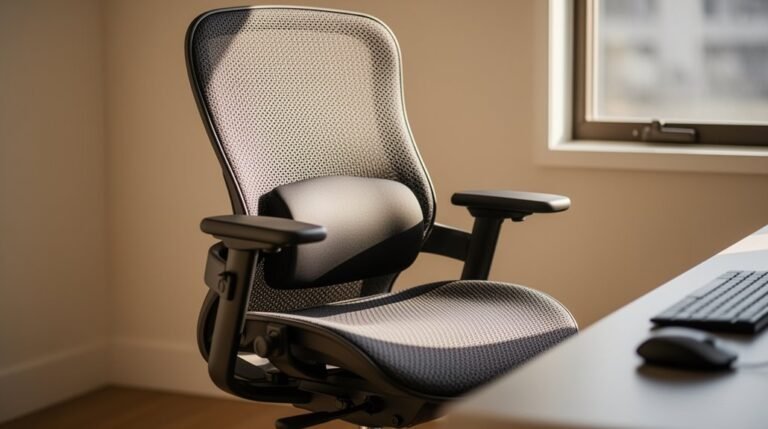
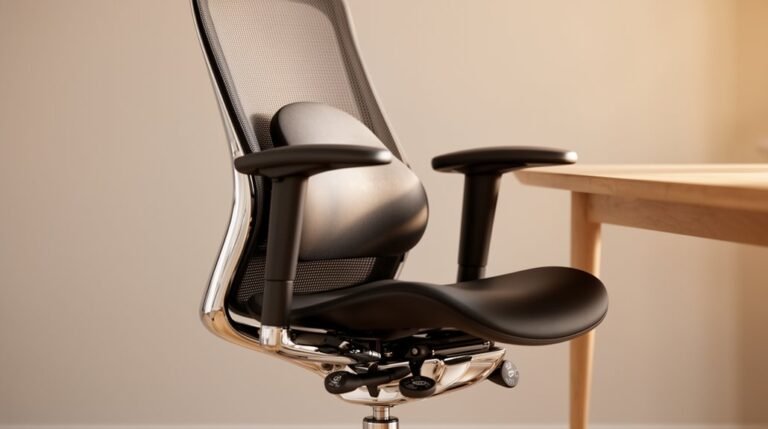
Lumbar Support: Guarantee the chair maintains your spine’s natural curve, with adjustable firmness.
Seat Height and Depth: Look for a pneumatic adjustment that allows your feet to rest flat and thighs parallel to the ground.
Adjustable Armrests: Verify they support your arms without straining your shoulders.
Mobility and Base Quality: Choose a chair with smooth-rolling casters for easy movement across different surfaces.
Can I Try an Ergonomic Chair Before Purchasing?
Yes, you can try an ergonomic chair before purchasing.
Visit physical showrooms at retailers like Steelcase or Herman Miller to test models firsthand. Many local ergonomic furniture stores offer display models for hands-on experience.
Additionally, some companies provide trial periods for employees. Utilize augmented reality apps for virtual assessments.
Finally, check return policies for online purchases; generous options allow you to test chairs in your workspace without risk.
How Long Does It Take to Adjust to an Ergonomic Chair?
Adjusting to an ergonomic chair typically takes about 7 to 14 days. During this time, your body adapts to new support.
Factors influencing this duration include your previous chair’s design and your sitting habits. Proper setup accelerates adaptation; confirm seat height allows your feet to rest flat, backrest supports your lumbar spine, and armrests align with your elbows.
If discomfort occurs, make incremental adjustments and take breaks to facilitate a smoother change.
Are There Specific Ergonomic Chairs Recommended for Remote Workers?
For remote workers, consider the Steelcase Series 1, featuring LiveBack technology for adaptive support.
The Haworth Soji offers adjustable lumbar support and 4D armrests, enhancing comfort for long hours.
The SIHOO Ergonomic Chair provides essential lumbar support at an affordable price.
Finally, the Herman Miller Aeron delivers premium features like adjustable PostureFit SL lumbar support, ensuring ideal posture during extended work sessions.
Each option aims to reduce strain and enhance productivity.
What if My Workplace Budget Is Limited for Ergonomic Furniture?
When budgets are tight, you can still find effective ergonomic chairs.
Look for models under $300, like the Colamy Kirin Chair or the Branch Task Chair, which offer adjustable lumbar support and breathable mesh backs.
Prioritize features like adjustable seat height and armrest adjustability for better posture.
Consider durable materials and warranties, as these guarantee longevity and reduce future replacement costs, giving you the best bang for your buck without breaking the bank.
Conclusion
In the corporate garden, every plant needs proper support to thrive.
Just as a flower flourishes with adequate sunlight and water, employees benefit from ergonomic chairs that enhance productivity and well-being.
These chairs align the body, reduce discomfort, and improve focus.
By investing in ergonomic solutions, you’re not just acquiring furniture; you’re cultivating a healthier, more efficient workspace.
Present your case with data and compassion, and watch your workplace blossom into a hub of engagement and satisfaction.