Are Expensive Office Chairs Worth It?
Expensive office chairs often include advanced ergonomic features, such as adjustable seat height, lumbar support, and a five-point base for stability. These specifications promote better posture and can reduce lower back pain considerably.
Studies show these chairs can enhance productivity by up to 15%. Their durability also means they typically last longer than traditional chairs, offsetting the higher upfront cost over time.
Beyond durability, the long-term health benefits and potential savings on medical expenses make ergonomic investments worthwhile. Explore further to understand the full scope of what a quality office chair can offer.
Understanding Ergonomics in Office Chairs
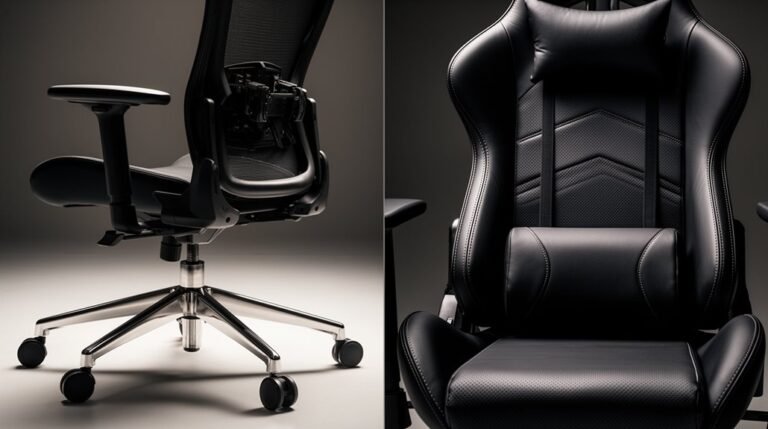
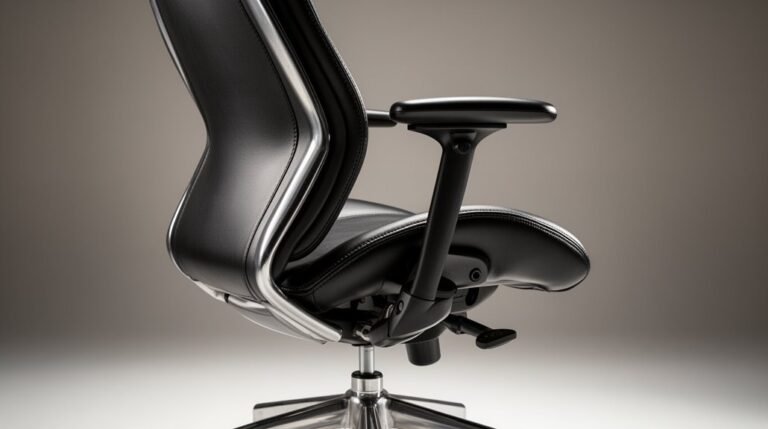
Ergonomics plays an essential role in selecting an office chair designed for comfort and productivity. Key features include adjustable seat height, allowing you to match your desk effectively. Proper lumbar support accommodates the natural curve of your spine, reducing discomfort. Adjustable armrests help you position your arms correctly, minimizing shoulder strain. A five-point base enhances stability, reducing the risk of tipping over.
Adjustability is vital; the seat pan depth should cater to your size, while the backrest height and tilt must provide ideal support. Confirm your feet rest flat on the floor, and your thighs remain parallel, maintaining a 90-degree knee angle. A stable base with at least five wheels is essential for minimizing tipping risks and enhancing overall safety while working.
Adhering to ANSI/BIFMA standards guarantees that your chair meets established ergonomic design principles, promoting long-term comfort.
The Health Benefits of Investing in Ergonomic Seating
Investing in ergonomic seating offers significant health benefits that can enhance your work experience.
Ergonomic chairs with lumbar support can reduce lower back pain by up to 54%. Adjustable features, including seat height, backrest, and armrests, decrease muscle activity in the neck, shoulders, and back. Studies confirm that proper adjustment leads to reduced muscle fatigue and lower back pain. Additionally, these chairs support natural spinal curvature, promoting better posture and reducing static muscle loading. Prolonged sitting without proper support increases risks of heart disease and musculoskeletal disorders, making ergonomic chairs a vital investment for long-term health.
How Ergonomic Chairs Influence Productivity
Understanding how ergonomic chairs influence productivity is essential for creating efficient work environments.
Ergonomic chairs support proper posture and maintain natural body alignment, which reduces musculoskeletal strain during prolonged computer use. Studies show that organizations implementing ergonomic chairs can see productivity increases of up to 15%. When combined with ergonomics training, increases can reach 17.7%. Additionally, investments in ergonomic furniture yield significant ROI for businesses, further demonstrating their value.
Additionally, ergonomic seating leads to fewer workflow interruptions caused by discomfort. Employees report lower pain levels, which correlates with enhanced concentration and reduced distractions. Improved blood circulation from ergonomic designs promotes focus, further boosting productivity.
Ultimately, the integration of ergonomic chairs can enhance employee satisfaction, leading to better retention and a more committed workforce.
Evaluating the Cost-Benefit Ratio of Ergonomic Chairs
When evaluating the cost-benefit ratio of ergonomic chairs, it’s crucial to reflect on both initial investment and long-term savings.
Ergonomic chairs range from $100 to $2000, with mid-range models ($100–$400) providing a good balance of quality and cost. High-end options offer advanced features, like dynamic lumbar support and extensive adjustability, enhancing comfort.
Traditional chairs, costing $50–$150, often require replacement every 1–3 years, while ergonomic chairs last 5–10 years, reducing long-term costs. By preventing chronic pain, ergonomic chairs can lower annual medical expenses by $300–$1800 per employee.
Additionally, businesses benefit from reduced absenteeism and lower turnover rates, leading to significant overall savings. This analysis reveals that the long-term financial benefits outweigh the initial costs.
Enhancing Employee Well-Being Through Better Seating
As you prioritize employee well-being, consider how ergonomic chairs play a critical role in fostering a healthier work environment.
These chairs considerably reduce musculoskeletal discomfort, particularly in the back, neck, and shoulders. Studies reveal a 47% decrease in musculoskeletal disorder cases after implementation. Proper lumbar support and adjustable features maintain healthy posture, lowering the risk of chronic injuries.
Comfortable seating enhances mental well-being, supporting alertness and focus. Employees report increased engagement and lower anxiety levels.
Additionally, ergonomic seating interventions can decrease absenteeism related to musculoskeletal issues by up to 67%. Providing ergonomic chairs not only improves health but also boosts productivity, with increases of 15–17.8%.
Investing in quality seating promotes a healthier, more committed workforce.
Key Features to Look for in Ergonomic Chairs
To guarantee you choose the right ergonomic chair, focus on specific features that enhance comfort and support.
Adjustable Seat Height and Depth allows users of varying heights to position their feet flat on the floor, maintaining a 90-110 degree angle at knees and hips.
Lumbar Support Customization should include height and pressure adjustments to align with your spine’s natural curve, effectively reducing lower back strain.
Backrest Design and Recline Functionality provides a surface area of 12-19 inches, allowing for angle adjustments from 90 to 130 degrees for spinal relief.
Armrest Adjustability helps minimize shoulder strain, making sure your arms rest comfortably during work.
Lastly, Seat Material and Base Stability**** guarantees breathability and durability, accommodating diverse body types while supporting prolonged use.
Market Trends in Ergonomic Office Furniture
The ergonomic office furniture market is rapidly evolving, driven by significant changes in work environments and consumer preferences. By 2034, it’s projected to reach USD 12,412.44 million, with the ergonomic chair segment expected to grow from USD 11.13 billion in 2025 to USD 19.12 billion by 2033.
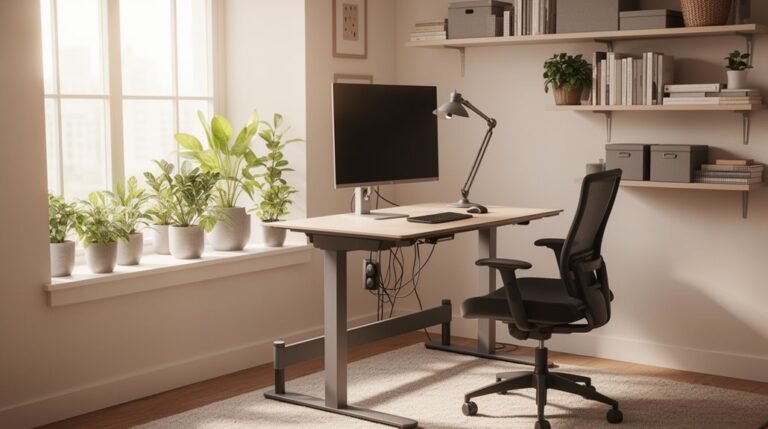
The commercial sector leads this growth, as businesses invest heavily in ergonomic seating solutions. Remote and hybrid work trends further boost demand for ergonomic home office setups. Height-adjustable desks comprise 48% of sales, while lumbar-supported seating accounts for 52% of consumer demand.
Additionally, manufacturers focus on sustainability, incorporating eco-friendly materials like bamboo and recycled plastics. Overall, the market reflects a commitment to health, wellness, and efficiency in modern workspaces.
Comparing Budget vs. High-End Ergonomic Chairs
When you compare budget and high-end ergonomic chairs, the differences in build quality, comfort, adjustability, and durability become strikingly evident.
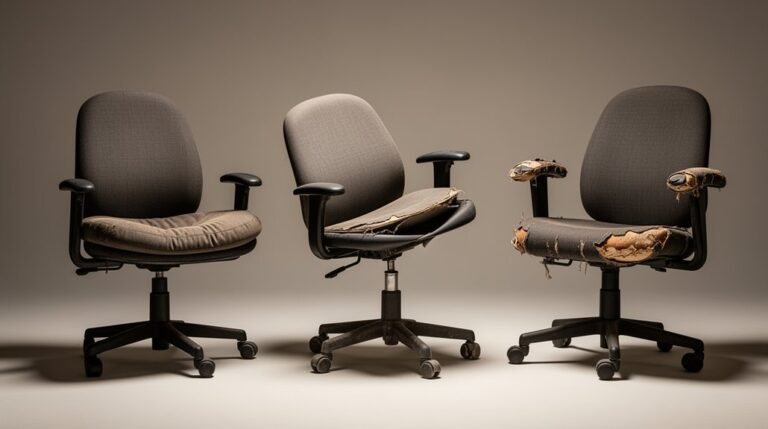
High-end chairs often use premium materials like high-density memory foam and strong frame materials, ensuring longevity and comfort. In contrast, budget chairs utilize lower-quality components, leading to potential instability during use.
Comfort features also vary; expensive models offer dynamic lumbar support and multiple adjustment points, while budget options typically provide basic cushioning with limited adjustments.
High-end chairs allow for greater customization, including seat depth and armrest angles. Durability is another key factor; premium chairs are built to last and often come with extended warranties, while budget chairs lack material value, compromising performance over time.
Long-Term Effects of Ergonomic Seating Solutions
As you consider the long-term implications of using ergonomic seating solutions, it’s essential to recognize how these chairs can greatly influence your musculoskeletal health.
Prolonged use of non-ergonomic chairs often leads to chronic discomfort, particularly in the back, neck, and shoulders. Ergonomic chairs, designed with proper lumbar support and adjustability, greatly reduce the risk of musculoskeletal disorders (MSDs).
Studies indicate that office workers using ergonomic seating report lower pain severity and frequency. Additionally, these chairs help maintain the spine’s natural curve, preventing chronic back pain.
Long-term use shows sustained benefits, although evidence beyond one year remains limited. Investing in ergonomic solutions ultimately promotes healthier work environments and reduces absenteeism linked to musculoskeletal issues.
Making the Case for Ergonomic Investments in the Workplace
Investing in ergonomic office chairs can greatly enhance workplace productivity and employee well-being. Ergonomic chairs improve posture, increasing productivity by up to 15%. They also reduce muscle fatigue, fostering sustained attention. Employees experience fewer distractions, leading to higher cognitive performance.
Additionally, these chairs lower the risk of musculoskeletal disorders, cutting absenteeism by up to 67%. This reduction in workplace injuries results in significant cost savings, including a potential 32% decrease in healthcare expenses.
Furthermore, ergonomic designs boost employee satisfaction by 24%, improving morale and retention. With a return of $3 to $6 for every dollar spent, investing in ergonomics enhances operational efficiency, ultimately driving profitability.
Frequently Asked Questions
Do Expensive Office Chairs Guarantee Better Comfort and Support?
No, expensive office chairs don’t guarantee better comfort and support.
Both high-end and budget chairs can provide core ergonomic features like lumbar support and adjustable seat depth.
Premium models may include advanced features, such as customizable armrests or superior materials, but the fundamental support remains similar across price ranges.
For most users, mid-range options offer comparable comfort without the inflated price, making them a practical choice for effective ergonomic support.
How Long Do Ergonomic Chairs Typically Last?
Lifespan of Ergonomic Chairs
Ergonomic chairs typically last 7 to 12 years with regular use. High-quality models can extend to 10–15 years if maintained properly.
Factors affecting longevity include build quality, frequency of use, and maintenance practices. Budget chairs often last only 5–7 years, while ergonomic chairs maintain support and stability over time.
Signs of wear include visible damage, mechanical issues, and reduced comfort, indicating the need for replacement.
What Are Common Brands of High-End Ergonomic Chairs?
Herman Miller, Steelcase, and Haworth lead the high-end ergonomic chair market.
Herman Miller’s Aeron and Embody models emphasize innovative design and support.
Steelcase offers the Leap and Amia, featuring advanced lumbar support and adjustable armrests.
Haworth’s Fern model showcases premium construction with customizable adjustments.
Each brand typically provides a 12-year warranty on select models, emphasizing durability and quality.
Other notable brands include Humanscale and Secretlab, which also focus on ergonomic performance.
Can Ergonomic Chairs Be Adjusted for Different Users?
Yes, ergonomic chairs can be adjusted for different users.
Seat height and depth adjustments guarantee proper alignment, accommodating various body proportions.
Lumbar support automatically responds to posture changes, providing personalized comfort.
Additionally, adjustable armrests allow for ideal elbow positioning, reducing strain.
Recline features adapt to body weight, promoting healthy posture.
These adjustments create a versatile seating solution, making ergonomic chairs suitable for a wide range of users with differing needs.
Are There Warranties for Expensive Ergonomic Office Chairs?
Yes, many expensive ergonomic office chairs come with warranties.
For example, Herman Miller offers a 12-year warranty on parts, while Humanscale provides 15 years on components.
Sitmatic’s warranty is transferable, with no weight limits.
However, most warranties exclude normal wear and tear and misuse.
Labor and shipping costs may or may not be covered, depending on the manufacturer.
Always check the warranty specifics to understand coverage and limitations before purchasing.
Conclusion
Investing in an ergonomic chair isn’t just about the initial cost. High-quality models provide adjustable features, lumbar support, and durable materials that enhance comfort and reduce health risks.
Budget chairs may seem sufficient at first, but they often lack essential ergonomic elements and can lead to long-term discomfort.
By prioritizing ergonomic seating, you improve individual well-being and foster a more productive work environment. Ultimately, the benefits tend to outweigh the expense, making it a wise investment.