Footrest Benefits for Posture and Circulation
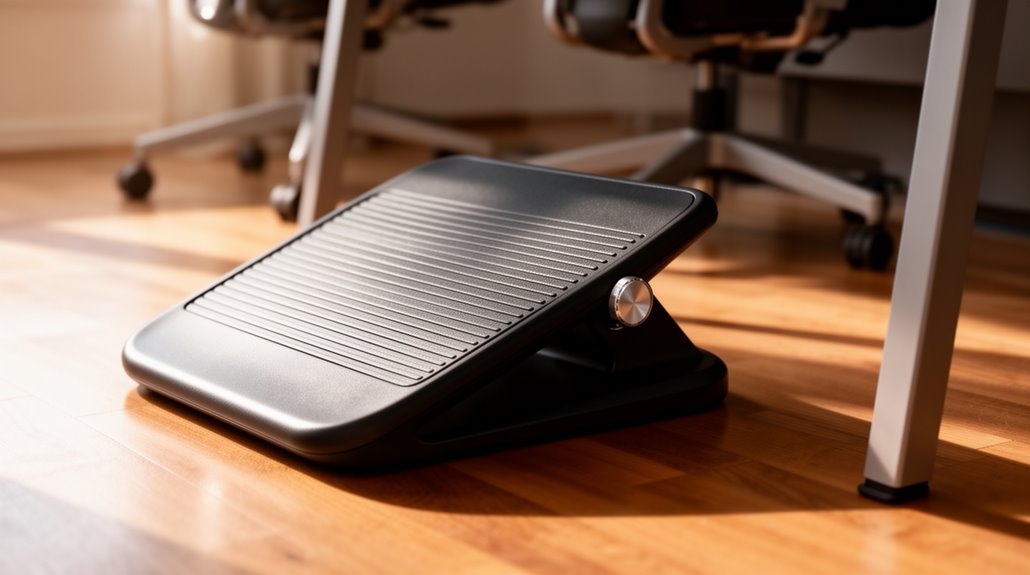
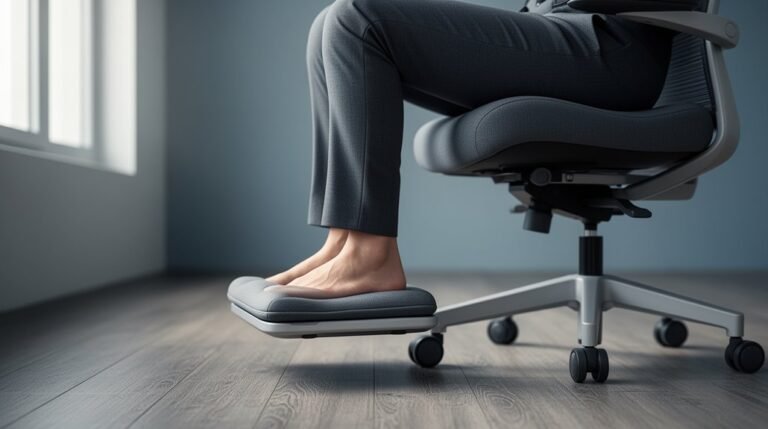
Footrests enhance posture and circulation by maintaining neutral pelvic alignment. Using a footrest promotes proper foot positioning at a 15–30 degree angle, which improves blood flow and reduces venous stasis.
Adjusting footrests encourages a better lumbar curve and helps prevent slouching, with many users experiencing less discomfort. Elevating the feet also reduces pressure on the ankles and legs, leading to decreased swelling and fatigue.
Implementing footrests can boost productivity and comfort in the workplace, so you may find additional insights beneficial for overall workplace ergonomics.
Enhancing Circulation With Footrests
When you use a footrest correctly, it can greatly enhance circulation in your lower extremities. Positioning the footrest at an angle between 15 and 30 degrees promotes ideal blood flow, reducing swelling in legs and ankles.
Footrests that mimic your foot’s natural position prevent blood pooling and venous stasis. Dynamic footrests encourage subtle movements, like rocking or foot taps, activating the calf muscle pump, which aids venous return. These movements can considerably reduce fatigue and discomfort. Furthermore, adjustable footrests allow you to customize angles for maximum circulation benefits. Proper positioning also redistributes body weight, alleviating pressure on veins, thereby improving arterial and venous blood flow throughout your lower limbs. Additionally, micromotions of the feet can enhance venous return and reduce fatigue, highlighting the importance of footrest usage for overall leg health.
Alleviating Lower Back Pain
Utilizing a footrest can greatly reduce lower back pain, especially for those who spend extended periods standing. Intermittent footrest usage allows you to elevate one leg for one-minute intervals, alternating with three minutes of level standing. This approach helps prevent lower back pain development. In fact, nearly 92% of individuals using this method during prolonged standing experienced no discomfort. Additionally, research from the University of Waterloo indicates that only one participant reported lower back pain during a similar intervention study.
For maximum effectiveness, adjust your footrest height between 10 to 13 centimeters, or about 10% of your total height. This promotes a 135-degree angle between your trunk and thighs, reducing lumbar load. Proper foot positioning redistributes weight evenly, maintaining a neutral pelvis and spinal curves, which further alleviates pain and enhances overall comfort during extended work periods.
Promoting Better Posture
To achieve better posture, using a footrest can be a key factor in maintaining proper alignment. Footrests support a neutral pelvic position, which promotes the natural lumbar curve and encourages spinal alignment.
Elevating your feet allows your thighs to remain parallel to the floor, with your feet flat or slightly angled. This positioning minimizes slouching and helps maintain a 90-degree angle at your hips and knees.
By preventing excessive forward sliding in your chair, footrests enhance contact with the seat, improving lumbar support effectiveness. Additionally, adjustable footrests can cater to individual needs, accommodating various body types and chair setups. Enhanced blood circulation from using a footrest contributes to overall well-being, making it easier to stay focused and productive throughout the day.
Customizing height and angle guarantees ideal support for your spine’s natural curve, ultimately promoting better posture throughout your day.
Reducing Swelling and Fatigue
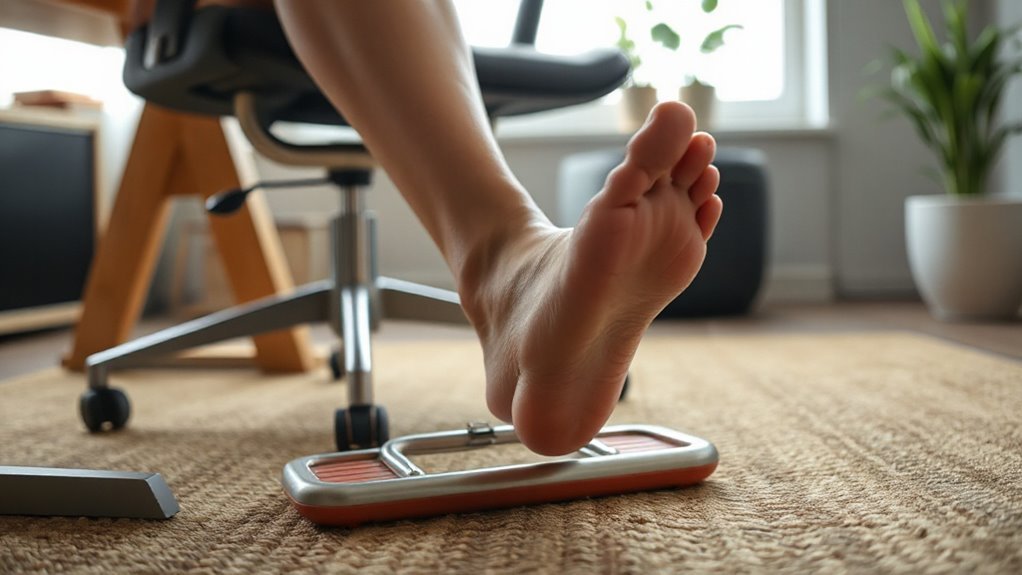
Using a footrest effectively elevates your feet, which greatly improves blood circulation in your lower extremities. Elevating your feet encourages better blood flow, preventing blood pooling in your legs and ankles.
Studies show that footrests angled between 15 and 30 degrees considerably reduce leg and ankle swelling by enhancing oxygenated blood delivery. Dynamic footrests promote subtle movements that further enhance circulation, reducing the risk of varicose veins.
Supporting your feet alleviates strain on leg muscles, lowering fatigue in calves and thighs. Proper weight distribution across your feet eases pressure on soles, enhancing venous return to your heart.
Consistent use of footrests can lead to long-term reductions in swelling and leg discomfort, improving overall energy levels throughout the day.
Ergonomic Advantages in the Workplace
When you consider the importance of maintaining proper posture at your workstation, ergonomic footrests play an essential role in enhancing your overall comfort and productivity. They support neutral seated posture, promoting spinal alignment.
Workers often spend about 38 minutes per hour slouching, leading to discomfort and decreased efficiency. By using footrests, you can lean into chair support, maintaining a healthier position throughout the day.
Incorporating footrests can also reduce low back pain, a leading cause of employee absenteeism. They improve blood circulation, reducing fatigue and preventing circulatory issues like varicose veins.
Ultimately, comfortable employees are more productive, experiencing fewer distractions. Implementing ergonomic footrests creates a more supportive and efficient work environment for everyone.
Benefits for Special Populations and Conditions
Footrests play a significant role in enhancing the comfort and functionality for special populations and individuals with specific conditions. For those with mobility impairments, footrests provide essential support, stabilizing the back and upper body while reducing blood pressure.
Electronic footrests promote circulation through controlled involuntary movements. Older adults benefit from footrests angled between 15-30 degrees, optimizing blood flow and alleviating leg swelling.
For individuals with musculoskeletal disorders, proper foot positioning minimizes strain and discomfort, enhancing spinal alignment. Taller and shorter individuals can adjust footrests to guarantee proper posture, preventing compression and promoting arm and back alignment.
Frequently Asked Questions
Can Footrests Be Used With Standing Desks?
Yes, footrests can be used with standing desks. They promote better posture by allowing you to shift your weight, which aligns your spine and pelvis.
Adjustable footrests accommodate various heights, ensuring ergonomic alignment. Some feature rocking mechanisms that enhance circulation and reduce fatigue.
Look for non-slip surfaces for stability and durability. These elements combined help alleviate foot and lower back pain during prolonged standing, improving your overall comfort and productivity.
How Do I Choose the Right Footrest Height?
To choose the right footrest height, measure your chair and desk height. Aim for a footrest between 2 to 5 inches high, guaranteeing your feet rest flat, with knees bent at 90 degrees.
For taller individuals, consider a footrest adjustable up to 12 inches. Ascertain stability and surface grip to prevent slipping.
Adjustability allows you to fine-tune angles, promoting comfort and reducing fatigue during long periods of sitting.
Are Footrests Portable for Travel Use?
Yes, footrests are portable for travel use. Many models feature compact designs, fitting easily into carry-on luggage or backpacks.
Reinforced ribs guarantee structural integrity, preventing deformation during transport. Included travel bags allow organized storage and quick access.
Weighing minimally, they can attach to luggage without significant bulk. Simple setup mechanisms require no tools, confirming you can quickly and efficiently use them at your destination or during flights.
Do Footrests Require Any Special Maintenance?
Yes, footrests require special maintenance. You should perform routine visual checks monthly to identify any wear or loose parts.
Clean surfaces regularly to prevent debris buildup. Lubricate moving parts and joints to reduce friction, applying lubricant evenly.
Tighten screws and inspect for corrosion. Replace damaged components promptly to maintain functionality.
Additionally, avoid overloading footrests beyond weight specifications and educate users on proper use to enhance safety and longevity.
Can Children Benefit From Using Footrests?
Yes, children can greatly benefit from using footrests. They promote optimal hip, knee, and ankle alignment, achieving the ideal 90-degree angles. This alignment enhances stability, reducing the need for excessive core engagement.
Additionally, footrests improve reach, allowing children to access tables and perform tasks efficiently. Proper support also boosts circulation, minimizing discomfort during prolonged sitting.
Ultimately, footrests foster better posture and comfort, supporting children’s engagement in various activities.
Conclusion
Using a footrest can greatly enhance your posture and circulation. Elevating your feet reduces strain on your lower back and helps promote better blood flow.
Footrests also help alleviate swelling and fatigue, making them beneficial for many people, including those who sit for long periods or have circulation issues.
Incorporating this ergonomic tool into your workspace can lead to lasting improvements in overall health, helping you stay productive and comfortable throughout the day.