Laptop Stand Vs Monitor Stand
Laptop Stand vs Monitor Stand
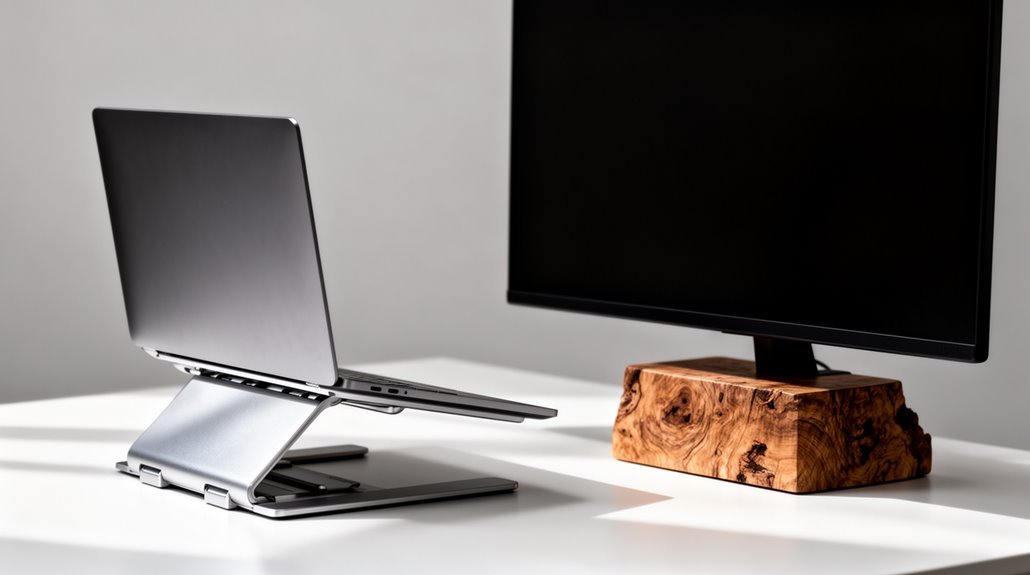
Laptop stands elevate screens to eye level, reducing neck strain and promoting neutral spine alignment. They take up less desk space, making them a good choice for compact setups and shared work areas.
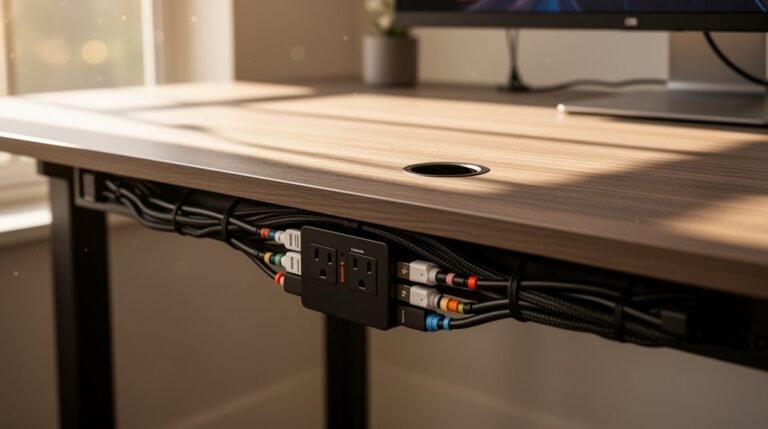
Monitor stands also raise displays but typically require more surface area. They often offer adjustable height and tilt for ergonomic positioning and include features like cable management.
Price ranges overlap: laptop stands can cost $20 to $100, while basic monitor stands are typically $20 to $50. Explore further to discover additional features and benefits.
Ergonomic Advantages of Laptop Stands
When you use a laptop stand, it elevates your laptop screen to eye level, which greatly reduces forward head tilt and neck strain. This adjustment promotes neutral spine alignment, minimizing the risk of musculoskeletal discomfort. Exploring optimal laptop positioning techniques can further enhance your ergonomics while working. Achieving the right distance and angle not only improves your posture but also reduces eye strain, allowing for longer, more focused productivity sessions. Combining these techniques with regular breaks can help maintain overall comfort and health.
By preventing ‘tech neck,’ you eliminate the need to look down at the screen, which supports a balanced head position over your shoulders, reducing muscle tension. Moreover, the stand encourages an upright sitting posture, helping maintain your natural spinal curves. Proper posture is essential for preventing discomfort during long hours of laptop use.
Studies indicate that up to 45% of laptop users experience discomfort without ergonomic aids. Using a laptop stand can considerably decrease pain in the neck, shoulders, and lower back, enhancing your overall work experience and productivity.
Benefits of Using Monitor Stands
Monitor stands provide significant ergonomic improvements, much like laptop stands do for portable computers. They elevate your monitor to eye level, reducing neck and back strain during prolonged use. This promotes a neutral spine posture, minimizing the risk of musculoskeletal discomfort.
Proper monitor placement can decrease discomfort and fatigue by up to 40%, supporting cervical spine health by aligning the screen with your natural line of sight. You’ll also reduce the need to hunch or crane your neck, preventing long-term postural issues. Additionally, monitor stands offer adjustable height, tilt, and swivel options for personalized screen positioning, enhancing productivity and workspace efficiency. With these features, you can create a more comfortable and organized work environment tailored to your needs, while also benefiting from built-in cable management that keeps your workspace tidy.
Space Considerations for Home Offices
Selecting the right stand for your laptop or monitor can greatly impact your home office’s spatial efficiency. Laptop stands occupy smaller footprints, allowing for a compact workspace setup. In contrast, monitor stands typically require more desk space due to wider bases and additional peripheral placements. Using a laptop stand can free up desk space underneath for keyboards or documents, optimizing vertical space. Monitor stands can balance surface area consumption with built-in storage features. The adjustability of monitor stands allows for better ergonomic alignment without extensive desk rearrangement, saving lateral space. Ultimately, both stands help declutter by elevating screens off desktops, improving overall space efficiency in small home offices. Increased emphasis on in-office experiences is expected to enhance collaboration and innovation in hybrid work environments. Evaluate your equipment size and workspace layout to determine the best option.
Portability and Flexibility Comparison
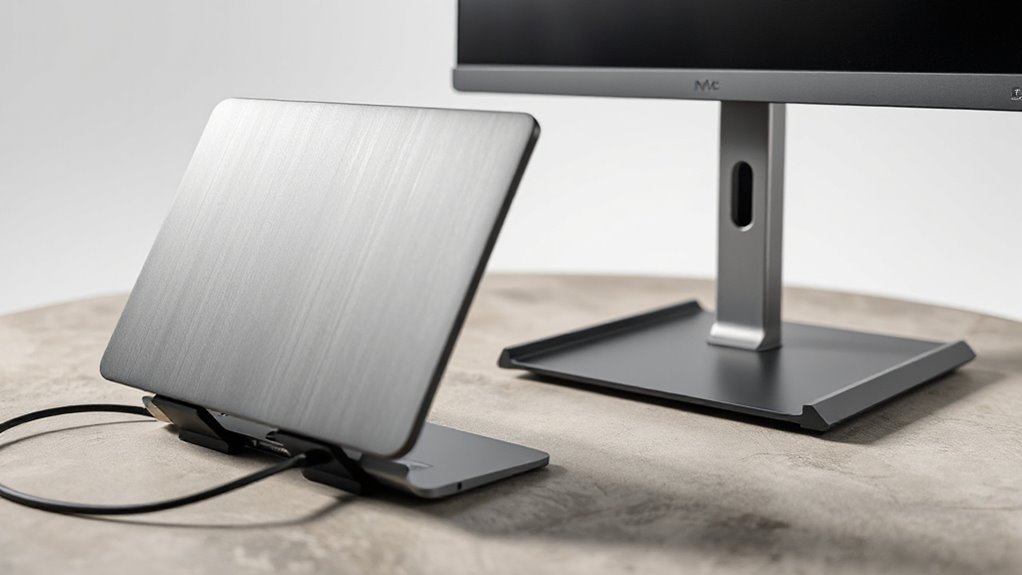
While both laptop and monitor stands serve essential roles in enhancing ergonomic comfort and workspace organization, their portability and flexibility vary considerably.
Laptop stands often feature foldable designs and lightweight materials, making them easy to transport. Some, like the MOFT adhesive stand, attach directly to the laptop, prioritizing compactness but limiting adjustability.
In contrast, portable monitor stands weigh between 2-5 lbs, with ultra-slim options around 1.5 lbs. They commonly provide adjustable height and tilt, allowing for ergonomic positioning. Certain models support multiple devices and offer diverse angle settings.
While laptop stands may sacrifice flexibility for compactness, portable monitor stands effectively balance portability with usability, making them versatile for various work conditions.
Cost Analysis of Laptop and Monitor Stands
When evaluating the cost of laptop and monitor stands, it’s essential to recognize the significant price range differences between these products.
Laptop stands typically range from $20 to $100, depending on their materials and adjustability features. In contrast, basic monitor stands usually cost between $20 and $50, providing reliable support for minimal investment.
Monitor arms, however, can span from $50 to $300, with quality options averaging around $100. While monitor stands deliver the lowest upfront cost, laptop stands balance affordability with functionality.
For budget-conscious setups, combining a mid-range monitor stand with a laptop stand keeps costs under $100. Ultimately, quality considerations suggest that investing in higher-end options enhances long-term value and reduces replacement frequency.
Material Choices and Their Impact on Performance
Understanding material choices is key to enhancing the performance of laptop and monitor stands.
Laptop stands typically use plastic, aluminum, or steel. Aluminum excels in heat dissipation and durability, making it a top choice for cooling. Plastic is lightweight, ideal for portability, but lacks stability under heavier loads. Steel provides maximum stability but is heavier, suitable for permanent setups.
Monitor stands often incorporate wood, metal, or acrylic. Metal supports larger monitors effectively, while wood offers aesthetic appeal and storage. Acrylic stands are lightweight but may lack robustness.
The choice of material affects cooling efficiency, weight capacity, and overall stability. Always consider the weight of your devices to prevent instability and guarantee peak performance.
Frequently Asked Questions
Can Laptop Stands Accommodate Gaming Laptops?
Yes, laptop stands can accommodate gaming laptops.
Most models support devices weighing 6.8–9.9 lbs, with heavy-duty options handling up to 40 lbs. They’re typically designed for laptops up to 17–18 inches, ensuring compatibility with most gaming screens.
Look for stands with adjustable height and width for personalized ergonomics. Additionally, consider options with ventilation features to enhance cooling during intensive gaming sessions, maintaining ideal performance and preventing overheating.
Do Monitor Stands Work With Multiple Screens?
Yes, monitor stands work with multiple screens. Dual, triple, or quad monitor stands efficiently support various setups.
Most options adhere to VESA standards, accommodating monitors from 17 to 40 inches. They often allow height, tilt, and swivel adjustments, ensuring ideal viewing angles.
Additionally, some stands include cable management features to organize your workspace. Always check the weight capacity, as it typically ranges from 9kg to 17.6lbs per screen for stability and safety.
Are There Specific Laptop Stands for Tall Users?
Yes, there are specific laptop stands for tall users.
Look for adjustable models with height settings exceeding 6’2″. Features like modular legs and labeled increments allow you to fine-tune the height.
Stands that offer tilt functionality enhance ergonomic viewing angles, reducing neck strain. Make sure the design includes rubberized feet for stability at higher elevations.
While options exist, truly tall-user-specific stands remain limited, so research carefully to find a suitable solution.
Can I Use a Monitor Stand for My TV?
Yes, you can use a monitor stand for your TV, but it comes with limitations.
Monitor stands typically support VESA patterns like 75×75 mm or 100×100 mm, which may not match your TV’s larger pattern.
Additionally, weight capacity is vital; most monitor stands aren’t designed for heavier TVs.
Always verify the specifications of both the stand and your TV to guarantee stability and compatibility, as improper use can lead to safety issues.
How Do I Clean My Laptop or Monitor Stand?
Start by unplugging all devices.
Disassemble removable components per the manufacturer’s instructions.
Use a soft-bristle brush or compressed air to remove loose dust.
Dampen a microfiber cloth with a mild soap solution, then wipe the surfaces in circular motions.
For joints and hinges, use isopropanol-soaked cotton swabs to eliminate grease.
Finally, dry with a clean microfiber cloth to prevent residue.
Avoid excessive moisture to protect mechanical parts.
Conclusion
To conclude, choosing between a laptop stand and a monitor stand depends on your specific needs. Both options offer unique ergonomic benefits, space efficiency, and material choices.
Laptop stands enhance mobility and are well suited for flexible work setups. Monitor stands provide better viewing angles for stationary setups and can improve posture for prolonged desktop use. the ergonomic benefits of a laptop stand also contribute to reduced strain on the neck and back, making it easier to maintain comfort during long hours of use. By elevating the device to eye level, users can promote a healthier working posture that aligns with their natural body mechanics. Additionally, many laptop stands are lightweight and portable, making them a great accessory for users on the go.
When considering cost, portability, and performance, evaluate your workspace requirements. Ultimately, the right stand enhances productivity and comfort, ensuring an efficient working environment tailored to your preferences.