Vertical Mouse Vs Regular Mouse
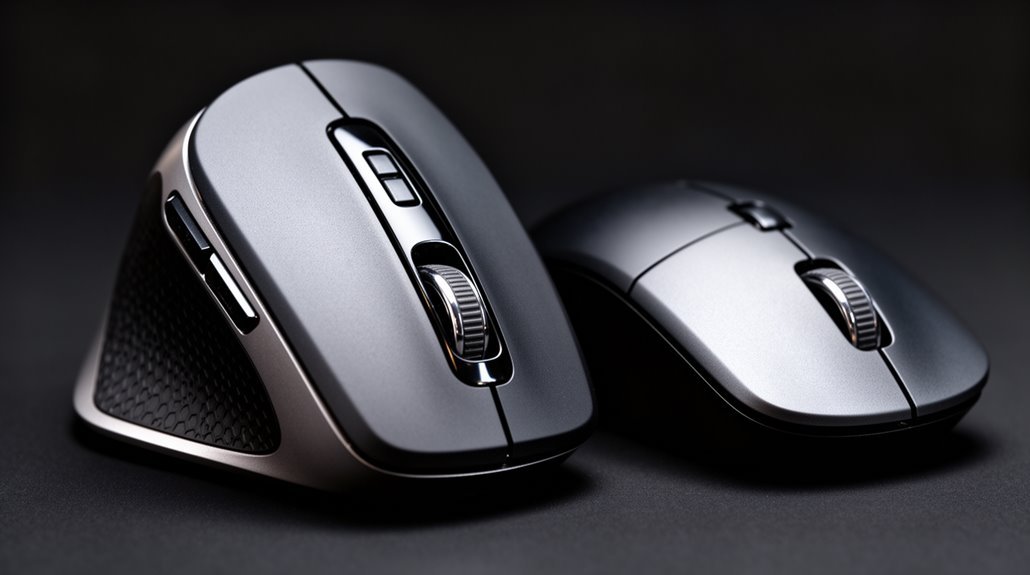
Vertical mouse devices align your hand, wrist, and forearm in a natural handshake position, which reduces strain. This posture decreases forearm pronation compared to a regular mouse, which often forces awkward wrist positions.
The vertical mouse design helps minimize muscle fatigue and lowers the risk of repetitive strain injuries, promoting greater comfort during extended use. Some users find cursor responsiveness slightly slower with vertical models, and there can be a learning curve when switching from a regular mouse.
Considering the differences in comfort, performance, and ergonomic design will help you choose the right mouse for your needs.
Benefits of Using a Vertical Mouse
When you switch to a vertical mouse, you can experience several ergonomic advantages that directly enhance your comfort and productivity.
The handshake posture aligns your hand, wrist, and forearm naturally, reducing excessive twisting. Increased mouse height and angled surfaces greatly lower forearm pronation compared to traditional mice. This design decreases repetitive muscle strain, requiring less hand movement—up to four times less than standard mice. Additionally, users of ergonomic mice can move their mouse up to 17 miles each year, highlighting the importance of an ergonomic design for prolonged use.
As a result, you face reduced pressure on your little finger and experience less fatigue. In addition, vertical mice help prevent conditions like carpal tunnel syndrome due to their neutral hand positioning.
With maintained pointing performance, you won’t sacrifice accuracy for comfort. Overall, a vertical mouse promotes better posture and supports extended computer use effectively.
Risks Associated With Regular Mouse Use
Regular mouse use can lead to several significant health risks, particularly repetitive strain injuries (RSIs). Studies indicate that up to 15% of computer users report RSI symptoms, including carpal tunnel syndrome.
Awkward wrist postures increase pressure on the median nerve, especially when using a mouse for more than four hours daily. Musculoskeletal disorders in the wrist, forearm, and shoulder are also common, affecting 10–20% of office workers. Additionally, mouse infestations can create an unhealthy work environment, further exacerbating health issues.
Non-neutral wrist positions cause muscle fatigue and joint stress. Additionally, prolonged use can result in poor posture, including rounded shoulders and chronic discomfort.
Over time, these issues may lead to work-related disability, necessitating medical intervention, and potentially decreasing your overall quality of life.
Performance Comparison: Vertical vs. Regular Mice
The performance of vertical mice compared to regular mice reveals distinct differences in accuracy, speed, and ergonomic advantages.
- Vertical mice may reduce pointing accuracy, especially fully vertical designs.
- Some models, like Logitech MX Vertical, offer adjustable DPI for improved precision.
- Regular mice excel in speed and responsiveness, essential for fast-paced tasks.
- Vertical mice can reduce hand movement length, but may slow cursor responsiveness. Additionally, users often experience less wrist pain when using a vertical mouse design.
- Traditional mice remain preferred for high-speed tasks, such as competitive gaming.
While vertical mice provide ergonomic benefits, their performance can vary greatly based on the specific task.
For general use, vertical mice may suffice, but for precision-demanding applications, regular mice often deliver superior results.
Comfort and Fatigue Levels
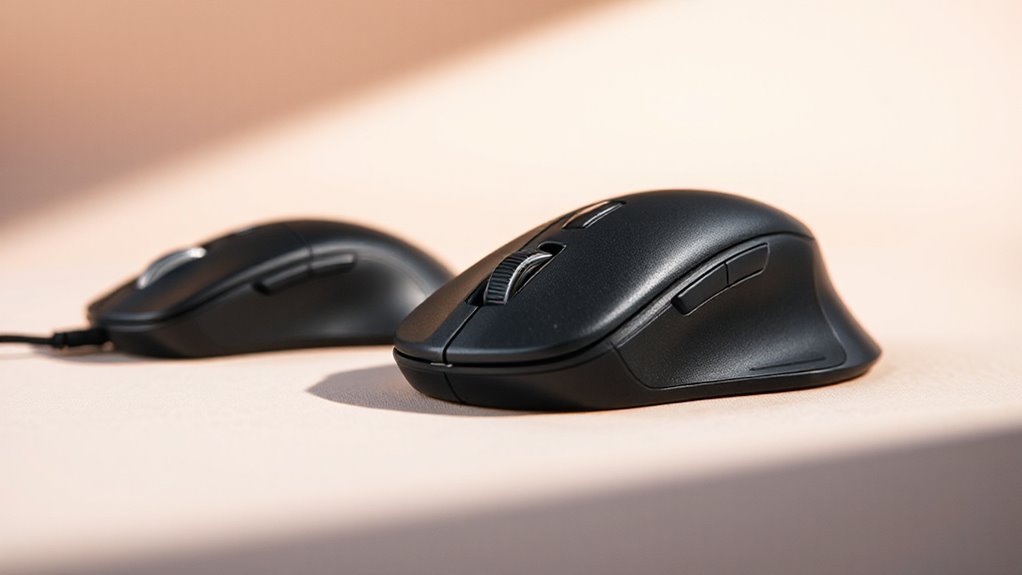
Comfort and fatigue levels play an essential role in determining the effectiveness of a mouse during prolonged use.
Vertical mice promote a natural handshake position, reducing forearm pronation and wrist twisting associated with regular mice. This design supports a neutral wrist alignment, minimizing strain and potential repetitive strain injuries.
As a result, you’ll experience less muscle load, extending comfort beyond just the wrist to the forearm and neck. Users often report lower fatigue levels and reduced muscle tension with vertical mice, especially during long hours of use.
While some may encounter an initial learning curve, many find that the ergonomic benefits lead to improved overall comfort, reducing the risk of developing musculoskeletal disorders like carpal tunnel syndrome.
Design Features of Vertical Mice
When considering the design features of vertical mice, you’ll notice several key elements that enhance usability and ergonomics. These features prioritize comfort and efficiency during use.
- Vertical handshake position aligns your hand and forearm naturally.
- Angled design ranges between 58° and 72°, minimizing muscle strain.
- Ergonomic thumb rest supports your thumb, reducing pressure and fatigue.
- Programmable buttons are easily accessible, allowing for intuitive operation.
- Adjustable angles enable customization for a personalized fit.
These design features collectively promote a neutral wrist alignment, reducing unnatural twisting.
User Preferences and Adaptation Challenges
User preferences for vertical mice often hinge on individual comfort and ergonomic needs. Many users experiencing wrist or forearm pain prefer these devices for their potential to alleviate discomfort.
However, adjusting to a vertical mouse can present adaptation challenges. Initially, you might find pointing accuracy and speed decrease, as getting used to the new hand position requires time. The degree of slant, ranging from 24 to 90 degrees, also influences your comfort.
Users accustomed to wrist movements may feel awkward using an arm-based movement. While some adapt within days, others may take weeks. Ultimately, long-term use often leads to increased satisfaction, particularly for those with prior discomfort, as adaptation improves and ergonomic benefits become more evident.
Ergonomic Considerations for Different Hand Sizes
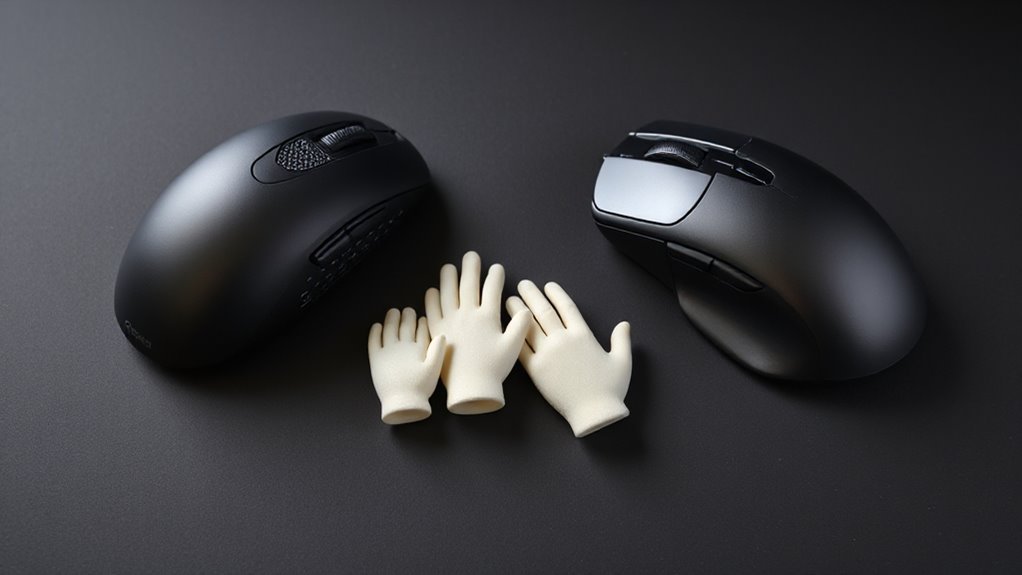
Selecting a vertical mouse involves understanding how hand size directly influences ergonomic benefits. A proper fit enhances comfort and reduces strain. Here are key considerations:
- Minimum Hand Size: Standard models suit hands over 7 inches (178 mm).
- Small-Sized Mice: Designed for hands under 7 inches, ensuring ergonomic effectiveness.
- Medium to Large Models: Options like the Delux Vertical Mouse align well for larger hands.
- Logitech Lift Design: Specifically targets small to medium hand dimensions for ideal usage.
- Natural Hand Positioning: Vertical design reduces forearm twisting, enhancing comfort across sizes.
Matching your mouse size to your hand dimensions is vital for achieving the intended ergonomic benefits and preventing discomfort.
Long-Term Health Implications of Mouse Choice
Choosing the right mouse can greatly affect your long-term health, particularly regarding wrist and forearm posture, repetitive strain injuries, and muscle fatigue.
Vertical mice maintain a neutral, handshake-like position, reducing forearm pronation and wrist strain. This positioning minimizes pressure on the median nerve, lowering the risk of carpal tunnel syndrome.
Regular mice, on the other hand, can result in unnatural wrist angles and increased risk of repetitive strain injuries, such as tendonitis. Studies show that users of vertical mice experience less muscle fatigue during prolonged use.
Additionally, vertical mice reduce joint stress and the likelihood of developing osteoarthritis over time.
To summarize, selecting a vertical mouse promotes better posture and enhances overall joint and tendon health.
Frequently Asked Questions
Can Vertical Mice Be Used for Gaming Effectively?
Yes, vertical mice can be used for gaming effectively, but they often lag behind regular mice in speed and precision.
While some vertical models feature high polling rates and adjustable DPI, you might experience a learning curve and reduced accuracy in fast-paced scenarios.
If you prioritize comfort and ergonomic benefits, a vertical mouse could suit casual gaming.
However, for competitive play, traditional mice generally provide better responsiveness and quicker reaction times.
Do Vertical Mice Come in Different Sizes?
Yes, vertical mice come in different sizes.
For instance, the Logitech MX Vertical fits hands over 175mm with a height of 54mm, while the Evoluent VerticalMouse 4 offers both regular and small options for hand lengths above and below 178mm.
Proper sizing reduces strain on your wrist and forearm, enhancing comfort.
Using calipers for accurate measurements guarantees you select the right model, preventing issues like pinky drag or wrist torque.
How Do I Clean a Vertical Mouse?
To clean a vertical mouse, first disconnect it from your computer.
Use a dry, lint-free cloth to remove surface dust.
Mix a few drops of dish soap with warm water, dampen a cloth, and wipe the outer shell gently.
For stubborn grime, hold the cloth over the area for 30 seconds before scrubbing.
Clean the sensor with a lightly moistened cotton swab, then dry all components thoroughly before reconnecting.
Are Vertical Mice Wireless or Wired?
Vertical mice can be both wired and wireless. Wired vertical mice connect through USB cables, offering stable performance without battery dependence. They often have adjustable DPI settings and ergonomic designs.
On the other hand, wireless vertical mice utilize Bluetooth or a USB dongle for connectivity. These models typically feature rechargeable batteries and multi-device pairing.
Both types maintain an ergonomic “handshake” grip, emphasizing comfort and reducing wrist strain during prolonged use.
Can I Customize Buttons on a Vertical Mouse?
Yes, you can customize buttons on a vertical mouse.
For Logitech models, install Logi Options+ software to reassign button functions, including standard clicks and advanced actions like media controls.
Evoluent models require Evoluent Mouse Manager for Windows, but some have fixed functions.
macOS users may need third-party software for customization.
You can also create multiple profiles for different applications, enhancing your workflow with tailored button configurations.
Conclusion
In conclusion, choosing a mouse affects your comfort and health. A vertical mouse encourages a more natural wrist position, which can potentially reduce strain.
Regular mice are more common but may cause discomfort during extended use. Each design offers unique features that suit different preferences and hand sizes.
By considering ergonomics, you can make an informed choice that improves daily activities. Ultimately, investing in a suitable mouse can be a small step toward better long-term well-being.