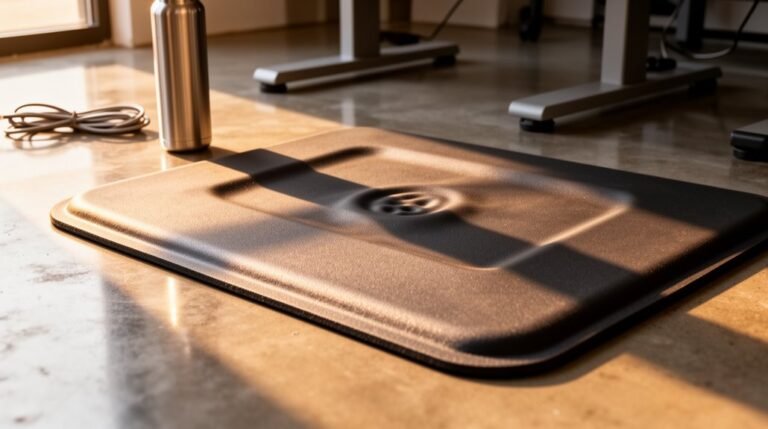
Anti-Fatigue Mat Care and Maintenance
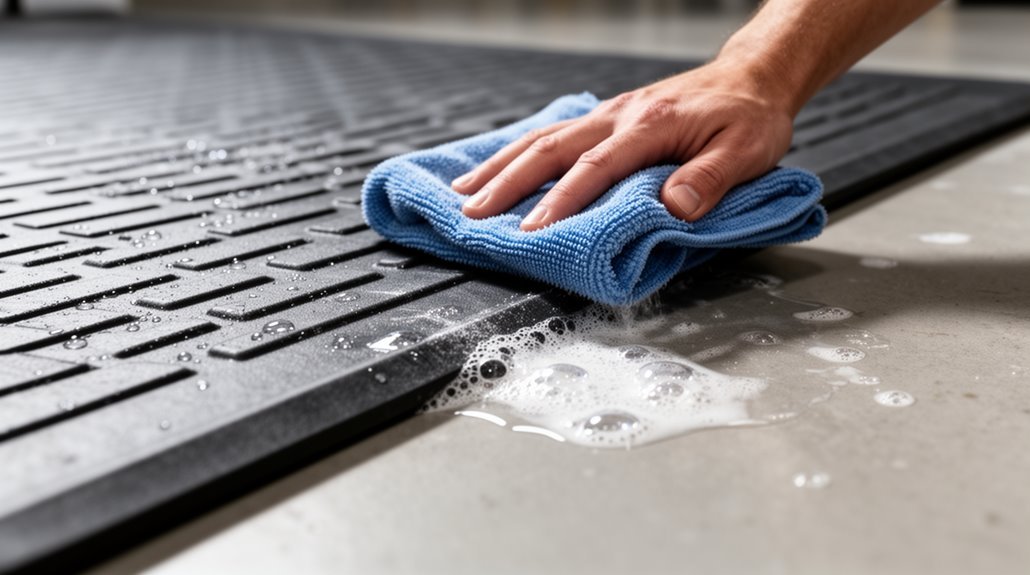
Anti-fatigue mats should be cleaned weekly with a mild detergent. Vacuum daily to remove debris and prevent buildup that can shorten the mat’s life.
Use material-appropriate cleaners: mild soap for rubber and PVC, and avoid harsh chemicals that can damage surfaces. Rinse and remove all soap residue.
Dry mats completely in a well-ventilated area before returning them to use. Store mats flat or hang them to prevent permanent curling or warping.
Regularly inspect for wear, damage, or curling and replace mats when they no longer provide proper support. These simple practices enhance longevity and performance and keep your mats functional.
Cleaning Frequency and Routine
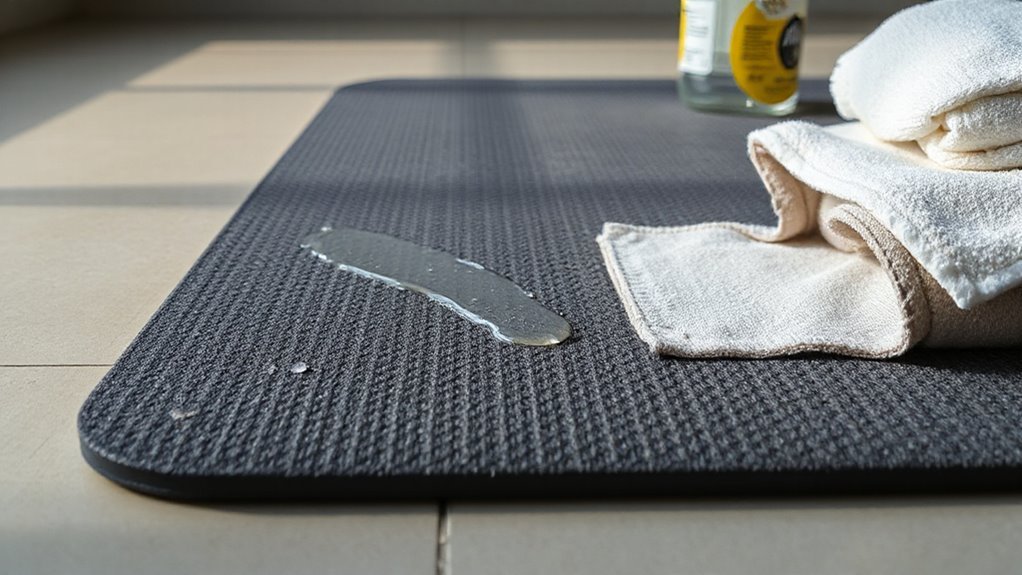
When maintaining your anti-fatigue mat, understanding the cleaning frequency and routine is essential for guaranteeing its longevity and effectiveness.
For typical home settings, weekly cleaning suffices. In high-traffic areas, like restaurants, you should clean daily to manage spills and grime. If you notice odors or stains, increase your cleaning frequency to combat bacterial growth. Regular cleaning helps to reduce the risk of slips and falls, ensuring a safer environment for all.
Start daily maintenance by sweeping or dry-mopping to remove loose debris. For washing, use lukewarm water between 120-140°F with mild soap, avoiding machine washing. After cleaning, make sure the mat is thoroughly rinsed and completely dry before reuse.
Monthly deep cleaning is recommended for commercial mats using specialized detergents. Regular inspections help identify wear, assuring you adapt your routine accordingly to maintain peak performance.
Cleaning Solutions and Techniques
Choosing the right cleaning solutions and techniques is key to maintaining the integrity of your anti-fatigue mat. Use mild dish soap, Ivory soap, or baking soda for effective cleaning. Opt for detergents with a pH between 4.0 and 9.0 to preserve mat quality. Daily maintenance is also important to prevent dirt buildup and extend the life of your mat.
If your mat encounters grease, use a mild degreaser compatible with the material. Daily, sweep or dry-mop to remove loose debris. For deeper cleaning, vacuum first, then damp mop with a mild detergent solution.
Carpet extractors work well for deep stains; apply the solution, let it penetrate, then extract. Avoid steam cleaning and harsh chemicals, which can damage the mat.
Always consult manufacturer guidelines for material-specific care recommendations.
Drying and Post-Cleaning Care
To guarantee peak performance and longevity of your anti-fatigue mat, proper drying and post-cleaning care are essential.
Hang your mats fully extended to maximize airflow, ensuring even drying. Avoid folding them, as this can trap moisture and lead to uneven drying. Proper air circulation accelerates evaporation, contributing to quicker drying times.
Place mats in well-ventilated areas, but keep them out of direct sunlight to prevent UV damage. If needed, use commercial extractors per manufacturer guidelines to speed up drying without harming the mat.
After cleaning, allow mats to dry completely before reuse to prevent bacterial growth and odors.
Store mats flat or hung, avoiding rolling when wet to prevent moisture retention and deformation.
Routinely inspect mats post-drying to catch any signs of wear early.
Material-Specific Care
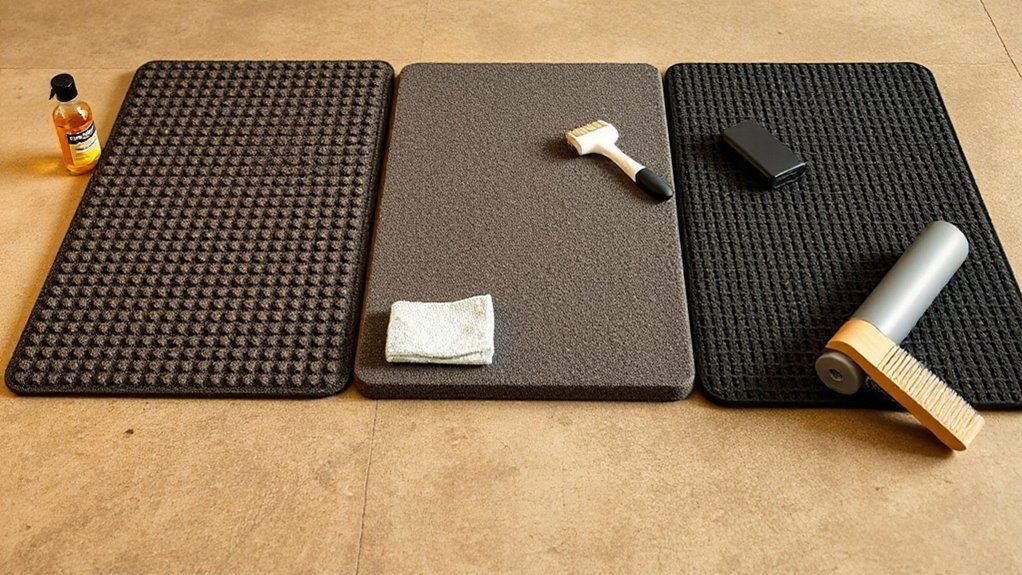
Understanding the specific care requirements for different types of anti-fatigue mats can greatly enhance their longevity and performance. benefits of using an antifatigue mat include reduced discomfort during long periods of standing and improved overall productivity. Additionally, these mats can contribute to better posture and reduce the risk of developing musculoskeletal issues, making them a valuable addition to any workspace. Investing in a quality antifatigue mat can lead to long-term health advantages and a more comfortable working environment.
Rubber Mats: Clean with mild detergent and warm water. Avoid harsh chemicals, as they can degrade the surface. Protect against direct sunlight to prevent cracking.
PVC Mats: Use mild soap and water for cleaning. Check edges regularly for curling, which can create trip hazards. Avoid extreme temperatures.
Polyurethane Mats: Clean with mild detergents and avoid abrasive tools. Inspect for wear, as they resist tears better than PVC.
Blended Mats: Maintain with mild detergents, inspecting regularly for signs of degradation.
Foam Mats: Clean gently, avoiding soaking. Inspect density regularly to maintain ergonomic benefits.
Maintenance Tips for Longevity
Regular maintenance of anti-fatigue mats greatly contributes to their lifespan and functionality.
To start, sweep or vacuum daily to eliminate dirt and debris, preventing wear. Weekly deep cleaning with mild soap and a damp cloth preserves material integrity; avoid harsh chemicals. Use microfiber tools for effective cleaning without leaving lint. Handwash mats instead of machine washing to protect cushioning properties.
Inspect mats regularly for wear, cracks, or curling edges. Repair or replace damaged mats promptly to maintain support. Store mats rolled loosely, top side out, to prevent deformation. Always place mats on clean, even surfaces, and avoid folding them.
Monitor the cushioning; replace when mats feel flat. These practices considerably extend the life of your anti-fatigue mats.
Frequently Asked Questions
How Often Should I Replace My Anti-Fatigue Mat?
You should replace your anti-fatigue mat when you notice visible damage, like dents or tears, which compromise safety. To enhance your workspace, consider how to improve standing desk comfort by adjusting the desk height to align with your elbows at a 90-degree angle. Additionally, incorporating ergonomic accessories like monitor risers and a supportive chair or footrest can significantly alleviate strain. Regularly changing your posture throughout the day can also contribute to increased comfort and productivity.
Other indicators include significant color fading, loss of cushioning, and curling edges. If persistent odors or mold develop, replacement is necessary for hygiene.
Typically, commercial mats last about 12 months, but high-quality mats may last longer with proper care.
Regular inspection for these signs helps guarantee peak performance and comfort.
Can I Use Fabric Softeners When Cleaning Mats?
No, you shouldn’t use fabric softeners when cleaning mats. They leave a residue that disrupts breathability and absorbency.
This film can make mats slick, increasing slip risks. Additionally, softeners may degrade elastic materials, reducing durability over time.
Instead, opt for mild, pH-neutral detergents to clean your mats effectively.
Following manufacturer guidelines guarantees you maintain their performance properties and prolong their lifespan, preserving both comfort and safety in your workspace.
Are There Specific Brands Recommended for Anti-Fatigue Mats?
Recommended brands for anti-fatigue mats include Imprint CumulusPRO, known for its 100% polyurethane unibody construction, ensuring durability.
iMovR EcoLast Premium offers a 10-year full-performance warranty, highlighting long-term reliability.
Ergotron Workfit mats feature medium-density polyurethane foam for moderate softness.
Kensington’s patented gel foam technology provides effective fatigue relief.
Additionally, iMovR EverMat delivers quality at a lower price, making it suitable for budget-conscious consumers seeking comfort and support.
Do Anti-Fatigue Mats Help With Back Pain Relief?
Yes, anti-fatigue mats help with back pain relief. Studies show they can reduce lower back pain by up to 50% compared to standing on hard surfaces.
These mats promote subtle movements, preventing static postures that cause discomfort. They also improve blood circulation and reduce muscle pressure, aiding in posture stabilization.
While individual results vary, many users report significant pain relief and increased comfort during prolonged standing tasks, enhancing overall ergonomic safety.
Can I Use Mats Outdoors or Only Indoors?
Yes, you can use mats outdoors, but material choice matters.
For instance, 100% polyurethane mats resist stains and fading, making them excellent for outdoor use. Rubber mats offer durability and slip resistance, ideal for muddy conditions.
However, EVA foam mats are typically for indoor settings.
Confirm your chosen mat has UV resistance and drainage features to enhance safety and longevity in outdoor environments, preventing deterioration and maintaining performance despite exposure to the elements.
Conclusion
Maintaining your anti-fatigue mat is essential for its longevity and effectiveness.
Regular cleaning, appropriate drying, and material-specific care will help it perform at its best.
Investing time in proper maintenance now can prevent bigger problems later — as the saying goes, “A stitch in time saves nine.”
By following these guidelines, you’ll keep your mat in excellent condition and continue to enjoy its comfort and support during long periods of standing.