Best Stretches to Do at Your Desk
Best Stretches to Do at Your Desk
Common desk stretches for upper body can help relieve tension from long hours of sitting. Clasp your hands overhead with palms facing out and push upward, holding for 10–30 seconds. Interlace your fingers and reach up and back for a deeper stretch.
For your wrists, extend one arm with the palm up and gently pull your fingers back with the opposite hand to stretch the wrist flexors. Repeat on the other side.
To ease neck discomfort, tilt your head slowly from side to side and hold each position for 15–20 seconds. Regularly doing these stretches can improve posture and reduce pain.
Common Desk Stretches for Upper Body
When you spend long hours at your desk, your upper body can become tense and fatigued. Incorporating upper body arm stretches can alleviate this discomfort. Clasp your hands above your head, palms facing outward, and push upward for 10–30 seconds. This stretches your arms, shoulders, and upper back. For a deeper stretch, interlace your fingers and raise your arms overhead. Additionally, extend one arm straight, palm up, and gently pull down on the fingers with the opposite hand for a wrist flexor stretch. Don’t forget to repeat these stretches on both sides for balanced muscle relief. Engaging in these simple stretches can greatly improve your range of motion and reduce upper body tension throughout your workday, as stretching is essential for maintaining neck and upper body health.
Neck and Shoulder Stretches
Neck and Shoulder Stretches
Neck and shoulder stretches are essential for countering the stiffness and discomfort that can arise from prolonged desk work.
Neck Stretch Techniques
To perform a forward neck stretch, gently lower your chin toward your chest for 10-30 seconds.
For a side neck stretch, tilt your head toward one shoulder, holding for 15-20 seconds per side.
Rotate your head to each side for 10-15 seconds to improve range of motion.
Use your hand to gently pull your head during the upper trapezius stretch on each side for 10-20 seconds. Incorporating periodic stretching into your routine can significantly reduce discomfort and enhance overall well-being.
Shoulder Stretching Exercises
For shoulder relief, do 10-15 shoulder shrugs, followed by 10 shoulder rolls in each direction.
A cross-body shoulder stretch can be held for 15-30 seconds each side, enhancing mobility considerably.
Back and Torso Stretches
Back and torso stretches are essential for alleviating discomfort from prolonged sitting at a desk. Incorporating these stretches can enhance your spinal health and flexibility. Seated Spinal Twist is one of the best practices to relieve tension along the spine.
Here are three effective stretches you can do:
- Seated Spinal Twist: Sit upright, feet flat. Place one hand on the backrest, twist your torso toward that side, and hold for 15-30 seconds. Repeat on the opposite side.
- Cat-Cow Stretch (Seated Version): Arch your back while inhaling, lifting your chest. Then, round your back while exhaling, tucking your chin. Repeat this 5-10 times.
- Seated Forward Flexion Stretch: With feet shoulder-width apart, lean forward from your hips, arms hanging. Hold for 30 seconds and repeat 2-3 times.
These stretches can effectively reduce stiffness and promote mobility.
Leg and Hip Stretches
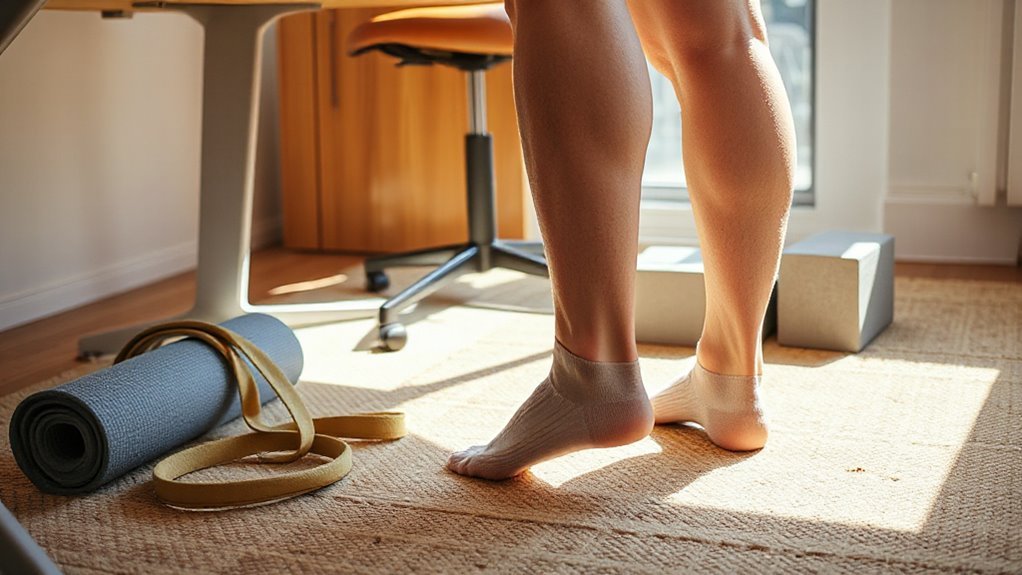
Sitting for long periods puts significant strain on your legs and hips, leading to tightness and discomfort. To alleviate this, try the Seated Hip Flexor Stretch: sit on the edge of your chair, cross one ankle over the opposite thigh, and hinge forward to stretch the buttocks and outer hip for 20–30 seconds per side.
Next, perform the Chair-Based Hip Extensor Activation by shifting to the side of your chair, lunging one leg back, and driving the back toes into the ground for 10 seconds.
Finally, do the Desk Hip Flexion Mobilization: lift one knee toward your chest while pressing your hand into it for 10 seconds. Repeat on both sides for ideal relief.
Frequency and Ergonomics
To maintain ideal health while working at your desk, it’s crucial to integrate regular movement and stretching into your routine. Experts recommend the following frequency guidelines:
- Stretch for 1–3 minutes every 30–45 minutes, or at least once per hour.
- Incorporate micro-stretches every 30–60 minutes, ensuring each stretch lasts 15–30 seconds.
- Adjust your workstation ergonomics, alternating between sitting and standing using a 1:1 to 1:3 ratio.
Proper ergonomics prevent discomfort and promote well-being. Stand up 6–15 times daily during an 8–10 hour workday, and take 5–10 minute breaks every hour.
This approach reduces tissue dehydration and stiffness, helping you maintain focus and productivity throughout your workday.
Benefits of Stretching
Although many people overlook stretching, it plays an essential role in enhancing overall health, particularly for those who spend long hours at a desk. Stretching enhances your range of motion, leading to better posture and a reduced risk of injury.
It increases blood flow, supplying your muscles with oxygen and nutrients, which reduces tension and fatigue. Regular stretching can alleviate musculoskeletal complaints, such as neck and back pain. Additionally, stretching helps maintain muscle flexibility, preventing tightness associated with prolonged sitting.
On a mental level, it promotes endorphin release, improving mood and reducing stress. By integrating stretching into your daily routine, you can greatly enhance your physical fitness, emotional resilience, and overall workplace productivity.
Research Findings on Workplace Stretching
Recent studies highlight the complexities surrounding workplace stretching programs and their effectiveness. While some research indicates modest reductions in musculoskeletal disorders (MSDs), other studies show no notable benefits.
Here are three key findings:
- A 3-month stretching program markedly reduced the 12-month prevalence of MSDs in the neck, shoulders, and back among office workers.
- Stretching often accompanies ergonomic interventions, which complicates isolating the effect of stretching alone.
- Meta-analyses generally don’t support stretching as a primary injury prevention method, revealing mixed results regarding injury reduction.
Despite some benefits, it’s essential to approach workplace stretching with caution, as improper techniques may lead to negative outcomes.
Understanding these factors can help you make informed decisions about your stretching routine at work.
Frequently Asked Questions
Can I Stretch While Sitting in My Chair?
Yes, you can stretch while sitting in your chair. Stretching improves range of motion and posture. It also relieves stress and counteracts the negative effects of prolonged sitting.
Simple stretches like shoulder shrugs or trunk rotations can be done in just a few minutes. Aim for 10–30 seconds per stretch, breathing normally.
Incorporating periodic stretching every hour can help prevent discomfort and enhance overall well-being. Always listen to your body, and stop if you experience pain.
What Should I Avoid While Stretching at My Desk?
Avoid Improper Posture
Don’t sit on the edge of your chair; it strains your back and neck.
Keep your monitor at eye level to prevent neck flexion.
Avoid Strain
Avoid bouncing stretches, which can cause injury.
Don’t overreach or lock joints during stretches to prevent excessive pressure.
Avoid Static Positions
Don’t remain static for long; shift positions every 20 minutes.
Finally, avoid performing stretches without proper form to reduce injury risk.
How Long Should I Hold Each Stretch?
Hold each stretch for 10 to 30 seconds to effectively relax and lengthen your muscles. Aim for a minimum of 15 seconds to achieve meaningful results.
For dynamic stretches, you can hold for 3–5 seconds and repeat multiple times. Perform each stretch at least twice per side.
Avoid holding beyond 30 seconds, as it may cause discomfort. Focus on maintaining deep breathing during each hold to enhance effectiveness and prevent tension.
Are There Stretches for Wrist and Hand Pain?
Yes, there are effective stretches for wrist and hand pain.
Try the Prayer Position Stretch: press palms together at chest level, then lower toward your waist, holding for 20–30 seconds.
For wrist extension, extend your arm, palm down, and gently pull fingers back. Hold for 10–30 seconds.
Perform figure-eight motions with your hands to improve mobility.
Incorporate these stretches regularly to relieve tension, improve circulation, and prevent further discomfort.
Can Stretching Improve My Focus and Concentration?
Yes, stretching can improve your focus and concentration.
Movement increases blood flow to the brain, enhancing oxygen delivery, which boosts cognitive function. Regular stretching elevates dopamine and serotonin levels, improving attention.
Engaging in brief movement breaks reduces mental fatigue, allowing you to refocus on tasks.
Studies show that active workstations enhance reasoning scores, demonstrating that even simple stretches can lead to significant improvements in productivity and mental clarity during work periods.
Conclusion
Incorporating desk stretches into your daily routine not only enhances flexibility but also mitigates discomfort from prolonged sitting.
Research indicates that regular stretching can considerably lower muscle tension and improve circulation.
By focusing on specific areas, such as the neck, shoulders, and hips, you can effectively reduce the risk of workplace-related injuries.
Prioritizing these simple exercises, performed consistently throughout the day, can lead to a healthier and more productive work environment.