How to Correctly Use a Lumbar Cushion
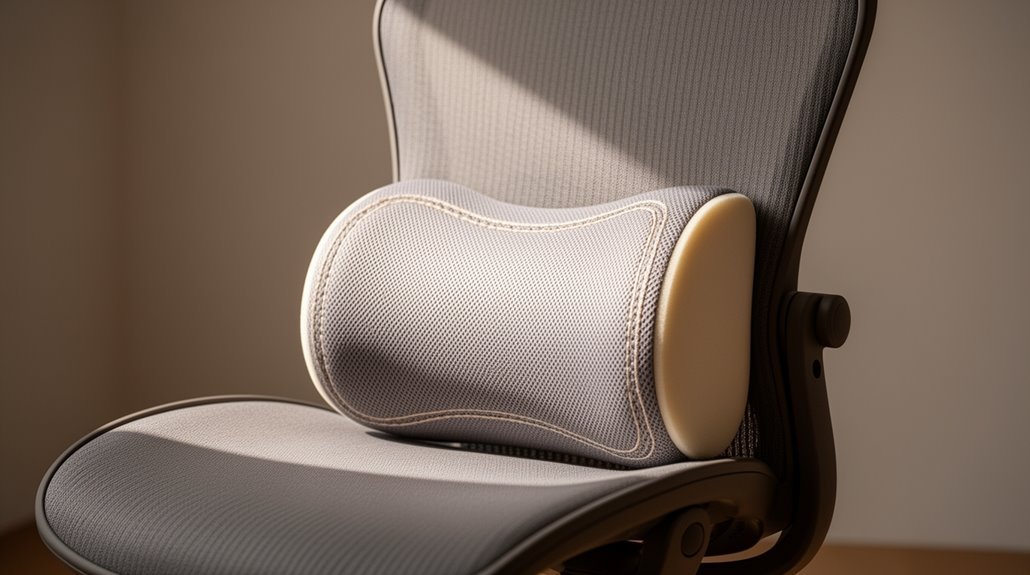
To correctly use a lumbar cushion, position it at the small of your back so it aligns with the natural curve of your spine. Adjust the cushion’s depth to fill the gap without forcing your back; it should support, not push.
Make sure your chair height lets your feet rest flat on the floor and your knees form about a 90-degree angle. These adjustments help maintain spinal alignment and reduce discomfort.
Using a lumbar cushion this way promotes proper posture during sitting. For more tips on effective use, explore related practices such as ergonomic chair adjustments and regular movement breaks.
Purpose of a Lumbar Cushion
A lumbar cushion is essential for supporting the natural curvature of your lower spine. It maintains proper spinal alignment while you sit or rest, reducing strain on the lumbar region. By filling the gap between your lower back and the chair, it helps prevent slouching and promotes an upright posture. This support encourages the spine’s natural lordosis, thereby reducing the risk of spinal abnormalities. Additionally, using a lumbar cushion alleviates lower back pain by delivering targeted support, decreasing muscle fatigue and tension in the lumbar area. It can also limit motion in the lower back if you’re injured, aiding in recovery and easing pressure during prolonged sitting or heavy lifting. Moreover, a lumbar cushion can greatly enhance overall health by promoting better circulation and respiration as you maintain proper posture.
Correct Placement on Chair
To achieve ideal lumbar support, position the cushion at the small of your back, aligning it with the natural inward curve of your spine. Follow these steps for correct placement:
- Locate the Natural Curve: Sit at the edge of the chair and rock your pelvis forward and backward to find the most comfortable spot.
- Fill the Gap: Place the cushion in the gap between your spine and the backrest, making sure it maintains your spine’s curve.
- Secure the Cushion: Use the elastic strap to attach the cushion to the chair, preventing any movement during use. Proper lumbar support is essential for maintaining spinal health in a digital age, as neglecting it can lead to discomfort and health issues.
- Avoid Pressure Points: Confirm the cushion doesn’t push your body forward or create discomfort, allowing for free movement while seated.
How to Adjust for Optimal Support
Adjusting your lumbar cushion for ideal support requires careful attention to several key factors.
First, position the support just above your waist, aligning it with the natural curve of your lumbar spine. Confirm the height accommodates your body type, allowing for several inches of vertical adjustment.
Next, customize the cushion’s depth, filling the gap in your lower back without forcing you forward. Adjust your seat height so your feet rest flat on the floor, with knees at a 90-degree angle. Proper lumbar support is crucial for comfort and overall ergonomic setup.
Regularly test your adjustments over one to two days, noting any discomfort or fidgeting.
Finally, maintain the natural S-curve of your spine to prevent slouching or excessive arching, guaranteeing ideal spinal alignment.
Tips for Effective Use
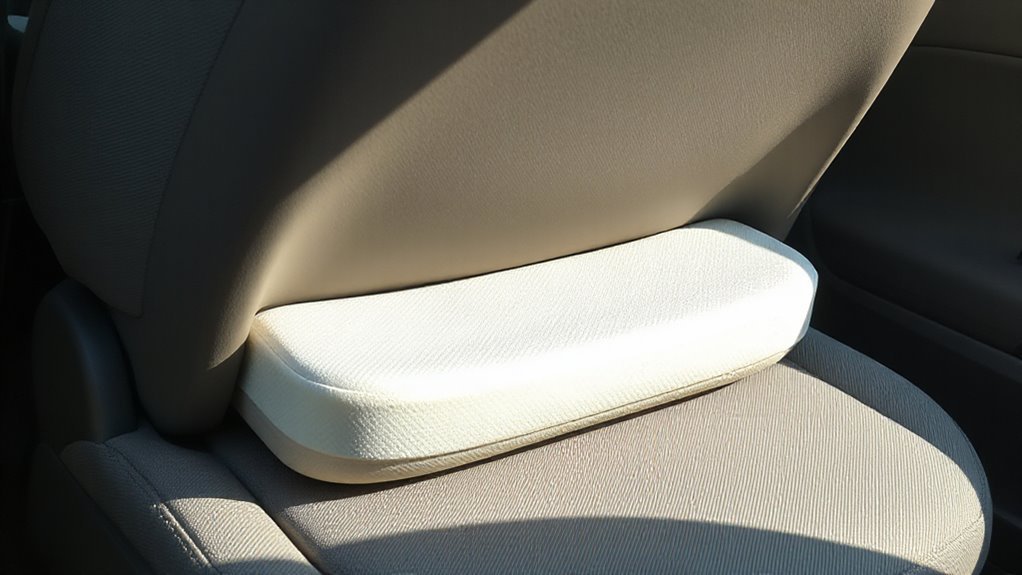
Using a lumbar cushion effectively enhances your sitting experience and supports spinal health. To maximize its benefits, follow these tips:
- Placement Consistency: Use your lumbar cushion in any frequently used seat, like an office chair or car seat, for consistent support.
- Posture Maintenance: Maintain an upright posture, with shoulders relaxed and head aligned, while keeping your feet flat on the floor.
- Regular Breaks: Incorporate frequent breaks to stand or stretch, reducing muscle fatigue and promoting circulation.
- Cushion Care: Clean the cushion regularly, inspect straps, and replace cushions that show signs of wear to guarantee ideal support.
Common Mistakes to Avoid
While using a lumbar cushion can greatly improve your sitting posture, several common mistakes can undermine its effectiveness.
Incorrect Placement Height: Placing the cushion too low or too high disrupts alignment. Aim for just above the waist to support the natural lumbar curve.
Overcompensating with Excessive Support: A cushion that’s too firm can force your lower back out of neutral alignment. Choose gentle support that maintains spinal curvature without creating pressure points.
Neglecting Seat and Chair Adjustments: Properly adjust your chair’s height and depth to guarantee the cushion maintains contact with your lumbar region.
Failing to Reassess and Readjust: Regularly check and adjust the cushion position based on comfort and posture changes.
Using Lumbar Support in Isolation: Integrate the cushion with other ergonomic adjustments for ideal comfort and support.
Benefits of Proper Use
Achieving ideal comfort and support from a lumbar cushion greatly enhances your overall well-being. Proper use provides several key benefits:
- Pain Relief: It eases neck and back pain, reducing tension on spinal ligaments and muscles.
- Posture Improvement: The cushion maintains lumbar lordosis, preventing slouching and encouraging core engagement.
- Enhanced Circulation: It improves blood flow by supporting a neutral spine, reducing muscle tightness during prolonged sitting.
- Long-Term Health: Regular use prevents chronic back pain and spinal disorders, promoting overall spinal health.
These benefits collectively contribute to better physical alignment, improved comfort, and reduced discomfort, allowing you to focus on daily tasks with increased productivity and less strain.
Maintaining Long-Term Comfort
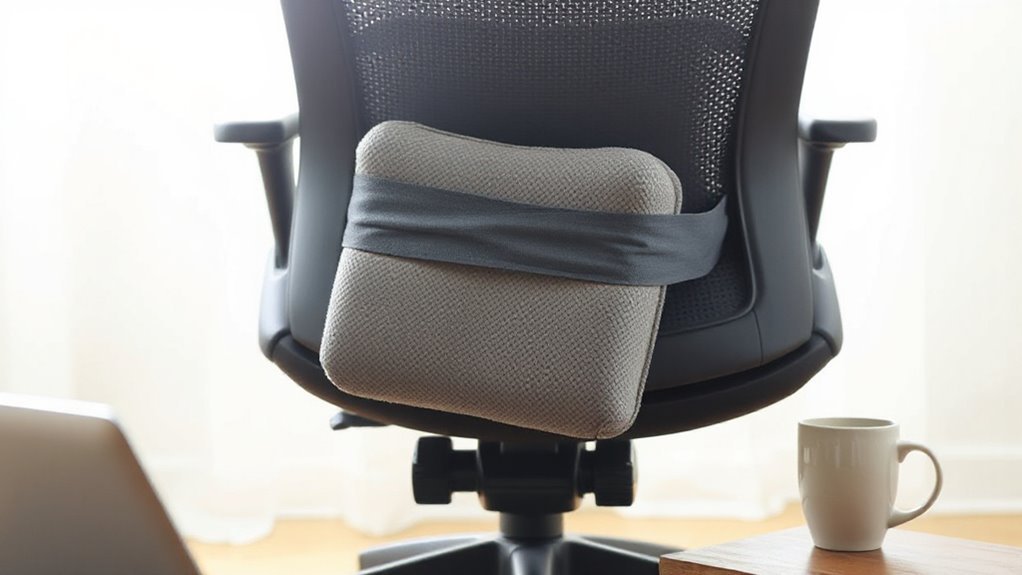
To maintain long-term comfort with your lumbar cushion, proper placement and regular maintenance are essential.
Position the cushion at the small of your back, aligning it with the natural curve of your lumbar spine. This guarantees targeted support and ideal posture. Secure it with adjustable straps to prevent shifting, and recheck its position after standing or moving.
Regularly clean the removable cover, ideally every 1–2 weeks, according to manufacturer instructions. For memory foam cushions, air-dry thoroughly to prevent mold.
Inspect for wear, sagging, or loss of shape, and replace if needed. Pair the cushion with an ergonomic chair for maximum support, adjusting chair height and armrests to enhance spinal alignment and comfort.
Frequently Asked Questions
Can I Use a Lumbar Cushion While Driving?
Yes, you can use a lumbar cushion while driving. It provides essential support, maintaining your spine’s natural curve.
This support reduces discomfort and enhances posture, improving your control over the vehicle. Proper positioning prevents back pain, allowing you to focus on driving hazards.
Confirm that the cushion doesn’t interfere with seatbelt placement or visibility. Always adjust it for ideal comfort and support to maximize its benefits during your journey.
How Often Should I Adjust My Lumbar Cushion?
You should adjust your lumbar cushion every 30 to 60 minutes during prolonged sitting.
Monitor for discomfort, slouching, or pressure points, as these indicate misalignment.
Reassess the cushion’s height and firmness at the start and end of each sitting block.
Make subtle adjustments as needed, ensuring it gently supports your lower back without forcing an unnatural arch.
Regular adjustments maintain proper spinal alignment and prevent strain, enhancing overall comfort and posture.
Are Lumbar Cushions Suitable for All Body Types?
Lumbar cushions aren’t universally suitable for all body types.
Larger cushions, up to 60 inches, cater to taller individuals with longer lumbar curves, while smaller cushions benefit petite users.
Adjustable supports accommodate various shapes and spinal curvatures.
Ergonomic designs, like contoured pillows, enhance posture for specific needs.
It’s essential to choose the right size and firmness to guarantee the best support, improve spinal alignment, and reduce discomfort during prolonged sitting.
Can I Wash My Lumbar Cushion?
Yes, you can wash your lumbar cushion, but it depends on the care label.
Check if the cover is removable; if so, machine wash it on a gentle cycle with mild detergent in cold or lukewarm water.
For the cushion core, hand wash in lukewarm water, gently squeeze, and avoid twisting.
Always air dry completely before use to prevent mold.
Regular vacuuming and prompt spot cleaning help maintain its condition.
How Do I Choose the Right Firmness Level?
To choose the right firmness level, assess your comfort preferences and back condition.
Start with a medium-firm cushion, as it generally suits most body types.
Test firmness through compression assessment—apply pressure and observe how it responds. If it feels excessively hard or soft, adjust accordingly.
Consult product specifications and consider your spine’s natural curve.
If needed, seek professional advice to guarantee ideal support and alignment for your specific needs.
Conclusion
In conclusion, using a lumbar cushion correctly can transform your sitting experience. Proper placement and adjustments can prevent discomfort and promote spinal health.
Follow simple tips and avoid common mistakes to reap the benefits of long-term use. Your lumbar cushion isn’t just an accessory; it can significantly improve comfort and productivity.
Embrace these guidelines and elevate your seating posture. Your back will thank you, and you may wonder how you ever lived without it.