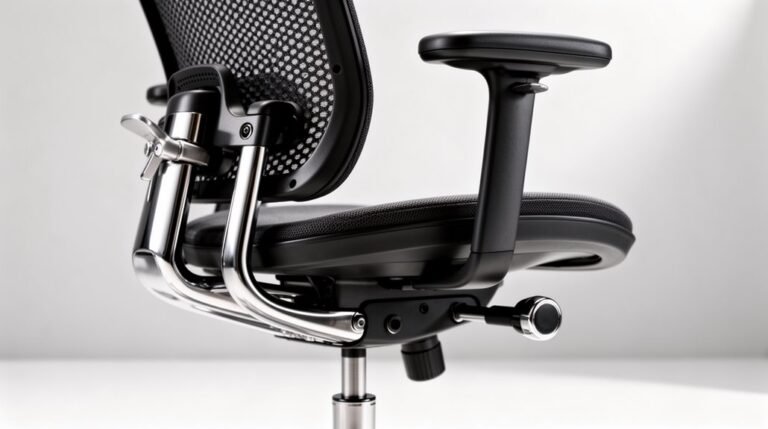
Kneeling Chair Vs Office Chair: Pros & Cons
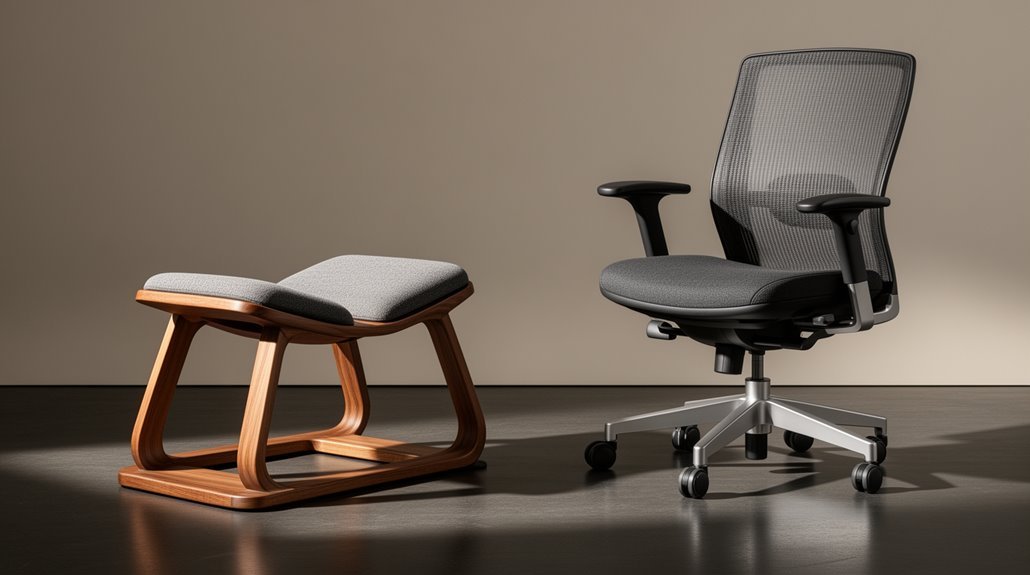
Kneeling chair vs office chair: Kneeling chairs promote good posture by tilting the pelvis forward, which helps align the spine and can reduce back pain through weight redistribution. Research even shows kneeling chairs can improve lumbar curvature by 7.633 degrees.
However, kneeling chairs restrict leg movement and may cause discomfort on the shins for some users. They’re often best for shorter periods of focused work rather than full-day use.
Office chairs provide ample lumbar support, a wide range of adjustability, and cushioned seating for prolonged sitting. That said, many office chairs lack proper ergonomic design, which can lead to posture-related strain if not chosen or adjusted correctly.
Explore use cases and recommendations to determine which chair suits your needs: kneeling chairs for posture-focused, shorter sessions; ergonomic office chairs for all-day comfort and adjustability.
Advantages of Kneeling Chairs
While traditional office chairs may provide comfort, kneeling chairs offer several distinct advantages that enhance ergonomic support.
First, they promote improved posture and spine alignment. The forward-tilting seat encourages anterior pelvic tilt, aligning your spine closer to a standing position, which can reduce slouching. Research indicates a mean difference of 7.633 degrees in lumbar curvature compared to standard chairs.
Additionally, kneeling chairs reduce lower back pain by redistributing weight between the seat and knee pads, minimizing spinal compression. This design shifts weight off your lower back, relieving strain on lumbar vertebrae. Furthermore, this weight redistribution contributes to a more natural spinal alignment, further enhancing comfort during extended use.
Moreover, they enhance core strength, requiring constant engagement of your core muscles to maintain an upright position. Overall, these features contribute to better long-term spinal health and comfort.
Disadvantages of Kneeling Chairs
Although kneeling chairs offer unique ergonomic benefits, they also present several disadvantages that can impact user comfort and health.
Restricted Leg Movement
These chairs require you to keep your legs in fixed positions, limiting natural movement and stretching. This design can create pressure on your knees and shins, leading to discomfort over time.
Shin and Knee Discomfort
The upper shins bear significant body weight, causing aching and potential rashes with extended use. Inadequate knee pad cushioning can worsen this discomfort.
Limited Adjustability
Kneeling chairs usually lack the adjustment options of traditional office chairs. Most models don’t have backrests or armrests, making them less adaptable for diverse body types.
Difficulty with Entry and Exit
Getting in and out of these chairs can be challenging, especially for prolonged sitting periods.
Advantages of Office Chairs
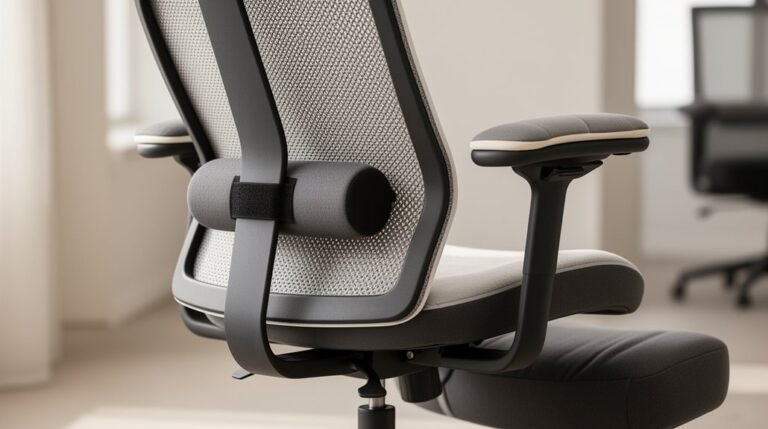
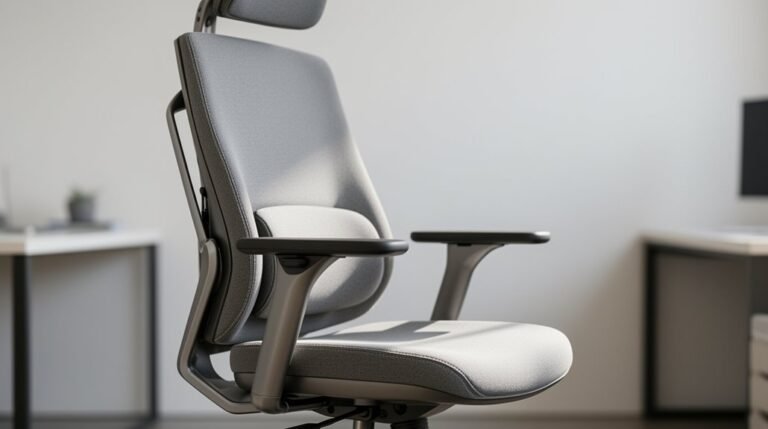
Office chairs are designed with ergonomics in mind, providing support that enhances musculoskeletal health. They feature lumbar support, which reduces lower back pain. Adjustable seat height and backrests help maintain natural spinal alignment. Wide, cushioned seats minimize pressure points during prolonged sitting. Additionally, tilt mechanisms relieve hip pressure, promoting better blood flow.
Research indicates that ergonomic chairs can boost productivity by 15% to 20% boosting productivity, making them a valuable investment for businesses looking to enhance employee performance. Comfortable seating reduces distractions, enhancing focus and concentration. Customizable elements like armrests and seat depth accommodate various body types, ensuring a neutral working position.
These chairs also reduce work-related injuries, particularly musculoskeletal issues. Long-term use supports healthy posture, contributing to overall physical health and improved mental wellbeing.
Disadvantages of Office Chairs
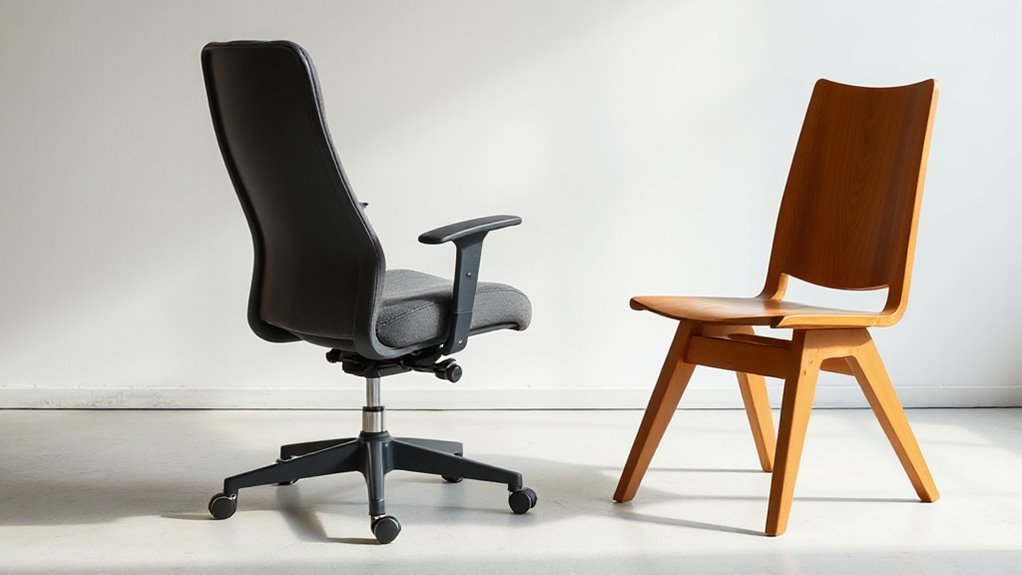
Many office chairs fail to provide the necessary ergonomic support, which can lead to significant health issues. Here are some key disadvantages:
- Poor Ergonomics: Many chairs lack features that promote proper spinal alignment, causing neck, shoulder, and back strain.
- Sedentary Lifestyle Risks: Prolonged sitting contributes to obesity, cardiovascular disease, and muscle stiffness, leading to serious health concerns.
- Fit and Dimension Issues: Inappropriate chair height or depth can result in discomfort and awkward posture, increasing spinal stress.
- Reduced Productivity: Discomfort from poor seating affects task performance, leading to higher error rates and increased absenteeism.
These issues demonstrate the importance of choosing an office chair that prioritizes ergonomic support and fit.
Health Benefits Comparison
When comparing kneeling chairs and traditional office chairs, the health benefits of kneeling chairs become apparent. Kneeling chairs tilt your pelvis forward, promoting a natural spine curve. This design maintains lumbar curvature better, showing a mean difference of 7.633 degrees compared to standard chairs.
The 60-70 degree leg position opens your hips, improving spinal alignment and reducing slouching.
Kneeling chairs enhance circulation by creating approximately 110-degree angles in your legs, reducing compression on veins and arteries. This promotes better blood flow, supporting oxygen delivery to your brain.
Additionally, the absence of a backrest engages your core and back muscles, helping to develop strength. Weight distribution in kneeling chairs alleviates pressure on your lower back, reducing overall strain during seated work.
Ideal Use Cases and Recommendations
While both kneeling chairs and traditional office chairs serve specific purposes, understanding their ideal use cases can enhance your seating experience.
Ideal Use Cases
- Kneeling Chairs: Best for short tasks like focused work, drawing, or handwriting.
- Intermittent Use: Effective for computer work when used in rotation to promote movement.
- Posture Support: Recommended for those with early posture issues or lower back discomfort.
- Dynamic Environments: Suitable for spaces encouraging frequent position changes.
Office Chairs
- Prolonged Sitting: Designed for full workdays, providing essential back support.
- Task-Specific: Ideal for typing or phone calls.
- Adjustability: Necessary for users requiring lumbar, armrests, and height adjustments.
- Chronic Support: Recommended for individuals with existing back or joint issues.
Frequently Asked Questions
Can I Use a Kneeling Chair for Extended Periods Daily?
You shouldn’t use a kneeling chair for extended periods daily. Core muscle fatigue sets in within an hour, leading to discomfort and slouched posture.
The lack of movement in static models can worsen back pain. For better results, limit usage to 15-20 minute intervals.
Alternating between a kneeling chair and a traditional office chair is recommended for ergonomic support and to reduce strain on your back and legs throughout the day.
Are Kneeling Chairs Suitable for People With Knee Issues?
Kneeling chairs aren’t ideal for people with knee issues. They transfer weight to your knees and shins, increasing pressure on these joints. This can aggravate existing conditions or cause discomfort after extended use.
Limited adjustability restricts leg positions, which may hinder circulation and mobility. Instead, consider adjustable chairs or sit-stand stools that offer better support and flexibility.
Always consult a healthcare professional before choosing a chair if you have knee concerns.
How Do I Adjust a Kneeling Chair Properly?
To adjust your kneeling chair, start by setting the height. Confirm your elbows rest at a 90-degree angle and your thighs slope slightly downwards.
Next, adjust the seat angle between 20 and 30 degrees to promote spinal alignment.
Finally, position the knee pads so your shins are parallel to the floor, distributing weight evenly. If you feel discomfort, readjust the knee pads for a better fit.
What Materials Are Commonly Used in Kneeling Chairs?
You might think kneeling chairs require exotic materials, but they often rely on simple, effective choices.
Most use 3/4″ plywood for seat and knee pads, offering strength and affordability. Hardwoods like ash serve as durable frames, while high-density foam cushions provide comfort.
Upholstery typically features durable fabrics, like canvas. Fasteners include 3″ screws and wood glue for structural integrity, ensuring your chair remains stable and supportive during use.
Do Kneeling Chairs Come in Different Sizes or Styles?
Yes, kneeling chairs come in various sizes and styles.
Models typically accommodate user heights from 5’2″ to 6’2″. You’ll find adjustable options with seat heights ranging from 18” to 28”.
The two primary styles are Balance Chairs, which are lightweight and fixed-height, and X-frame Adjustable Chairs, which offer height adjustments and wheels for mobility.
Each style has unique features, such as rocking motion or casters, catering to different ergonomic needs.
Conclusion
To conclude, choosing between a kneeling chair and an office chair depends on your needs.
Kneeling chairs promote better posture but may cause discomfort during prolonged use.
Office chairs offer versatility and comfort but can lead to poor posture over time.
Like choosing between a sturdy bridge and a winding path, each option has its merits and drawbacks. Assess your work habits and physical condition to find the right fit for a healthier, more productive workspace.