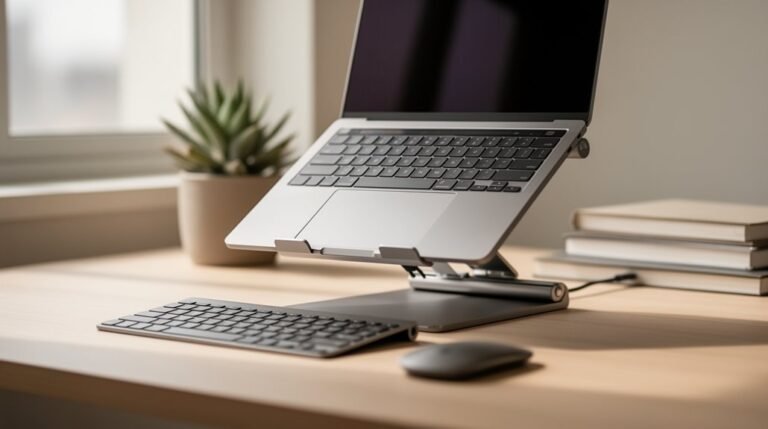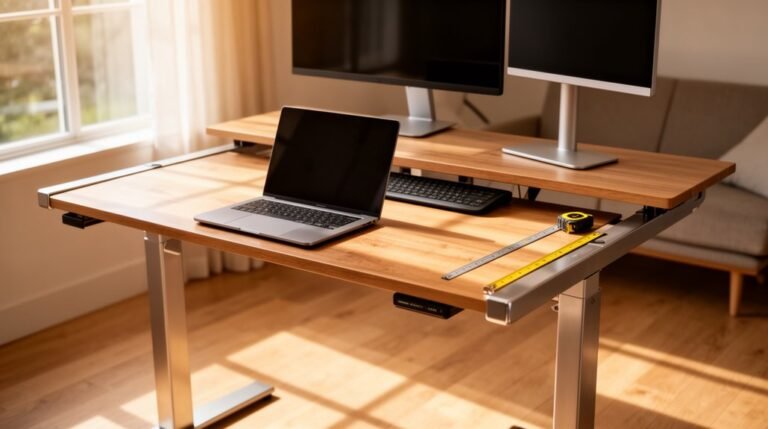
Using a Standing Desk Converter With a Laptop
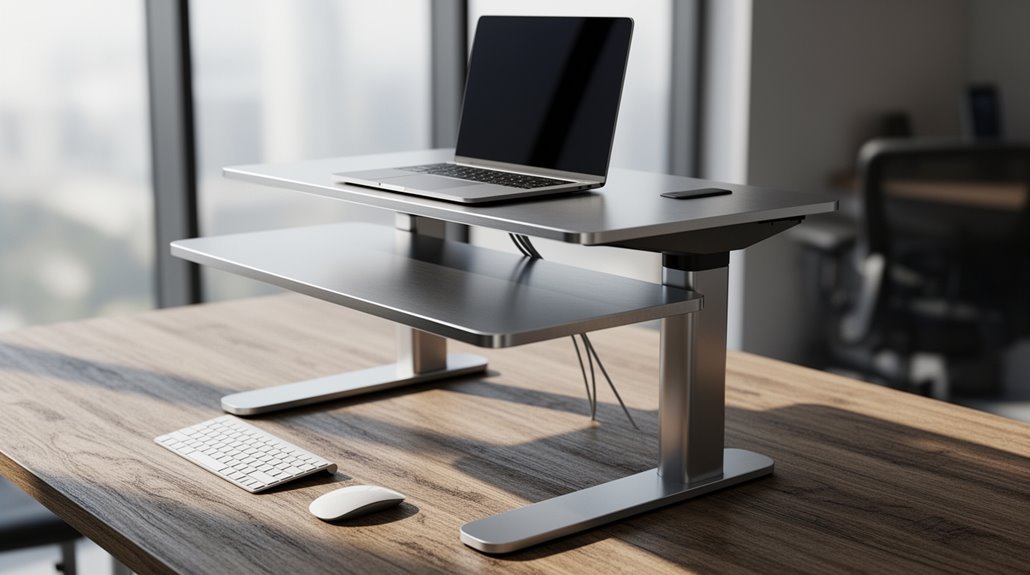
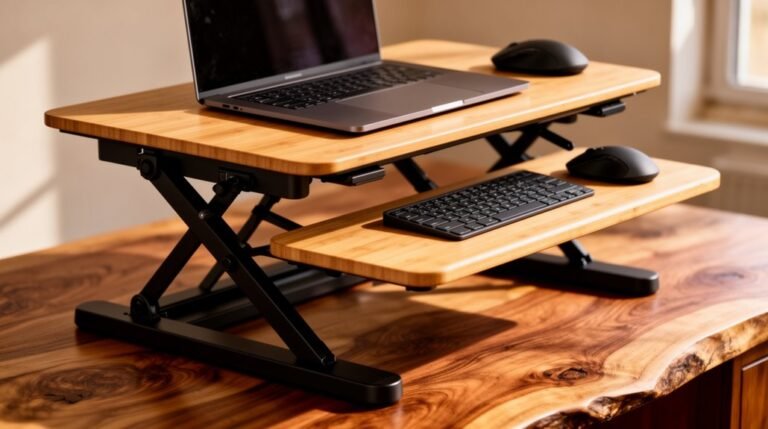
Using a standing desk converter with a laptop elevates the screen to eye level, promoting better posture and reducing neck and back strain.
Set up your external keyboard so your elbows are at about 90 degrees when typing. This alignment helps prevent wrist and shoulder discomfort.
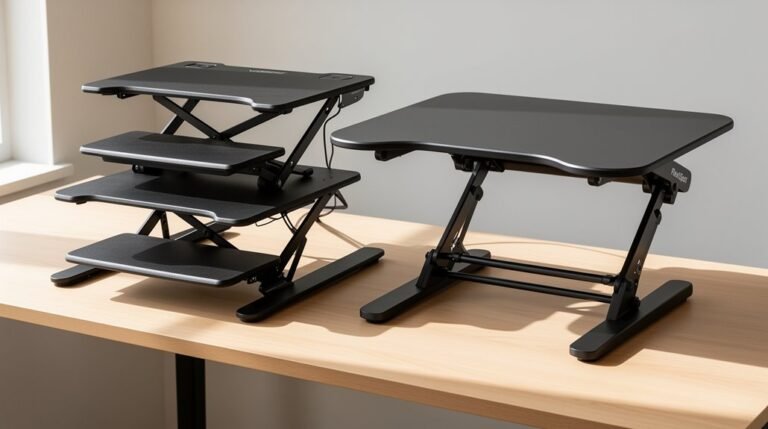
Choose a stable converter—scissor-lift designs tend to minimize wobble. A spacious platform is also useful for holding a mouse, documents, or other accessories.
Switching between sitting and standing throughout the day can boost comfort and productivity. If you want to optimize your workspace further, more information is available.
Benefits of Standing Desk Converters for Laptop Users
As you integrate a standing desk converter into your workspace, you’ll notice significant improvements in ergonomics and comfort. These converters elevate your laptop screen to eye level, reducing forward head inclination and improving posture. Proper height adjustments decrease neck, shoulder, and lower back strain, effectively mitigating localized discomfort.
Studies demonstrate enhanced typing accuracy, allowing you to maintain speed while increasing comfort and productivity. Additionally, standing desk converters facilitate alternating between sitting and standing, leading to productivity boosts of 23-45%. This shift enhances cognitive processing and engagement, improving concentration and decision-making.
Regular use contributes to long-term musculoskeletal health, reducing fatigue and promoting energy levels throughout your workday. In fact, research shows that height-adjustable desks are effective for improving wellbeing at work. Overall, these converters create a more efficient, comfortable, and health-conscious workspace.
Choosing the Right Standing Desk Converter
When selecting a standing desk converter, it’s essential to evaluate various factors that will directly impact your workspace efficiency and comfort. One important consideration is the ergonomic benefits of standing desks, which can help reduce back pain and improve posture during long work hours. Additionally, standing desks encourage more movement throughout the day, potentially increasing energy levels and productivity. Overall, investing in a standing desk can lead to a healthier and more dynamic working environment.
First, choose the type: X-lift converters provide stability and a weight capacity of around 33 lbs, while Z-lift models accommodate multiple monitors but may risk tipping.
Consider the adjustment mechanism; electric converters offer effortless height changes, while manual options require more physical effort. Desk converters emphasize health and flexibility, allowing you to alternate between sitting and standing, which can significantly improve your overall well-being.
Assess workspace size, as platforms typically range from 28 to 36 inches in width.
Weight capacity, generally between 26 to 35 lbs, influences usability for dual monitors.
Finally, prioritize build quality; sturdy materials like extruded aluminum enhance durability and minimize wobble during use, ensuring a stable work environment.
Setup and Installation Guide
Setting up your standing desk converter requires careful attention to detail to guarantee a smooth and efficient installation. Begin by unpacking all components, verifying completeness against the packing list.
Place the converter on a stable, flat surface, ensuring enough clearance for height adjustments. Handle the unit gently to avoid damaging the gas spring.
Next, attach the keyboard tray by aligning it with the designated slots. If applicable, follow specific mounting instructions for monitor arms.
Install non-slip base pads for stability and secure cable routing using grommet holes if available. Ensure compliance with security measures before positioning your laptop centrally on the platform and organizing accessories to prevent obstruction of movement.
Confirm all components are secure before adjusting the height for use.
Ergonomic Best Practices for Laptop Use
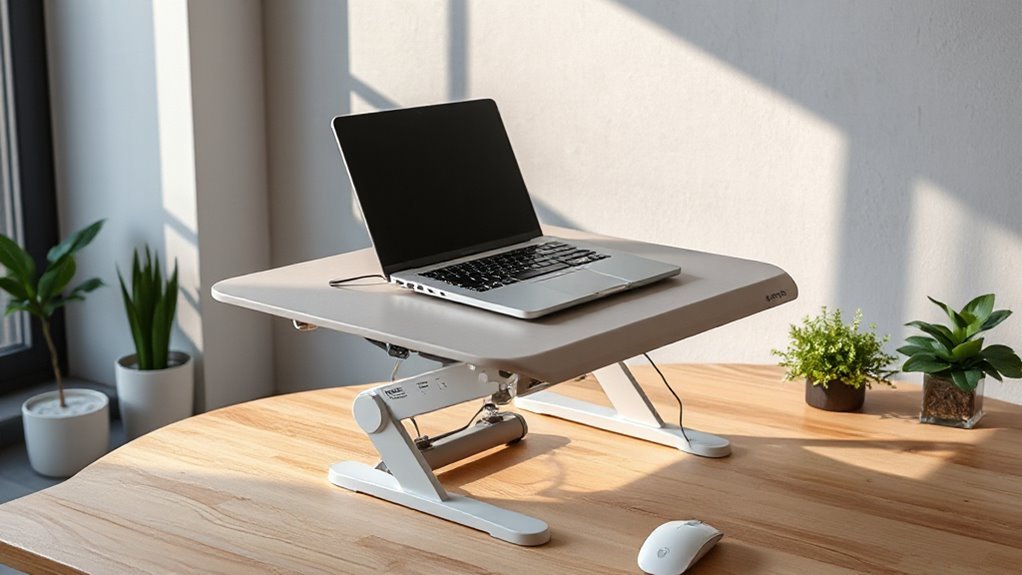
Using a standing desk converter with a laptop can greatly enhance your workspace, but it’s essential to follow ergonomic best practices to maximize comfort and productivity.
Here are four key practices to implement:
- Screen Positioning: Keep the top of your laptop screen at or slightly below eye level, ensuring you’re 20-40 inches away to minimize eye strain.
- Input Devices: Use an external keyboard and mouse at elbow height to maintain neutral wrist posture and reduce strain.
- Posture Maintenance: Sit or stand upright with relaxed shoulders, keeping your elbows at a 90-degree angle while typing.
- Workspace Organization: Position frequently used items within a 16-inch reach to avoid twisting and excessive reaching.
These practices help optimize your setup for better health and efficiency.
Managing Cables and Accessories
Managing cables and accessories efficiently is essential for maintaining a clean and organized workspace, especially when using a standing desk converter with a laptop.
Under-desk cable trays provide a dedicated space for power strips and bundled cables, reducing trip hazards. Cable raceways guide cords out of sight, improving aesthetics and preventing tangling.
For quick organization, use adhesive cable clips or zip ties to secure cables, ensuring enough slack for height adjustments. Cable management kits can offer extensive solutions, combining trays, raceways, and clips tailored for your setup.
Additionally, floor-to-desk routing options, like cable spines, help keep cords organized and accessible, allowing for smooth shifts between sitting and standing.
These methods enhance both function and appearance.
Tips for Transitioning Between Sitting and Standing
Shifting between sitting and standing at your workstation can enhance comfort and productivity, but it’s essential to approach it thoughtfully. Here are some tips to make the shift easier:
- Start Gradually: Begin with short intervals of standing, gradually increasing the duration as your body adjusts.
- Listen to Your Body: Pay attention to signs of fatigue or discomfort, and adjust your standing time accordingly.
- Use Timers: Implement structured intervals, like 30 minutes of sitting followed by 30 minutes of standing, using reminders to prompt changes.
- Maintain Ergonomics: Confirm your desk converter is at eye level, with your wrists neutral, to minimize strain during both postures.
Following these guidelines can help you create a balanced and effective workspace.
Common Challenges and Solutions
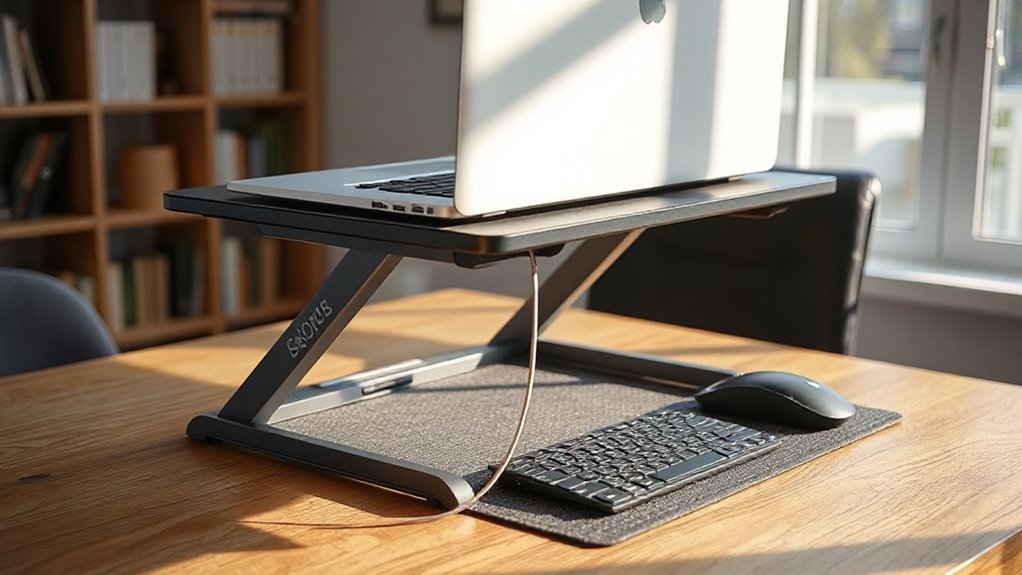
When you start using a standing desk converter with a laptop, you may encounter several common challenges that can impact your experience.
Stability issues often arise, especially with converters that wobble or extend beyond the desk’s edge, creating a tipping hazard. To enhance stability, opt for scissor-lift designs over cantilever models.
Workspace limitations may restrict your ability to organize essential tools. Choose converters with larger platforms to accommodate peripherals, reducing awkward reaches.
Ergonomic compromises are prevalent with laptop integration, causing neck and back strain. Use external keyboards and mouse devices to improve posture.
Weight and handling can pose difficulties; consider lighter models or those with motorized adjustments to minimize physical strain.
Exploring Advanced Features of Standing Desk Converters
As you contemplate a standing desk converter for your workspace, it’s essential to explore the advanced features that enhance usability and ergonomic comfort.
Here are key aspects to ponder:
- Dual-tier design: This allows you to position your laptop on the upper tier and your keyboard on the lower tier, promoting better posture.
- Spring-assisted lift mechanisms: These provide smooth height adjustments, minimizing strain and safety risks.
- Programmable height settings: Electric models let you save preferred heights, making changes effortless.
- Wide height adjustment ranges: These accommodate diverse user statures, improving overall comfort.
Frequently Asked Questions
Can I Use a Standing Desk Converter for Gaming Laptops?
Yes, you can use a standing desk converter for gaming laptops. Verify the converter’s weight capacity is sufficient, ideally between 35 to 45 pounds, to support your device.
Look for a two-tier design for better organization and stability, especially during intense gaming. Adjustable height settings are essential for maintaining ergonomic posture.
Additionally, consider models with cable management to reduce clutter and improve your gaming experience. Always check measurements for compatibility.
How Much Weight Can a Standing Desk Converter Support?
A standing desk converter typically supports weight ranging from 11 lbs for compact models to 55 lbs for heavier units.
Most mid-range converters handle 33 to 44 lbs, accommodating multiple monitors or a laptop.
Stability mechanisms, such as weighted bases and dual stability bars, enhance load support.
It’s essential to match your equipment’s weight with the converter’s capacity, ensuring safe use, especially when adjusting to taller heights to avoid wobbling.
Are There Any Noise Concerns With Motorized Converters?
Yes, there are noise concerns with motorized converters. Noise levels typically range from 40 to 60 decibels during operation, often comparable to office ambient noise.
Brushless motors are quieter, often below 45 decibels. Increased noise may occur under heavier loads or faster speeds due to motor strain.
Selecting dual-motor systems and ensuring proper installation can minimize operational noise. Regular maintenance also helps maintain quiet performance and prevent unusual sounds.
What Maintenance Is Required for Standing Desk Converters?
Regularly inspect cables for looseness and fraying to guarantee secure connections.
Use a soft cotton or microfiber cloth for dusting, avoiding canned air. Clean surfaces with warm, soapy water, drying thoroughly to prevent water marks.
Calibrate adjustable feet for stability and lubricate moving parts as per manufacturer recommendations.
Check bolts and screws frequently, tightening them to prevent wobbling and guarantee peak function during height adjustments.
Can I Use a Standing Desk Converter With a Desktop Computer?
Yes, you can use a standing desk converter with a desktop computer.
Most converters support heavy loads, typically ranging from 33 lbs to over 55 lbs, accommodating monitors and keyboards. They often feature adjustable heights, allowing you to align monitors at eye level and keyboards at elbow height.
Make certain your converter has adequate depth for CPU placement, as desktop towers usually can’t sit on the converter. Check for additional monitor mounts if needed.
Conclusion
Incorporating a standing desk converter can greatly enhance your workspace. Studies indicate that using a standing desk can reduce sedentary time by up to 50%, promoting better health.
By selecting the right converter and following ergonomic practices, you can improve posture and reduce discomfort while working on your laptop.
Shifting between sitting and standing can refresh your focus and productivity.
With careful setup and management of cables, you can create an efficient, organized, and comfortable working environment.