Why Your Chair Height Matters for Ergonomics
Why Chair Height Matters for Ergonomics
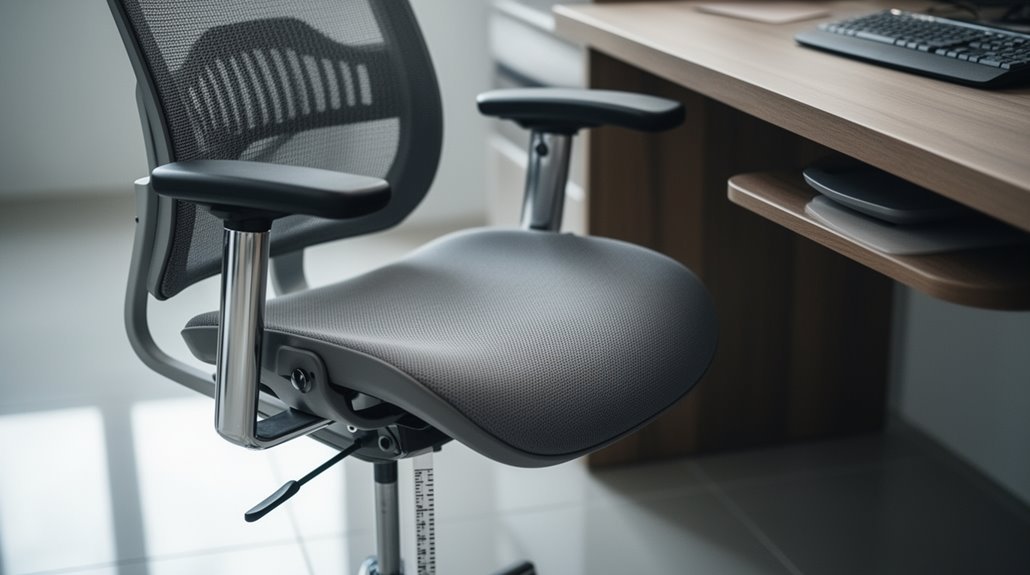
Chair height affects your posture, spinal alignment, and risk of musculoskeletal disorders. An ideal seat height maintains a 2–3 inch gap between the seat edge and the back of your knees, allowing your knees to bend near a 90-degree angle.
Proper lumbar support enhances spinal health by preserving the natural curve of your spine. This support helps reduce lower back strain during long periods of sitting.
Adjusting your chair so your feet rest flat on the floor optimizes comfort and reduces pressure on your thighs. Small height changes can make a big difference in overall comfort and long-term musculoskeletal health.
Further insights on achieving the right fit follow.
The Importance of Proper Seat Height
Understanding the importance of proper seat height is essential for maintaining overall health and comfort while seated.
An ideal seat height provides a 2-3 inch gap between the seat edge and the back of your knees, preventing blood vessel compression that can reduce circulation. Additionally, when your knees bend at or near a 90-degree angle, you’re less likely to experience joint discomfort. Proper seat height also supports spinal alignment by encouraging a neutral spine position, reducing strain on your lower back. Adjusting the height of your chair to match your leg length enhances posture, minimizing slouching or excessive arching. Adjustable features cater to individual body types, ensuring that everyone can find their optimal seat height.
Ultimately, maintaining the correct seat height contributes greatly to your comfort and overall well-being during prolonged sitting.
Musculoskeletal Disorders and Chair Height
When you sit in a chair that isn’t properly adjusted, you increase your risk of developing musculoskeletal disorders. Misalignment between chair height and desk height can strain your neck, shoulders, and upper back. For instance, desk heights exceeding 55 cm can apply excessive pressure on your thoracic spine, leading to pain. Additionally, if your seat depth is too deep, it creates pressure on your thighs, impairing blood circulation. Conversely, insufficient depth can force your body into a forward posture, stressing your back and knees. These mismatches in chair and workstation dimensions can lead to increased discomfort and a 30% higher risk of lumbar disc disorders. Proper alignment is key to minimizing these risks and maintaining your overall comfort. Moreover, bad posture from inappropriate equipment significantly raises the incidence of spinal disorders.
Impact of Lumbar Support on Spinal Health
Proper lumbar support plays an essential role in maintaining spinal health, as it helps preserve the spine’s natural “S” shape. It keeps your spine aligned, reducing stress on spinal discs and easing muscle strain. The ideal lumbar support height is about 190 mm above the seat, while the depth should be approximately 387 mm from the seat front. Individuals with higher Body Mass Index (BMI) often prefer higher lumbar positions, while those with back pain may choose a closer positioning for increased support. Moreover, maintaining lumbar lordosis is crucial for overall spinal alignment and preventing back issues. Adjustable lumbar supports can adapt to varying body types, optimizing spinal alignment and comfort. This customization promotes better posture, alleviates back pain symptoms, and helps prevent future musculoskeletal disorders.
Designing Chairs for Optimal Height
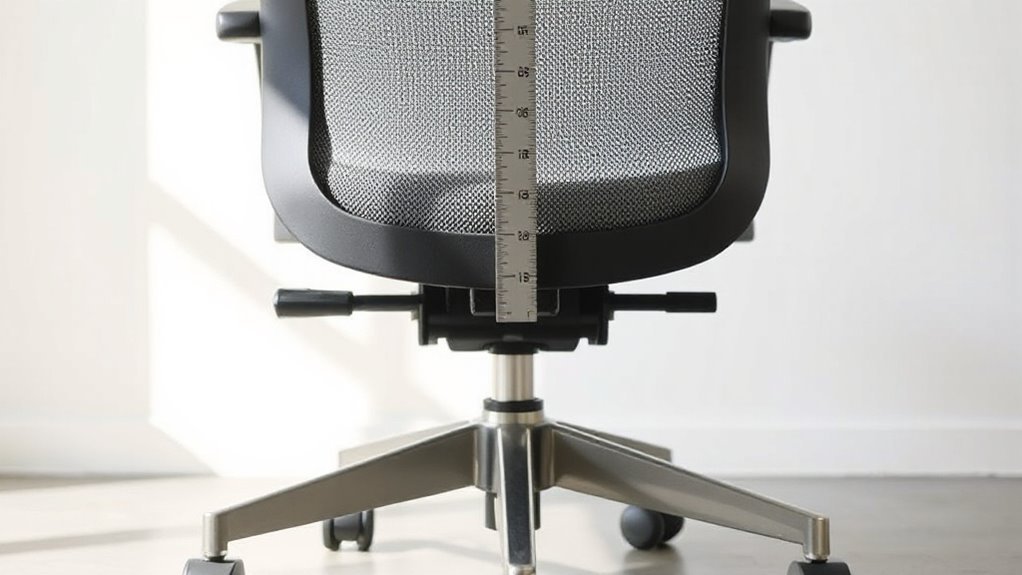
Designing chairs with ideal height requires careful consideration of user anthropometry to guarantee a proper ergonomic fit.
Seat height should accommodate users between 146–207 cm tall, typically ranging from 42–54 cm. The design must make certain feet rest flat on the floor, with knees slightly below hips. Fixed chairs need to cater to the 5th percentile female, with a minimum height of 38 cm, while adjustable options can accommodate taller users.
Seat depth is vital, ideally between 38–45 cm, allowing the lumbar curve to support the back without pressure behind the knees.
Additionally, seat width should be 40–45 cm for general use, expanding to 55.9–73 cm for bariatric users to guarantee comfort and support across diverse body types.
Effects of Ergonomic Chairs on Workplace Productivity
Implementing ergonomic chairs considerably impacts workplace productivity. Here are some key effects:
- Increased Productivity: Ergonomic environments can boost productivity by 15% or more, with some studies showing gains up to 17.8%.
- Enhanced Focus: Proper seating supports comfort, which directly correlates with increased concentration and work performance.
- Reduced Absenteeism: Organizations that invest in ergonomic furniture report a 67% decrease in absenteeism due to musculoskeletal disorders.
- Higher Employee Satisfaction: Ergonomic workstations contribute to a 24% increase in employee satisfaction, encouraging retention and motivation.
Common Issues With Chair Height in Home Offices
When chair height doesn’t align with desk height, it creates a range of ergonomic challenges that can affect your comfort and productivity. Fixed desks typically range from 28 to 30 inches, while many chairs adjust from 17 to 21 inches, leading to incompatibility. This misalignment forces your body to compensate, causing shoulder tension and wrist strain.
Additionally, improper foot positioning occurs when your feet don’t rest flat on the floor, which can inhibit blood flow and lead to discomfort.
Misaligned elbows can also strain your shoulders and wrists, especially if your forearms aren’t parallel to the desk. Overall, these issues can trigger circulatory problems, poor posture, and chronic pain if left unaddressed.
Strategies for Achieving the Right Chair Height
Achieving the right chair height is essential for maintaining ergonomic comfort and productivity. Here are some strategies to help you find that ideal height:
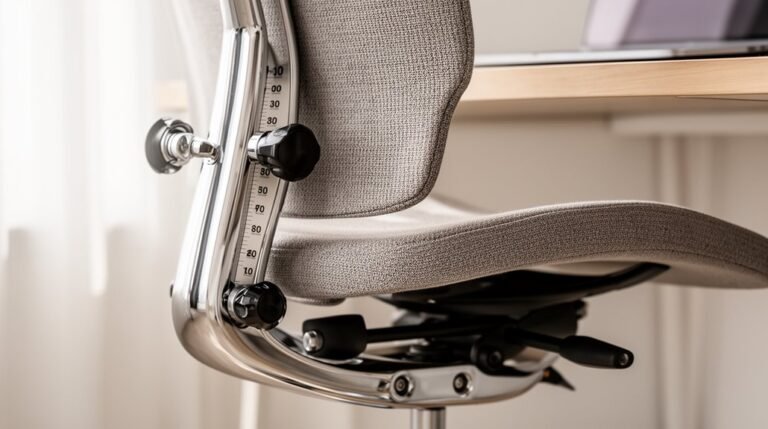
- Adjust Using Levers: Most office chairs feature a gas lift cylinder. Use the lever beneath the seat to raise or lower your chair, making sure your thighs are parallel to the floor.
- Consider Replacement Options: If your chair isn’t tall enough, replace the gas lift cylinder for extra height or use chair leg extenders.
- Add Cushions: Thick seat cushions can elevate your sitting height without permanent modifications. Confirm they’re secure to maintain stability.
- Check Ergonomic Guidelines: Aim for knees at a 90° to 100° angle and feet flat on the floor for proper posture and reduced strain.
Frequently Asked Questions
How Can I Measure My Ideal Chair Height Accurately?
To measure your ideal chair height accurately, sit on a firm surface with your feet flat.
Measure from the floor to the bottom of your thigh, just behind the kneecap, ensuring your thighs are parallel to the ground.
Record this measurement in inches or centimeters.
For maximum comfort, your chair height should allow your hips to be slightly higher than your knees and maintain a 1-2 inch clearance from the seat’s edge to your knees.
What Are the Signs My Chair Height Is Incorrect?
If your feet don’t touch the floor, your chair’s too high.
You’ll notice your legs dangling, leading to pressure on your thighs.
When your knees sit above your hips, the chair’s too low, causing hip misalignment.
You may experience back, shoulder, or neck pain due to poor posture.
If you feel numbness or fatigue in your legs, it’s a sign your chair height needs adjustment.
Can Using Cushions Improve Chair Height Comfort?
Absolutely, using cushions can greatly enhance chair height comfort.
Cushions provide additional support, helping you achieve ideal alignment. They mold to your body shape, relieving pressure on your hips and spine.
Lumbar cushions maintain the natural curve of your back, promoting proper posture. This support reduces discomfort during prolonged sitting, ensuring you remain focused and productive.
With various designs available, you can easily find one that fits your chair and personal comfort needs.
Are There Specific Chair Heights for Different Tasks?
Yes, specific chair heights do cater to different tasks.
For standard office work, a chair height of 15-22 inches suits most users, ensuring elbows form 90-110 degree angles.
Precision tasks often require higher surfaces, necessitating adjustments beyond 21 inches.
For assembly work, lower chair heights accommodate heavy tasks effectively.
Adjustability in seat height, depth, and lumbar support enhances comfort and productivity, aligning with varying task demands throughout your workday.
How Often Should I Adjust My Chair Height?
You should adjust your chair height every 3-6 months for ideal comfort.
After the initial adjustments, follow up within 2-4 weeks to guarantee proper alignment. If you experience discomfort, reassess immediately.
Changes like new equipment or job responsibilities require prompt adjustments.
Remember to fine-tune your chair during the first month, as this period is essential for identifying any issues.
Regular adjustments enhance your overall productivity and well-being.
Conclusion
To summarize, chair height greatly affects your comfort and productivity.
An ideal seat height aligns your knees at a 90-degree angle, promoting better posture and reducing strain.
Just as a well-tuned instrument performs best, your workspace requires the right adjustments for peak efficiency.
By prioritizing ergonomic principles, you can prevent musculoskeletal disorders and enhance your overall well-being.
Remember, the right chair height isn’t just a detail; it’s a foundation for a healthier, more productive environment.