When to Replace Your Office Chair
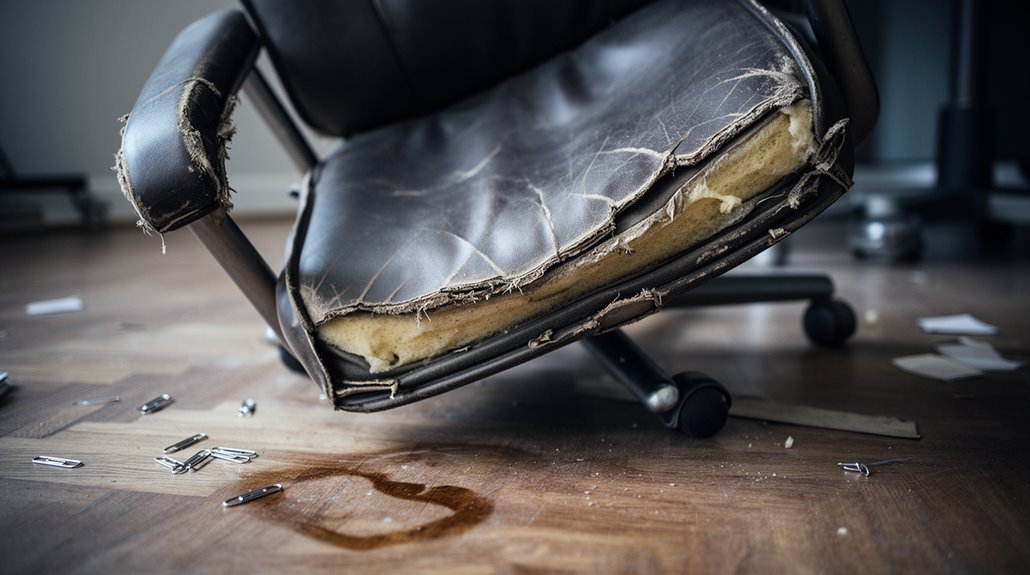
When to replace your office chair? Look for visible signs of wear and tear, such as cracks in the frame or loose wheels, which can indicate structural compromise and a need for replacement.
If you notice growing discomfort or insufficient lumbar support, it’s a strong sign it’s time to change your office chair. Mechanical problems—squeaking, stuck height adjustments, or unstable tilt—also point to replacement.
Consider the age of the chair: most office chairs last about 5 to 10 years, though daily heavy use can shorten that lifespan. Paying attention to these factors will help keep your workspace comfortable and safe.
Signs of Wear and Tear
Recognizing signs of wear and tear in your office chair is essential for maintaining ergonomic support and functionality.
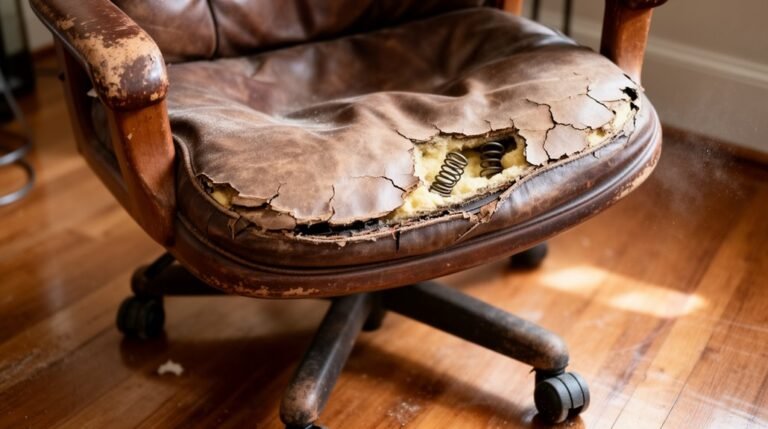
Start by examining the upholstery; cracks, tears, or fraying indicate compromised support. Leather chairs with rough surfaces should be replaced, while cloth chairs with visible tears affect both comfort and structural integrity.
Next, check for mechanical issues. Loose wheels or malfunctioning height adjustment levers hinder mobility and adjustability. Wobbly frames increase injury risks, and broken components fail to function properly. Regular use can significantly impact the average lifespan of your office chair, making it important to monitor its condition.
Finally, assess the cushioning; sagging or deformed cushions lead to uneven weight distribution, affecting posture.
Regular checks for these signs guarantee your chair remains safe and functional, ultimately enhancing your work environment.
Comfort and Support Issues
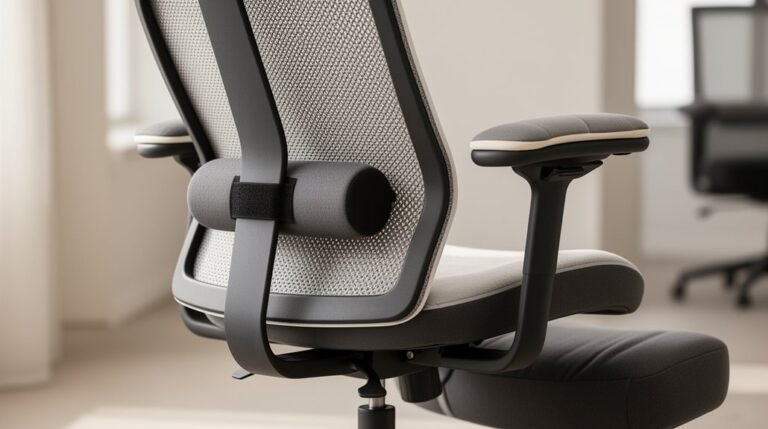
Poor ergonomic support in office chairs can lead to significant discomfort and health issues. Inadequate lumbar support and incorrect chair height can cause poor posture, increasing the risk of musculoskeletal disorders (MSDs). Prolonged sitting in poorly designed chairs contributes to lower back, neck, and shoulder pain.
Research shows that poor posture decreases task performance, increasing errors in work tasks. Ergonomic chairs with adjustable features, like seat height and lumbar support, help reduce disc pressure, promoting better posture. Studies indicate that employees using such chairs report improved comfort and reduced discomfort. Adjustable back support in chairs can significantly reduce absenteeism related to pain and discomfort.
Maintaining proper support is essential for overall well-being and productivity, as poorly supported chairs can hinder focus and efficiency, leading to increased absenteeism due to pain.
Mechanical and Adjustability Problems
When your office chair starts showing signs of mechanical issues, it’s important to assess its functionality. Squeaking noises often indicate loose screws or worn components, affecting durability. Tilt and recline mechanisms can become stuck due to lack of lubrication or wear, limiting adjustability. A gas lift failure may manifest as your chair slowly sinking, typically due to worn seals. Wobbly bases suggest structural compromise, creating safety hazards. If adjustment controls frequently fail, it may be time for a replacement. Additionally, regular inspections can help identify these mechanical issues early, allowing for timely maintenance or replacement. Height adjustments can be problematic from gas cylinder malfunctions, while tilt lock issues reduce ergonomic benefits. Addressing these mechanical and adjustability problems promptly can prevent further complications and maintain a safer, more comfortable workspace.
Age and Lifespan Factors
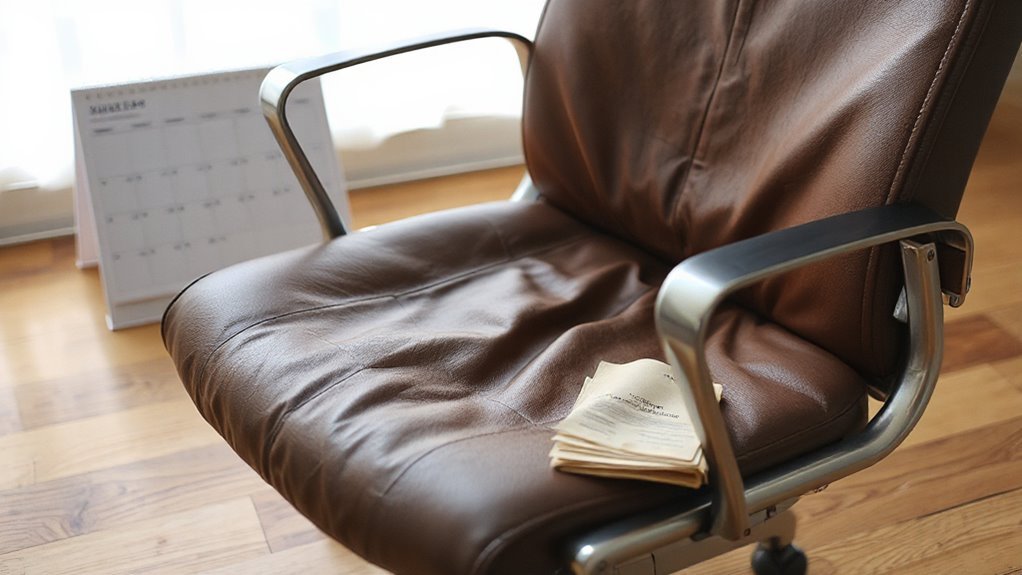
Most office chairs have an average lifespan of 5 to 10 years, influenced by quality and usage intensity. High-quality chairs, crafted from durable materials, can last 12 to 15 years with proper care.
In contrast, entry-level models typically last around 3 to 5 years, sometimes shorter with heavy usage. Daily use exceeding 8 hours accelerates wear, bringing the lifespan closer to the 5-year mark.
Maintenance plays an essential role; regular cleaning and timely repairs can extend longevity. Additionally, chairs with metal frames and high-density foam cushions provide better durability than plastic models.
Environmental factors, such as sunlight and humidity, can also impact material degradation, reducing overall lifespan. Prioritizing quality and care guarantees your chair remains functional longer.
Health and Safety Risks
Office chairs, while designed for comfort, can pose considerable health and safety risks if not regularly assessed for wear and functionality.
Musculoskeletal disorders (MSDs) account for about 54% of serious workers’ compensation claims, with low back pain being particularly prevalent. Poor posture considerably increases your risk of missed workdays. Prolonged sitting, especially over eight hours, heightens your chances of heart disease and metabolic syndrome.
Ergonomic deficiencies, such as mismatched desk and chair heights, lead to discomfort and productivity loss. Additionally, chair-related falls remain a major concern, with office workers being 2.5 times more likely to experience disabling falls.
Regularly inspecting your chair for ergonomic design and functionality can mitigate these serious health risks.
Frequently Asked Questions
How Can I Maintain My Office Chair’s Longevity?
To maintain your office chair’s longevity, clean upholstery weekly using appropriate methods, like vacuuming fabric or wiping leather with a damp cloth.
Lubricate moving parts every six months and check screws for tightness.
Rotate seat cushions to distribute wear evenly.
Use chair mats on carpeted floors and guarantee users adhere to weight limits.
Schedule regular inspections to catch damage early, and document maintenance activities to guarantee consistent care and performance.
What Are the Best Materials for Office Chairs?
Mesh offers breathability and ergonomic support, contouring to your body.
Fabric, like polyester, is durable and stain-resistant but requires regular vacuuming.
Leather provides a luxurious feel and durability, while faux leather is a budget-friendly alternative.
Plastic is lightweight and affordable, though less durable.
Metal bases guarantee strength and longevity, suitable for heavy use.
Each material has unique benefits, so consider your needs before making a choice.
Should I Choose a Chair With Wheels or a Stationary Base?
When deciding between a chair with wheels or a stationary base, consider your workspace needs.
If you frequently shift between tasks, a wheeled chair enhances mobility, allowing easy access to equipment. For static environments, like conference rooms, a stationary chair offers stability.
Ergonomically, wheeled chairs typically provide better adjustability, reducing strain. However, if noise is a concern, stationary options are quieter.
Assess your environment to choose the best fit for your work style.
How Do I Properly Clean My Office Chair?
To clean your office chair, start by vacuuming it thoroughly, focusing on seams and crevices.
Wipe surfaces with a dry microfiber cloth.
For stains, mix mild dish soap with lukewarm water, gently blotting the area.
Clean armrests and the base using a rubbing alcohol solution.
Finally, deodorize with equal parts white vinegar and water, allowing the chair to air dry completely.
This process helps maintain the chair’s appearance and longevity.
Can I Customize My Office Chair for Better Ergonomics?
Yes, you can customize your office chair for better ergonomics.
Adjustable height lets you keep your feet flat on the floor, while seat depth adjustments provide ideal leg support.
Integrated lumbar support maintains your spine’s natural curve, reducing pressure.
Memory foam conforms to your body for comfort.
Additionally, customizable armrests allow for height and width adjustments.
Investing in a mesh design enhances airflow, ensuring long-term comfort during extended use.
Conclusion
In summary, replacing your office chair is essential for maintaining productivity and comfort.
If you notice signs of wear, experience discomfort, or encounter mechanical issues, it’s time to contemplate a new chair.
The average lifespan of an office chair ranges from five to seven years, depending on usage and quality.
Prioritize your health and safety by investing in a chair that provides proper support and adjustability.
Don’t wait too long; the right chair can greatly enhance your work environment.