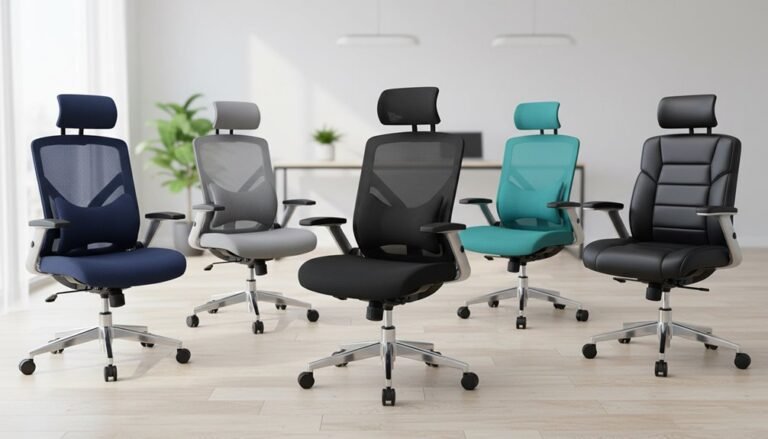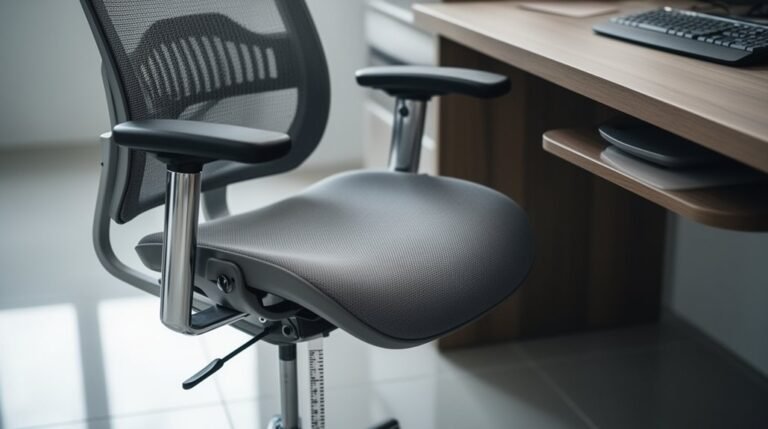
Gaming Chair Vs Office Chair: Which Is More Ergonomic?
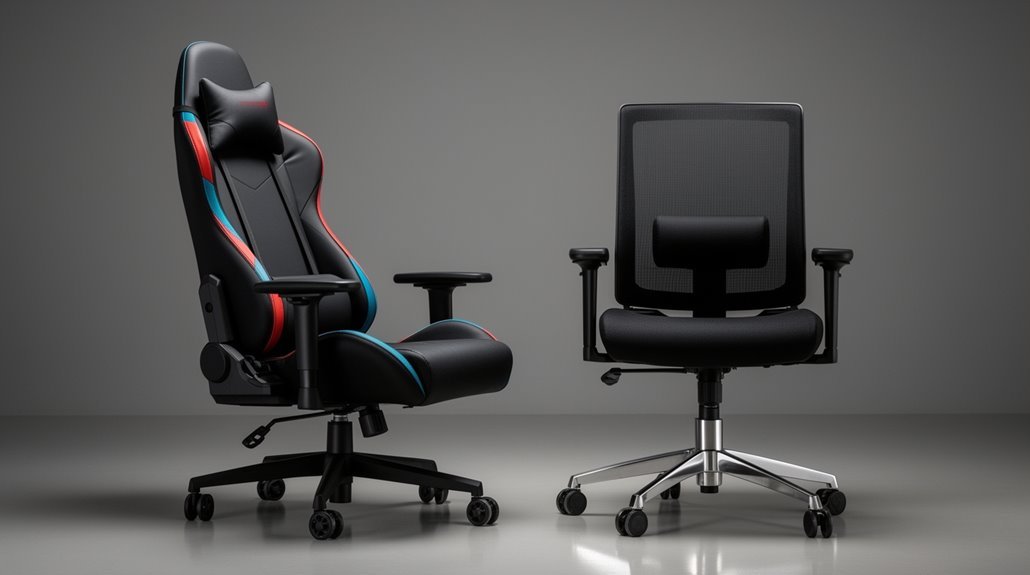
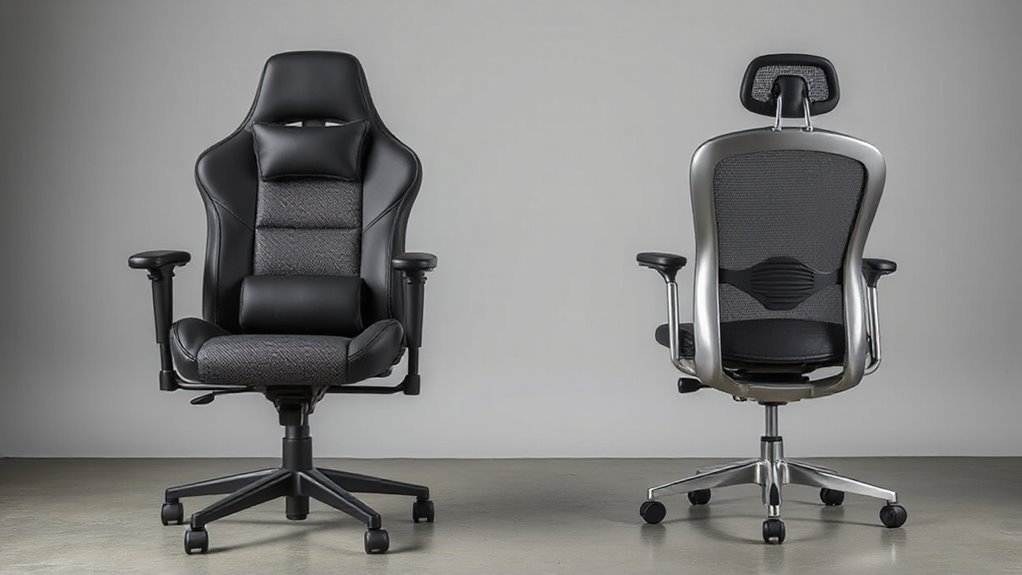
Gaming chair vs office chair: which is more ergonomic? Generally, office chairs offer superior ergonomic features. When considering office chair design advantages, one can find a variety of features aimed at enhancing comfort and support during long hours of work. Many office chairs are designed with adjustable components that allow for a customized fit, catering to the individual’s needs. This adaptability often leads to better posture and reduced strain compared to standard gaming chairs.
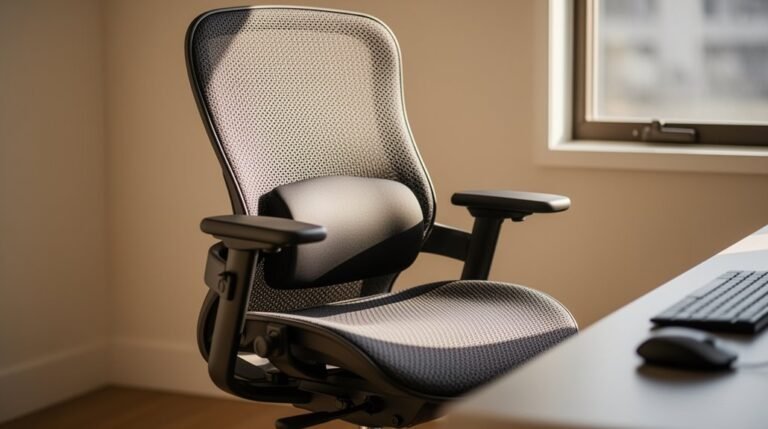
Office chairs typically provide adjustable lumbar support that promotes spinal alignment and helps reduce back pain. They’re designed for long-term use and often include multiple adjustment points to fit different body dimensions.
Gaming chairs tend to rely on fixed lumbar pillows that may not provide consistent support for every user. While they can feel comfortable initially, they don’t always deliver the same level of sustained ergonomic relief.
In short, gaming chairs can be cozy at first, but office chairs usually focus on long-term ergonomic effectiveness and preventing discomfort during extended periods of sitting.
Ergonomic Design Features
When choosing between a gaming chair and an office chair, ergonomic design features play an essential role in your comfort and health. Both types offer lumbar support, which is critical for maintaining the natural spinal curve. Adjustable lumbar support cushions or built-in systems help prevent lower back pain. Ergonomic chairs are essential for serious gamers to prevent discomfort during extended gaming sessions.
Advanced systems, like 4-way L-ADAPT™, allow movement to customize spinal support. Proper lumbar support reduces muscle strain and back fatigue. Additionally, head and neck support is important. Gaming chairs often feature adjustable headrests or neck pillows, alleviating neck strain during prolonged use. Lastly, seat comfort matters. Features like waterfall edges and high-density cushioning improve circulation, while cooling materials reduce heat buildup. These design elements collectively enhance your sitting experience, whether gaming or working.
Adjustability and Customization
Adjustability defines the usability of gaming and office chairs, impacting comfort and posture during extended periods of sitting.
Gaming chairs feature limited adjustability, often restricted by rigid metal frames and side bolsters. This design can hinder your movement and range of motion.
In contrast, office chairs incorporate flexible frames and open back designs, allowing you to reposition throughout the day. Office chairs typically offer extensive adjustment mechanisms that cater to individual needs, including seat height, armrest positioning, and seat depth.
Gaming chairs lack seat depth adjustments, forcing you to fit the chair instead of the chair accommodating your body.
Lumbar and Back Support Comparison
Understanding lumbar and back support is essential for maintaining comfort during extended periods of sitting.
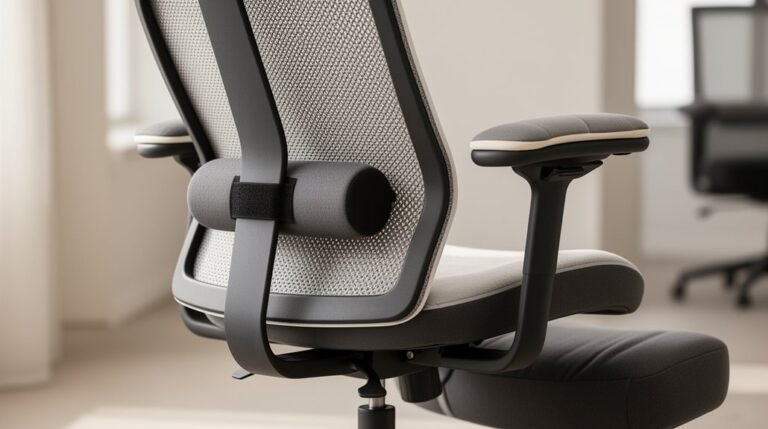
- Gaming chairs often use detachable lumbar pillows that may shift or flatten, reducing support effectiveness.
- Office chairs feature built-in, adjustable lumbar systems designed for consistent support, allowing fine-tuning to fit individual needs. Additionally, ergonomic designs in office chairs are specifically crafted to enhance spinal alignment during long hours of use.
- Backrest shapes differ markedly; gaming chairs typically have flat or slightly curved backrests, while office chairs use contoured designs that promote better spinal alignment.
Comfort and Padding Differences
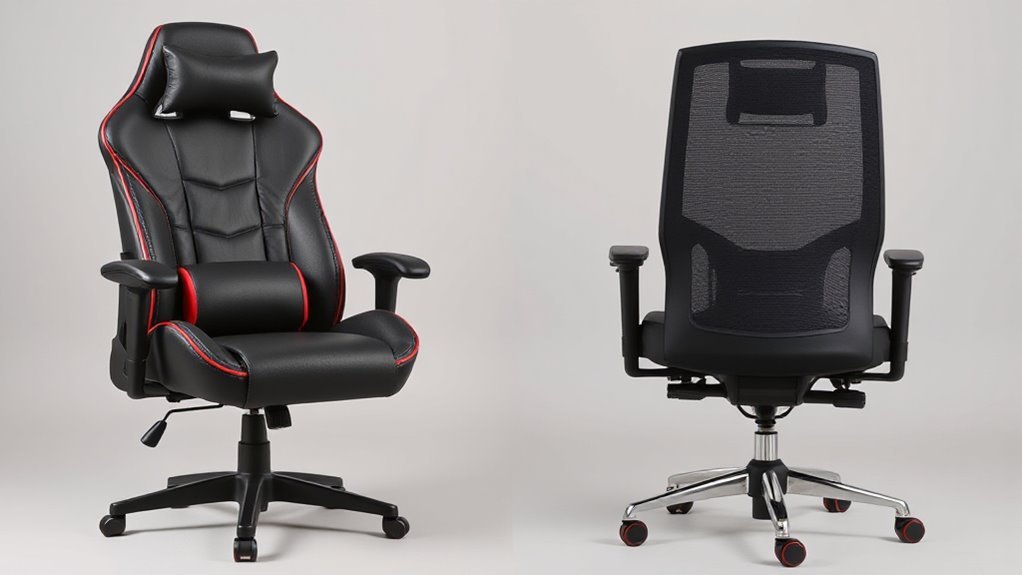
While both gaming and office chairs aim to provide comfortable seating, their padding materials and designs greatly influence user experience.
Gaming chairs typically use memory foam and extra cushioning for immediate comfort, ideal for short sessions. However, this can create pressure points and restrict circulation during extended use.
In contrast, office chairs employ high-density foam, which maintains support over long hours without excessive softness, promoting better weight distribution. This design helps prevent pressure point formation and offers firmer support.
While gaming chairs excel in initial coziness, office chairs prioritize sustained comfort, ensuring spinal health by preventing users from sinking too deeply into the padding.
Consequently, office chairs are more suitable for long-term use and overall ergonomic support.
Durability and Build Quality Analysis
Durability and build quality are essential factors when comparing gaming chairs and office chairs.
- Frame Construction: Gaming chairs typically use sturdy metal frames, while office chairs often feature aluminum or steel frames. The rigidity in gaming chairs may limit movement, whereas office chairs offer flexibility.
- Materials Used: Gaming chairs commonly employ PU leather or fabric, which can degrade faster than the high-quality mesh or real leather found in office chairs.
- Base and Wheel Quality: Gaming chairs have reinforced bases and larger wheels, built for dynamic use. Office chairs, however, utilize heavy-duty casters optimized for smooth rolling on various surfaces.
Understanding these aspects will help you choose a chair that meets your durability and build quality expectations.
Health Impacts of Long-Term Use
When evaluating the health implications of long-term use, ergonomic design plays a pivotal role in your overall comfort and well-being.
Office chairs support neutral spine alignment, reducing chronic back pain risk. Their adjustable lumbar support and seat depth allow you to maintain ideal posture. In contrast, gaming chairs often use fixed lumbar pillows, which can flatten over time, compromising support.
Additionally, office chairs promote dynamic sitting, encouraging movement and reducing muscle stiffness. Their breathable materials enhance blood circulation, while gaming chairs’ thick padding can restrict flow, leading to discomfort.
Ultimately, office chairs offer superior adjustability and ergonomic features that lower the likelihood of chronic pain and musculoskeletal issues, ensuring better long-term health outcomes compared to gaming chairs.
Recommendations for Choosing the Right Chair
To select the right chair, you should prioritize features that enhance comfort and support your body. Focus on adjustable elements that cater to your specific needs.
Consider the following:
- Seat Height: Choose a seat height adjustment range between 16”–22” for proper fit.
- Backrest Support: Look for adjustable backrests and lumbar support to maintain your spine’s natural curve.
- Armrest Adjustability: Make sure armrests allow for height, width, and pivot adjustments for ideal positioning.
Additionally, select chairs with ANSI/BIFMA X5.1 certification, guaranteeing durability and safety standards.
Remember, personal testing is essential; sit in multiple models to find the perfect fit for your unique body dimensions.
Prioritize comfort, support, and adjustability to enhance your sitting experience.
Frequently Asked Questions
Can Gaming Chairs Be Used for Office Work?
Yes, you can use gaming chairs for office work. They offer adjustable features like seat height, armrests, and recline, which support basic ergonomic needs.
However, entry-level models may lack precise adjustments for long sessions, like seat depth and advanced lumbar support. High-end gaming chairs can compete with office chairs regarding productivity.
While they provide immediate comfort, they mightn’t sustain support for extended use due to softer cushioning.
Are There Hybrid Chairs That Combine Features of Both?
Yes, there are hybrid chairs that blend features from both gaming and office chairs.
These designs incorporate adjustable lumbar support, 4D armrests, and breathable materials for prolonged comfort. They often feature high-density foam for durability and tension controls for reclining.
Models like the Cooler Master Hybrid 1 provide customization options, promoting better posture and reducing strain during long hours.
The aesthetic combines professional and gaming styles, fitting various environments seamlessly.
How Do Gaming Chairs Affect Posture During Gaming Sessions?
Gaming chairs greatly influence your posture during gaming sessions. They provide adjustable lumbar support, maintaining your spine’s natural curve and reducing slouching.
The high backrest promotes upright seating, while proper backrest angles minimize strain on your back. You experience greater postural variability, allowing for shifts that accommodate different body types.
Additionally, adjustable armrests support repetitive movements, lowering muscle stiffness and preventing discomfort during extended gameplay.
What’s the Price Difference Between Gaming and Office Chairs?
Gaming chairs typically range from $100 to over $500, featuring aesthetic designs and basic functionality.
Office chairs, however, start around $100, with mid-range models priced between $300 and $800. Premium office chairs can exceed $1,500, emphasizing durability and ergonomic features.
Do Chair Colors and Designs Impact Ergonomic Benefits?
Chair colors and designs greatly affect ergonomic benefits.
Blue and grey tones promote calmness, enhancing focus during prolonged use. Aesthetic choices, like softer colors, improve comfort perception.
Ergonomic features prioritize spine alignment and posture support, but the design can influence user experience. The materials used, such as foam and mesh, also contribute to comfort levels.
Ultimately, the combination of color and design affects overall usability and comfort during extended sitting.
Conclusion
In the end, choosing between a gaming chair and an office chair depends on your specific needs.
Think of the gaming chair as a race car, designed for speed and excitement, while the office chair resembles a sturdy commuter, built for endurance and comfort.
Both offer unique ergonomic features. Prioritize adjustability, lumbar support, and durability.
Ultimately, the right chair enhances your productivity and promotes your well-being, allowing you to navigate your tasks with ease, much like a well-tuned vehicle on a smooth road.