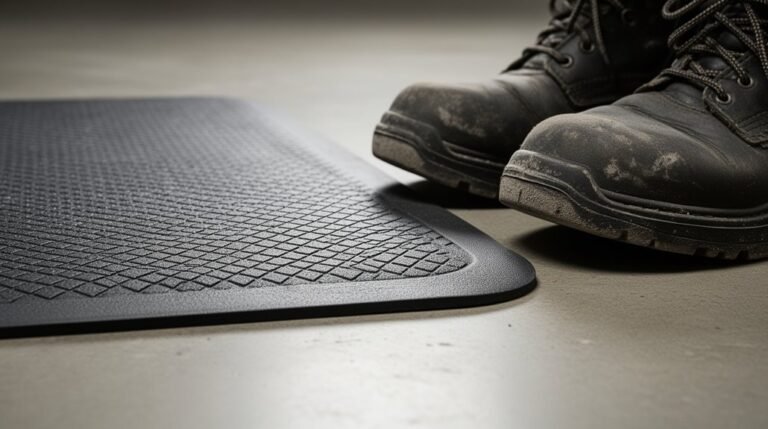
How to Use an Anti-Fatigue Mat Safely
To use an anti-fatigue mat safely, choose one suited to your workspace — for example, rubber mats for heavy-use areas. The benefits of antifatigue mat usage are significant, especially for individuals who spend long hours standing. These mats can reduce discomfort and fatigue, promoting better posture and increased productivity throughout the day. Additionally, they can help prevent injuries by providing necessary support to your feet and joints.
Position mats carefully, securing edges to prevent slips and avoiding overlaps. Make sure mats have appropriate thickness and firmness; medium firmness often provides the best support.
Inspect mats regularly for wear or damage. Clean them daily with mild soap and pH-balanced water to maintain hygiene and surface traction.
Following these practices helps enhance safety and wellness. There is more to learn about best practices and compliance.
Selecting the Right Anti-Fatigue Mat
When choosing an anti-fatigue mat, it’s important to take into account several key factors to guarantee ideal comfort and support.
Material Selection
Rubber mats excel in elasticity and shock-absorption, making them suitable for heavy use. Nitrile rubber offers durability for high-traffic areas.
For lighter applications, foam mats work well. PVC foam mats are affordable and resistant to grease, ideal for kitchens.
Thickness Considerations
Mats range from 1/8 inch for light use to 1 inch for maximum cushioning. Common professional thicknesses include 3/8 inch, 9/16 inch, and 3/4 inch, which balance comfort and practicality.
Firmness and Support Balance
Aim for medium firmness to maintain balance and support. Closed-cell foam construction provides cushioning without compromising stability, preventing strain during prolonged standing.
Installation and Placement Guidelines
Effective installation of anti-fatigue mats requires careful planning and attention to detail.
First, schedule the installation date and assign trained personnel for effective management. Remove any old mats to prevent uneven surfaces.
Thoroughly clean the area by sweeping and mopping to eliminate debris, oil, and residues. Ascertain the floor is dry and level to avoid deformation. Regular cleaning should also be scheduled to maintain mat longevity and safety.
Position mats according to a pre-determined layout, focusing on work areas with prolonged standing. Avoid overlapping or stacking mats, as this creates trip hazards.
Use non-slip products, like industrial-strength double-sided tape, around edges to secure mats.
Finally, document mat locations and any modifications for future reference, ascertaining compliance with safety standards and ergonomic assessments.
Maintenance and Inspection Practices
Regular maintenance of anti-fatigue mats is essential for ensuring their performance and longevity. Sweep or dry-mop mats daily to eliminate dirt and dust. For deeper cleaning, use a mild soap with a pH between 4 and 9, and avoid machine washing, which can degrade material integrity. Clean with hot water between 120°F and 140°F for effective grease removal. Always allow mats to dry completely, laid flat, to prevent slipping hazards. Conduct visual inspections for tears, cracks, or signs of wear, and monitor cushioning; flat mats need replacement. Mitigating discomfort is crucial for maintaining a productive work environment, as it helps employees remain comfortable during extended periods of standing. Store mats rolled in a dry, ventilated area, and keep them free from heavy objects. Adjust cleaning frequency based on foot traffic to maintain hygiene and prolong mat life.
Ergonomic and Health Benefits of Anti-Fatigue Mats
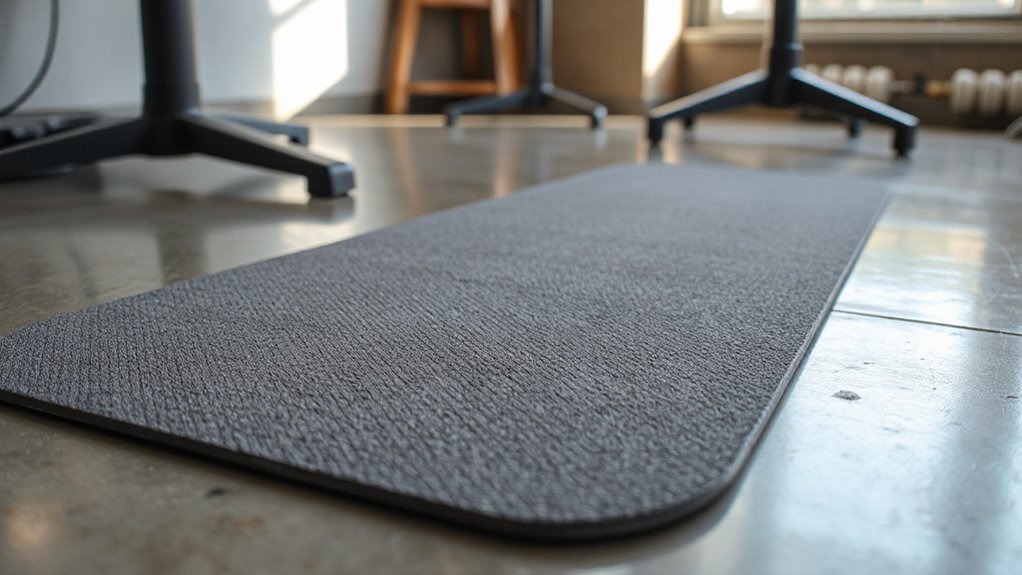
Anti-fatigue mats play an essential role in enhancing worker comfort and health during prolonged standing.
These mats promote subtle body sway, encouraging micro-movements in your calf and leg muscles, which enhances blood flow and prevents pooling. Their cushioning underlays evenly distribute body weight, minimizing pressure on your feet and joints. This design balances softness and firmness, supporting your muscles effectively.
Improved circulation reduces stiffness and soreness, helping to avoid conditions like varicose veins and plantar fasciitis. By decreasing joint pressure by up to 50%, these mats lower the risk of long-term musculoskeletal disorders.
Ultimately, they enhance your posture and reduce discomfort, contributing to better overall work performance and job satisfaction.
Identifying Common Safety Hazards
Identifying common safety hazards is essential for maintaining a safe workplace environment. Curling edges on mats can create trip risks, particularly when mats absorb fluids. Regularly inspect mats for tears or curling borders to avoid accidents.
Guarantee mats fit properly; small or poorly shaped mats force workers to step on and off, increasing fall risks. Avoid using multiple small mats which can create uneven surfaces. Contaminants like dirt or chemicals can reduce traction, making mats slippery.
Finally, monitor mat wear and degradation; low-quality materials compress quickly, diminishing their ergonomic support. Proper placement is critical—install mats on stable, even surfaces to prevent instability and injuries.
Regular maintenance and replacement of mats are essential for safety.
Mitigating Risks Associated With Anti-Fatigue Mats
To enhance workplace safety, you must carefully consider the selection and maintenance of anti-fatigue mats.
Choose mats suited to your specific work environment, whether dry, wet, or oily. Select appropriate thickness, ideally around 9mm for continuous use, guaranteeing that mats are firm yet stable. Prefer non-slip surfaces and beveled edges to minimize slips and trips.
Inspect mats monthly for wear, and replace them when they show signs of damage. Maintain cleaning protocols, sweeping daily and using mild detergent weekly. Avoid stacking mats, as this can lead to instability.
Ascertain mats fit the designated areas completely, preventing awkward postures that may increase musculoskeletal disorder risks. Following these guidelines will help mitigate risks effectively.
Compliance With Workplace Safety Regulations
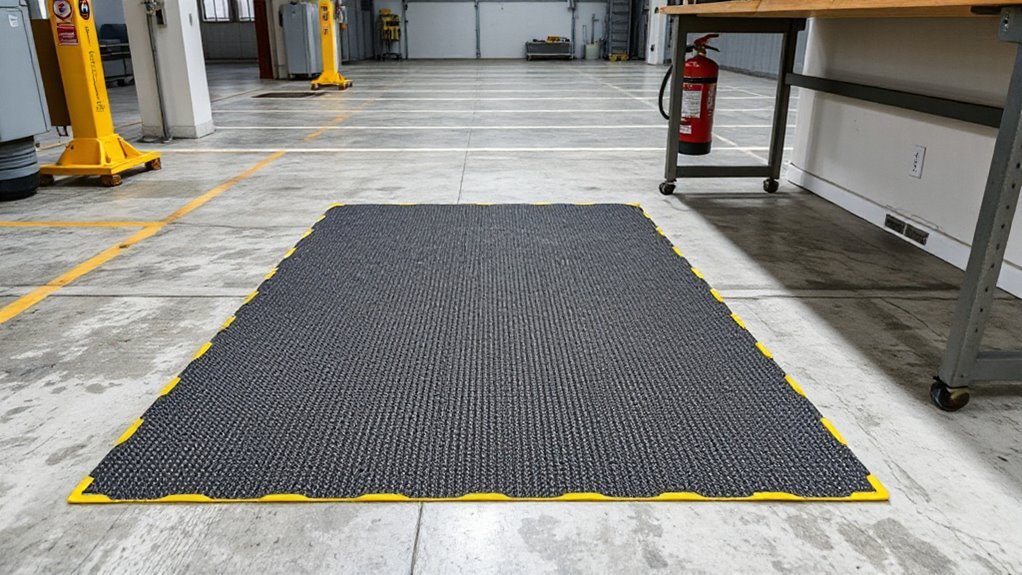
Selecting and maintaining anti-fatigue mats can play a significant role in adhering to workplace safety regulations. While OSHA doesn’t mandate these mats, they recognize their effectiveness in preventing musculoskeletal disorders caused by prolonged standing.
Employers must identify ergonomic risks and implement solutions, like anti-fatigue mats, to comply with OSHA’s general duty clause.
Documentation of mat selection, placement, and inspections is essential for compliance during audits. Regular ergonomic risk assessments are important to justify mat installation.
Training employees on proper mat use, cleaning, and hazard awareness further supports safety efforts. Compliance with ANSI standards on slip resistance is critical, ensuring mats are designed to minimize slip and fall incidents, enhancing workplace safety overall.
Best Practices for Usage
When using anti-fatigue mats, proper selection and placement are essential for maximizing their effectiveness.
Choose materials based on your environment—foam suits dry areas, rubber is ideal for wet settings, and vinyl offers durability. Opt for a thickness of at least 9 mm for continuous standing; thicker mats serve heavy-duty environments better.
Ascertain the surface is non-slip and fits the workspace to prevent trip hazards. Lay mats flat on clean, dry surfaces, aligning edges flush with work areas.
Position them where you stand the most, like assembly lines or checkout counters. Encourage subtle movement to activate your muscles, and keep the surrounding area clean to minimize slip risks.
Regularly inspect mats for wear and replace them as needed.
Documenting Maintenance and Inspection Routines
Documenting maintenance and inspection routines for anti-fatigue mats guarantees longevity and safety in your workspace.
Start by establishing daily logs to track cleaning frequency and methods. Record the date, time, and cleaning products used for accountability. Note environmental factors like foot traffic levels and exposure to oils.
Conduct monthly inspections to identify damages or wear, rotating mat positions every three months. Schedule weekly deep cleanings with hot water and mild detergent, documenting results.
Track signs of compression, holes, or fraying edges needing repairs. Maintain records of cleaning methods, including water temperature and pH levels of detergents.
Finally, monitor mat condition scores to establish replacement timelines, ensuring your workspace remains safe and effective.
Frequently Asked Questions
Can I Use Anti-Fatigue Mats on Carpeted Floors?
Yes, you can use anti-fatigue mats on carpeted floors. They perform effectively on both hard and carpeted surfaces, particularly on flat to low pile carpets.
To enhance stability, consider using a rug pad beneath the mat. Rubber materials offer ideal durability and elasticity for carpeted applications.
Regular maintenance, such as cleaning and inspections, guarantees longevity and preserves the mat’s cushioning properties.
Avoid placing heavy objects on the mat to maintain its structural integrity.
How Long Should Anti-Fatigue Mats Last?
Anti-fatigue mats typically last between 1 to 3 years, depending on their material.
Urethane mats can endure over 5 years, while PVC sponge mats usually last 6 to 12 months.
Mats made from blended PVC-nitrile rubber last about 3 to 5 years.
High foot traffic, exposure to chemicals, and maintenance practices greatly affect lifespan.
Signs of wear include flattening and loss of cushion.
Selecting the right size and thickness can enhance durability.
Are Anti-Fatigue Mats Suitable for Outdoor Use?
Yes, anti-fatigue mats can be suitable for outdoor use, provided they’re made from durable materials like rubber or polyurethane.
These materials resist weather elements and temperature changes, ensuring longevity. Waterproof designs prevent water accumulation, reducing slip hazards. Mats with drainage features manage moisture effectively, while textured surfaces aid in dirt removal.
Additionally, ergonomic support in outdoor-rated mats helps reduce fatigue for workers standing for long periods, enhancing comfort and safety.
Do Anti-Fatigue Mats Come in Different Colors?
Yes, anti-fatigue mats come in various colors. Many manufacturers provide 4 to 11+ color options per product line, with premium brands like GelPro offering extensive palettes.
Specialty retailers often stock over 20 distinct colors. Sizes range from 1’8″ x 3’3″ to 1’8″ x 6′, with color selections varying by size.
Certain brands, such as KitchenAid and Tempur-Pedic, feature specific color offerings, enhancing aesthetic appeal for different spaces.
Can I Customize the Size of an Anti-Fatigue Mat?
Yes, you can customize the size of an anti-fatigue mat. Major manufacturers like NoTrax and AcroMat offer various widths and lengths, including non-standard dimensions.
You can order mats cut to fit complex layouts, such as L-shapes or peninsulas. Some suppliers provide mats up to 75 feet long, ensuring full coverage in large areas.
This customization helps eliminate gaps, reduces trip hazards, and improves ergonomic support for your workspace.
Conclusion
In conclusion, using an anti-fatigue mat correctly enhances comfort and promotes well-being.
Choose the right mat based on your needs, and place it in high-traffic areas to reduce fatigue.
Regular maintenance and inspections guarantee longevity and safety.
By identifying and addressing potential hazards, you mitigate risks effectively.
Following workplace safety regulations and best practices safeguards both workers and the environment.
Prioritize these guidelines to create a supportive standing experience that benefits everyone involved.