Anti-Fatigue Mat Vs Balance Board
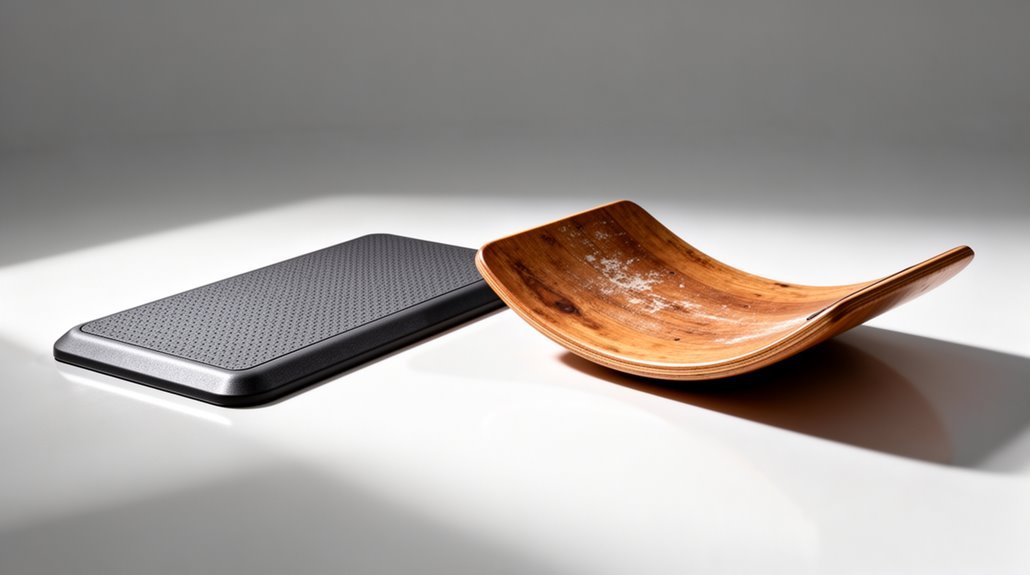
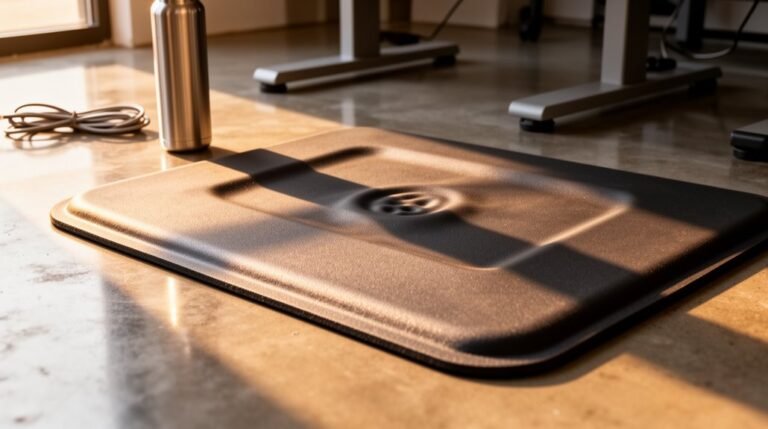
Anti-fatigue mats cushion your feet and reduce strain during long periods of standing, improving comfort and blood circulation. They lower perceived fatigue and can reduce lower back pain by up to 50%, making them a good choice for stationary tasks.
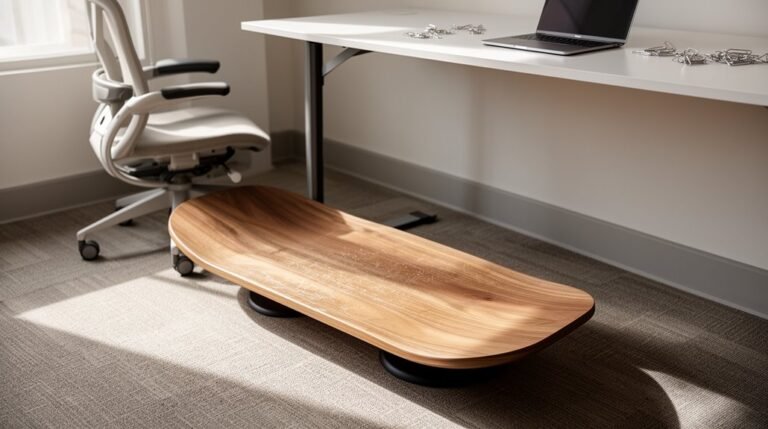
In contrast, balance boards engage your core and leg muscles, promoting active posture and stability through dynamic movement. They require ongoing adjustments and physical engagement, which can increase strength and balance over time.
Mats are stable and easy for beginners, offering passive support without needing constant attention. Balance boards are better for those seeking an active, fitness-oriented approach.
Understanding each tool’s benefits will help you choose the best option for your needs. Further insights await.
Function and Purpose Comparison
While both anti-fatigue mats and balance boards serve to enhance comfort and support during standing activities, their functions and purposes diverge considerably.
Anti-fatigue mats cushion your feet and legs, reducing strain and muscle soreness during prolonged standing. They encourage subtle movements that improve blood circulation without requiring active engagement. However, prolonged stagnation on these mats can lead to poor posture as they may lock your knees.
In contrast, balance boards promote dynamic movement by engaging your core and leg muscles continuously. They require active balancing, which helps maintain upright posture and prevents slouching. This engagement helps to alleviate restlessness while standing, making balance boards a more active choice for users.
While mats offer a resting surface, balance boards demand focus and balance control. This makes anti-fatigue mats suitable for all users, whereas balance boards are better for those seeking an integrated workout during standing tasks, emphasizing different approaches to counteracting fatigue.
Health Benefits and Physical Effects
When you stand for extended periods, using an anti-fatigue mat can greatly improve your overall health and comfort. These mats promote healthy blood flow, reducing fluid pooling in your lower limbs, which helps prevent varicose veins. Research from Loughborough University shows notable circulatory improvements with mat use compared to hard surfaces. Additionally, standing on anti-fatigue mats can decrease lower back pain by up to 50% and greatly reduce discomfort in your feet, legs, and neck during prolonged sessions. They also lower fatigue levels, with studies indicating a 50% reduction in perceived fatigue. Furthermore, studies have shown that anti-fatigue mats help in preventing health concerns associated with prolonged standing. Finally, these mats cushion impact and engage muscles, preventing chronic conditions like plantar fasciitis and lowering the risk of musculoskeletal disorders.
Ease of Use and User Experience
Anti-fatigue mats and balance boards offer distinct experiences based on user needs and preferences.
Anti-fatigue mats provide a stable surface, supporting standing with minimal challenge to balance. This ease of use makes them suitable for beginners or those preferring minimal movement. They help maintain better alignment and reduce fatigue without requiring significant postural adjustments. Additionally, the high-density core of anti-fatigue mats ensures durability over time, making them a worthwhile investment for long-term use.
In contrast, balance boards require dynamic engagement, demanding constant micro-adjustments to maintain stability. This encourages active movement and muscle activation, which can enhance focus. However, they present a steeper learning curve.
While mats are heavier and less portable, balance boards are lightweight and compact, making repositioning easier.
Versatility and Usage Scenarios
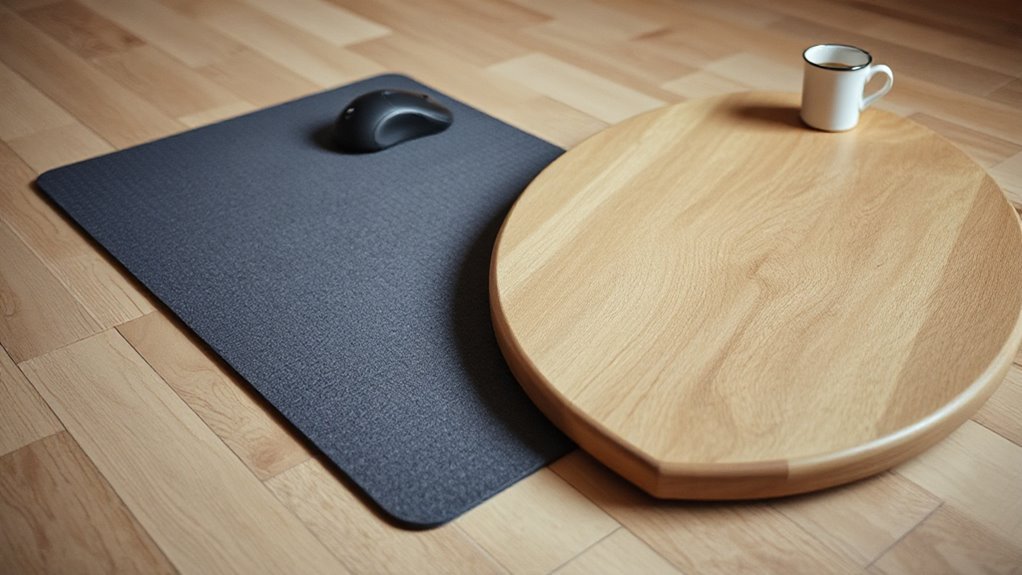
Both anti-fatigue mats and balance boards serve multiple purposes, catering to various environments and user needs.
Anti-fatigue mats excel in static settings, providing cushioning on hard surfaces, making them ideal for office use. They effectively reduce fatigue and discomfort, especially for users with balance limitations.
Balance boards, on the other hand, promote dynamic movement and engage stabilizer muscles, enhancing core strength and focus. You can use balance boards in gyms or home offices, where they support physical activity.
Some models combine both features, offering anti-fatigue cushioning while allowing for balance training. This versatility lets you alternate between static comfort and active engagement, accommodating diverse user preferences and physical capabilities.
Material and Design Differences
Understanding the material and design differences between anti-fatigue mats and balance boards is essential for selecting the right product for your needs.
Anti-fatigue mats commonly feature materials like rubber, vinyl, and polyurethane, designed for cushioning and durability. Their layered structures absorb shock, while textured surfaces enhance slip resistance.
In contrast, balance boards utilize rigid materials such as molded plastic or wood. They promote stability and controlled instability, engaging your muscles during use. Their surfaces often incorporate non-slip textures for safety, and designs prioritize impact resistance over cushioning.
While mats cater to comfort and support, balance boards focus on dynamic movement and muscle engagement, making your choice dependent on your specific requirements and intended usage.
Impact on Posture and Injury Prevention
When considering the impact on posture and injury prevention, the differences between anti-fatigue mats and balance boards become evident.
Posture Benefits
- Balance boards encourage active engagement of core muscles, promoting upright alignment.
- Anti-fatigue mats provide a cushioned surface that supports the feet, but may lead to poor posture if you’re not mindful.
Injury Prevention
- Balance boards activate stabilizing muscles, reducing the risk of joint injuries and enhancing balance.
- Anti-fatigue mats cushion joints and minimize foot fatigue, preventing issues like plantar fasciitis.
Both options improve posture compared to hard floors, yet balance boards offer more active correction.
Ultimately, your choice may depend on whether you prioritize dynamic engagement or cushioned support in your standing routine.
Choosing the Right Option for Your Needs
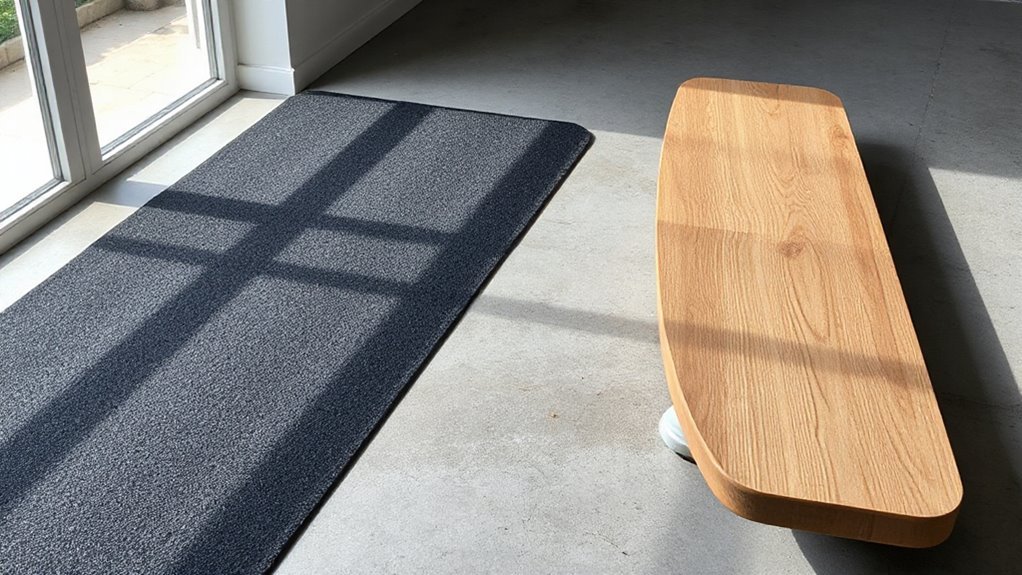
How do you determine which option best suits your standing routine? First, assess your comfort needs.
Anti-fatigue mats provide cushioned support, ideal for prolonged standing, reducing muscle soreness and improving circulation. They suit various tasks without requiring balance skills. proper cleaning techniques for antifatigue mats are essential to maintain their effectiveness and longevity. Regular cleaning not only removes dirt and bacteria but also ensures that the mats retain their cushioning properties. Employing the right cleaning solutions can extend the life of the mats and keep them looking new. When selecting the right mat for your workspace, consider best practices for using mats to enhance comfort and safety. Choosing the appropriate size and material can significantly affect their effectiveness in reducing fatigue. Additionally, regularly cleaning and maintaining your mats will prolong their lifespan and ensure they continue providing optimal support.
If you desire fitness benefits, consider a balance board. These engage your muscles dynamically, enhancing focus and agility, but may lead to quicker fatigue and require more concentration.
Evaluate your workspace; mats are portable and versatile, while balance boards need dedicated space.
Finally, think about your goals: if you prioritize sustained comfort during long hours, mats are preferable. For active engagement and fitness, choose balance boards, or combine both for a holistic approach that maximizes benefits.
Frequently Asked Questions
Can Anti-Fatigue Mats Be Used on Carpeted Surfaces?
Yes, anti-fatigue mats can be used on carpeted surfaces. They perform best on flat to low pile carpets, as high pile may affect stability.
Using a rug pad underneath enhances grip and prevents slipping. Look for mats with skid-resistant backings, beveled edges, and durable materials like rubber or polyurethane.
These features help maintain ergonomic support, reduce fatigue, and guarantee safety, making them suitable for various carpeted workspaces.
Regular maintenance is also recommended.
How Long Should I Stand on a Balance Board?
To maximize benefits, stand on a balance board for 10-15 minutes initially.
Gradually increase to 15-30 minutes per session as your balance improves.
Use the board intermittently, alternating with sitting to prevent fatigue.
Choose boards with a tilt angle below 10° for comfort during longer sessions.
Monitor your endurance and adjust standing time based on personal comfort and posture, ensuring you engage your core and maintain a soft bend in your knees.
Are Anti-Fatigue Mats Machine Washable?
Yes, many anti-fatigue mats are machine washable. Typically, these mats feature durable surfaces like polyurethane, allowing for easy cleaning.
They often include non-slip backing, ensuring stability post-wash. Benefits include improved hygiene and extended lifespan, as washing removes dirt and allergens.
However, follow care instructions to avoid damaging cushioning materials. Some mats require gentle cycles and air drying to maintain their integrity, while not all mats offer washability.
Can Balance Boards Improve Athletic Performance?
Yes, balance boards can improve athletic performance. They enhance neuromuscular coordination, leading to better stability and agility.
Training on these boards activates core muscles, improving posture and control during movements. Research shows they can reduce injury risks, such as ankle sprains, by enhancing proprioception and joint stability.
Additionally, balance boards boost reaction times and spatial awareness, directly contributing to improved performance in sports requiring dynamic balance and quick adjustments.
What Is the Typical Lifespan of an Anti-Fatigue Mat?
The typical lifespan of an anti-fatigue mat ranges from 1 to 3 years for high-quality versions.
Under heavy use, some mats might need replacing in just 6 to 12 months.
Factors like material composition, thickness, and exposure to harsh conditions directly influence durability.
Regular maintenance can extend usability.
For instance, mats made of pure nitrile rubber foam can last up to 5 years, making them a worthwhile investment for high-traffic areas.
Conclusion
In conclusion, choosing between an anti-fatigue mat and a balance board depends on your needs and preferences.
An anti-fatigue mat provides comfort during prolonged standing and helps reduce fatigue.
A balance board, in contrast, enhances stability and engages core muscles.
Each serves a distinct purpose—comfort versus active engagement—so evaluate your workspace, activity level, and health goals to pick the best option for promoting well-being and productivity.