How to Use a Footrest Correctly
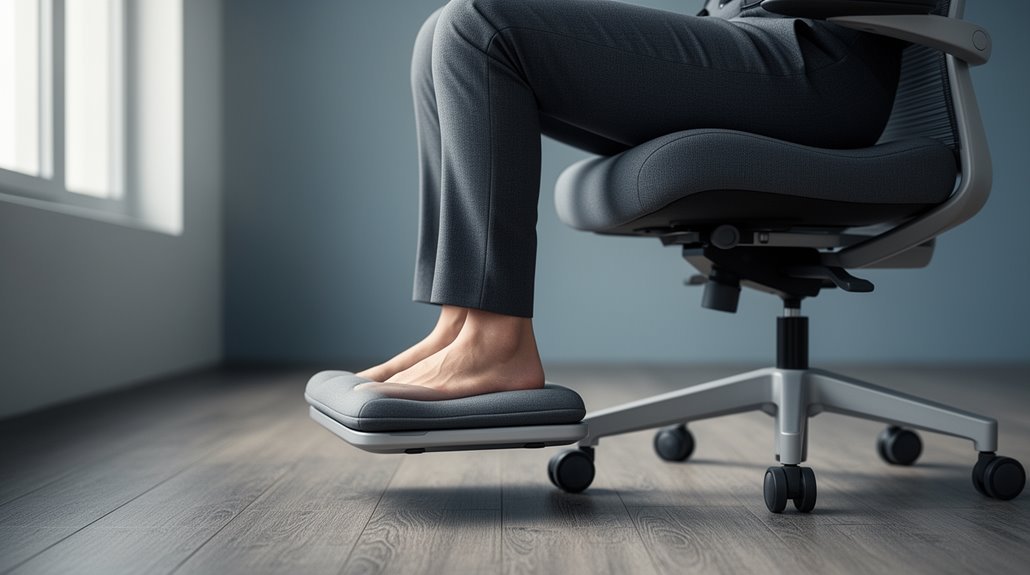
To use a footrest correctly, adjust its height so your knees form a 90-degree angle when seated. Your feet should rest flat, with heels slightly behind your knees to support your lumbar curve.
Position a footrest angled between 15 and 30 degrees to improve circulation. If you’re using a standing workstation, shift your weight periodically and keep your knees slightly bent.
Following these guidelines enhances comfort and posture. You’ll also discover additional insights into effective footrest usage as you try different positions and angles.
Understanding Proper Height Adjustment
When you sit down to work, adjusting your footrest to the correct height is essential for comfort and health. Start by ensuring your knees form approximately 90-degree angles when seated, with your back against the chair. Your hamstrings should lie flat on the seat, while your calves lightly touch the chair without pressing into it. Proper foot positioning is crucial for overall ergonomics and can significantly enhance your comfort during long working hours. Aim for a footrest height between 3 to 7 inches from the floor, measured from your seated position. Your feet should rest comfortably on the footplate, not dangling in the air.
Achieving Optimal Foot Positioning
To achieve ideal foot positioning, make certain your feet rest flat on the footrest or the floor, maintaining stability and proper alignment.
Position your heels slightly behind your knees to support your lumbar curve. Distribute your weight evenly across both feet to minimize muscle fatigue. Regularly checking your posture alignment is important to ensure continued comfort throughout the day.
Avoid crossing your legs, as this can lead to muscle tension and restrict circulation. Keep your feet in a neutral position, ensuring they aren’t pointed or excessively flexed.
Aim for your knees to be bent at approximately 90 degrees, with your hips at or slightly above knee level. This alignment helps maintain a neutral pelvis and spine, reducing the risk of discomfort and strain during prolonged sitting.
Encouraging Movement and Circulation
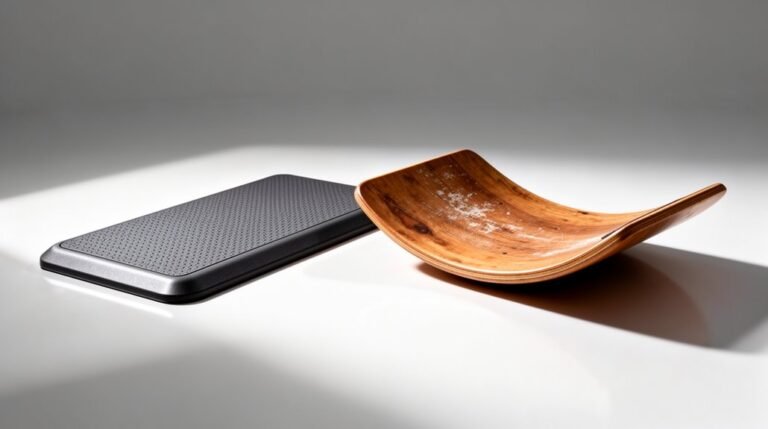
Proper foot positioning plays a significant role in promoting movement and circulation during prolonged sitting. Footrests angled between 15 and 30 degrees enhance blood flow to your feet, reducing swelling in your legs and ankles. Adjustable footrests let you customize the angle for ideal comfort and circulation. Additionally, good posture while using a footrest can inform overall body alignment, further supporting your shoulders, back, and hips. Rocking footrests encourage dynamic movement, stimulating subtle muscle contractions that promote blood flow and prevent pooling. This action helps reduce fatigue and lowers the risk of deep vein thrombosis (DVT). By engaging your lower leg muscles through micromovements, you can effectively maintain circulation and prevent sensations of numbness.
Utilizing Ergonomic Features
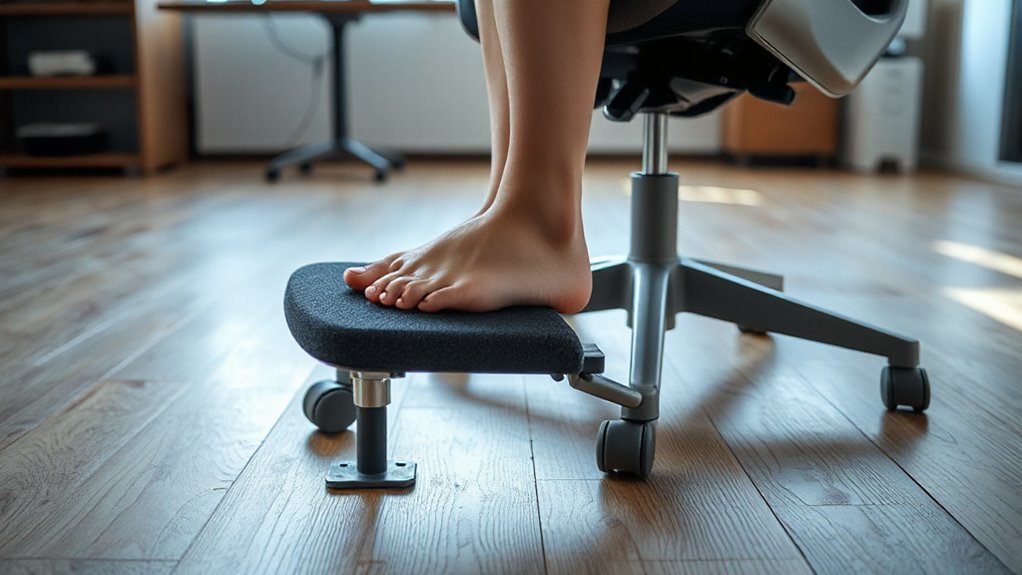
Using ergonomic features in a footrest greatly enhances comfort and promotes healthy posture during extended sitting.
Proper height adjustments keep your feet flat, with knees bent at approximately 90 degrees, supporting neutral posture. Adjustable angles accommodate varying ankle positions, preventing strain. Tilted footrests facilitate pelvis positioning, maintaining the lumbar spine’s natural curve.
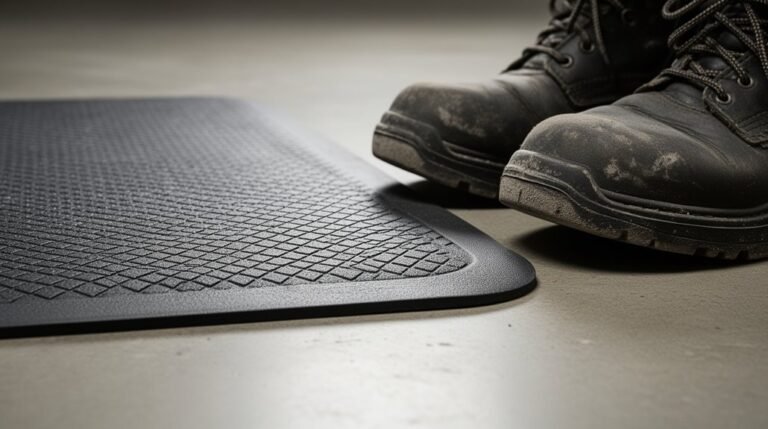
Non-skid surfaces guarantee your feet remain stable, while textured materials stimulate foot muscles for improved circulation. Features like wide platforms accommodate different foot sizes, reducing localized pressure.
Additionally, adjustable height settings allow for personalized support, especially in multi-user workstations. These ergonomic designs prevent slouching, align your knees and hips, and promote even weight distribution, ultimately reducing discomfort in the lower back and thighs.
Best Practices for Standing Workstations
While standing workstations offer numerous health benefits, implementing best practices can greatly enhance your experience.
Here are four key practices to evaluate:
- Use a Footrest: Incorporate a footrest to shift your weight periodically, reducing lower back and leg discomfort.
- Adjust Height: Set the footrest height so that your knee is slightly bent, promoting better posture and weight distribution.
- Maintain Foot Position: Position your feet comfortably on the footrest, avoiding unnatural angles to prevent strain.
- Incorporate Movement: Regularly shift your weight between legs, enhancing circulation and decreasing fatigue.
Safety and Maintenance Tips
Ensuring safety and maintenance of footrests contributes greatly to a comfortable and productive workspace.
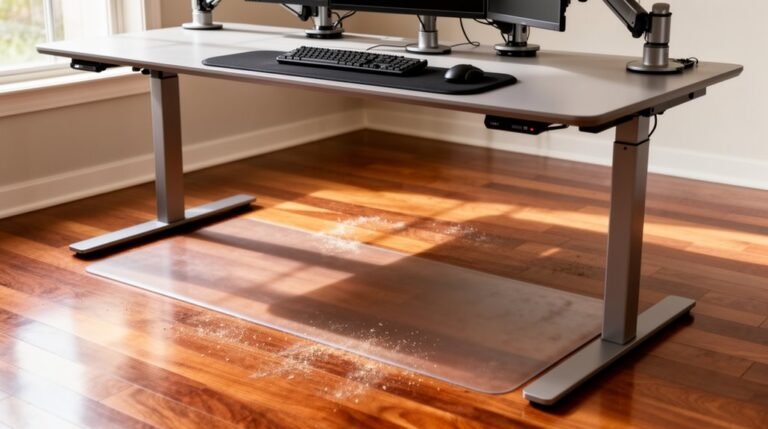
Place footrests securely to prevent sliding or wobbling, which can create tripping hazards. Maintain adequate knee and foot clearance under the desk to avoid discomfort. Use footrests with non-slip surfaces for stability, and avoid high-traffic areas to reduce collision risks. Regularly inspect footrests for sharp edges or structural damage.
For maintenance, clean surfaces frequently to prevent dust buildup. Check adjustment mechanisms for smooth operation, replacing any faulty components.
Examine non-slip pads for wear, and store footrests properly when not in use to prevent damage. Following these guidelines will enhance both safety and longevity of your footrest.
Frequently Asked Questions
Can Footrests Be Used With Any Type of Chair?
Footrests can’t be used with every chair.
Standard office chairs often accommodate independent footrests, while ergonomic models may have built-in options. Recliners typically include adjustable footrests.
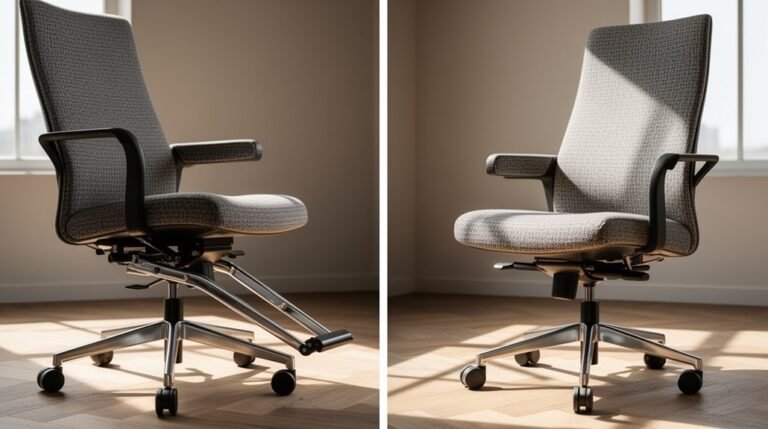
However, chairs with low seat heights, fixed heights, or bulky bases may limit footrest effectiveness. Confirm your footrest allows your feet to rest flat and knees to sit at or below hip level.
Selecting adjustable footrests can help optimize comfort and ergonomics across various chair types.
How Do I Know if My Footrest Is the Right Size?
To determine if your footrest is the right size, measure your chair seat height. Ideally, the footrest should be 1–2 cm lower than this height.
For comfort, make sure it supports your feet without overextending, allowing natural leg support. The width should accommodate your foot size without cramping. A proper fit avoids discomfort, so check that your feet rest flat without slipping off.
Adjustability can enhance your experience for peak ergonomic support.
Are There Footrests Specifically Designed for Taller Individuals?
Yes, there are footrests specifically designed for taller individuals.
These footrests feature height adjustment options, allowing customization to fit leg length. They typically have a large surface area, ensuring both feet can rest comfortably.
A tilt function encourages movement, reducing stiffness during long sitting periods. Non-slip surfaces provide stability, preventing feet from sliding.
Some models even offer removable padding for added comfort, accommodating users both with and without shoes.
What Materials Are Best for Footrests?
When selecting footrests, consider hard-wearing plastic for affordability and easy cleaning, or steel for added durability. Premium models often use ABS for impact resistance.
If comfort’s your priority, opt for foam—memory foam molds to your feet, while virgin foam provides long-lasting support.
Wooden options offer aesthetic appeal and stability, while mesh footrests enhance breathability.
Each material has unique benefits, ensuring you find the right balance between comfort, support, and longevity.
How Often Should I Replace My Footrest?
You should replace your footrest every 1 to 5 years, depending on its material and your usage intensity.
Foam or soft plastic footrests typically need annual replacement. Hard plastic models last 3 to 5 years.
Watch for signs like cracks, loss of support, increased foot fatigue, or visible wear. High-impact users may need replacements every 3 to 6 months.
Regular inspections help maintain comfort and prevent further issues.
Conclusion
To summarize, using a footrest correctly enhances comfort and promotes better posture.
Research indicates that improper foot positioning can lead to fatigue and discomfort, potentially impacting productivity.
By adjusting your footrest to the right height, making sure your feet are flat, and incorporating movement, you can improve circulation.
Regular maintenance of the footrest guarantees its effectiveness.
By following these guidelines, you’ll maximize the benefits of your footrest, contributing to a healthier workspace.