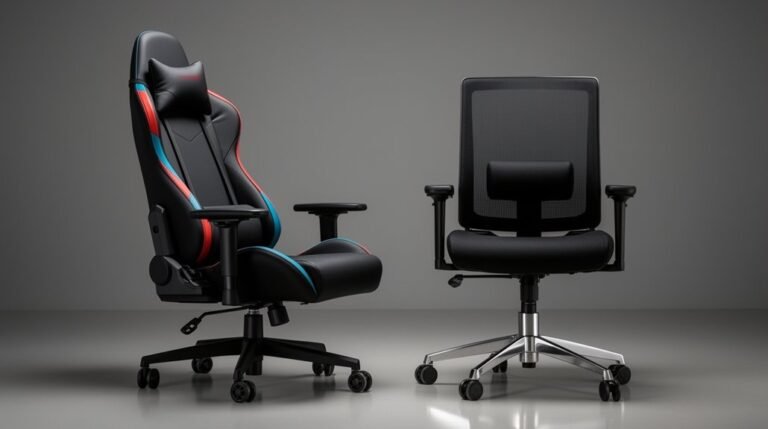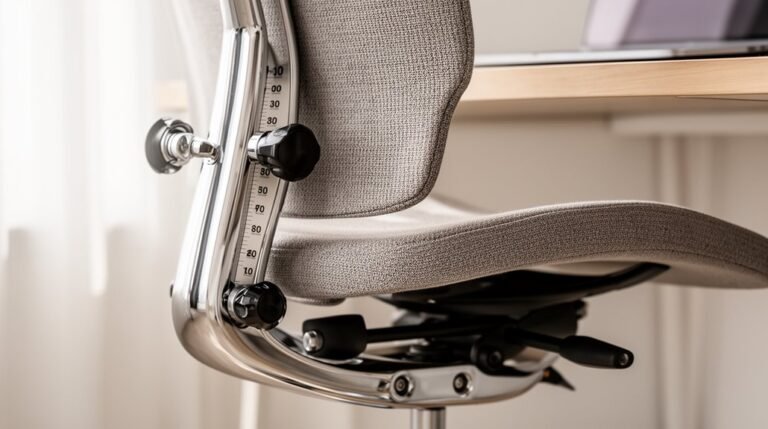
How to Clean and Maintain Your Office Chair
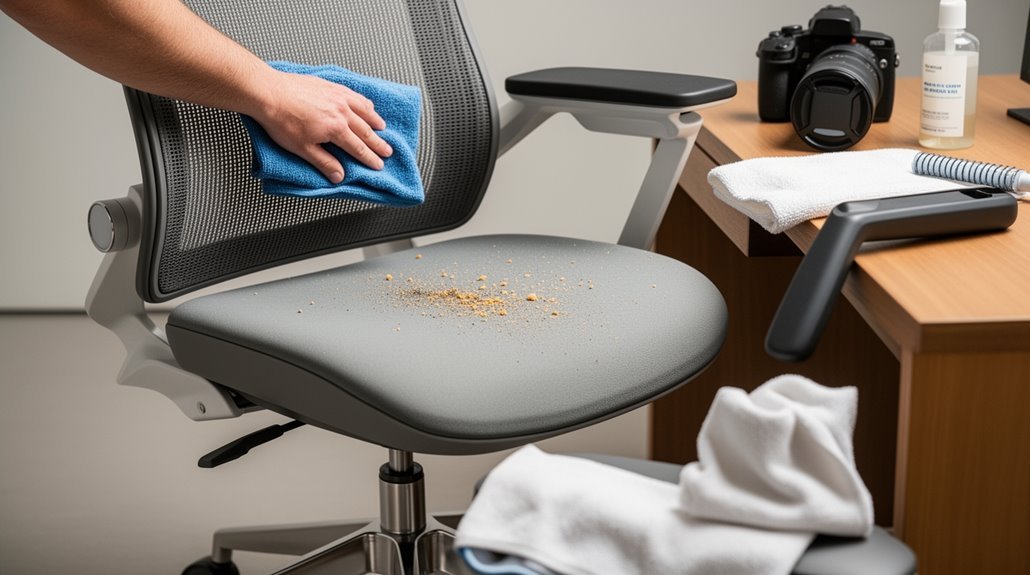
To clean and maintain your office chair, implement a weekly routine. Wipe surfaces with a dry microfiber cloth, then vacuum with the upholstery attachment.
Use material-specific methods: for fabric chairs, vacuum regularly and blot stains with a mild soap solution. For leather chairs, dust first and clean with a vinegar-and-water mix, then condition as recommended.
Inspect joints and screws monthly to ensure everything is tight and secure. Position your chair away from direct sunlight to prevent fading and material damage.
Apply lubricants to moving parts as needed to keep mechanisms smooth. You’ll discover further insights into proper maintenance practices next.
Routine Weekly Cleaning
You should clean your office chair at least once a week to prevent dirt and grime buildup.
Weekly cleaning typically takes 5–10 minutes, making it a quick yet essential task. Start by using a dry microfiber cloth to remove surface dust from the seat, backrest, and armrests.
For deeper cleaning, lightly dampen the cloth with a mild soap solution, guaranteeing you don’t saturate the fabric. Regular cleaning of office chairs promotes health and workspace hygiene.
Vacuum your chair thoroughly with an upholstery attachment, focusing on crevices, seams, and folds where dust accumulates.
Use a lint roller to remove hair and lint effectively.
After cleaning, wipe down surfaces with a clean, dry cloth and allow fabric to air dry completely before use.
Regular maintenance guarantees comfort and hygiene.
Material-Specific Cleaning Methods
When it comes to cleaning office chairs, the methods vary considerably based on the material.
For fabric chairs, vacuum the entire surface, then mix warm water with dish soap. Dampen a microfiber cloth and blot stains gently, rinsing the cloth afterward to remove soap. Regular cleaning helps to extend the lifespan of upholstery and parts.
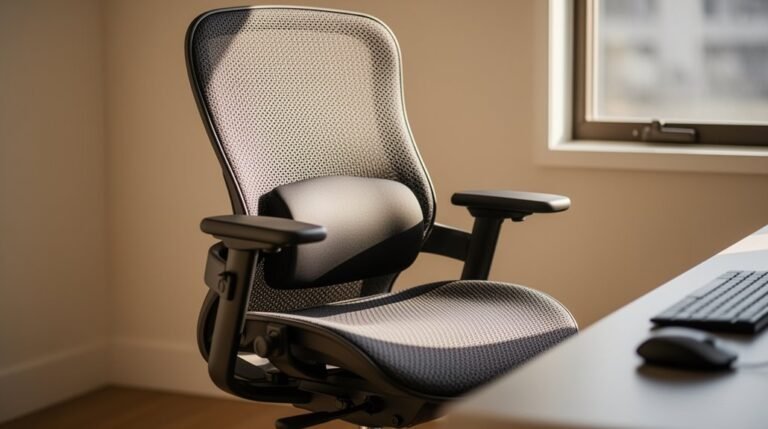
For mesh chairs, vacuum thoroughly and use a soft brush for embedded debris. Wipe with a mild soap solution, avoiding excess water.
When cleaning leather, dust first, then apply a vinegar-water solution with a soft cloth.
For plastic chairs, use a damp cloth with mild soap, scrubbing gently to avoid scratches. Rinse with clean water and dry completely to prevent water spots.
Each method guarantees longevity and durability of your chair.
Spot Cleaning and Stain Removal
Spot cleaning immediately addresses spills and stains on office chairs, which is essential for maintaining their appearance and longevity. Start by blotting any excess liquid with a soft absorbent cloth, avoiding rubbing, which can spread the stain.
- Test cleaning solutions on a small, inconspicuous area first.
- Use a mild dish soap mixed with lukewarm water for light stains.
- Apply the solution with a misting spray bottle to control moisture.
- Rinse with a damp cloth and blot excess moisture.
- Allow the area to air dry completely before use.
For tougher stains, consider specialized cleaners but always rinse thoroughly afterward to avoid residue. Additionally, be aware that server connectivity issues may prevent you from accessing online resources for cleaning solutions, so having a backup plan is advisable.
Deep Cleaning Procedures
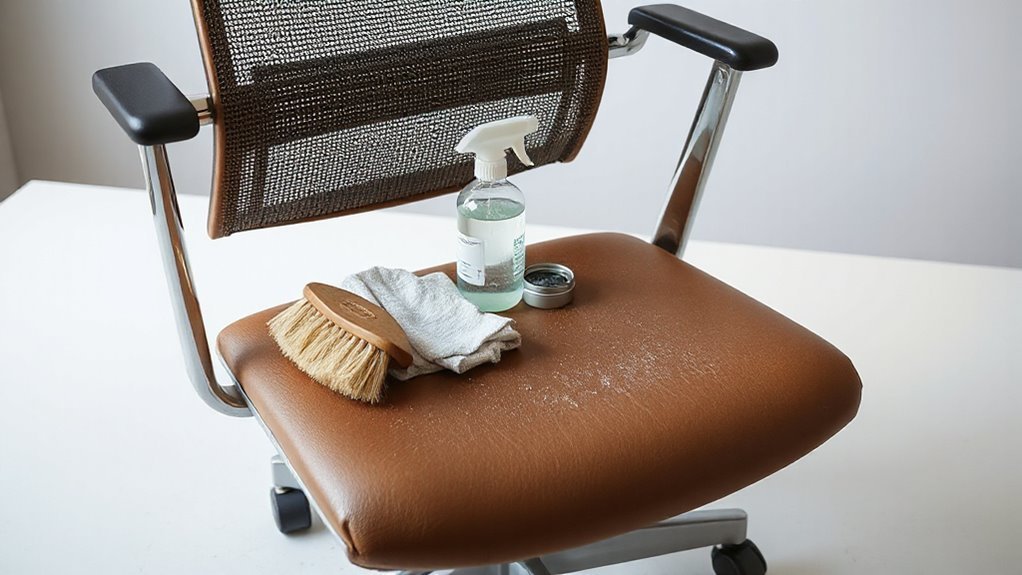
Deep cleaning your office chair is essential for maintaining its appearance and functionality, especially as it endures daily use.
Start by removing loose debris with a vacuum and brush attachment. Wipe down surfaces with a microfiber cloth before applying any cleaner. Check for material-specific care instructions.
For fabric chairs, vacuum thoroughly, then apply a fabric-specific cleaner or mild soap solution, scrubbing gently.
For mesh chairs, use a diluted soap solution and dab with a damp cloth.
For leather chairs, vacuum and use a specialized leather cleaner, conditioning afterward.
Finally, wipe hard surfaces with a damp cloth and blow out dust from crevices using compressed air.
Allow your chair to dry completely before use.
Moving Parts Lubrication and Maintenance
Proper lubrication and maintenance of your office chair’s moving parts are essential for guaranteeing smooth operation and longevity.
To maintain your chair effectively, lubricate the following areas:
- Joints, hinges, and pivot points on the backrest
- Wheels and caster mechanisms
- Springs and rivets attaching the control structure
- Height-adjustment mechanisms
- Clutch plates should remain untouched
Apply lubricant every six months, or when squeaking occurs, to maintain ideal performance.
Use recommended lubricants like white lithium grease for metal contact, or silicone-based lubricants for friction reduction.
Verify you wipe away excess lubricant to prevent dirt attraction.
If squeaking persists, check for wear or loose bolts.
Regular maintenance will help prevent unexpected mechanical failures and guarantee your chair remains functional and comfortable.
Long-Term Care and Prevention Strategies
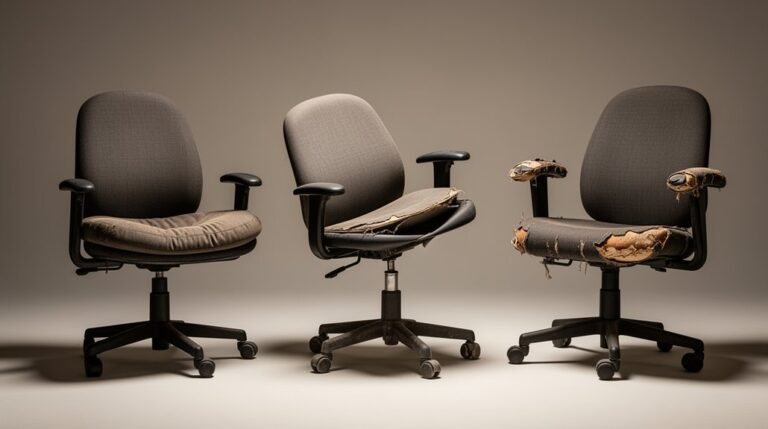
To guarantee the longevity of your office chair, implementing effective long-term care and prevention strategies is essential. Conduct regular inspections, ideally monthly or quarterly, to identify early signs of wear.
Check for loose screws, bolts, and joints to ascertain stability. Train employees on proper usage, discouraging excessive leaning or using chairs as step ladders.
Position chairs away from direct sunlight and high humidity to avoid material degradation. Schedule biannual maintenance to tighten screws and replace damaged parts.
Use protective accessories like chair mats and seat cushions to reduce wear. Document all maintenance activities for accountability.
These strategies help maintain your chair’s functionality and extend its lifespan considerably.
Tips for Maintaining Chair Appearance
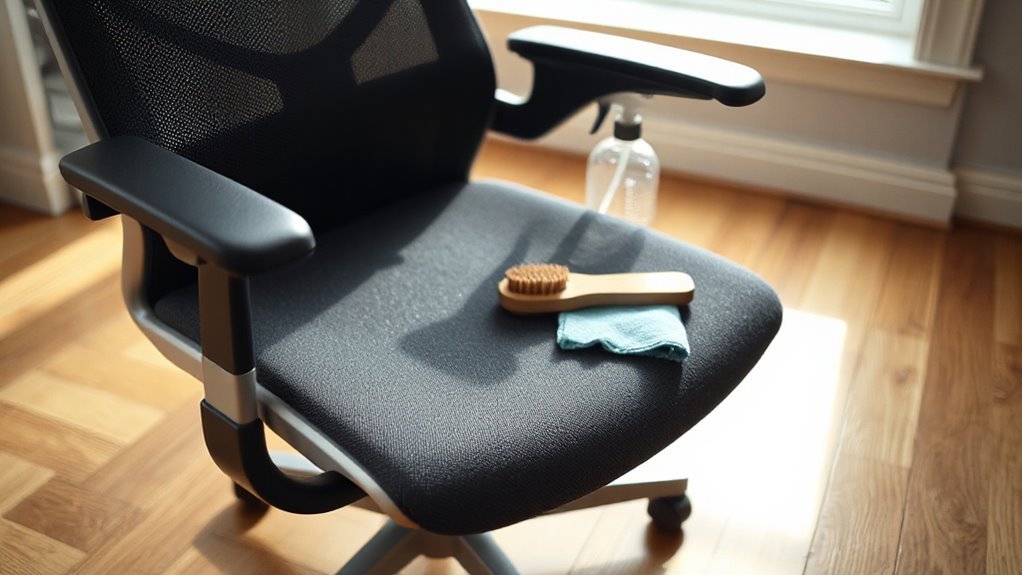
Maintaining the appearance of your office chair is essential for both aesthetics and longevity. By following these tips, you can keep your chair looking fresh and new:
- Use seat covers to shield upholstery from spills and stains.
- Vacuum weekly with a soft brush attachment to eliminate dust and debris.
- Wipe down surfaces with a damp cloth to maintain cleanliness.
- Spot clean stains immediately with a mild detergent or upholstery cleaner.
- Avoid harsh chemicals that can degrade fabric or finish.
Incorporating these practices not only prolongs the life of your chair but also enhances your workspace’s overall look.
Regular attention to your chair’s condition guarantees it remains a functional and attractive part of your office environment.
Frequently Asked Questions
How Often Should I Clean My Office Chair?
You should clean your office chair every 6 to 12 months, depending on the material and usage.
Fabric chairs need cleaning every 3 to 6 months due to dirt accumulation.
Leather or vinyl chairs require less frequent care, while mesh chairs should be cleaned gently.
If you work in a high-traffic area or shared space, consider cleaning every 3 to 6 months.
Always address spills immediately to prevent stains.
Can I Use Bleach to Clean My Chair?
No, you shouldn’t use bleach to clean your chair.
Bleach can discolor and damage most materials, including upholstery and leather, leading to permanent stains. It’s highly abrasive and may weaken fabric fibers.
If your chair is labeled as bleach-cleanable, dilute it properly with four ounces of bleach to 28 ounces of water, but use this sparingly.
Always opt for milder detergents or approved disinfectants for safer cleaning.
What Should I Do if My Chair Has a Strong Odor?
If your chair has a strong odor, start by vacuuming it thoroughly to remove dust and debris.
Then, sprinkle baking soda on the affected areas and let it sit for 8–12 hours to absorb odors.
Afterward, vacuum again.
For persistent smells, mix equal parts of white vinegar and water in a spray bottle and lightly mist the fabric, allowing it to air dry.
Regular maintenance can help prevent future odors.
Is It Safe to Use a Vacuum on Leather Upholstery?
Yes, it’s safe to use a vacuum on leather upholstery when done correctly.
For example, a user vacuumed their leather couch with a soft brush attachment and maintained its integrity.
Always set your vacuum to low suction, especially on older leather, to prevent damage.
Focus on seams and crevices using a crevice tool with light pressure.
Avoid wet leather and chemical cleaners, as both can harm the material over time.
Regular maintenance is essential.
How Can I Prevent My Chair From Squeaking?
To prevent your chair from squeaking, start by identifying and tightening loose components.
Regularly inspect screws, bolts, and connections, tightening them with appropriate tools.
Next, lubricate moving parts using silicone spray or WD-40, focusing on joints and swivel mechanisms.
Address rust by replacing corroded components, ensuring smooth operation.
Finally, maintain chair wheels, cleaning them of debris, and check for stability to avoid movement that causes noise.
Regular maintenance is key.
Conclusion
Maintaining your office chair is essential for longevity and comfort. Regular cleaning, tailored to the chair’s materials, helps prevent wear and tear.
Tackle stains promptly with spot cleaning, and use deep cleaning when the chair needs a more thorough refresh. These steps restore freshness and remove embedded dirt.
Lubricate moving parts to guarantee smooth operation and reduce noise. This keeps adjustments working properly and extends the chair’s lifespan.
Adopt long-term care strategies to preserve the chair’s appearance and functionality. By following these steps, you can work efficiently and comfortably for years to come.
A well-maintained chair is a solid foundation for productivity.