Why Taking Breaks Is Key to Ergonomics
Why Taking Breaks Is Key to Ergonomics
Taking breaks is essential for ergonomics. They enhance productivity by 13% and lower musculoskeletal discomfort linked to prolonged sitting. Structured work-to-rest cycles, such as 75 minutes of focused work followed by 33 minutes of rest, help maintain circulation and alleviate muscle fatigue.
Frequent breaks reduce the incidence of injuries and improve overall well-being. Regular movement and short pauses interrupt static postures that contribute to strain and discomfort.
Organizations that support a healthy break culture often see lower turnover rates and improved employee happiness. Encouraging breaks alongside ergonomic practices fosters a safer, more productive workplace.
Continue to explore the specific benefits of break policies and practical ergonomic measures to optimize health and performance.
Enhancing Productivity Through Breaks
When you incorporate structured breaks into your work routine, you can greatly boost your productivity. Research shows that regular breaks can lead to a 13% productivity increase. For ideal results, aim for work-to-rest cycles of about 75 minutes of focused work followed by 33 minutes of rest; this approach correlates with a 23% enhancement in output. Even short, 5-minute pauses improve efficiency by 7.12%. Frequent breaks help you avoid the cognitive fatigue associated with multitasking, allowing you to refresh your mental focus. Organizations that promote break-friendly cultures experience 18% lower turnover rates, highlighting the correlation between breaks and employee engagement. Additionally, more breaks would improve work happiness for 59% of employees, emphasizing the overall positive impact of breaks on workplace morale.
Reducing Musculoskeletal Discomfort
Prolonged sitting and static postures can lead to significant musculoskeletal discomfort, particularly in the lower back and upper extremities. Maintaining awkward positions, like arm overreaching or prolonged standing, stresses muscles and joints.
Static postures restrict blood flow and reduce muscle activation, causing stiffness and pain. Repetitive tasks combined with static positions increase the risk of musculoskeletal disorders (MSDs). In fact, MSD cases accounted for 30% of 900,380 days away from work cases in the U.S. private sector in 2018.
Frequent breaks interrupt these static postures, allowing muscles to recover and improving circulation. Short, regular breaks help reduce muscle fatigue, lowering the incidence of injuries like strains and sprains.
Research shows that implementing microbreaks correlates with decreased MSD rates and fewer lost workdays, emphasizing the importance of breaks in maintaining musculoskeletal health.
Boosting Employee Well-being
To enhance employee well-being, organizations must create supportive work environments that address both physical and mental health.
Implementing ergonomic training programs boosts psychological safety, improving job satisfaction. A well-designed workspace reduces cognitive load, allowing you to maintain focus, enhancing overall mental health outcomes. Prioritizing employee well-being leads to higher productivity and efficiency.
Ergonomic interventions, like adjustable workstations, tailor support to individual needs, increasing comfort and productivity. When you feel supported physically and mentally, your engagement and motivation levels rise, leading to higher output and quality work.
Organizations that prioritize holistic health approaches recognize mental health’s importance, fostering a culture of well-being. This supportive environment reduces burnout and enhances morale, ultimately driving greater efficiency across the workforce.
Prioritizing employee well-being is essential for long-term success.
Lowering Absenteeism and Healthcare Costs

Effective strategies for lowering absenteeism and healthcare costs require a multifaceted approach. Engaged employees show lower absenteeism rates, as recognition programs boost morale and commitment. Celebrating achievements can lead to a 22 percent decrease in absenteeism.
Extensive wellness programs addressing physical and mental health also play an essential role. These programs, offering services like stress management and fitness classes, enhance overall well-being.
Implementing flexible work arrangements, such as hybrid schedules, further reduces absences by addressing scheduling conflicts. Organizations with inclusive environments experience lower absenteeism due to increased employee comfort in disclosing time-off needs.
Maximizing Organizational and Economic Benefits
As organizations seek to enhance productivity and employee well-being, integrating structured break policies becomes essential.
Implementing effective break strategies can yield significant organizational and economic benefits. Here are key points to regard:
- Boosted Productivity: Workers taking regular breaks show 13% higher productivity than those who don’t.
- Enhanced Accuracy: Break reminders improve worker accuracy by 13% on average, reducing mistakes.
- Lower Costs: A supportive break culture decreases turnover rates, minimizing hiring and training expenses.
- Improved Mental Health: Breaks lower stress and burnout rates, leading to better overall employee satisfaction.
Frequently Asked Questions
How Often Should I Take Breaks During My Workday?
You should take breaks every 60 to 90 minutes during your workday. A 5 to 10-minute micro-break can help refresh your focus and reduce fatigue.
For longer tasks, consider a 15 to 20-minute break after 90 minutes. If you’re on an 8-hour shift, aim for a 30-minute meal break plus 2 or 3 short breaks of 10 to 15 minutes.
This schedule supports productivity and maintains well-being throughout your workday.
What Types of Activities Are Best for Breaks?
You should incorporate micro-breaks, lasting 30-60 seconds, every 10-20 minutes.
Light stretching, such as shoulder shrugs or neck rolls, alleviates upper body tension. Standing stretches, including overhead reaches, enhance circulation.
Walking around boosts mood and energy. Mindful breathing exercises manage stress effectively.
Additionally, hydrating with water and consuming healthy snacks, like fruit, sustains cognitive function. Engaging in brief social interactions fosters connection and improves overall workplace morale.
Can Breaks Help With Mental Clarity?
Yes, breaks can enhance mental clarity. When you take short pauses, your brain resets, reducing accumulated stress.
Research shows that stepping away from tasks allows your cognitive resources to replenish. This results in improved focus and decision-making.
Breaks also promote creative thinking, as fresh ideas often emerge during these periods. By preventing mental fatigue, you maintain higher engagement levels and better tackle complex problems when you return to work.
Are There Specific Ergonomic Tools to Enhance Breaks?
Research shows that incorporating breaks can boost productivity by up to 34%.
You can use tools like RSI Guard for automated break reminders, helping prevent strain.
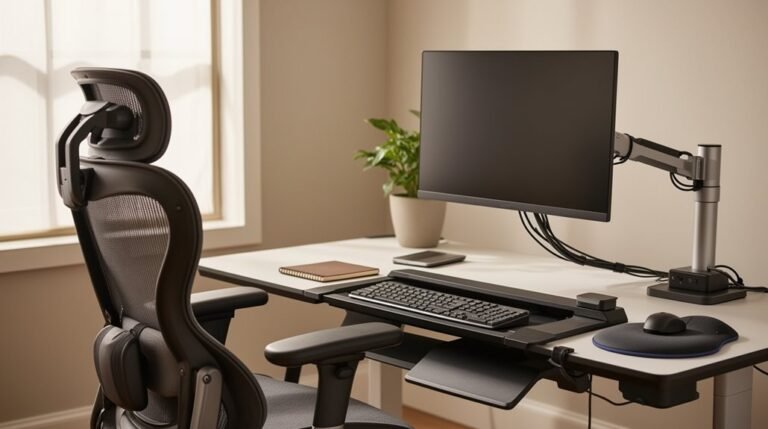
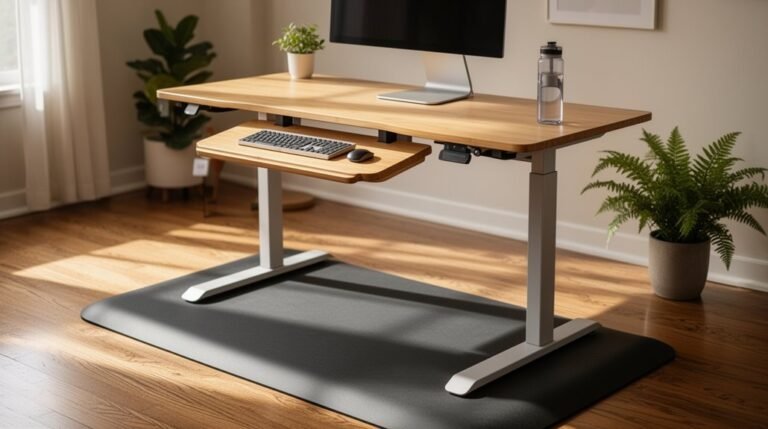
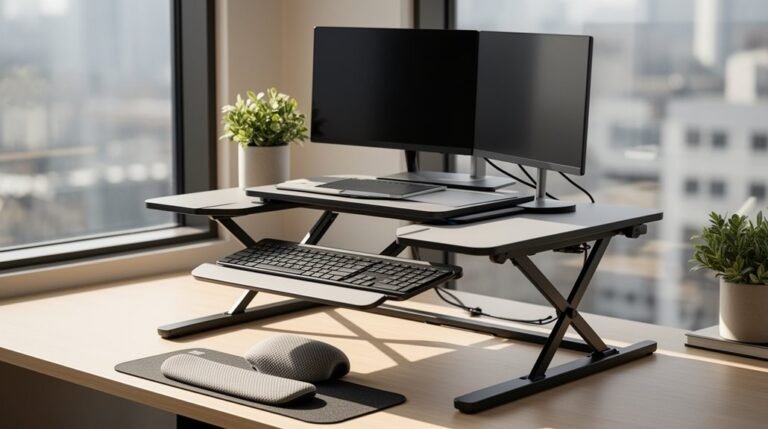
Standing desks let you alternate postures, while anti-fatigue mats enhance comfort during standing breaks.
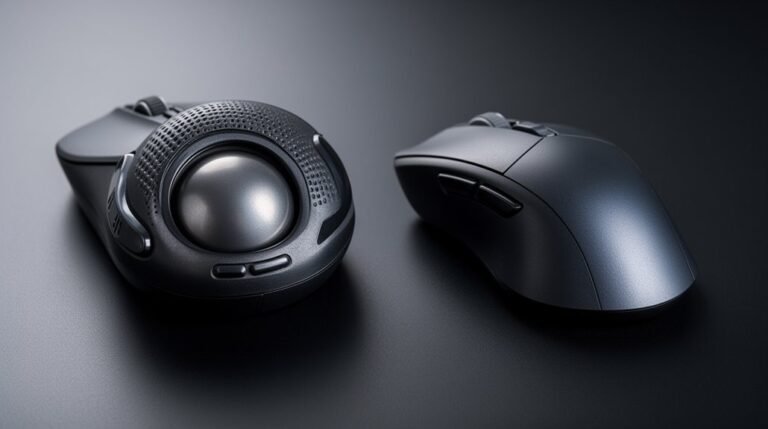
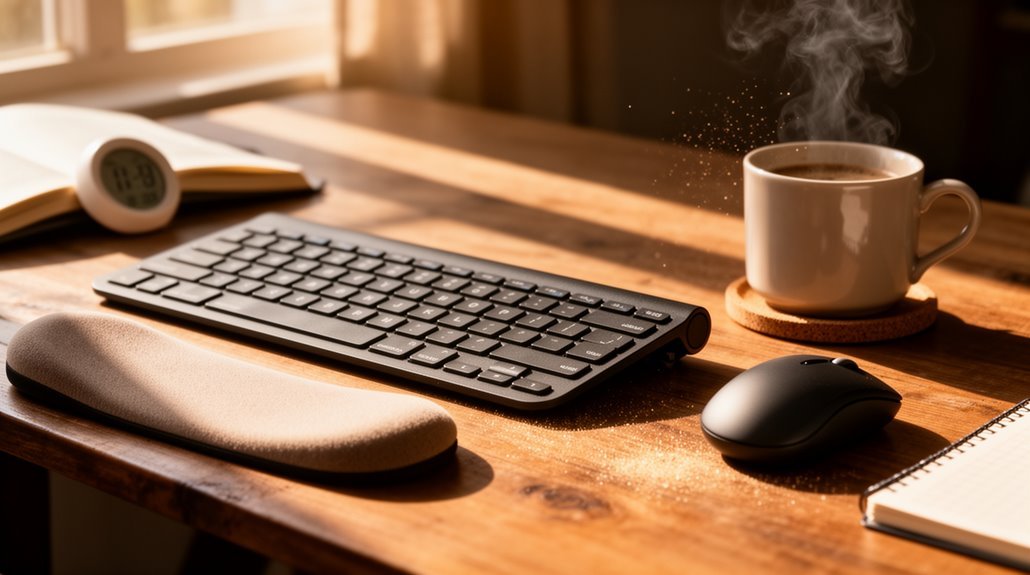
Consider ergonomic keyboards and mice to reduce wrist strain.
Water tracking apps remind you to hydrate, promoting both physical and mental refreshment during your breaks.
How Can I Create a Break-Friendly Work Environment?
Design break areas with comfortable furnishings and good air quality. Include plants to improve well-being and reduce discomfort. Guarantee easy access to these spaces, promoting frequent use.
Incorporate quiet zones for privacy and distraction-free relaxation. Provide health-promoting resources like nutritious snacks and hydration options. Maintain cleanliness and a welcoming atmosphere.
Encourage a culture that supports regular breaks, enhancing morale and productivity while reducing fatigue and stress.
Conclusion
To sum up, taking breaks is essential for maintaining ergonomic health at work. Just as a well-tuned machine requires pauses to function effectively, your body benefits from regular intervals of rest.
Breaks enhance productivity and reduce musculoskeletal discomfort. They also promote overall employee well-being.
By lowering absenteeism and healthcare costs, organizations can maximize their economic benefits. Prioritizing structured breaks can lead to a healthier, more efficient workplace, ultimately supporting both individual and organizational success.