Maintaining Good Posture Throughout the Day
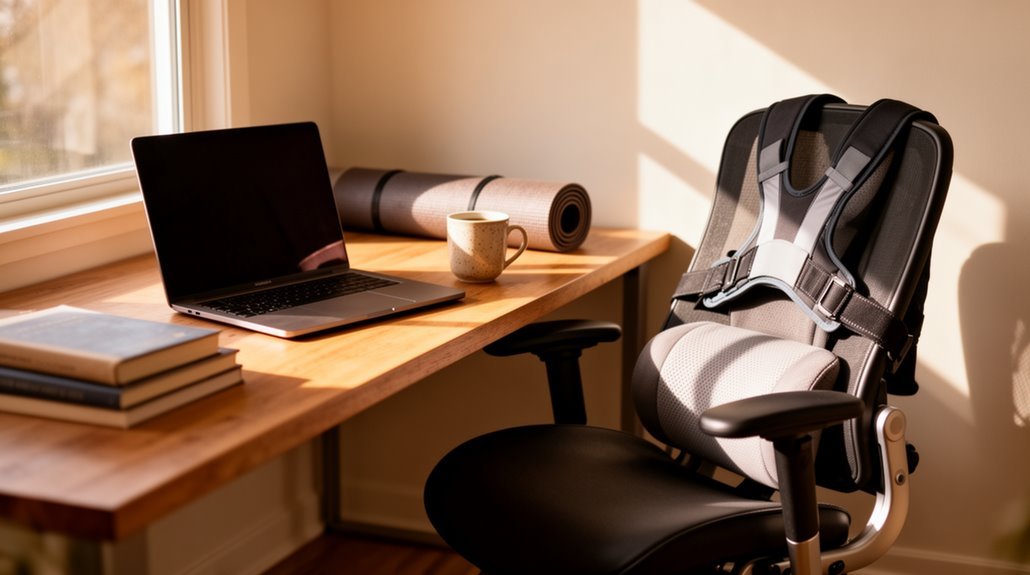
Maintaining good posture throughout the day starts with strengthening your core. Include exercises like planks and dead bugs to stabilize the spine and support alignment.
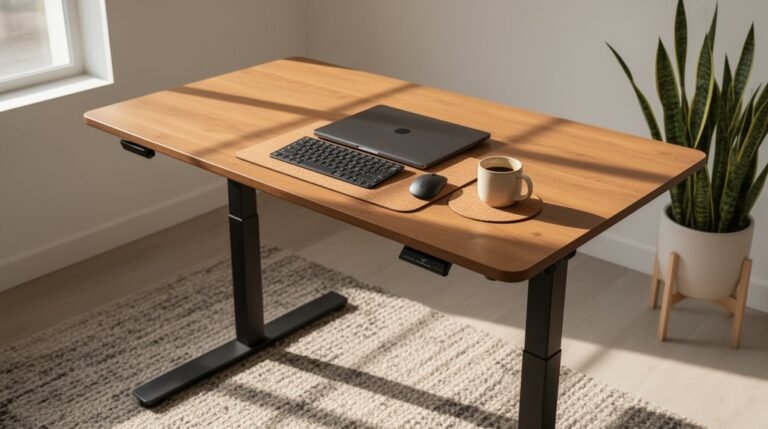
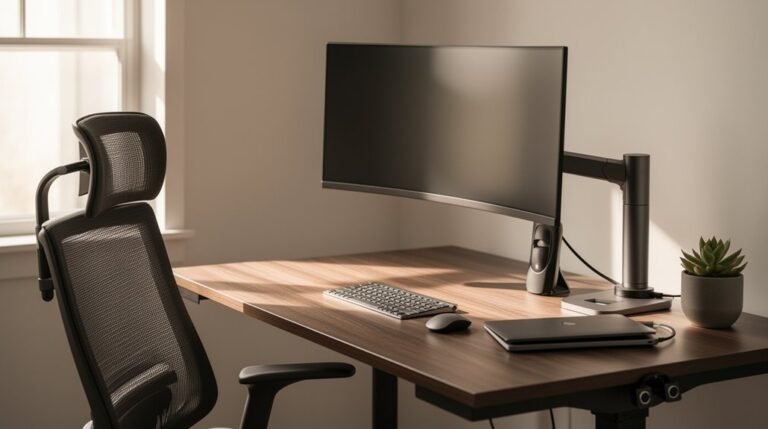
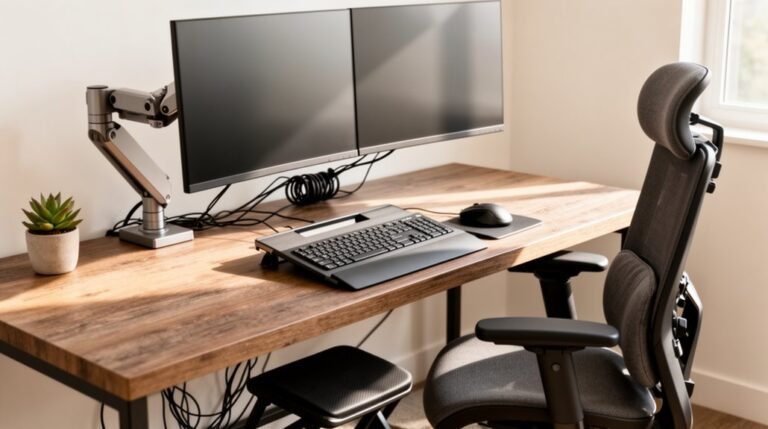
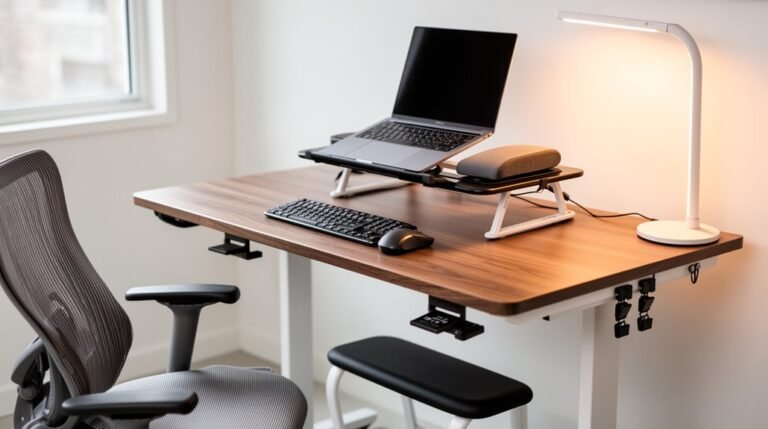
Set up an ergonomic workspace so your monitor is at eye level and your wrists remain neutral. Small adjustments to chair height and keyboard placement can make a big difference.
Take active microbreaks every 30 minutes to stretch or walk and reduce stiffness. These brief movements help reset your posture and circulation.
Pay attention to sleep posture by using pillows to align your spine. Together, these habits can enhance your overall posture and help you perform better over time.
Core Strengthening Exercises for Posture Support
To improve your posture, incorporating core strengthening exercises is essential, as they stabilize your spine and promote proper alignment. Standard planks engage your entire core, strengthening deep muscles vital for spinal support. For beginners, modified planks on forearms and knees maintain body alignment while activating core muscles. Side planks target your obliques and glute medius, enhancing lateral stability. Bird Dog exercises build spinal stability and improve balance, while Dead Bugs train coordination and activate the transverse abdominis. Strengthening deep core reduces the risk of lower back pain, and glute bridges strengthen your glutes and hamstrings, promoting spinal alignment, whereas wall sits improve endurance in postural muscles.
Stretching and Flexibility Techniques
Stretching and flexibility techniques play an essential role in enhancing posture and overall spinal health. Incorporating chest opener stretches and lying pectoral stretches targets the pectoral muscles, reducing slouching.
The extended puppy pose and wall angels strengthen the back and shoulders, promoting proper alignment. For spinal mobility, try seated spinal twists and cobra poses, which improve flexibility and relieve tension. Additionally, consistent stretching can lead to increased energy levels throughout the day.
Additionally, scapular retractions and pull your head back exercises strengthen the upper back and neck, countering forward head posture. Aim to hold each stretch for 20–30 seconds, repeating 2–3 times daily.
Consistent stretching enhances blood flow, reduces stiffness, and trains muscles to support better posture, leading to improvements in comfort and alignment during daily activities.
Ergonomic Adjustments for Your Workspace
How can ergonomic adjustments transform your workspace? By incorporating adjustable furniture, like sit-stand desks, you allow yourself to alternate between sitting and standing, reducing back pain by an average of 1.3 points. Height-adjustable workstations accommodate various body types, enhancing comfort and reducing fatigue. Additionally, proper monitor positioning is essential; external monitors should be at eye level to minimize neck strain. Ergonomic accessories, such as keyboards and mice, promote neutral wrist positioning, decreasing strain. Organizations see a 24% increase in employee satisfaction when they provide ergonomic equipment, as evidenced by the study on adjustable height work surfaces. Finally, improving workspace design, including lighting, enhances focus and productivity. By making these adjustments, you can create a healthier, more efficient work environment.
Importance of Movement and Regular Breaks
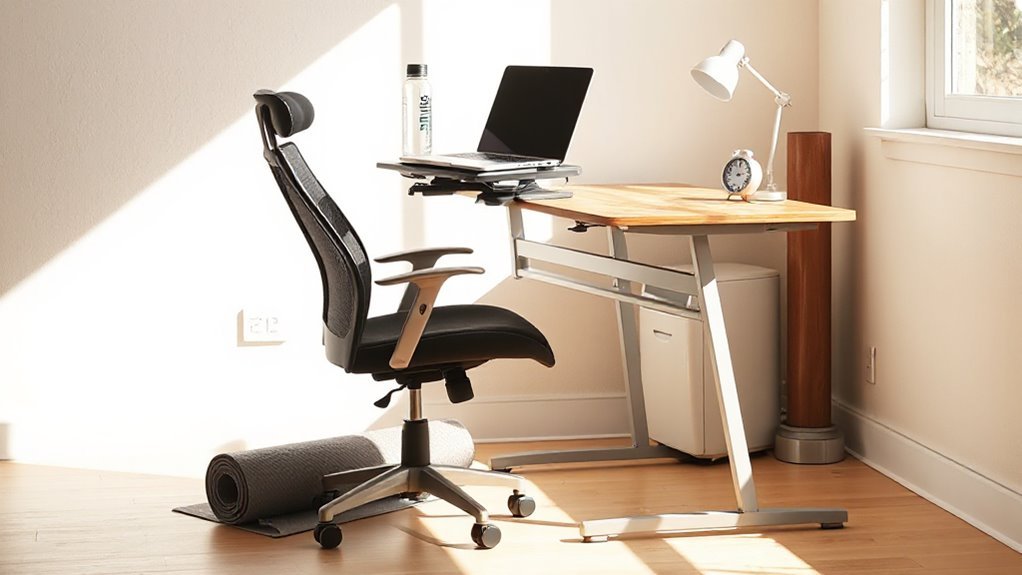
Maintaining good posture involves more than just ergonomic adjustments; it requires a proactive approach to movement and regular breaks. Prolonged sitting can lead to muscle stiffness, joint strain, and increased risk of discomfort, with office workers sitting an average of 477–569 minutes daily.
Incorporating active microbreaks every 30 minutes can greatly reduce these issues. Just 2–3 minutes of movement, such as stretching or walking, helps alleviate stiffness, improves concentration, and enhances overall productivity.
Regular movement breaks also reset the body’s posture, preventing the reversion to poor habits. Targeting multiple postural areas with compound movements can further promote healthy alignment.
Consistent breaks and movement are essential for maintaining good posture and preventing long-term musculoskeletal problems.
Sleep and Rest Posture for Better Alignment
What position do you sleep in? The right sleep posture is essential for spinal alignment.
Back sleeping distributes your weight evenly, maintaining a neutral spine. To enhance comfort, place a small pillow under your knees to support your lower back’s natural curve.
If you prefer side sleeping, use a firm pillow between your knees to keep your spine aligned and reduce lower back pressure. The fetal position can provide relief for conditions like herniated discs, but avoid curling too tightly.
Conversely, stomach sleeping stresses your neck and lower back, worsening misalignment. To improve your sleep quality, make sure your head pillow supports your neck’s natural curve, and address any gaps between your body and the mattress for the best support.
Frequently Asked Questions
How Does Stress Affect My Posture Throughout the Day?
Stress affects your posture by increasing muscle tension in your neck, shoulders, and back.
When you’re stressed, your body releases cortisol, which can lead to hunched shoulders and a rigid spine. This muscle tightness pulls your spine out of alignment, contributing to forward head posture.
Poor posture further restricts circulation, intensifying discomfort and stress.
Over time, these factors can create a cycle of chronic pain and increased stress levels, worsening your overall posture.
Can Poor Posture Lead to Long-Term Health Issues?
Yes, poor posture can lead to long-term health issues.
Slouching increases pressure on intervertebral discs, accelerating degeneration. Misalignment distorts spinal structure, causing chronic pain and muscle fatigue. Over time, weak muscles and diminished joint function develop, raising the risk of osteoarthritis.
Additionally, poor posture compresses blood vessels, reducing oxygen flow, which can lead to systemic complications.
Ultimately, these effects can greatly impact overall health and mobility.
What Are the Signs of Poor Posture?
You may notice several visible physical signs, like forward head posture, rounded shoulders, or an anterior pelvic tilt.
You might also experience neck pain and recurring headaches from muscle strain.
Functional issues could arise, such as limited range of motion in your neck and shoulders.
Additionally, you may struggle with balance or experience muscle aches.
These indicators often point to misaligned spinal structures, compromising your overall health and comfort.
Are There Specific Exercises for Improving Posture While Sitting?
Specific Exercises for Improving Posture While Sitting
You can enhance your seated posture through targeted exercises.
Perform shoulder rolls by lifting your shoulders to your ears and then pulling them down five to ten times, several times daily.
Try lateral stretches by straightening one arm and leaning to the opposite side.
Consider wall-side squats to correct spinal alignment.
Using a rolled towel under your pelvis can also help maintain proper pelvic tilt while sitting.
How Does Hydration Influence My Posture?
Hydration greatly influences your posture. Dehydration compresses spinal discs, reducing space between vertebrae and compromising spinal alignment.
This loss of disc hydration decreases flexibility, making it harder to maintain an upright posture. Additionally, well-hydrated muscles support spinal alignment effectively.
When dehydrated, you may experience muscle fatigue and cramps, further disrupting your posture. Aim for at least eight glasses of water daily to support disc health and enhance overall postural stability.
Conclusion
To conclude, maintaining good posture is essential for overall health and productivity.
Incorporate core-strengthening exercises, make ergonomic adjustments, and prioritize regular movement to create a supportive environment for your body.
Imagine standing tall like a tree — roots firmly grounded while reaching for the sky. Your commitment to proper posture today will yield long-term benefits, including reduced pain and improved alignment.
So take action, make adjustments, and invest in your posture for a healthier tomorrow.